꧁ Gowns in Art ꧂

꧁ Gowns in Art
Ep. 1 with Roberta Eaton Cheadle

Via the colour or other comparable aspect of the gown &/or painting – I will first pair a fine art painting from Robbie’s collection, then one from my collection, .

White Gowns

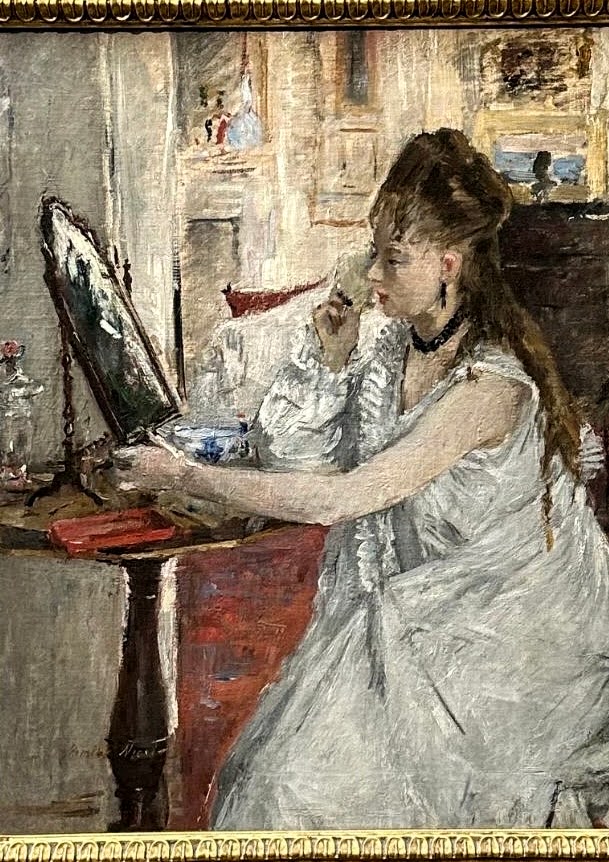
Jeune Femme se Poudrant by Berthe Morisot – French (1841 – 1895)

Berthe Morisots only daughter, Julie, inspired the many paintings, which documented the lives of women. The painting below is one of those paintings. It hangs in the Musée d’Orsay, Paris.
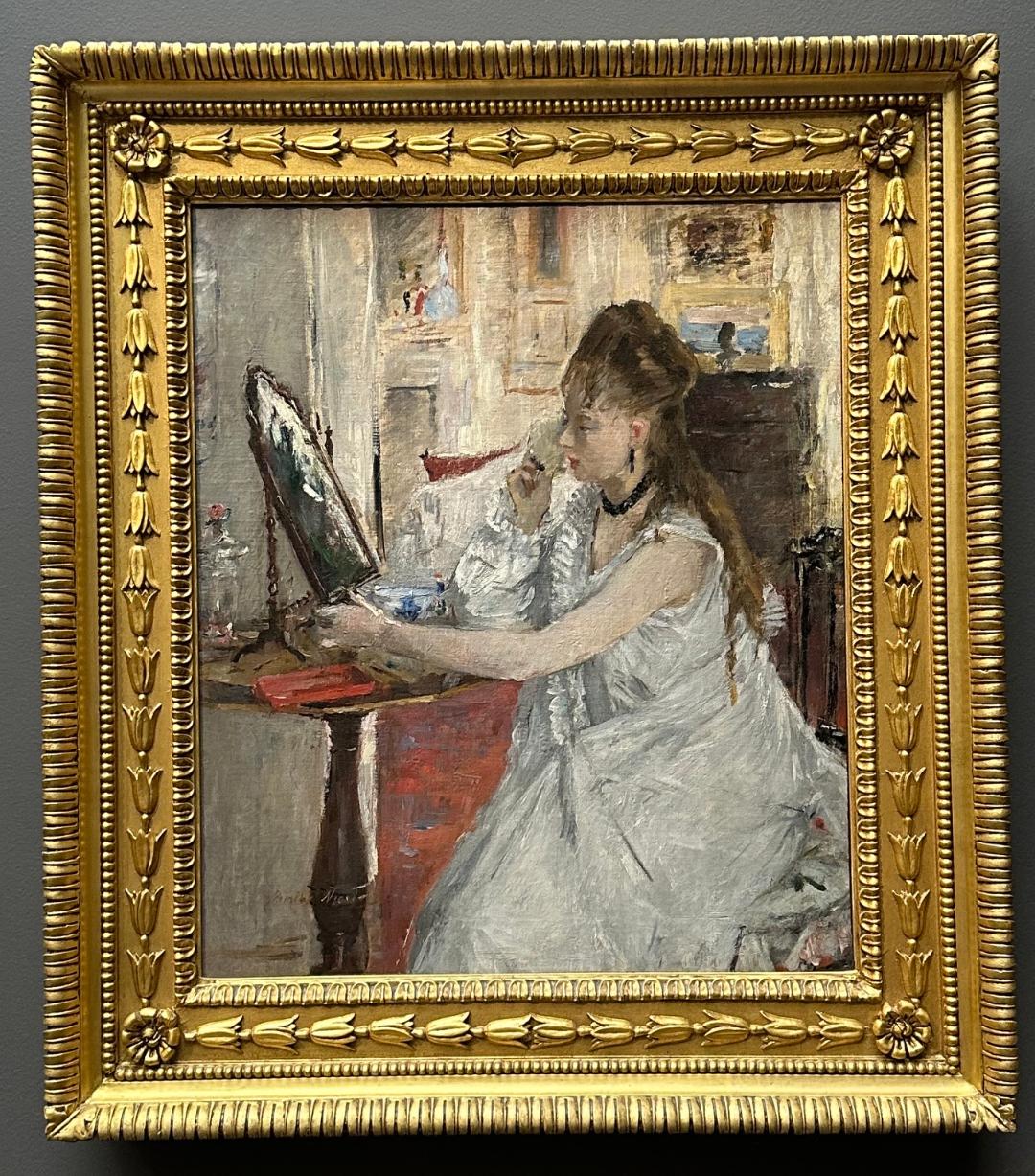
1887 – Oil on Canvas

Fortunate to have a genuine art education, Morisot studied under Jean-Baptiste-Camille Corot. In the 1860s, Morisot became a professional friend of Edouard Manet.
From1864 – 1870, she showed regularly at the Paris Salon.

In 1874, Morisot exhibited with the Société Anonyme des Artistes-Peintres, Sculpteurs, Graveurs, the first Impressionist exhibit.

In December, 1874 she married Eugène Manet (brother of Edouard Manet).

Achieving significant recognition during her lifetime, in 1887 her work showed at George Petit’s International Exhibition in Paris and Paul Durand-Ruel’s exhibition of Impressionist painting in New York.

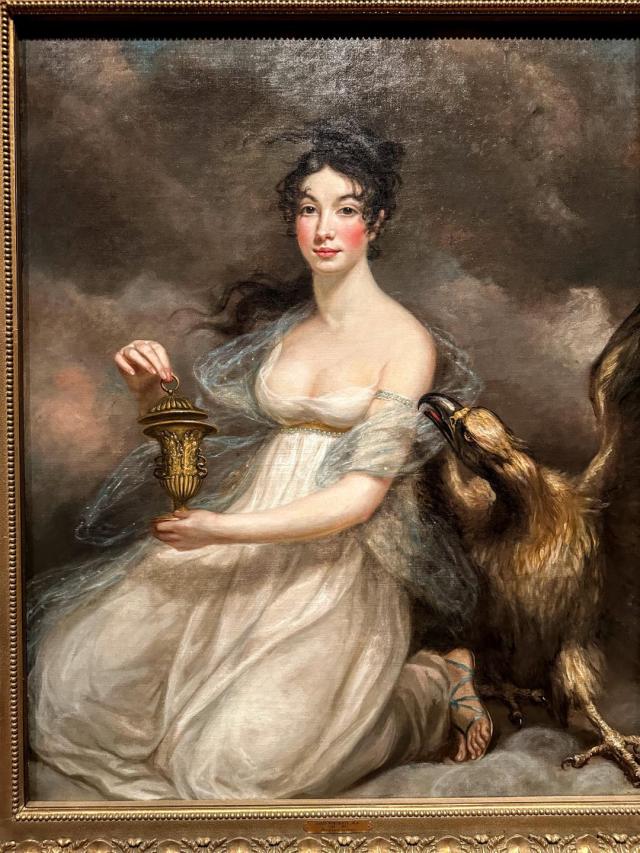
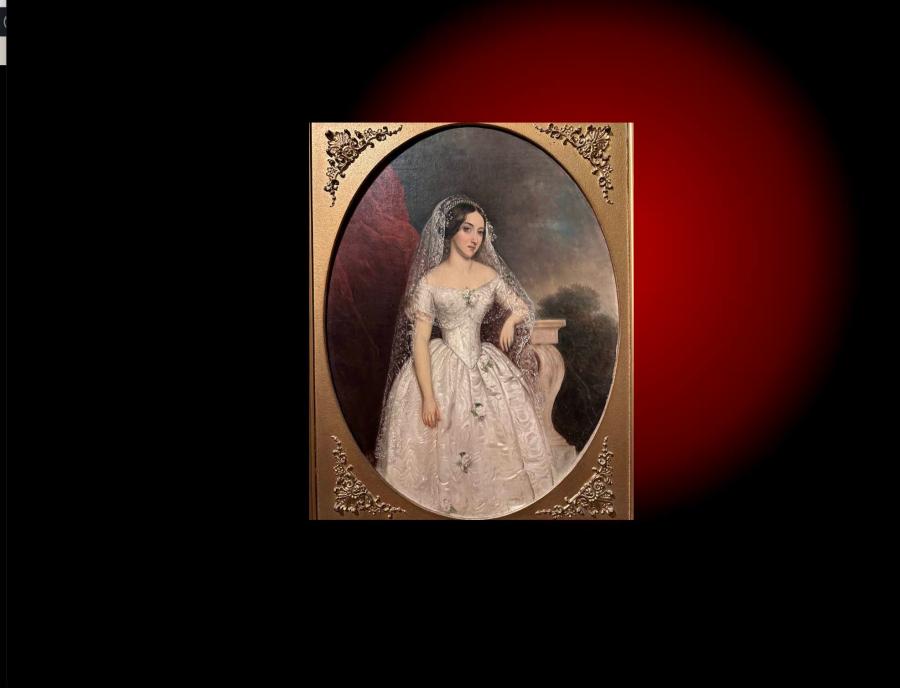
Mrs. Wells as “Hebe” James Northcote – British (1746 – 1831)

James Northcote was a writer as well as a painter of predominantly portraits. Largely self taught, he studied under and worked for Sir Joshua Reynolds. He became a member of The Royal Academy in 1787.
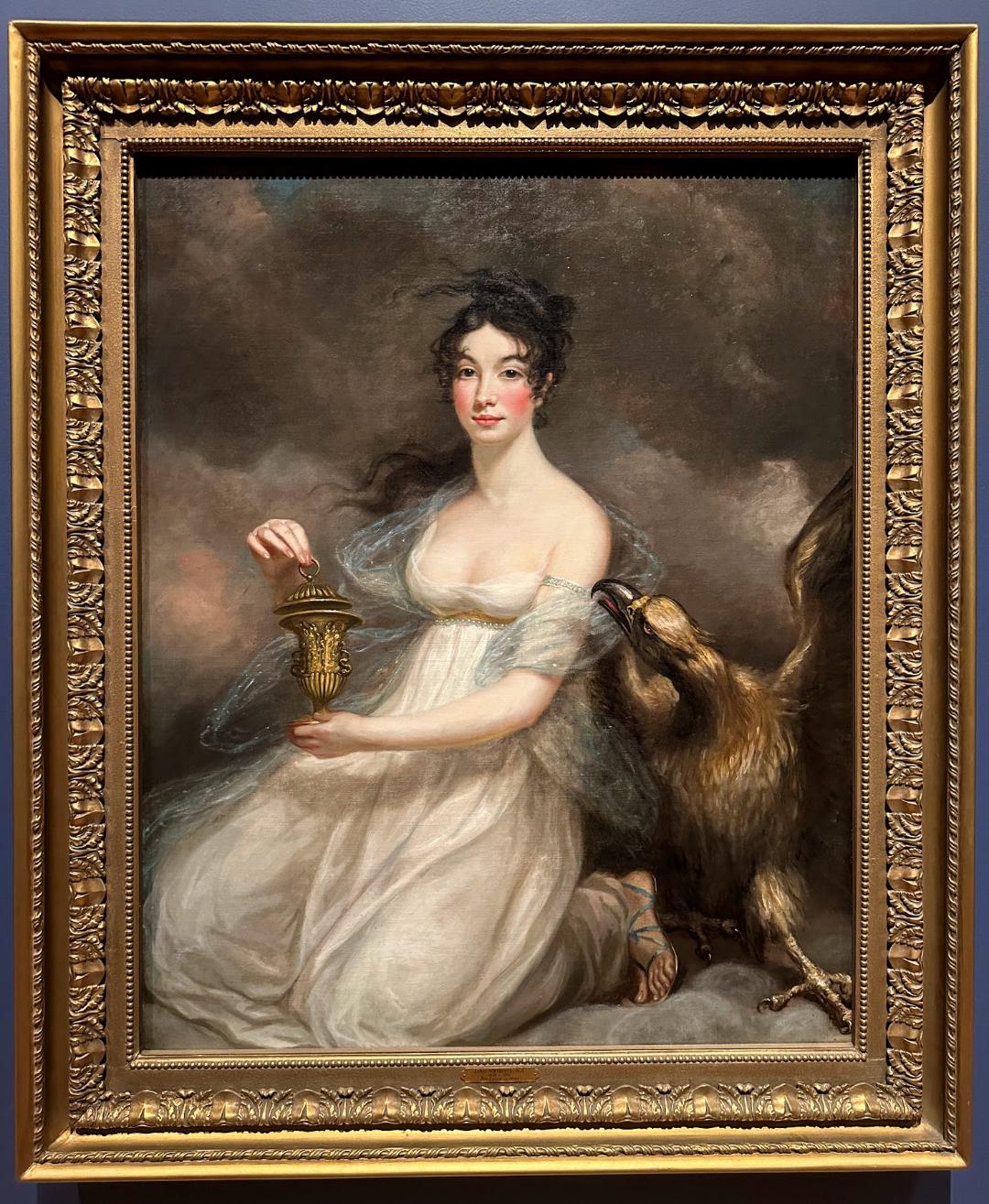
1805 – Oil on Canvas

At this time in history, allegorical artworks portraying people as mythological or historical figures were the height of fashion. 
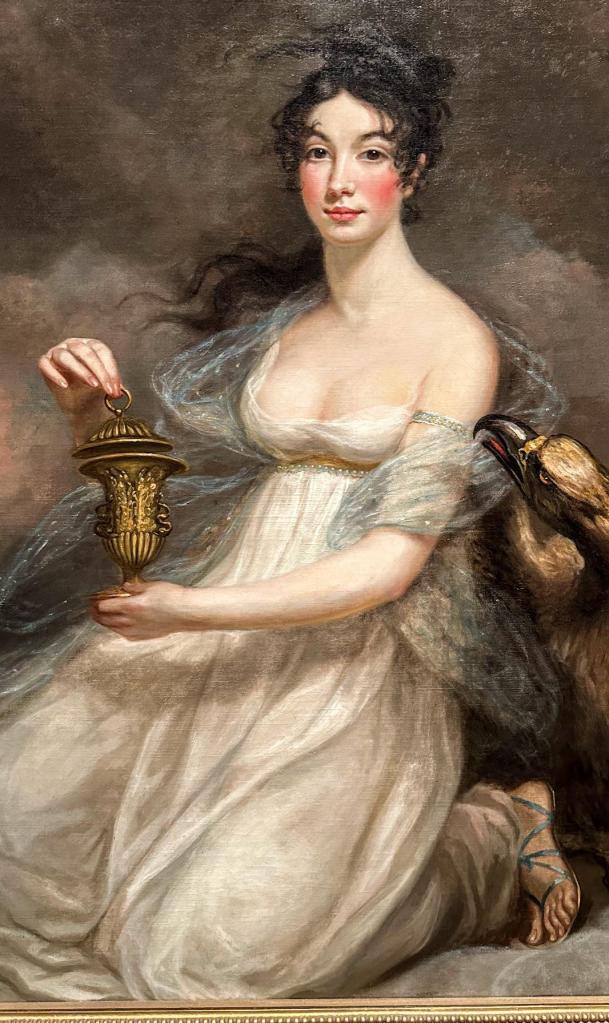
Zeus’s daughter – Hebe, goddess of youth & cupbearer of the gods, was also the young bride’s patron goddess.

A Child’s Gown

Portrait of Clara Alewijn – Dirk van Santvoort – Netherlands (1610-1680)

Dirk van Santvoort was a prominent painter of children circa the mid seventeenth century. Clara Alewijn, the subect of the portrait below, was van Santvoort’s sister.
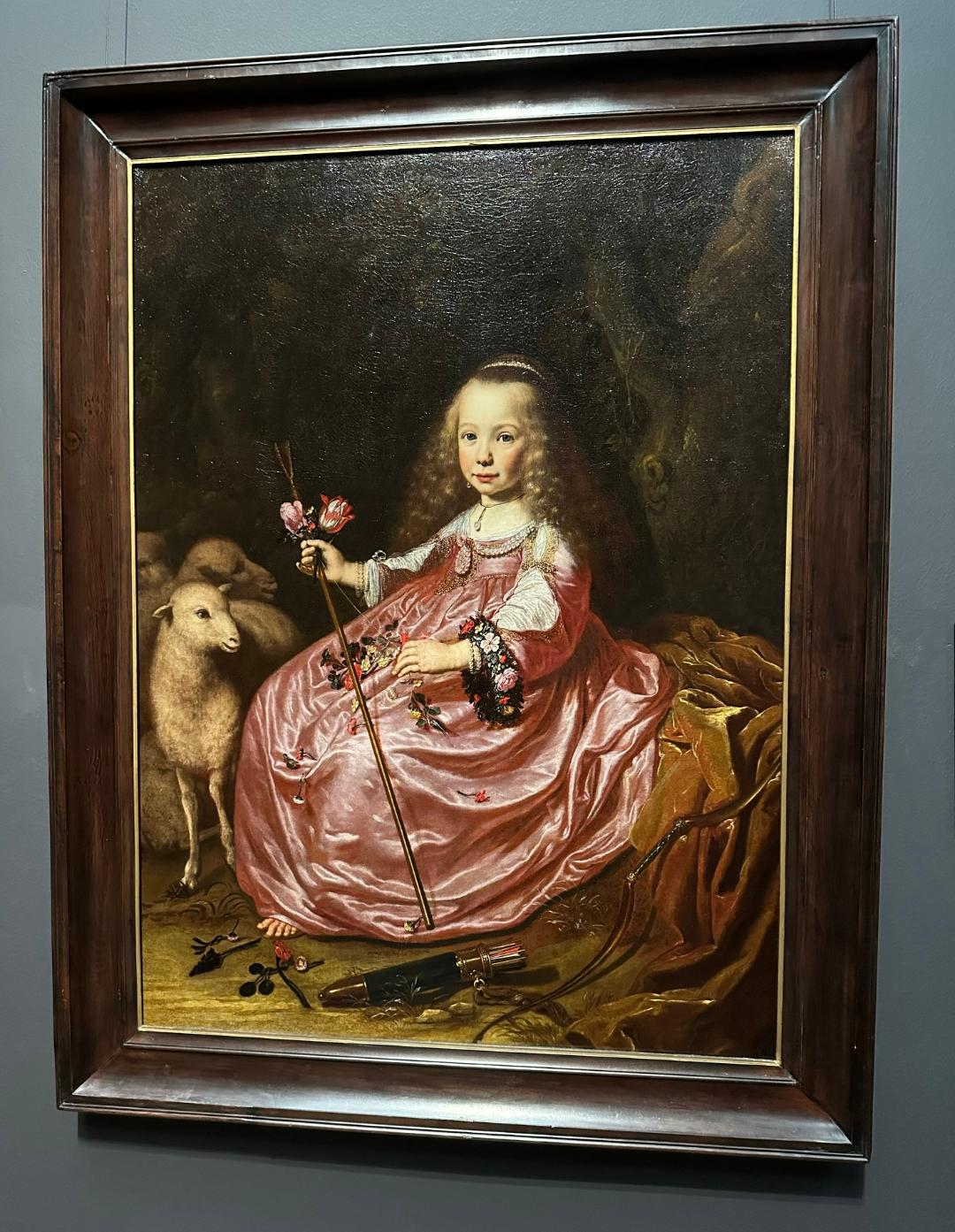
Oil on canvas – 1644

He likely studied under his farther – Dirck Pietersz. Bontepaert. None of the father’s work weathered time. After becoming wealthy, Van Santvoort ceased painting. He became the Dean of the Painters’ Guild and was an assessor of paintings.

Portrait of a Young Girl with Carnations – Jan Albertsz. Rotius – Netherlands (1615-1674)

Jan Albertsz. Rotius (aka Rootgies) was a portrait and still life painter
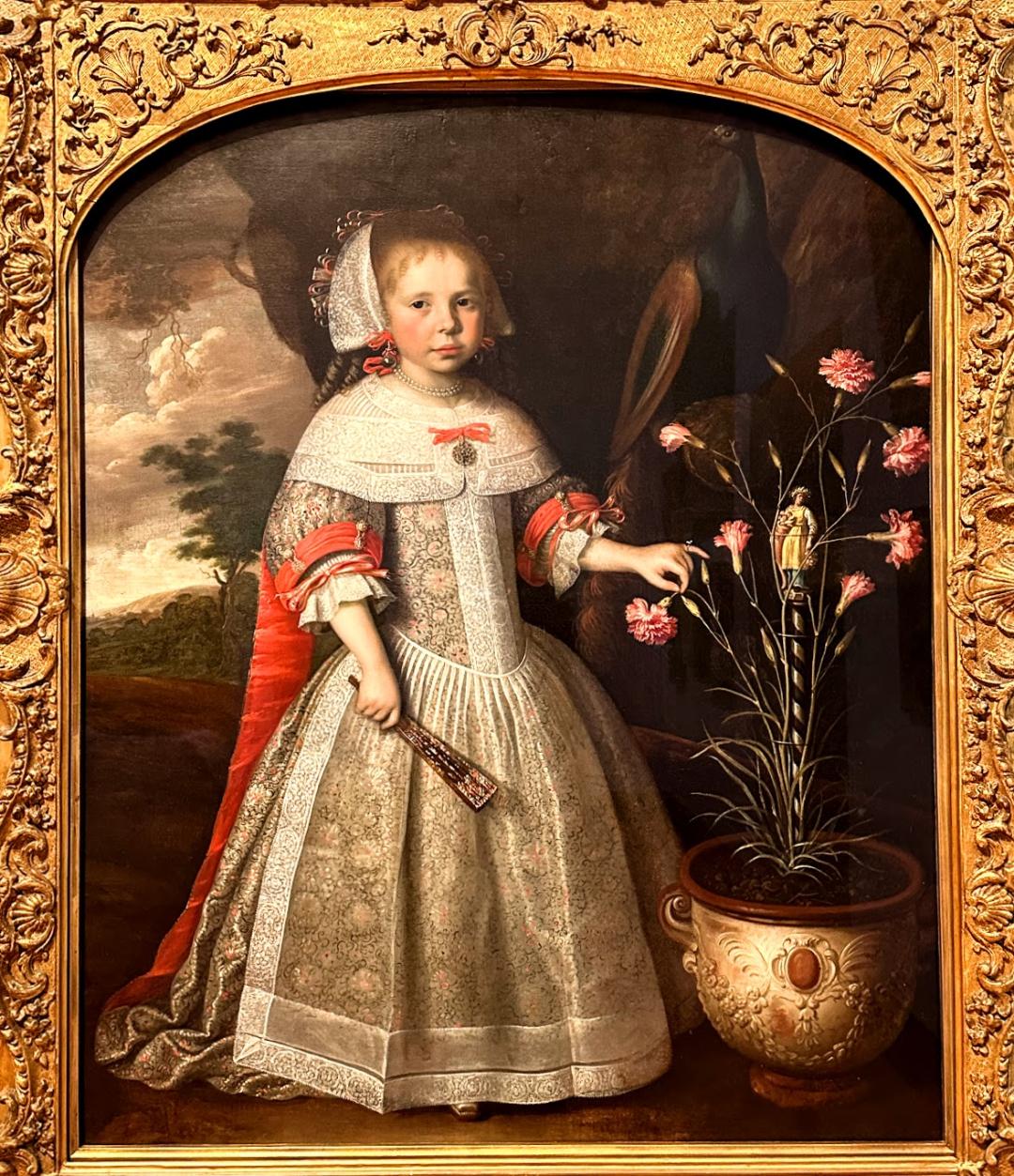
Oil on Canvas – circa 1663

He had 7 children, of which only 3 survived to adulthood. His son Jacob Rotius, became a successful painter of flowers.

Feels Antediluvian

Venus and the Three Graces Presenting Gifts to a Young Woman – Sandro Botticelli – Italian (1445-1510)

Botticelli, a draughtsman and painter, began painting religious frescoes before opening his own studio circa 1470.
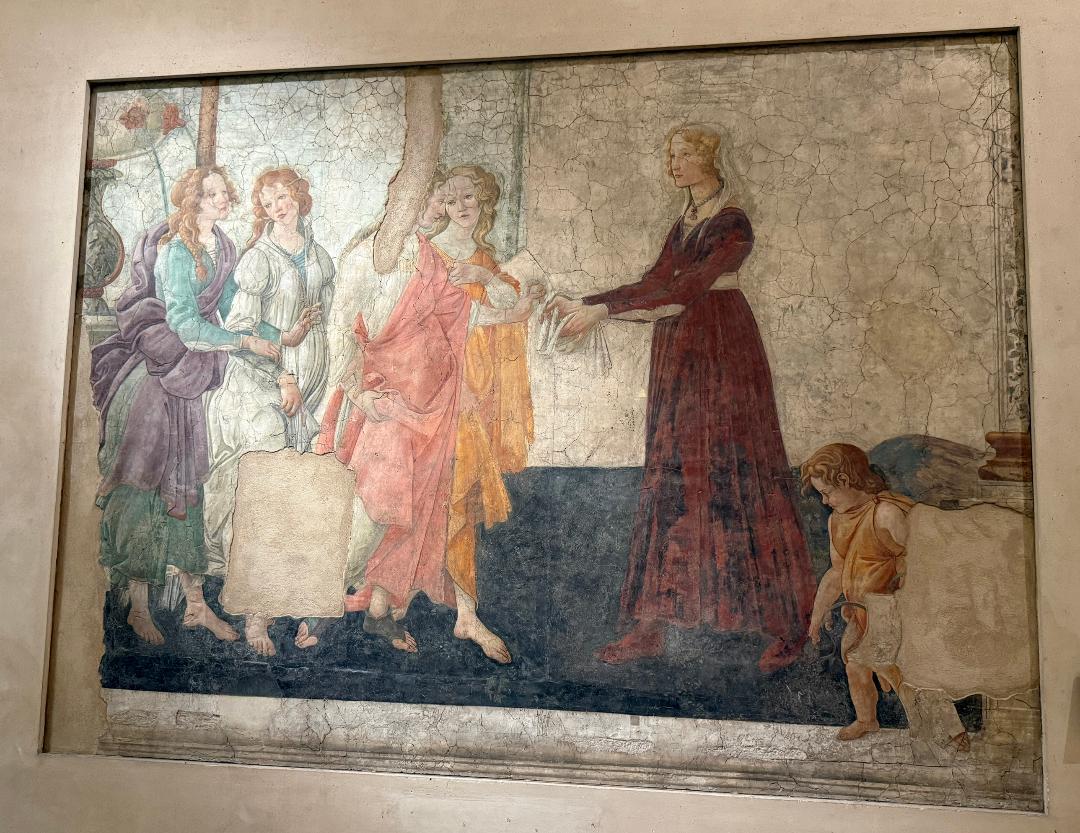
Fresco – circa 1484

Prior to opening his studio he apprenticed in the studio of Fra Filipo Lippi, then worked with Antonio del Pollaiuolo. Botticelli spent most his life in service of the Medici family and their clique.
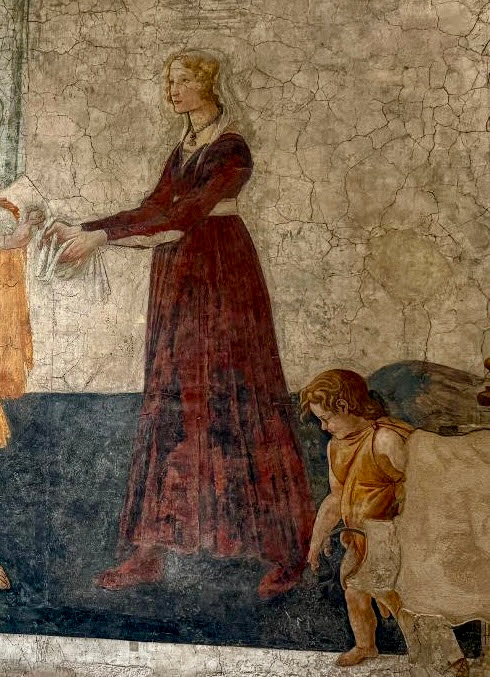
Aka Gioo degli Albizzi Receiving a Gift of Flowers from Venus, this fabulous fresco resides in the Louvre since 1882.

Found again in Italy in 1873, it is believed he used the patron’s daughter, possibly on her wedding engagement, for this allegorical image.

Botticelli’s name almost vanished from art circles until the late 19th century. At that time an esteem for the Florentine arts and culture renewed a look at his creations.

Initiation to Study – Two Young Ladies – Odilon Redon – French (1840-1916)

Bertrand-Jean Redon was a Symbolist painter, as well as a print maker.
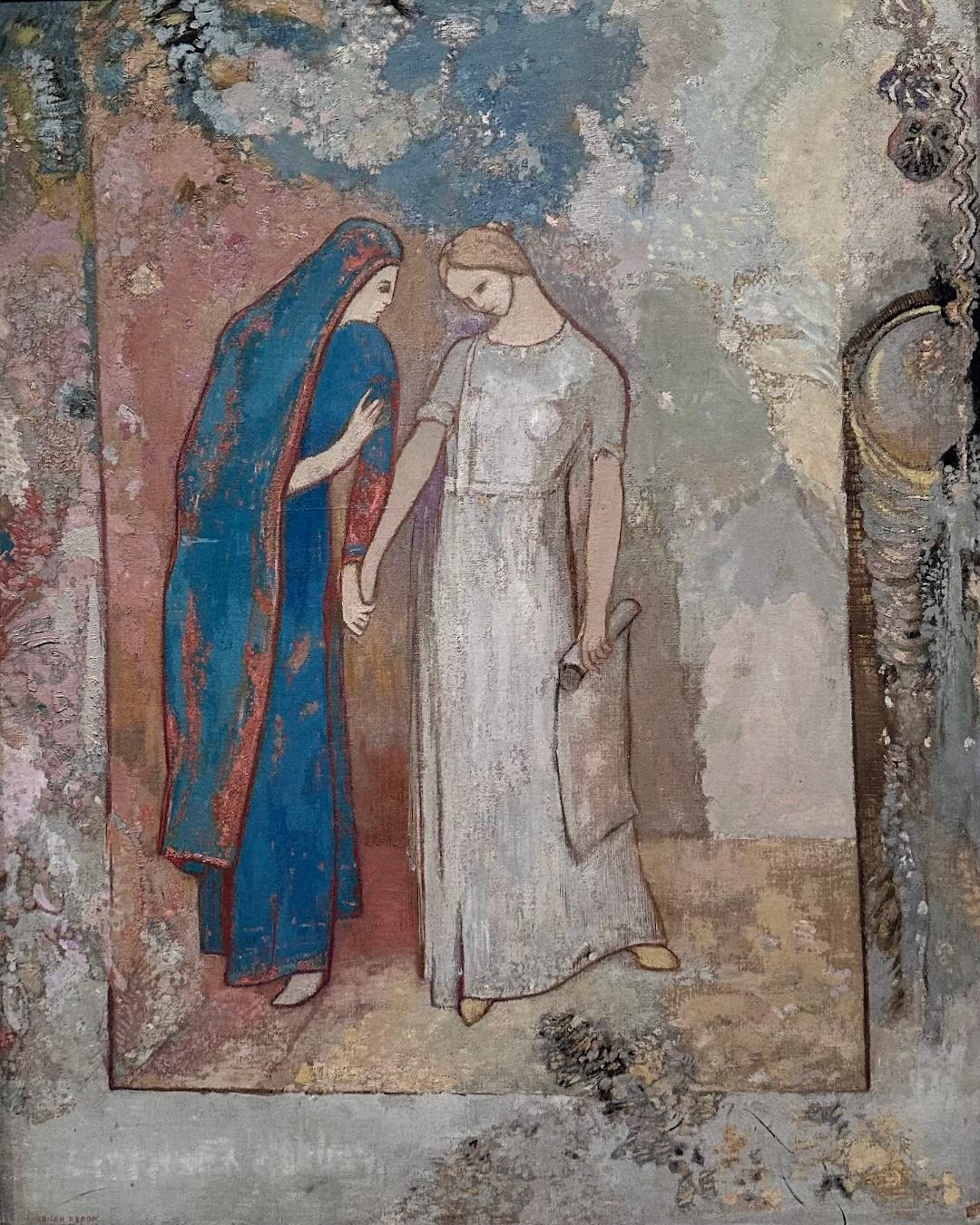
At 15, his father made him switch from drawing to architecture. Later, he enjoyed sculpture and was instructed in etching and lithography by Rodolphe Bresdin.

He joined the army during the Franco-Prussian War, putting his career on hold.

Redon was still mostly unknown until in 1884, when a novel by Joris-Karl Huysmans titled, À rebours, featured a debauched aristocrat who collected Redon’s drawings.

A catalogue of his etchings and lithographs, published in 1913, caused his popularity to increase.
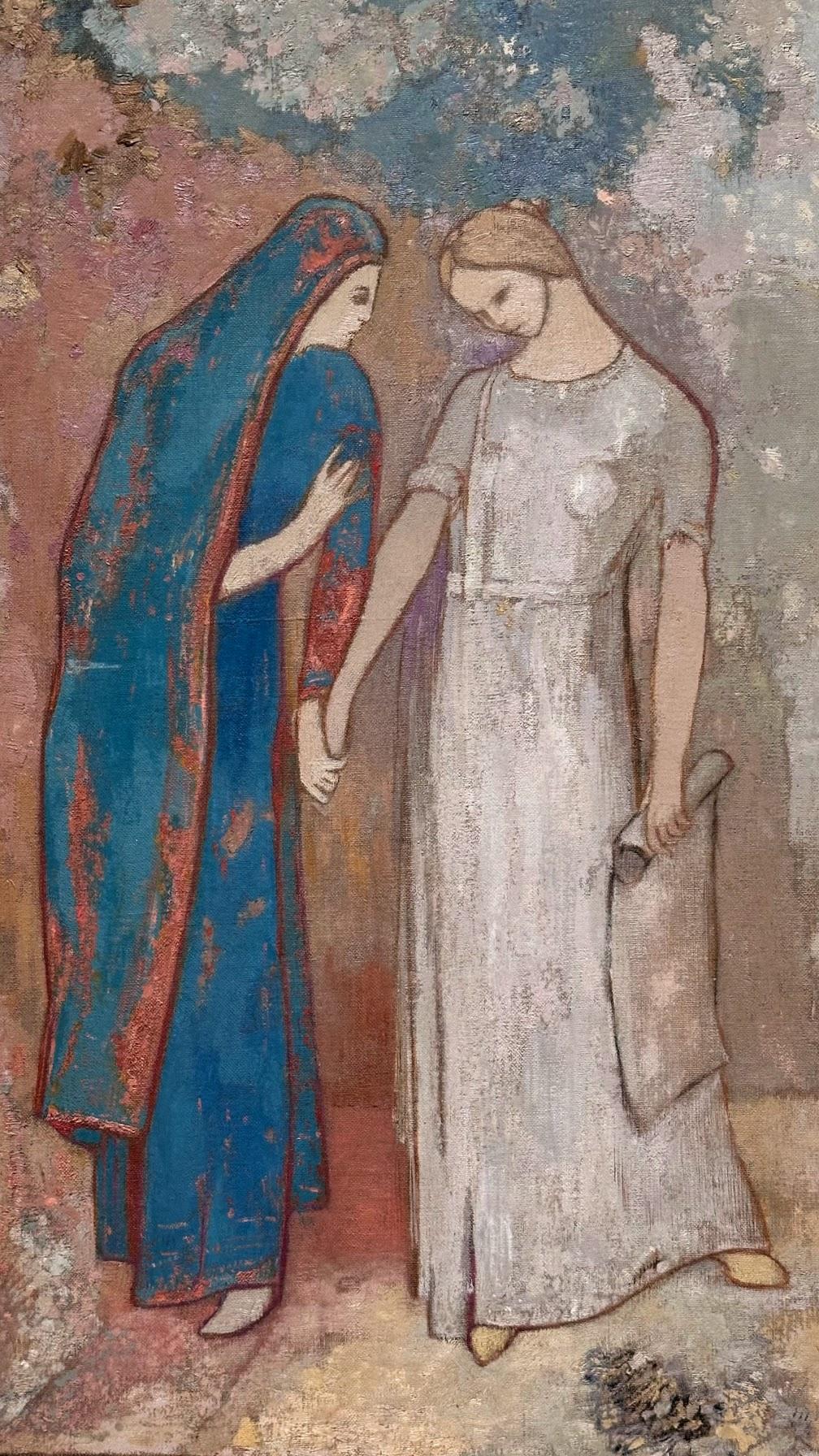
“My drawings inspire, and are not to be defined. They place us, as does music, in the ambiguous realm of the undetermined.” – REDON

The Lady Wears Black

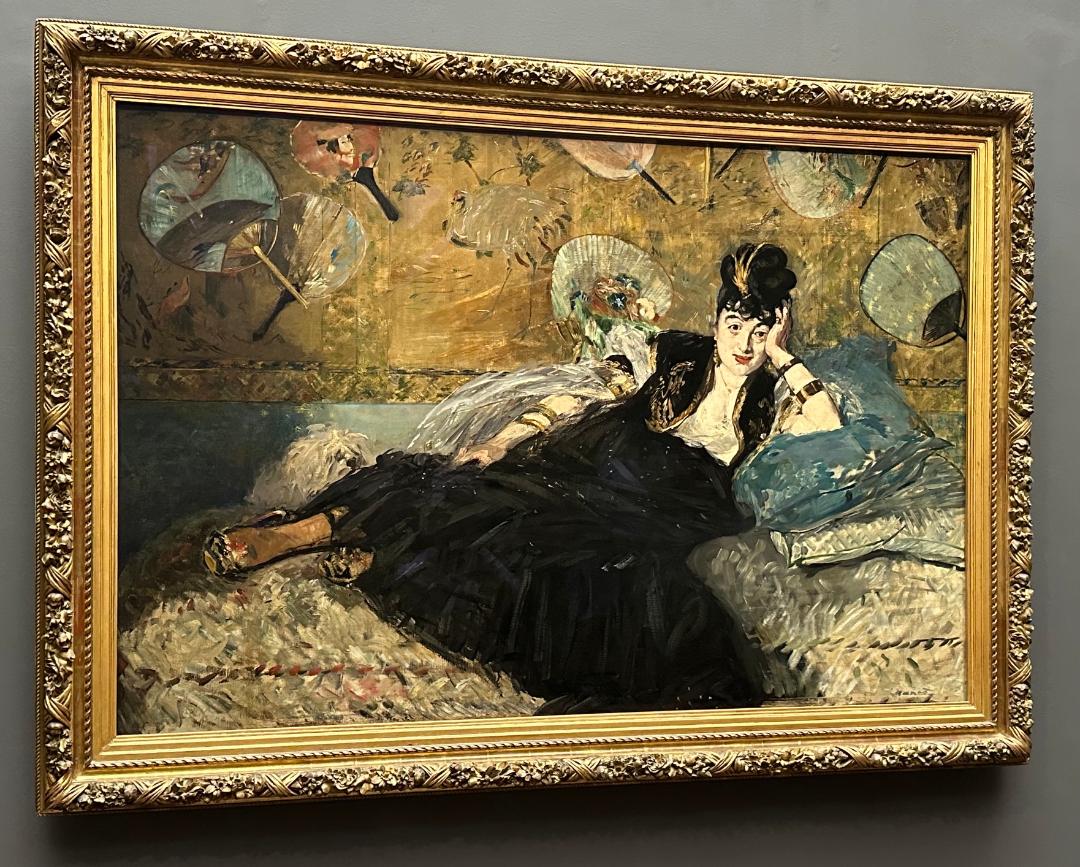
La Dame aux éventails  Édouard Manet – French – 1832-1883

He married Suzanne Leenhoff  in 1863. She modelled for at least 13 of his paintings, but not for Olympia. Exhibited at the 1865 Salon, this parody of the classic Venus created a vicious scandal, making Manet the de facto leader of the avant-garde.

Oriental Poppies – Laura Muntz Lyall – Canadian (1860-1930)

Born in England, Laura Muntz Lyall immigrated to Canada at the age of 9 years. The first Canadian artist to receive honourable mention at the Paris Salon, she is also the first female Canadian Impressionist artist to have her work become part of the National Gallery of Canada.
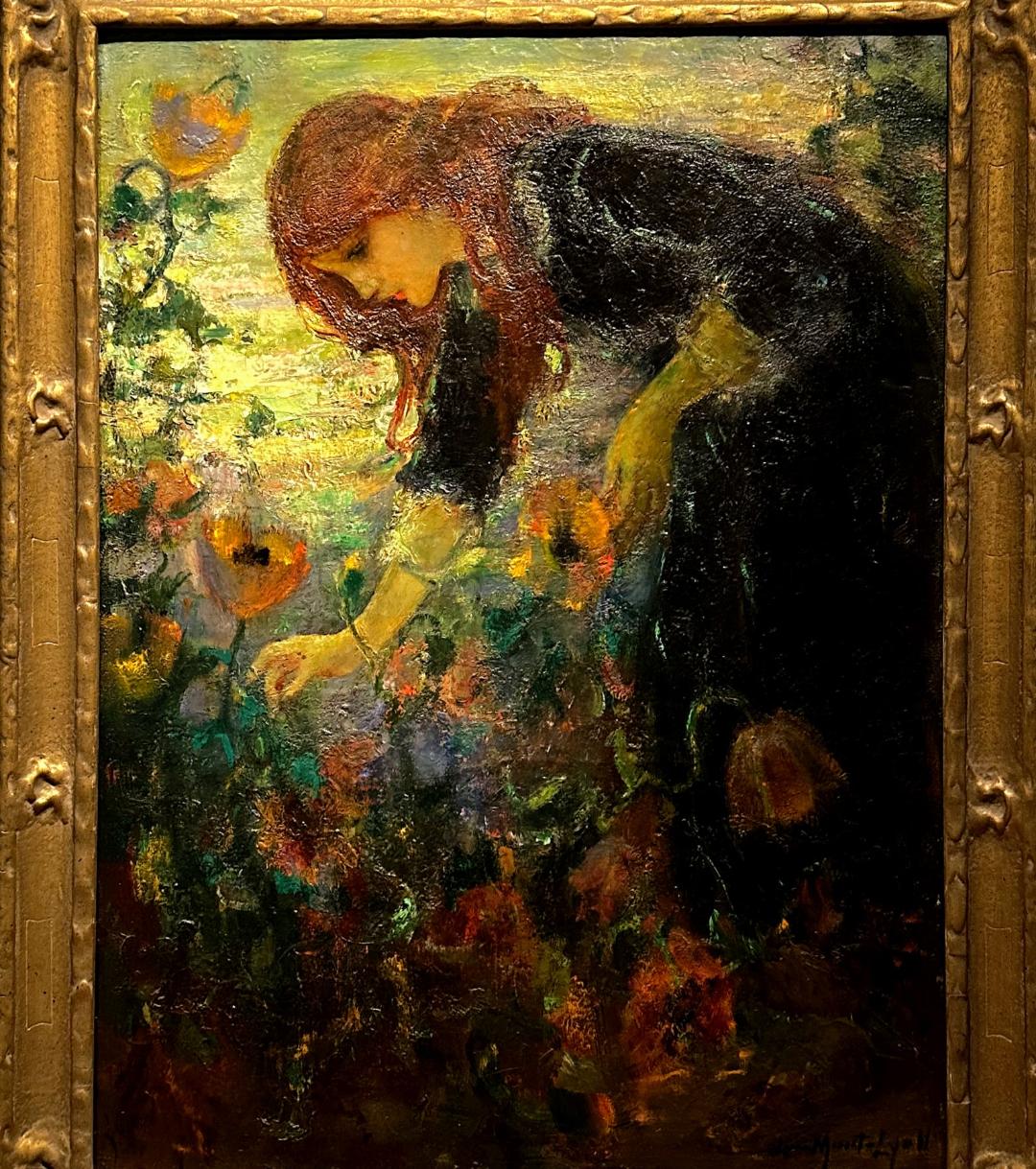
Oil on Canvas – circa 1915

Laura Muntz-Lyall studied in London, Toronto and Paris. She supported herself in Paris by teaching English. Prior to moving to Montreal in 1906, where she ran a prominent studio at Beaver Hall Square, she taught art at Toronto’s Havargal College.

The Red Gown

The Jewish Bride aka Isaac and Rebecca – Rembrandt van Rijn (1606-1609)

Rembrandt attended Leiden University. Here he studied literature and history. He learned painting from Jacob Van Swanenburgh, then apprenticed in Amsterdam with history painter Pieter Lastman.
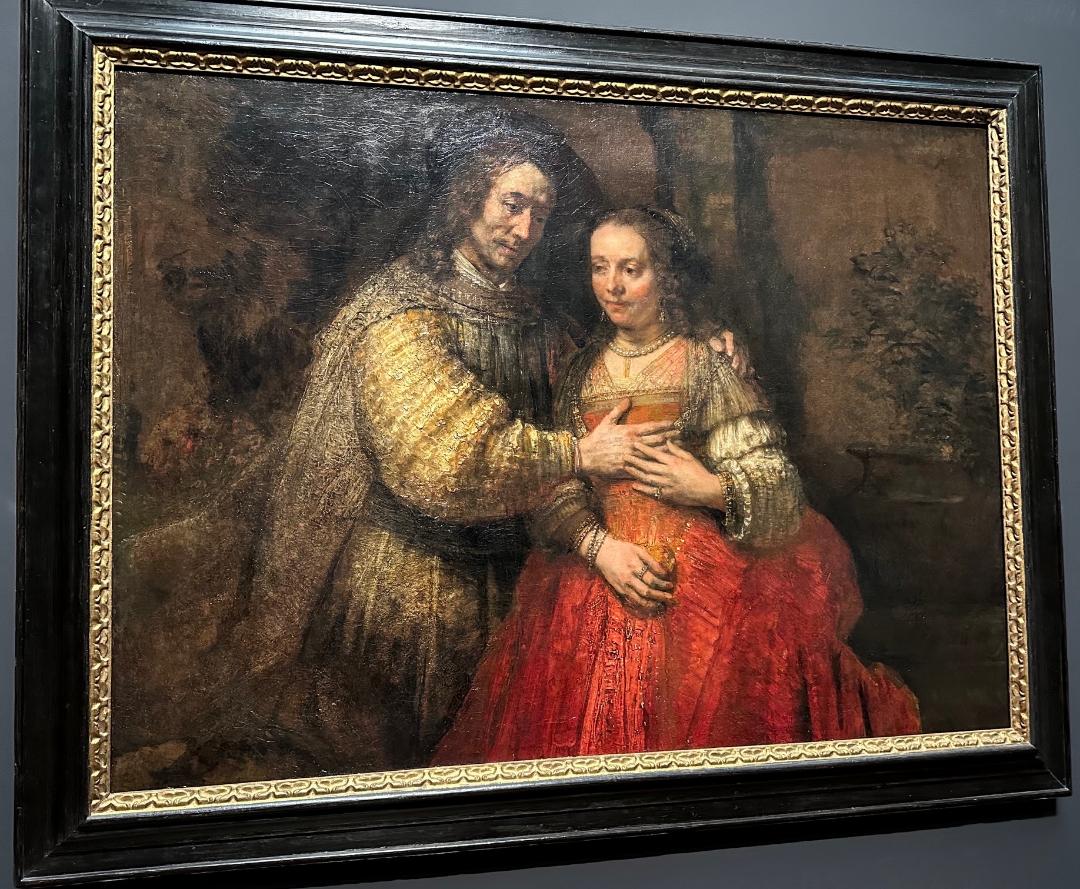
Oil on Canvas – Circa 1665-69

Later in his life, Rembrandt’s wife and some of their children died, leaving him in a state of loss. Demand for his work declined, and he declared bankruptcy.

This canvas, which he said brought him to tears, was painted later in Rembrandt’s career, when he was considered in artistic decline.

Ironically, this era yielded many of his most revered works, when rich earth tones ran from thinly painted areas to thick impasto.
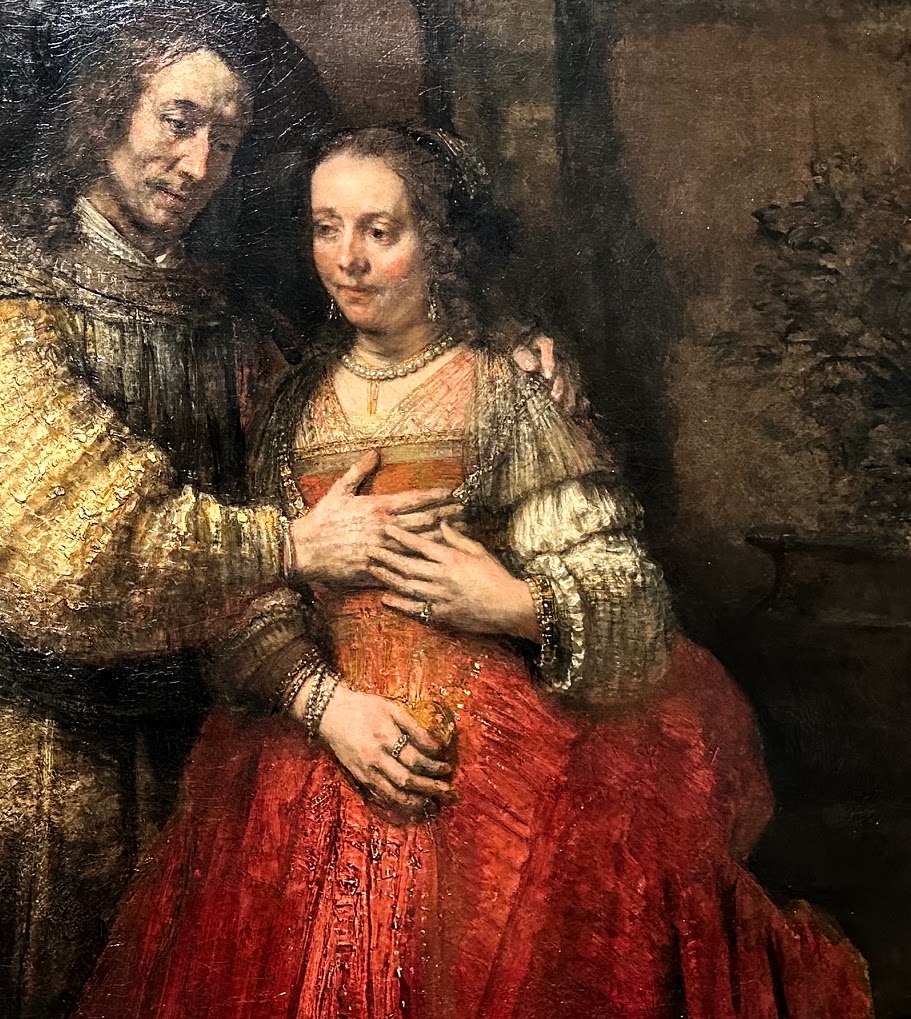
“…Hang this picture in a bright light and in such a manner that it can be viewed from a distance. It will then sparkle at its best. “ – Rembrandt

I’m Half Sick of Shadows, Said the Lady of Shalott – John William Waterhouse – English (1849-1917)

John William Waterhouse was born in Rome, prior to his parents moving back to England in the 1850’s. His paintings’ early classical themes gave way to genre paintings in the late 1870’s.
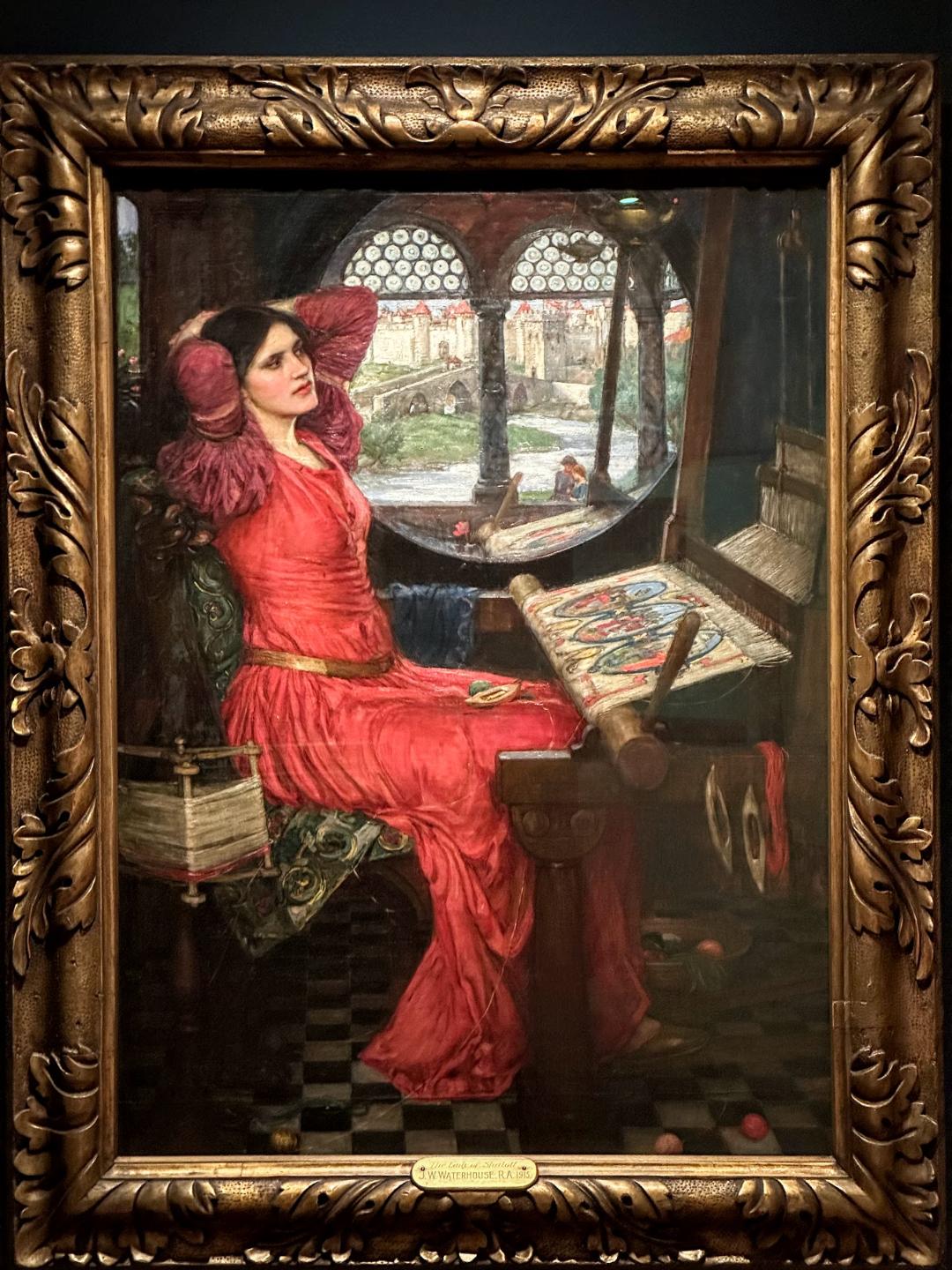
Oil on Canvas – 1915

By 1888, Waterhouse’s paintings reveal a growing interest in Pre-Raphaelite themes. He developed a penchant for ladies of tragic circumstance or femmes fatales. In 1901 he joined the St John’s Wood Arts Club. Here he served on the Art School advisory council.
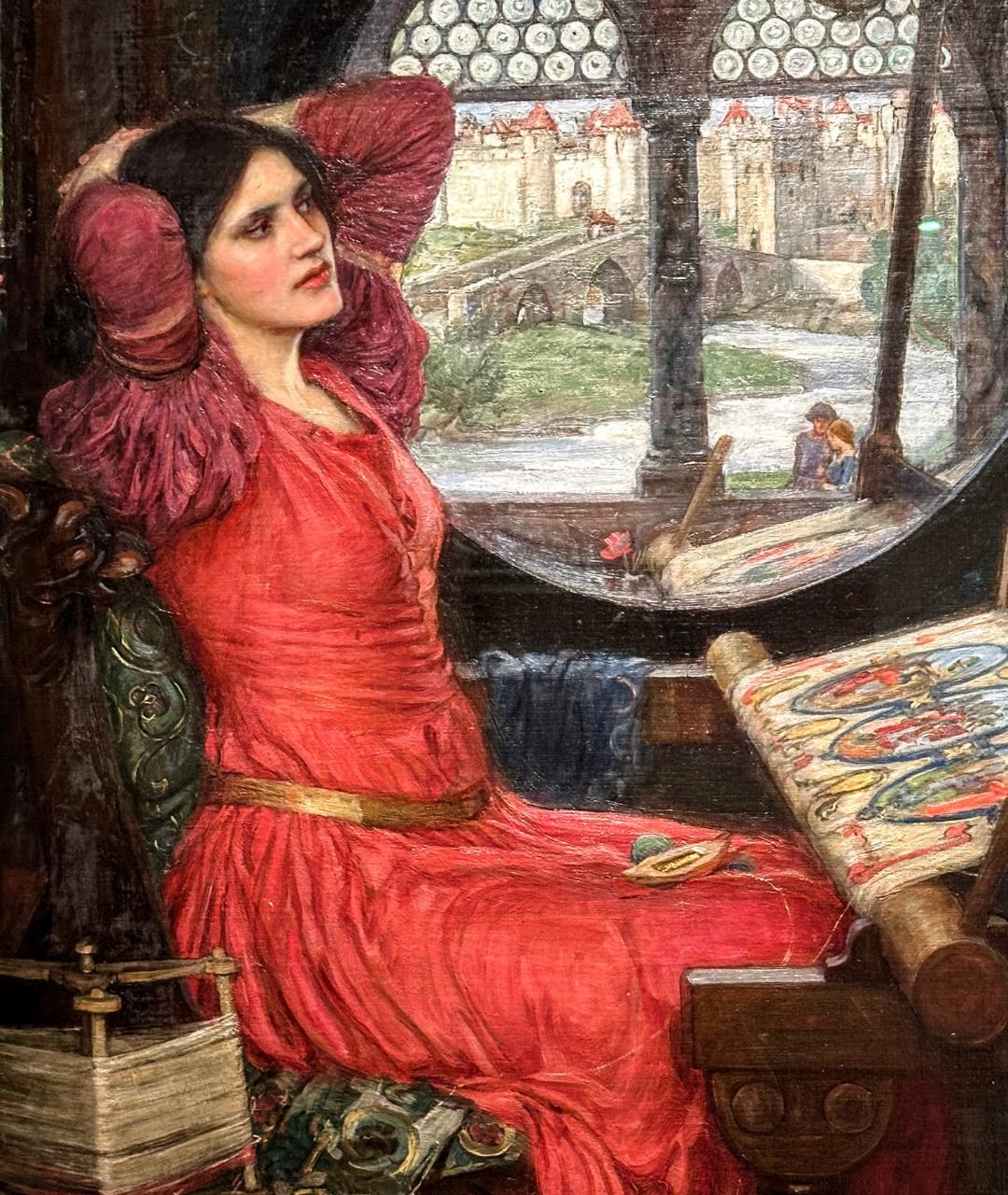
Based on Lord Alfred Tennyson’s poem – “The Lady of Shalott” is from the legends of King Arthur and his court at Camelot. The Lady of Shalott, aka Elaine Astolat, suffers a curse. Trapped in a tower, she may not look out the window. She observe’s the world through a window-facing mirror, weaving what she sees.

Waterhouse and his wife, Esther, married in 1883. She outlived him by 27 years.

“I’m Half Sick of Shadows, Said the Lady of Shalott” is inspired by the first 2 verses in part II.


PART II

No time hath she to sport and play:
A charmed web she weaves away.
A curse is on her, if she stay
Her weaving, either night or day,
To look down to Camelot.
She knows not what the curse may be;
Therefore she weaveth steadily,
Therefore no other care hath she,
The Lady of Shalott.

But in her web she still delights
To weave the mirror's magic sights,
For often thro' the silent nights
A funeral with plumes and lights
And music came from Camelot:
Or when the moon was overhead
Came two young lovers lately wed;
"I'm half sick of shadows," said
The Lady of Shalott.

Read entire poem at the POETRY FOUNDATION.

Roberta Eaton Cheadle

A prolific creator of art, poetry and prose, Robbie is the Bloggers’ Blogger. Her 2 blogs Roberta Writes and Robbie’s Inspiration will not just entertain, but sweep you around the blogiverse, where she shares a multitude of topics with her many blog pals. – Resa McConaghy
A Big Thank You to Robbie for joining me with her contribution of photos.

Photos of: Jeune Femme se Poudrant, Portrait of Clara Alewijn, Venus and the Three Graces Presenting Gifts to a Young Woman, La Dame aux éventails, The Jewish Bride aka Isaac and Rebecca -Are All Taken by and ©️ Roberta Eaton Cheadle.

About the Header Image
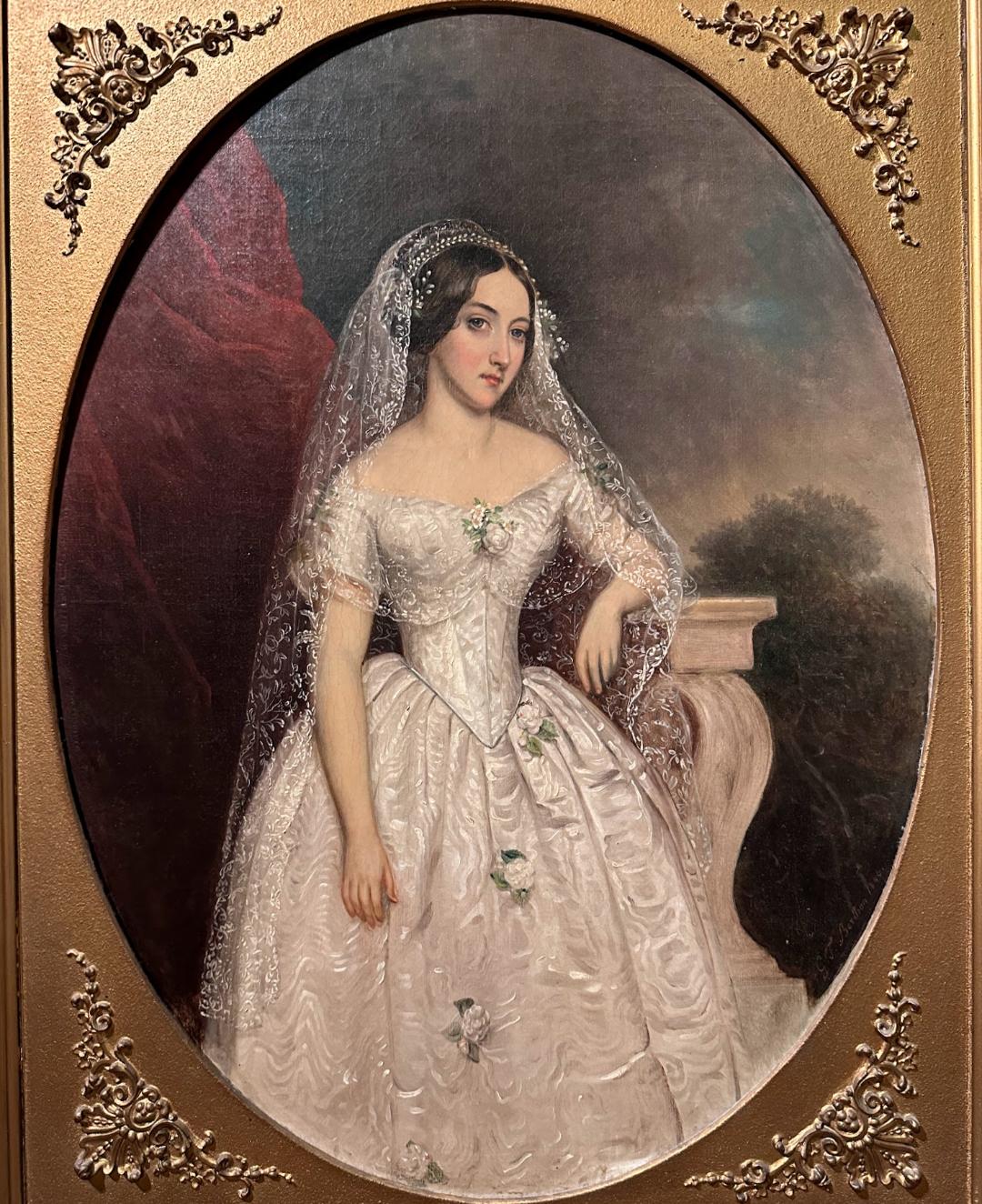
Oil on canvas – by George Théodore Berthon (1846)

Harriet Boulton Smith (1825-1909) willed her art collection and residence, The Grange – “to serve as the first home of the Art Museum of Toronto. Built in 1817, the Grange is a national historic site,” – now part of the AGO

Please click on the below painting by Louise-Adéone Drölling, to view all research links.
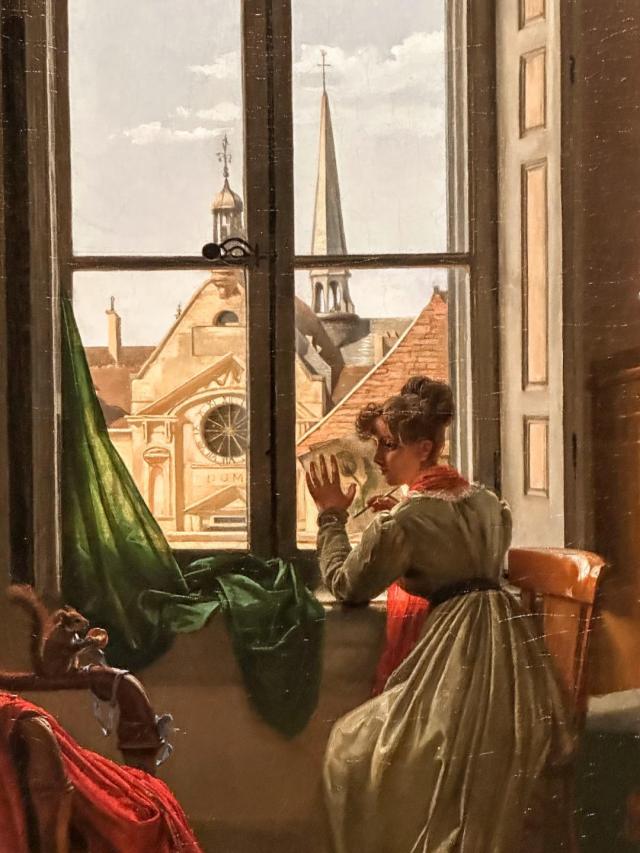
NO AI was used in the research or preparation of this post.
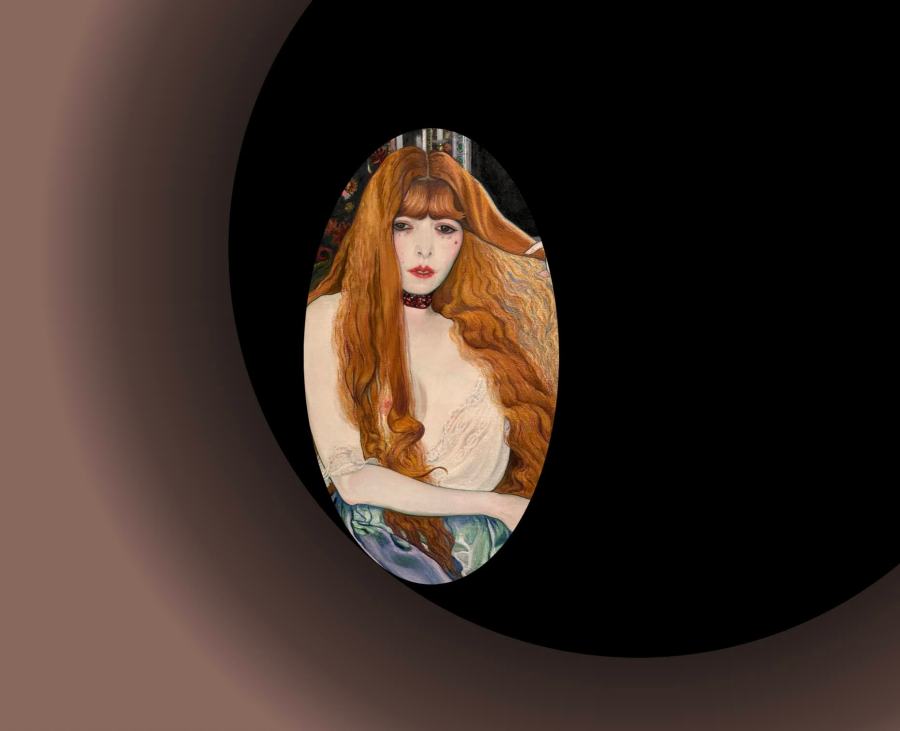
All Photos not credited to Roberta Eaton Cheadle are taken by and ©️ Resa McConaghy at various times at the Art Gallery of Ontario.

Sad Café III

The painting mesmerized. Couldn’t tear myself away. In a spell, my thoughts were of Holly and her Sad Café.

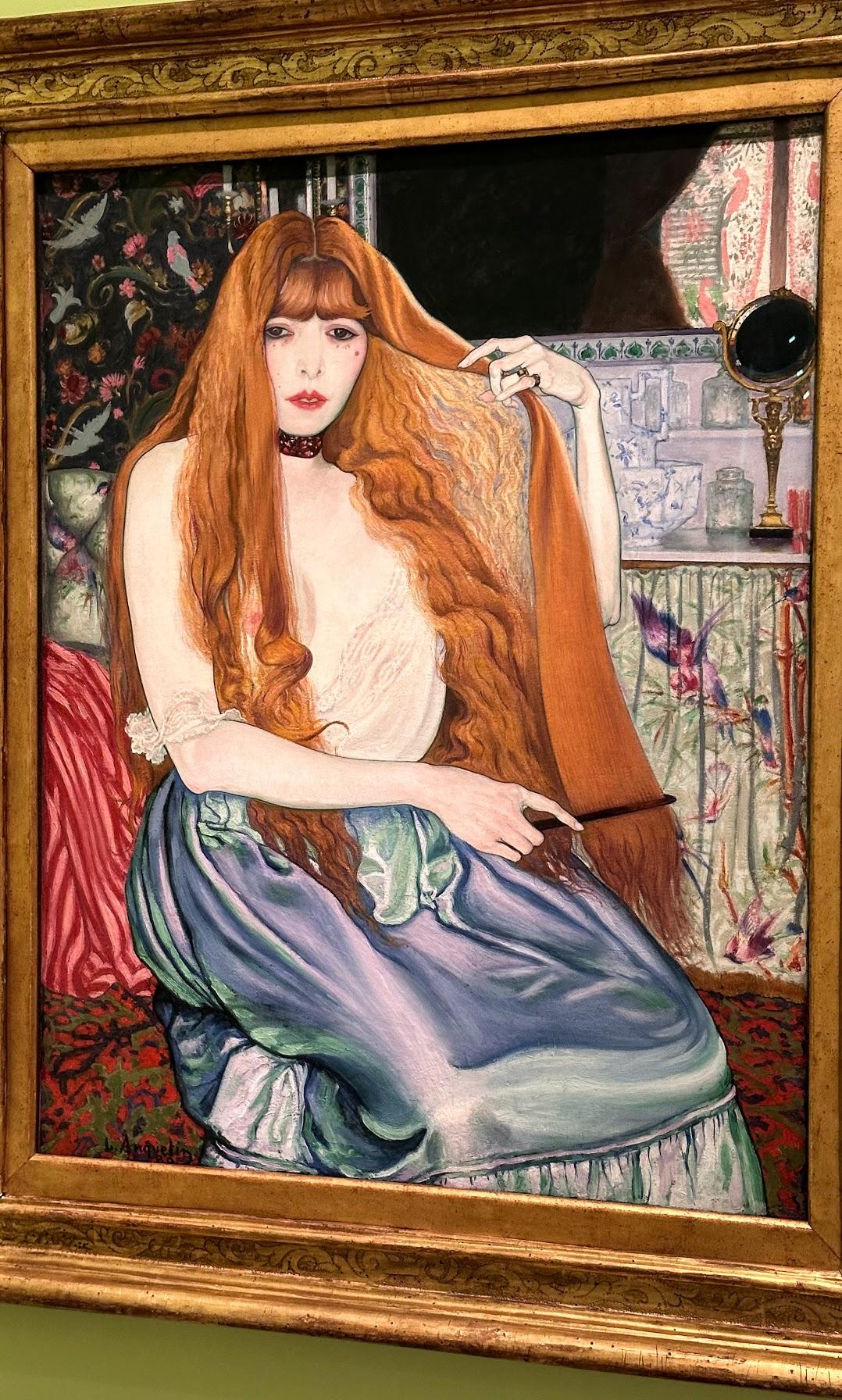
Oil on canvas (1889)
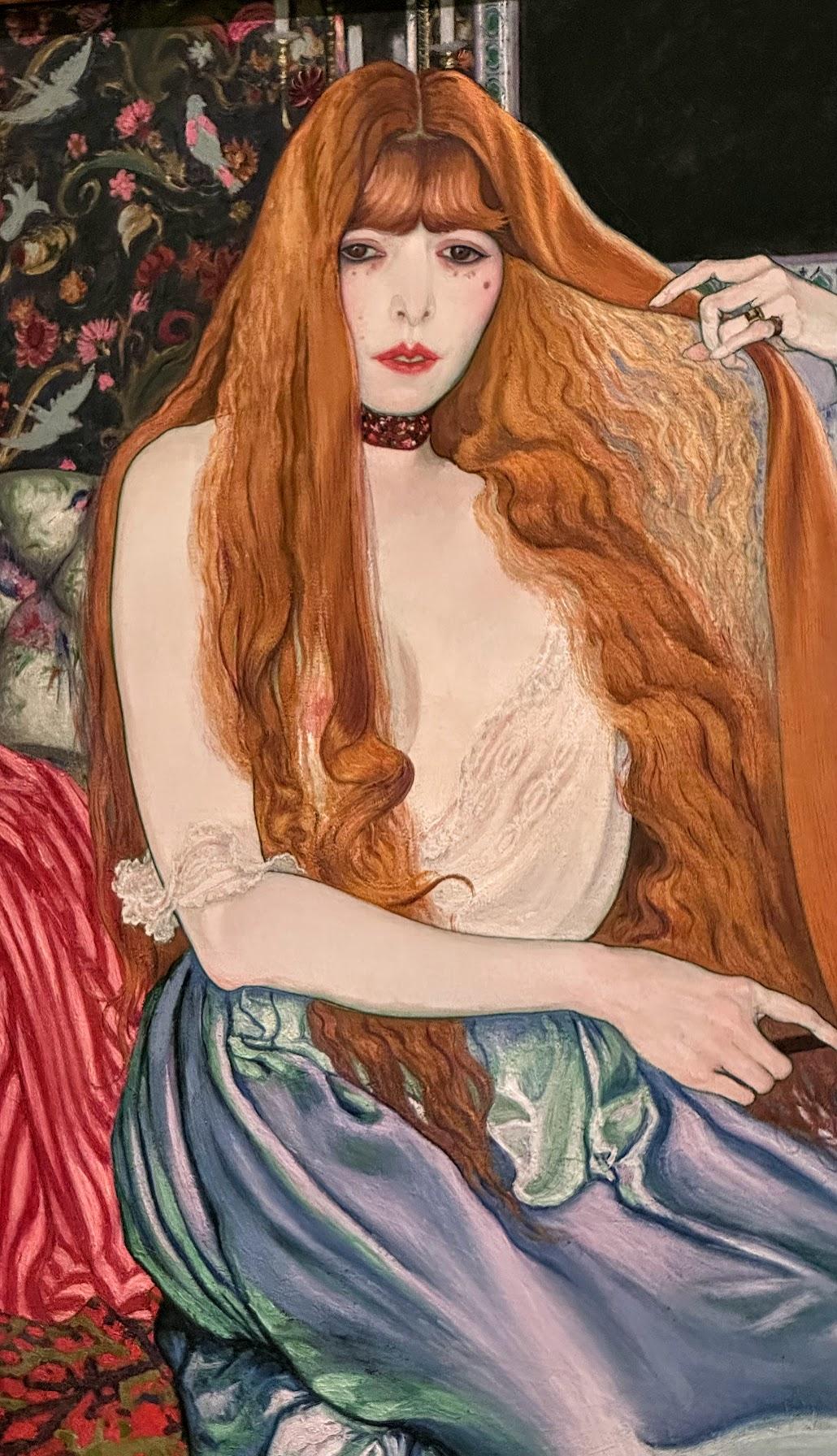
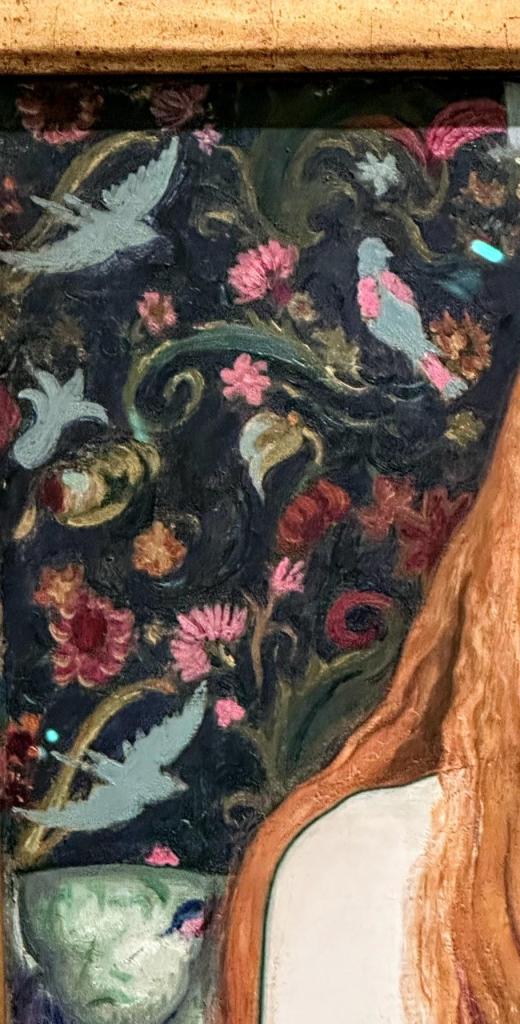
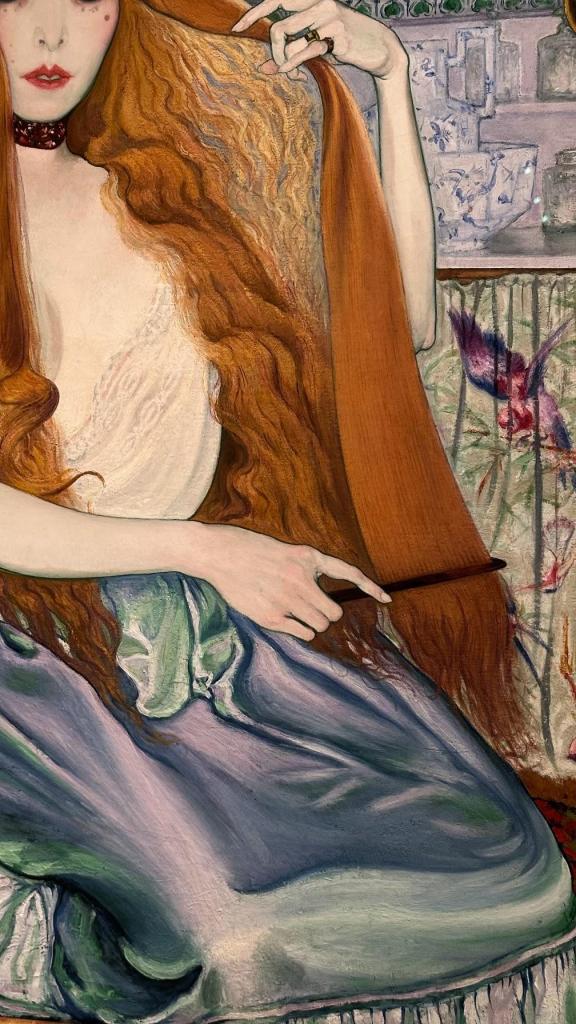
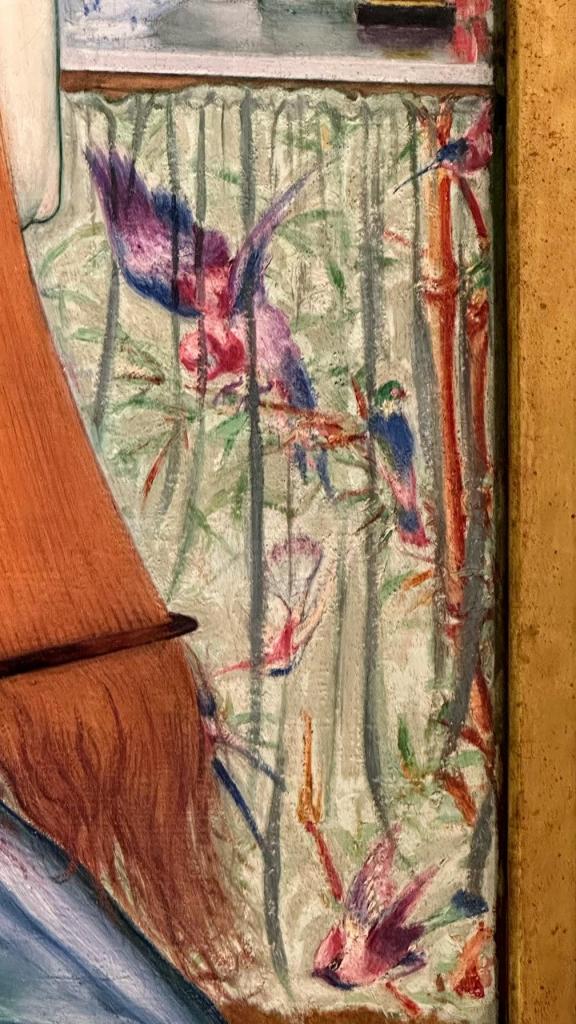
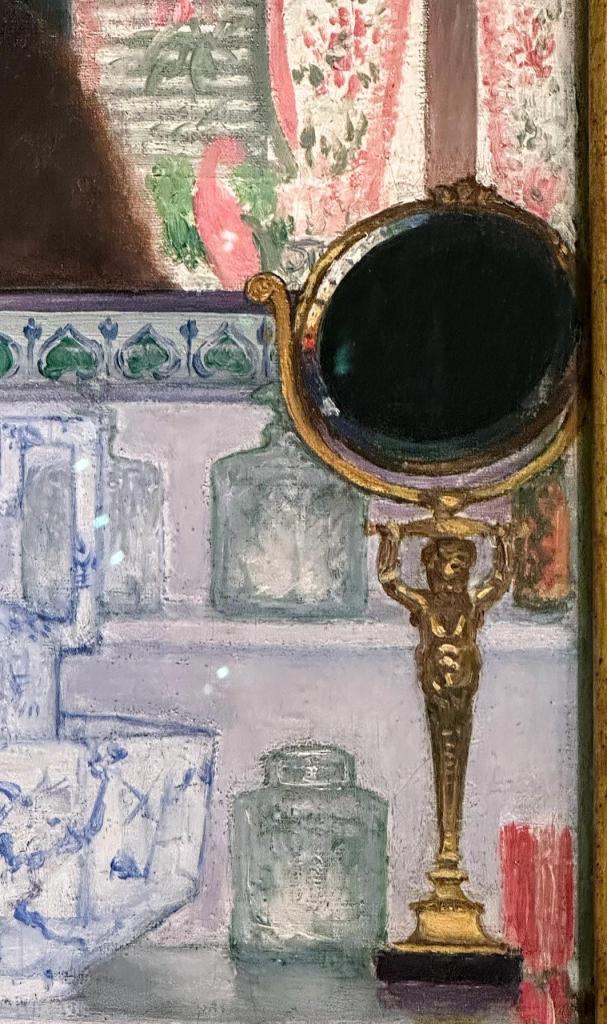
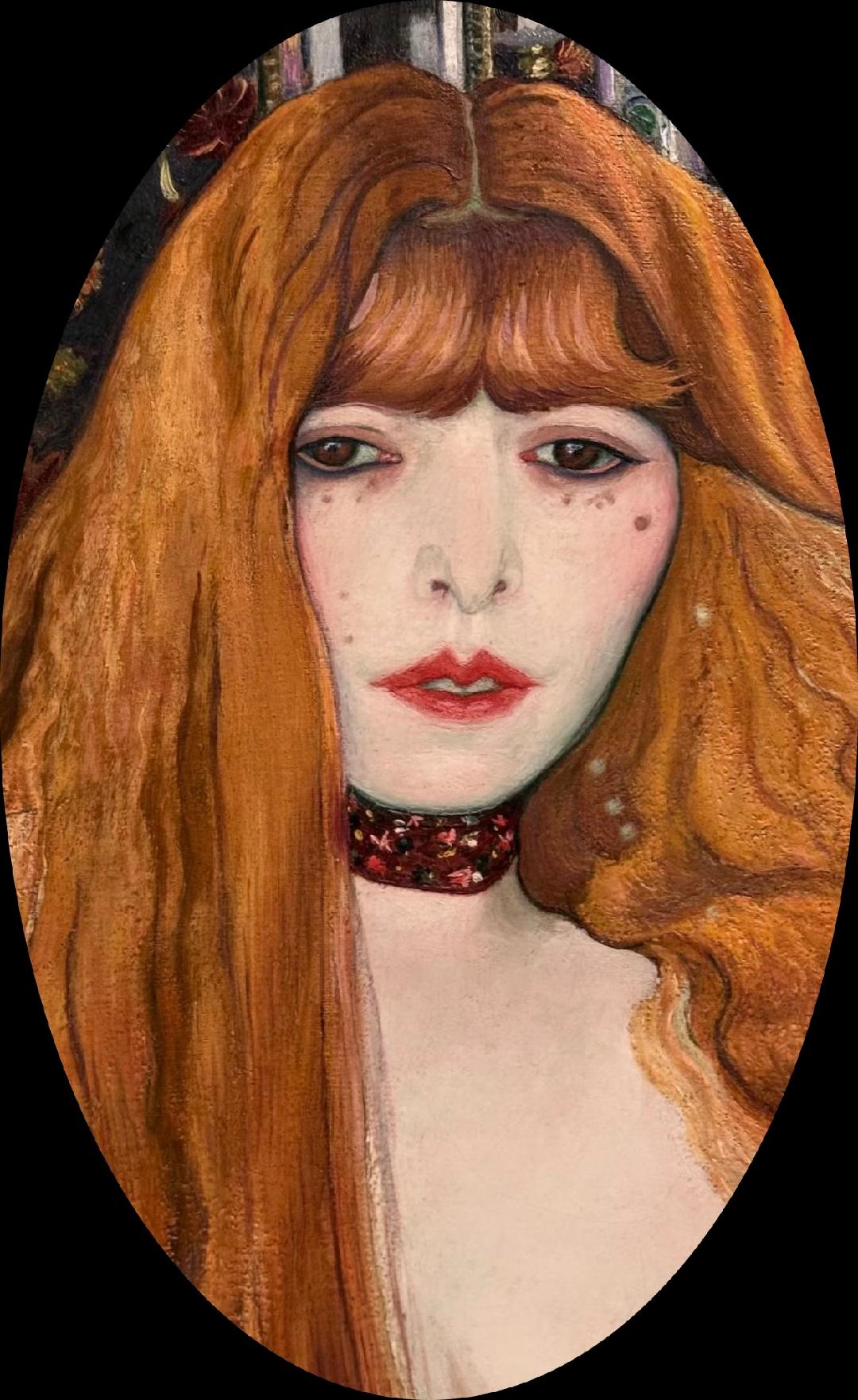
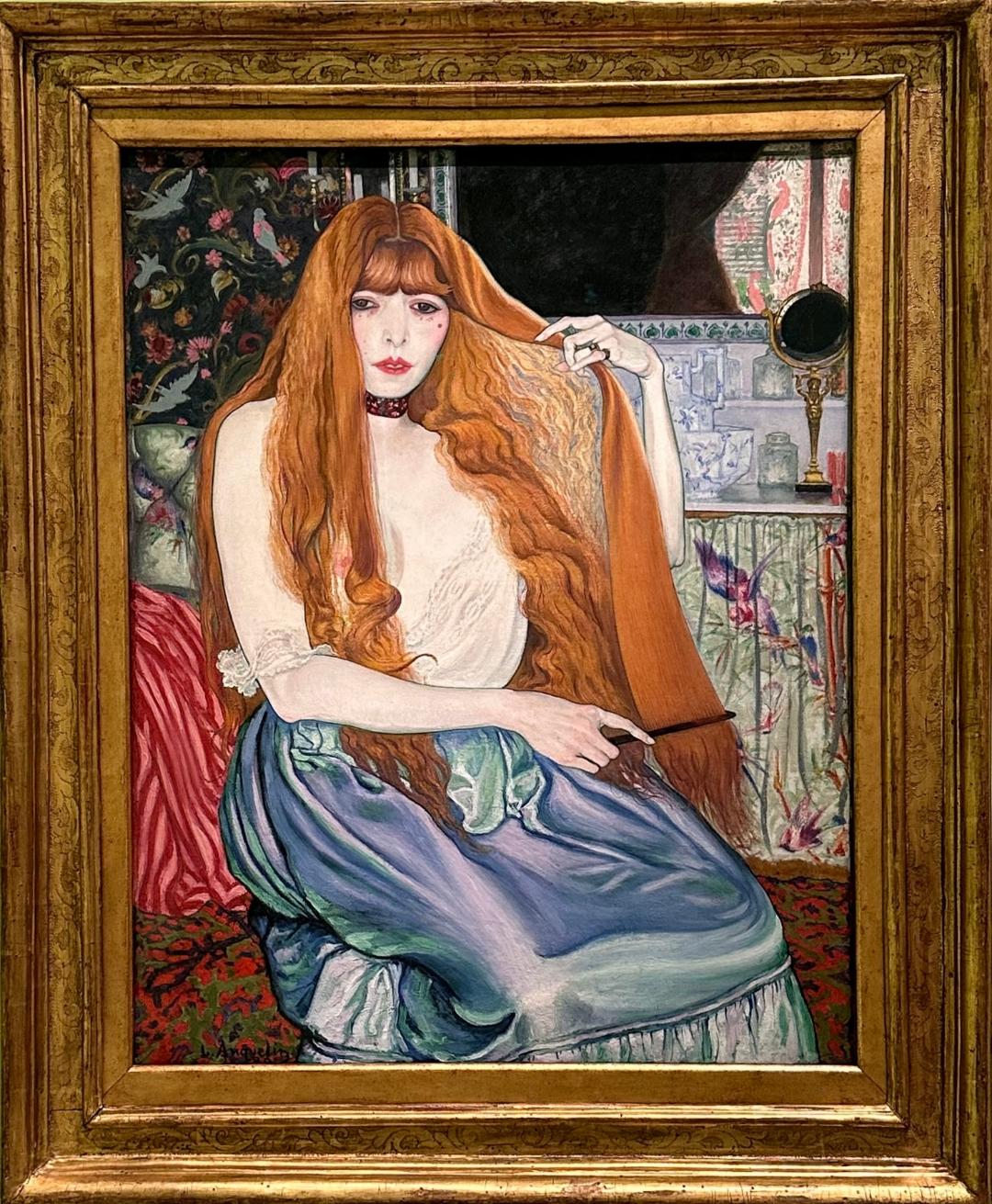
Woman at Her Toilette : Louis Anquetin – French (1861-1932)

It was in the Salon titled Post Impressionism at the AGO. I was floating after having just seen Monet’s Water Lilies. Then I saw her, combing her long red hair.

At my mirror I braid silver thread through my hair.

“- though images of women dressing, are traditional within European art, the figure’s direct gaze and pronounced makeup suggest the she is a courtesan, a sex worker who catered to upper class patrons.

My skin smells of yesterday’s perfume mingled with the haunting presence of strong cologne and the sweet scent of sweat and rope.

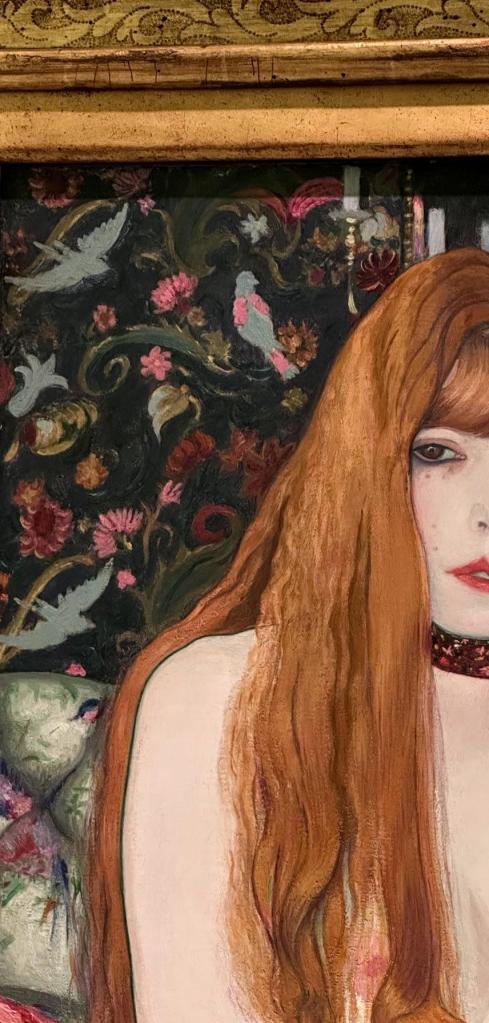
The details in this painting are luscious. I got in with the camera, as close as was allowed. The slideshow highlights shots of this Cloisonnism style work of art. The details are “Imitating medieval stained glass windows, cloisonné enamel and Japanese woodcut prints.”

“Cloisonnism features flat areas of solid colour enclosed by curving outlines, such as the green contour that encircles the woman’s porcelain skin.”

Cloisonnism was a bold new style invented by Anquetin, with his friend Émile Bernard.

The Sad Café


I’ve been here forever

hidden away in fantasies,

dimly lit rooms where

moonbeams caper blithely

over the river Seine.

All of my memories are strangers,

they come and go.

I want them to know

the smokey purple of lunar tides,

the bittersweet of Rose red.

They linger on lamp lit streets,

shadows on tiger paws.


©️ Holly Rene Hunter

… intoxicated by long red hair

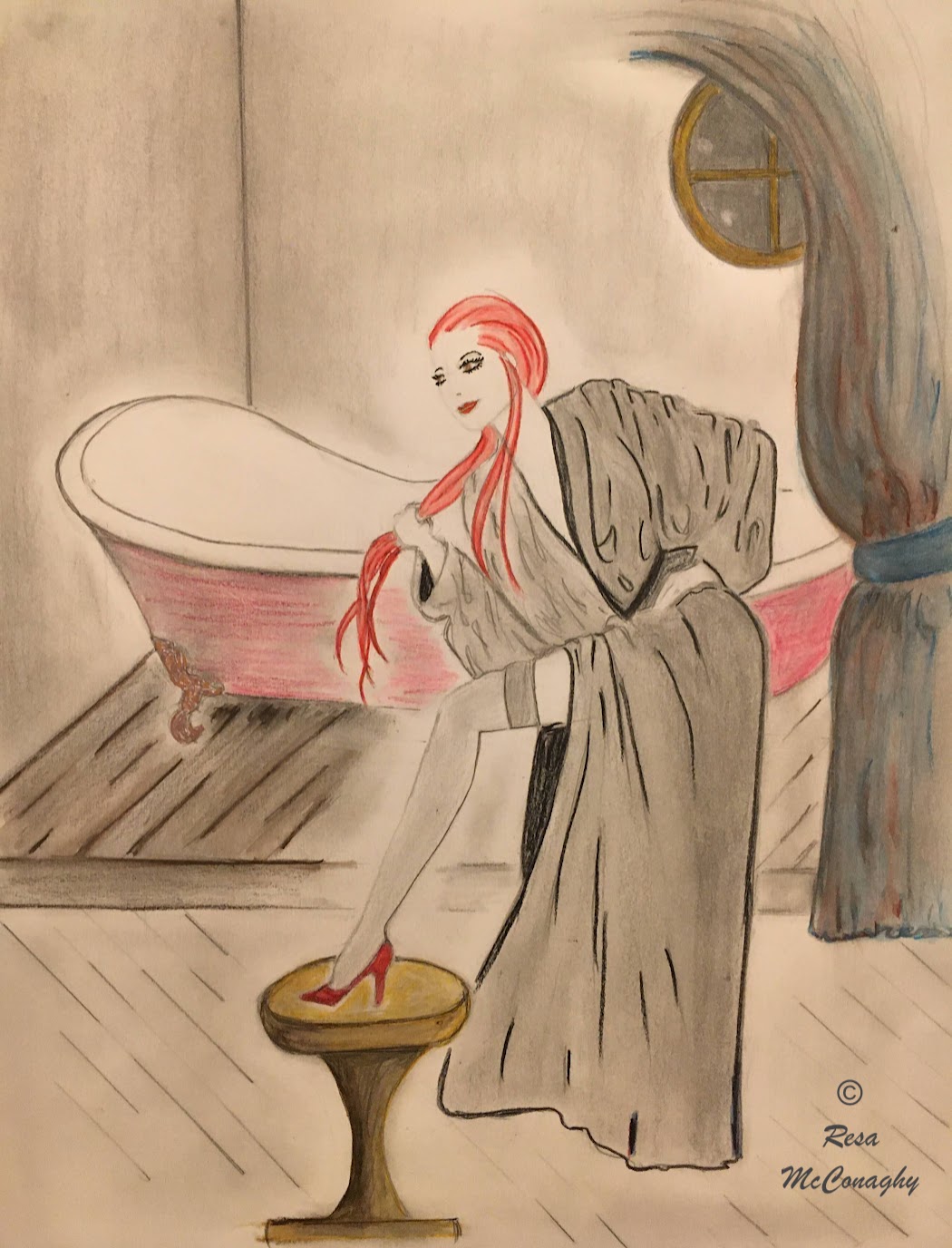
Since the first Sad Café poem I drew a picture to, my heroine has had long red hair.

At the mirror I brush my hair and pull it back with a silver plated comb, slip into smoky seamed stockings

All Pullquotes are from ©️Sad Café poems by Holly Rene Hunter

Photos ©️ – of Woman at Her Toilette taken by Resa McConaghy

Art Gallery of Ontario, Toronto, Canada

Thank you Holly!

Visit Holly on her blog to read all her Sad Café poems and all her sublime poetry.

Source: Art Gallery of Ontario – Quotes in bold italics are from the plaquard beside the painting.

Tissot – 2

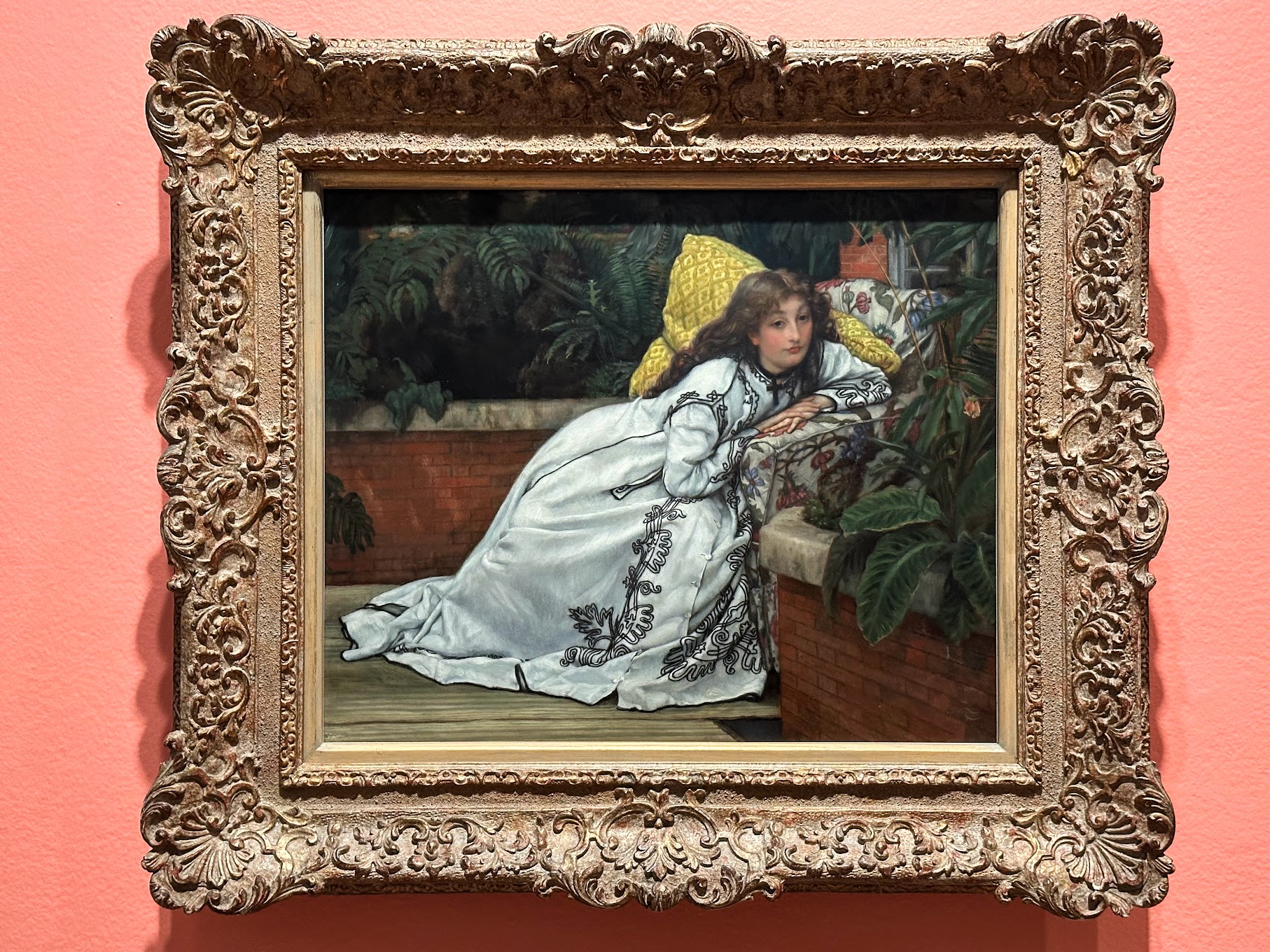
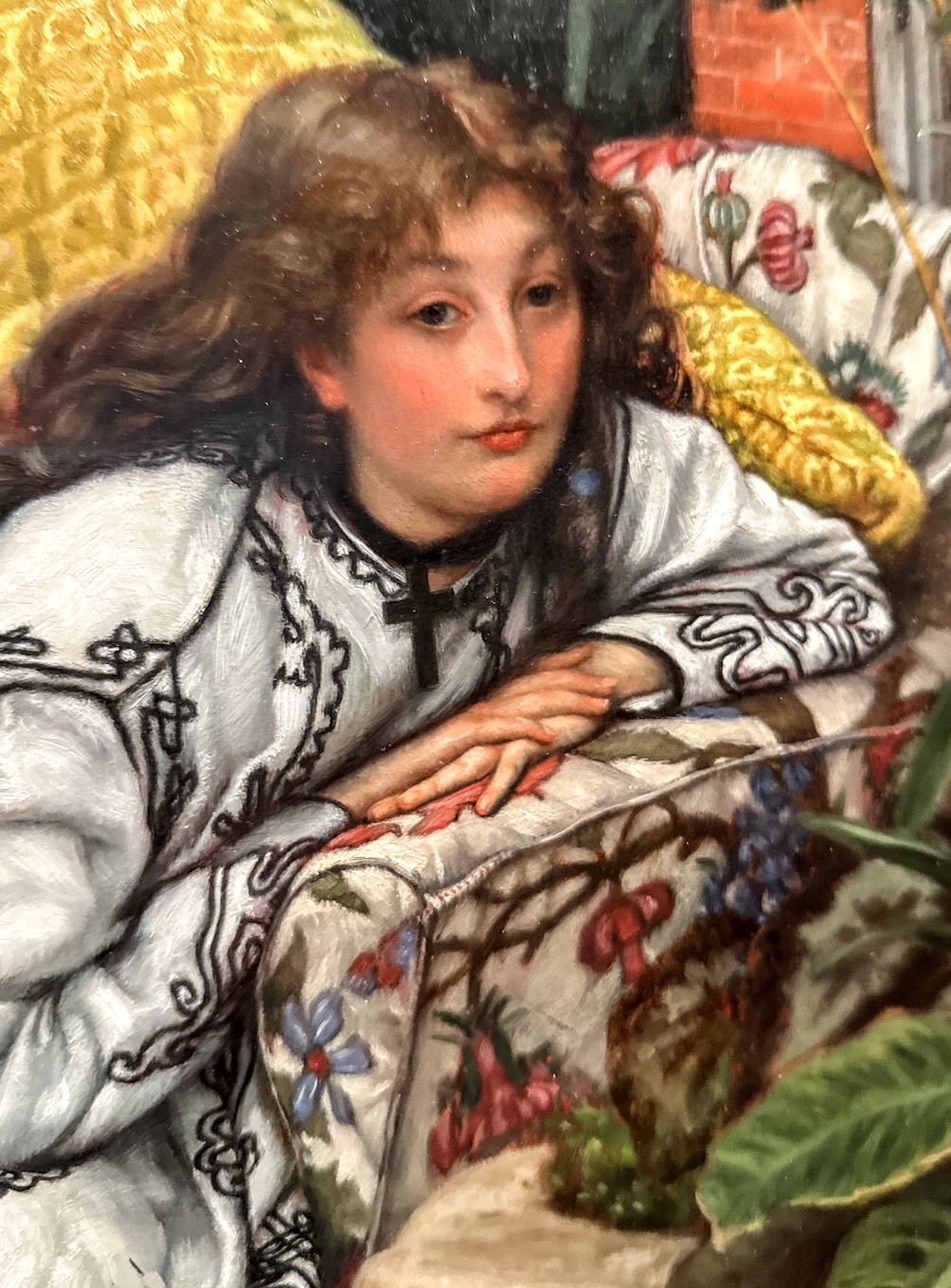
This is the painting that lured me to the exhibit.

The Convalescent -1872

This young woman’s housecoat, patterned yellow pillow and tropical plants were introduced to Europe via colonial conquests in the southern hemisphere.

Juxtaposed to these items that signify the speed of travel, trade and fashion are the middle class woman’s long slow hours of recuperating health.

The Seasons

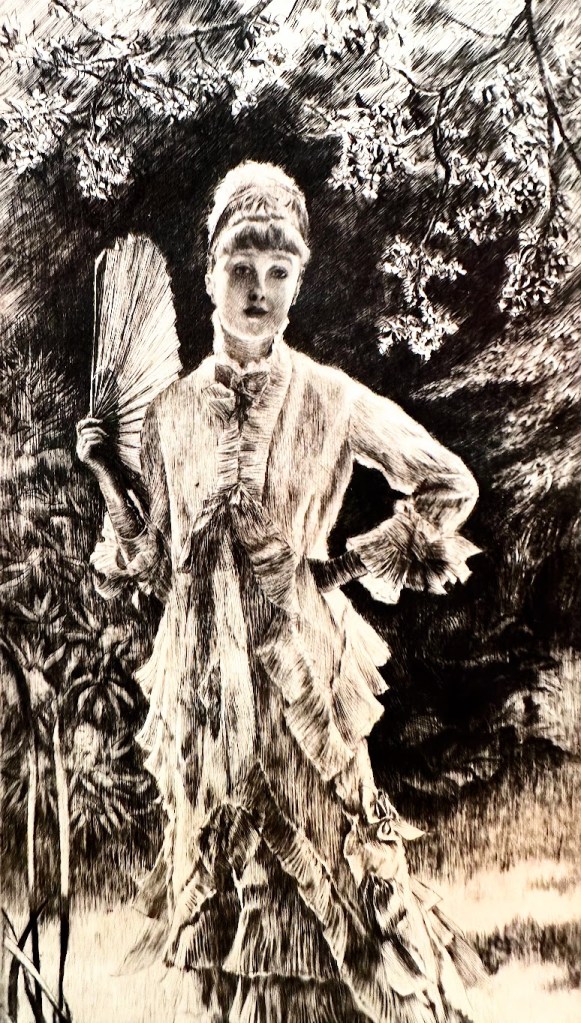
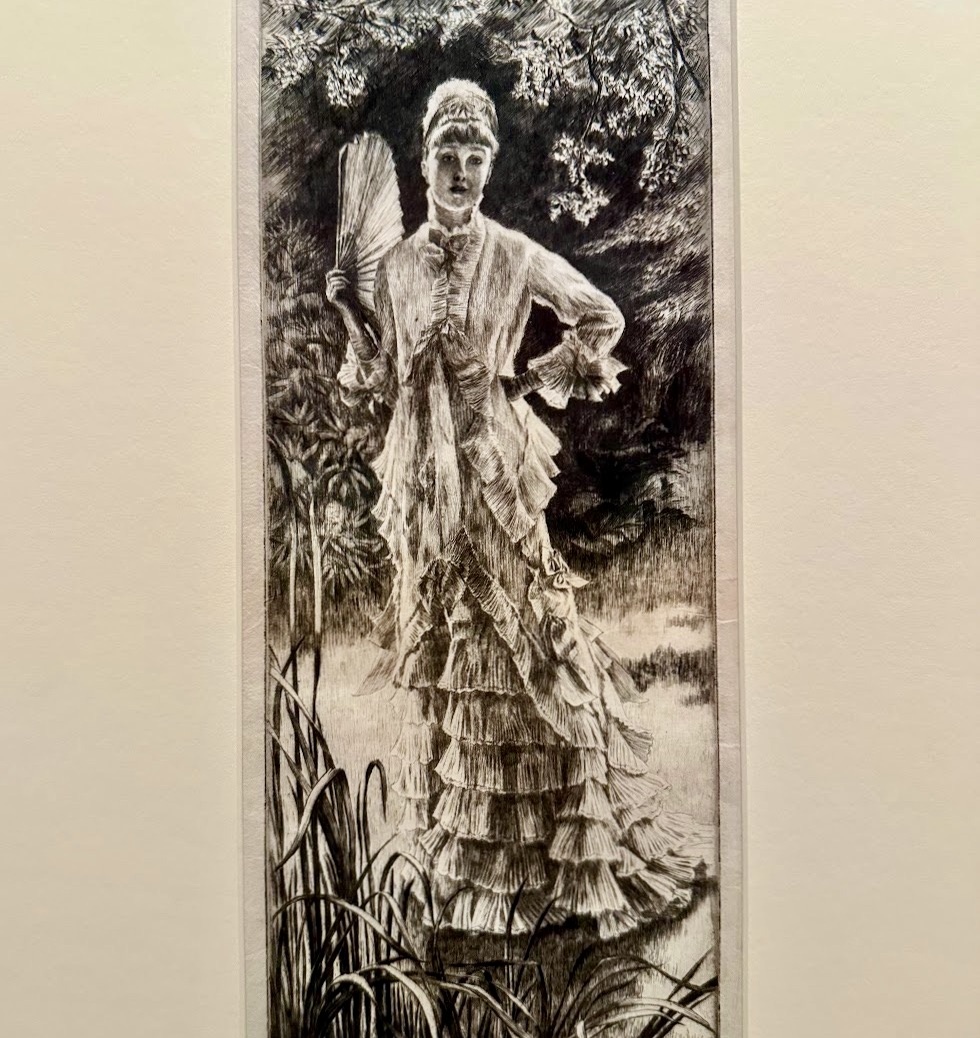
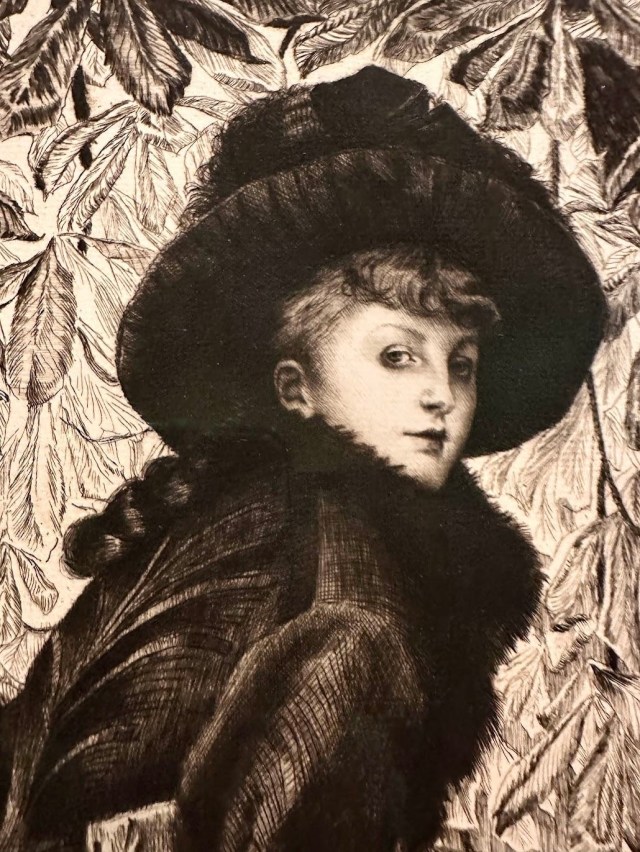
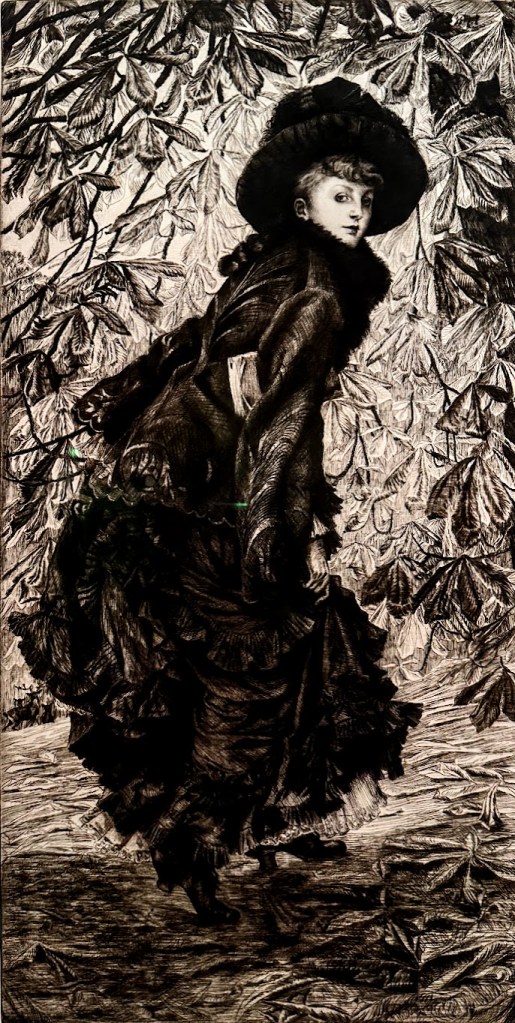
Tissot drew on the art historical tradition of women and natural cycles; ie. young women and spring.

Ippitsusai Buncho (Japanese, active 1765 – 1792), Kabuki. Segawa Kikunojo in female role of Ohatsu in“Yoni Osaka Nitsuino Myoto”

The elongated form, and stylized blades of grass in the foreground shows the influence of Japanese woodblock prints.

Spring Morning (1878)
Spring (1878)

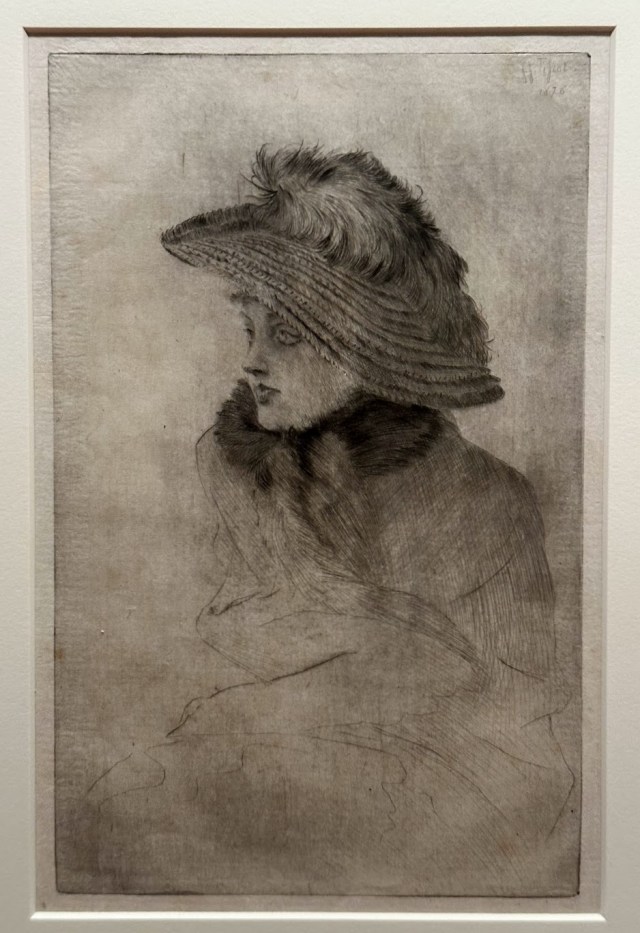
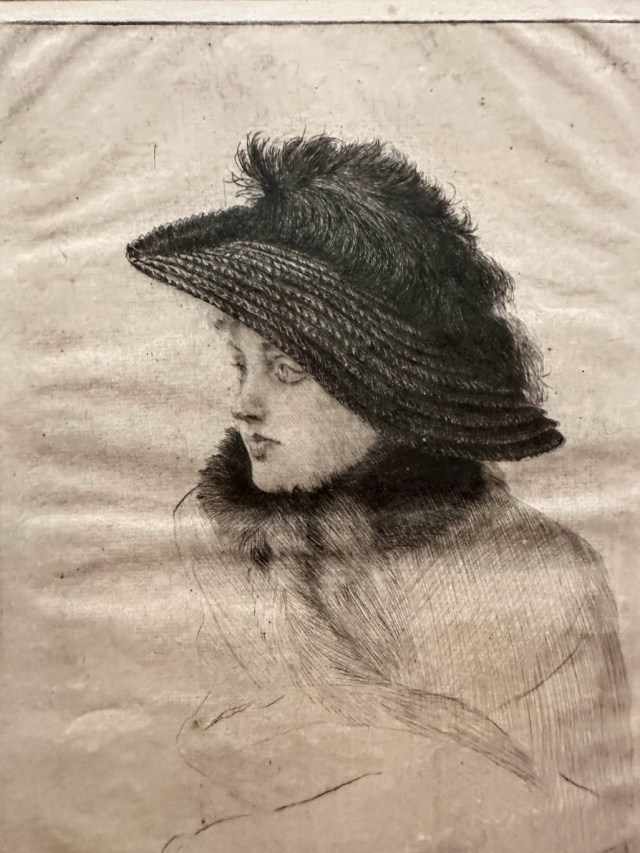
Limiting the number of prints to a plate (which adds value through scarcity) was unusual prior to the second half of the 1800’s.

The simplest way to cancel a run is to rut the metal plate with deep lines.

PRINTS MADE BEFORE & AFTER PLATE CANCELLATION
Summer (1878)
October (1878)

“He also depicted women in current fashions, presenting them as both timeless and contemporary.”

Despite the racial diversity of Europe at the time, Tissot’s artworks focus on white women.

The Thames

This image of a naval officer cruising the polluted Thames River with 2 women (Must be prostitutes!) was deemed “thoroughly and willfully vulgar”by a critic.

The Thames (1876)

The British saw this as immoral French art, which included Impressionism.

Emigrants (1880)

Tissot captured the global flow at bustling ports along the Thames.

This print highlights the artist’s expertise in capturing nautical scenes.

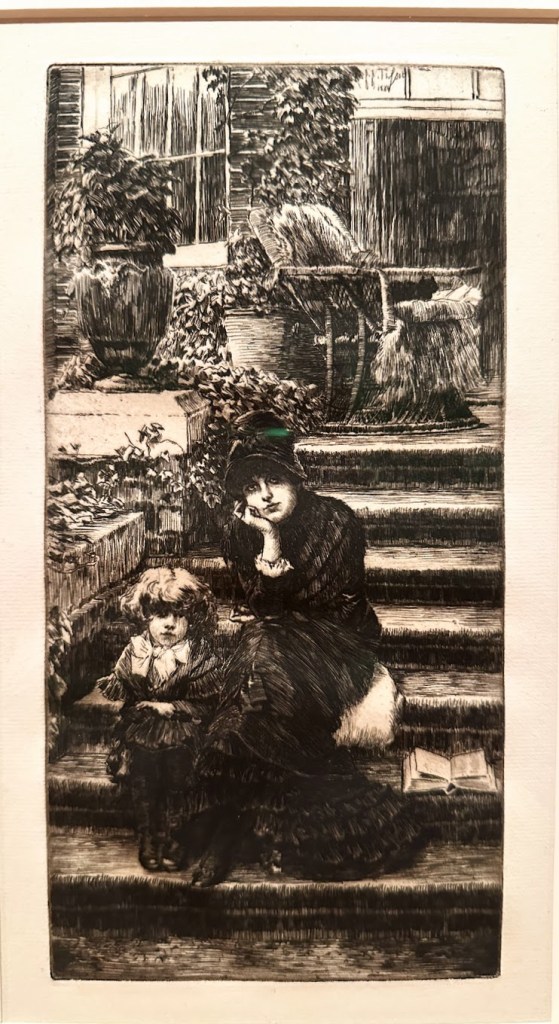
Tissot had an infinitude for portraying women in ambiguous situations.

This emigrant woman leaving a ship with her baby makes one wonder where her journey will lead.

Souvenirs of the Siege of Paris

This collection recounts Tissot’s time as a sharpshooter with The French National Guard during the Franco-Prussian War (1870 – 1871)

Foyer of the Comédie-Française, Recollection of the Siege of Paris (1877)

Tissot’s images of dead or ailing men depict specific historical events and locations. They were viewed by Victorians as accurate reportage.

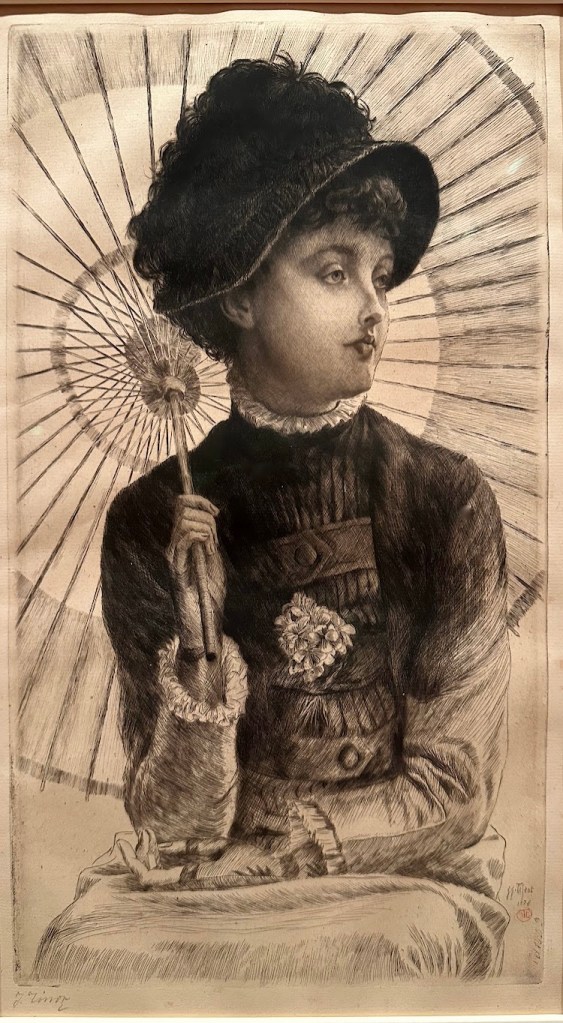
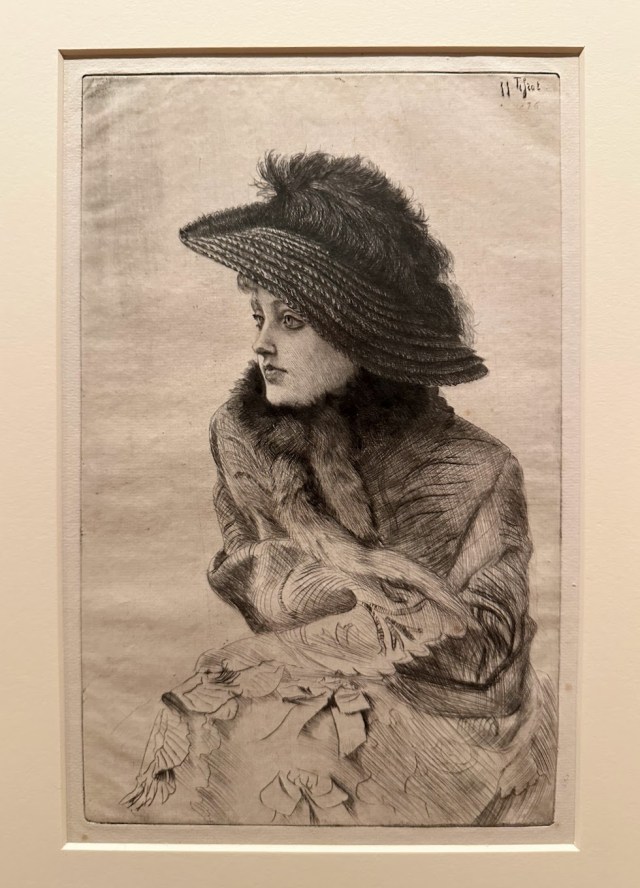
La Frileuse

Kathleen Newton (1854 – 1882)

Kathleen Turner was a young Irish divorcée and mother, who lived with Tissot in London until her early death at 28 from tuberculosis. Tissot often used her as a model.

Tissot’s prints were affordable, attracting middle-class and international buyers. His Victorian themes were adored and his prints circulated the globe, amassing the artist a small fortune.

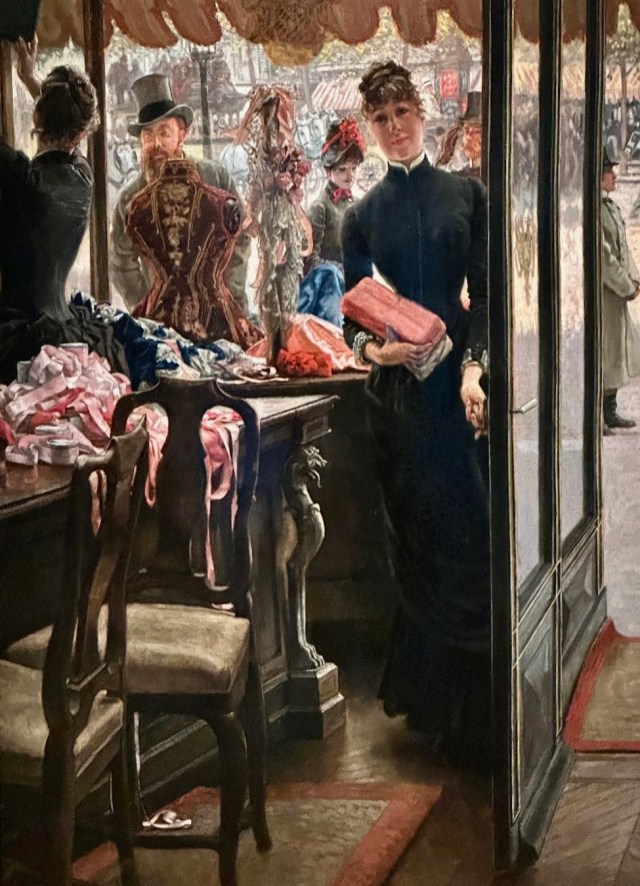
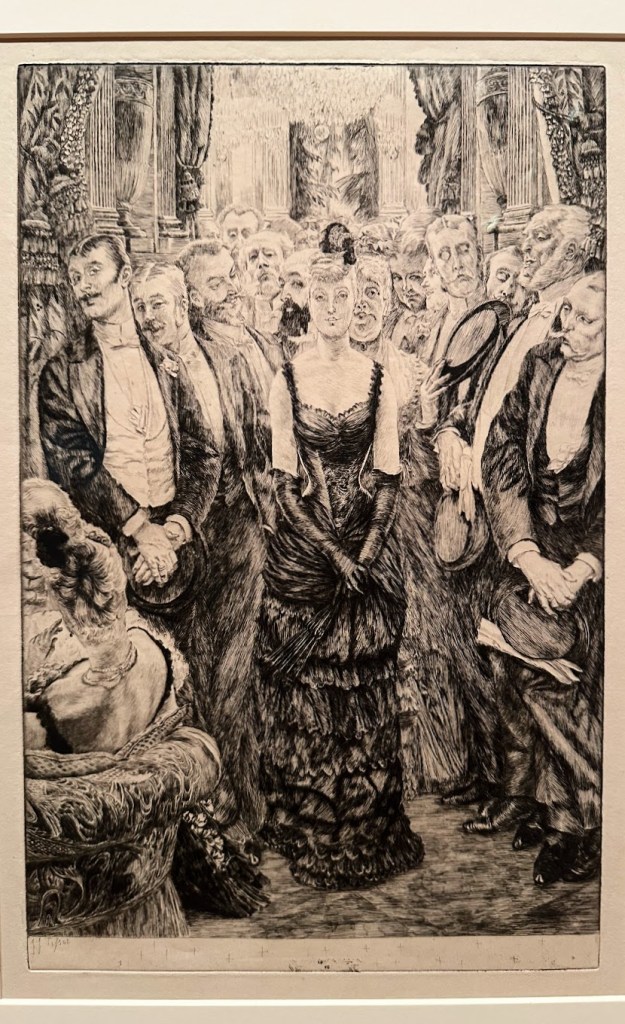
The Women of Paris

Following the death of Kathleen in 1882, Tissot returned to Paris.

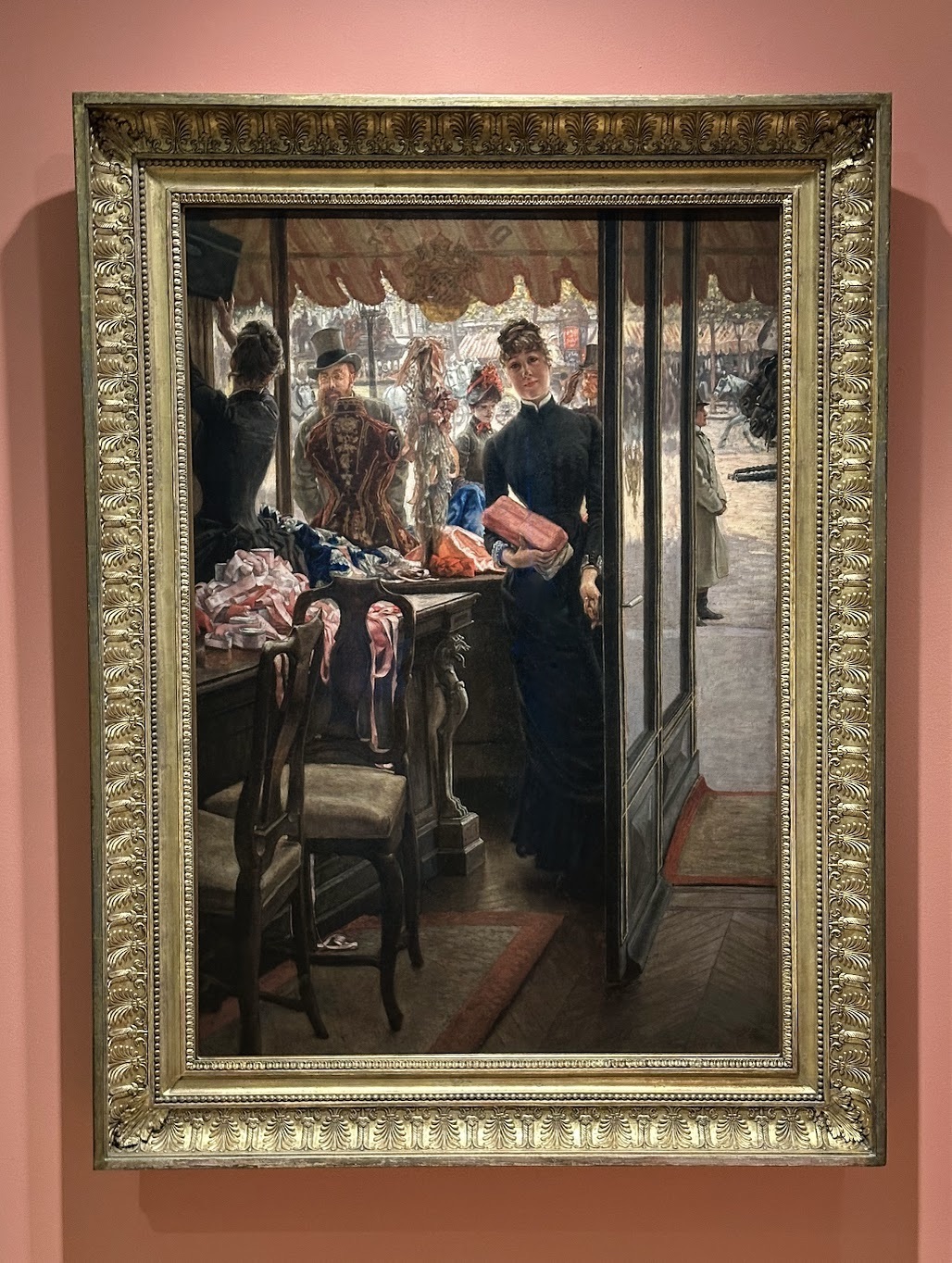
Tissot exhibited 15 paintings and a corresponding print series of modern Parisian women from different social classes, each accompanied by a short essay by a prominent French writer.

Critics panned the show as behind the times. They claimed he painted “the same Englishwoman” repeatedly.

“Following the critical failure of his exhibition, Tissot never focused on the theme of modern womanhood again.”

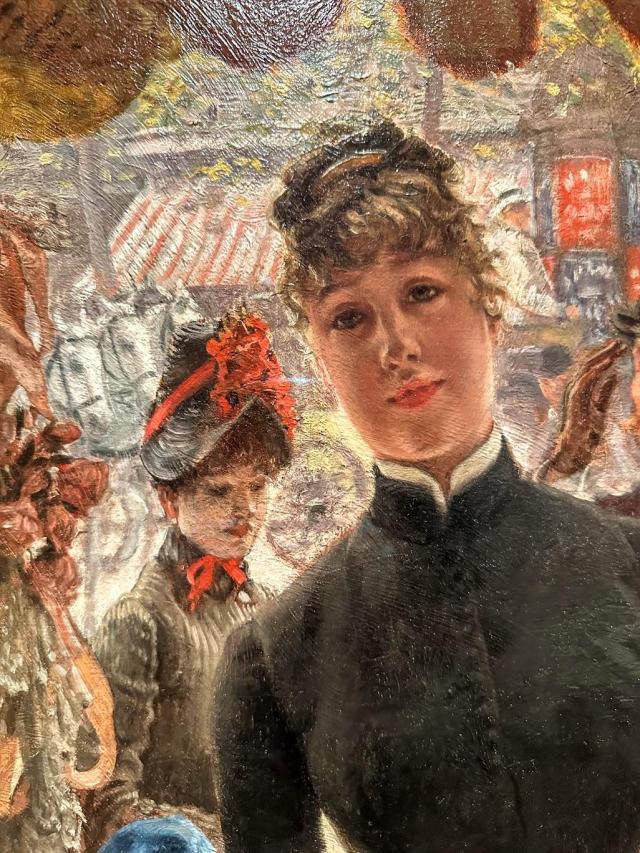
Shop Girl (circa 1884)

Photos taken © Resa McConaghy – January 7, 2025

Art Gallery of Ontario, Toronto, Canada

Source material – Art Gallery of Ontario

Tissot – I

Tissot, a name I hadn’t heard much. Then the AGO announced an exhibit featuring their collection of 2 oil paintings, 1 watercolour and 30 etchings on paper.

A Most Enchanting Day at the AGO

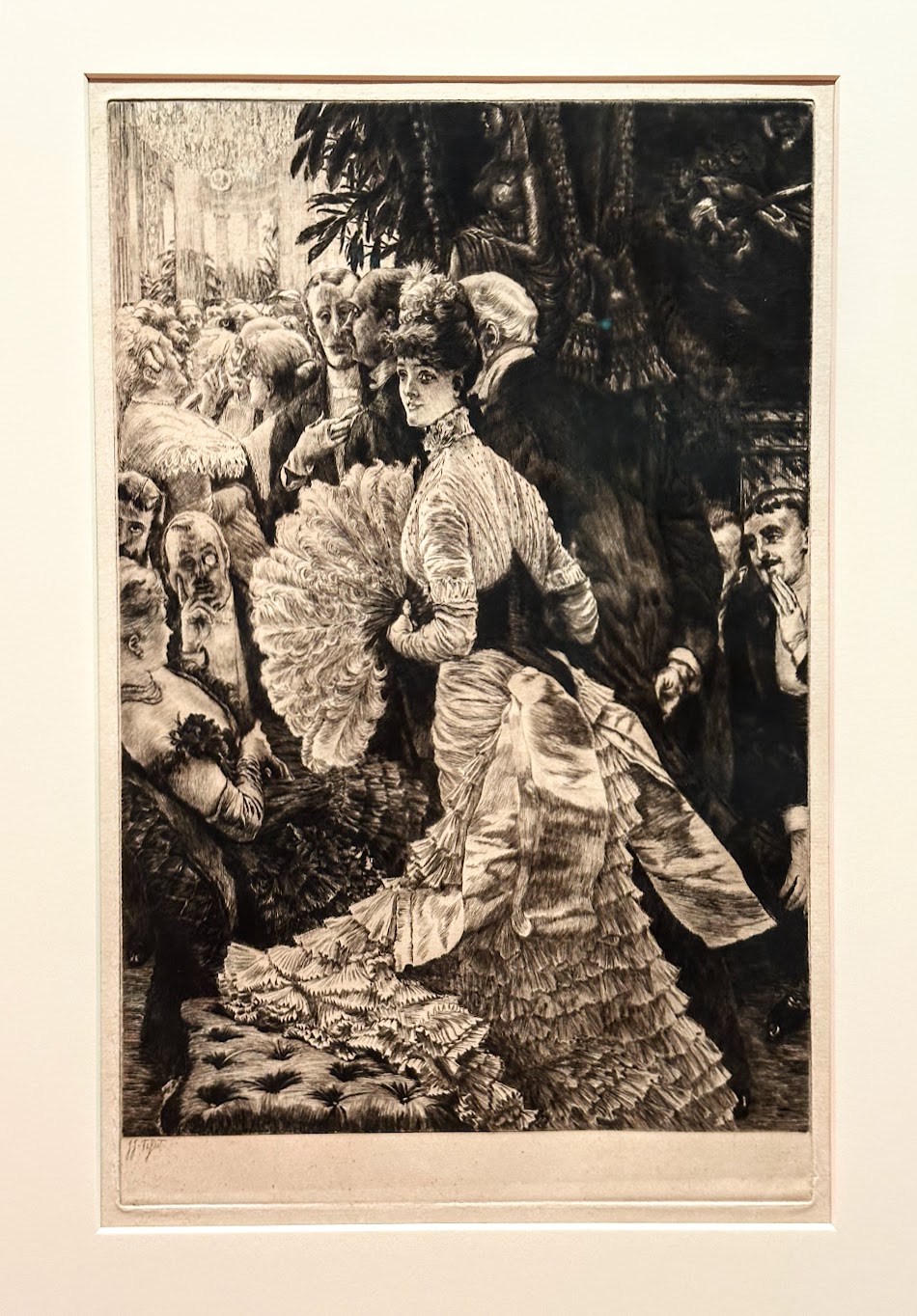
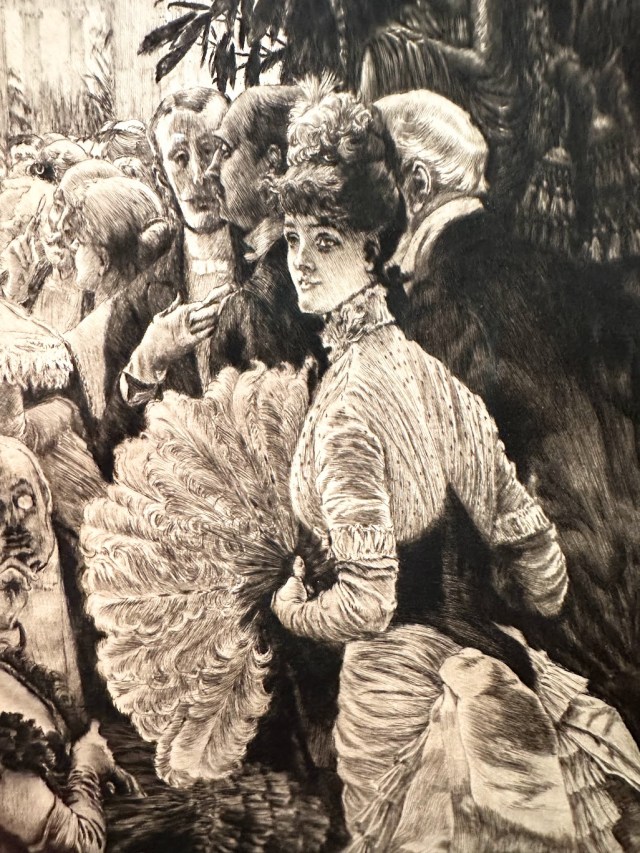
The Fashionable Beauty (1885)

In the last decades of the nineteenth century, James Tissot portrayed women within the contradictions of the period.

Political Woman (1885)

Modernity via the speed of travel, fashion and commodity culture is juxtaposed with the constraint of women’s every day lives.

Flaunting the “Masculine” Realm

A well dressed woman reads a newspaper. The fashionable Japanese-influenced wallpaper lining the wall informs of her engagement with the outside world & knowledge of trends.

Fashion magazines and novels were appropriate for Victorian women.

Newspapers were linked to men, as they symbolized factual knowledge and interest in global politics. Although, the image below depicts another reason a woman would read a newspaper.

Without a Dowry (1885)

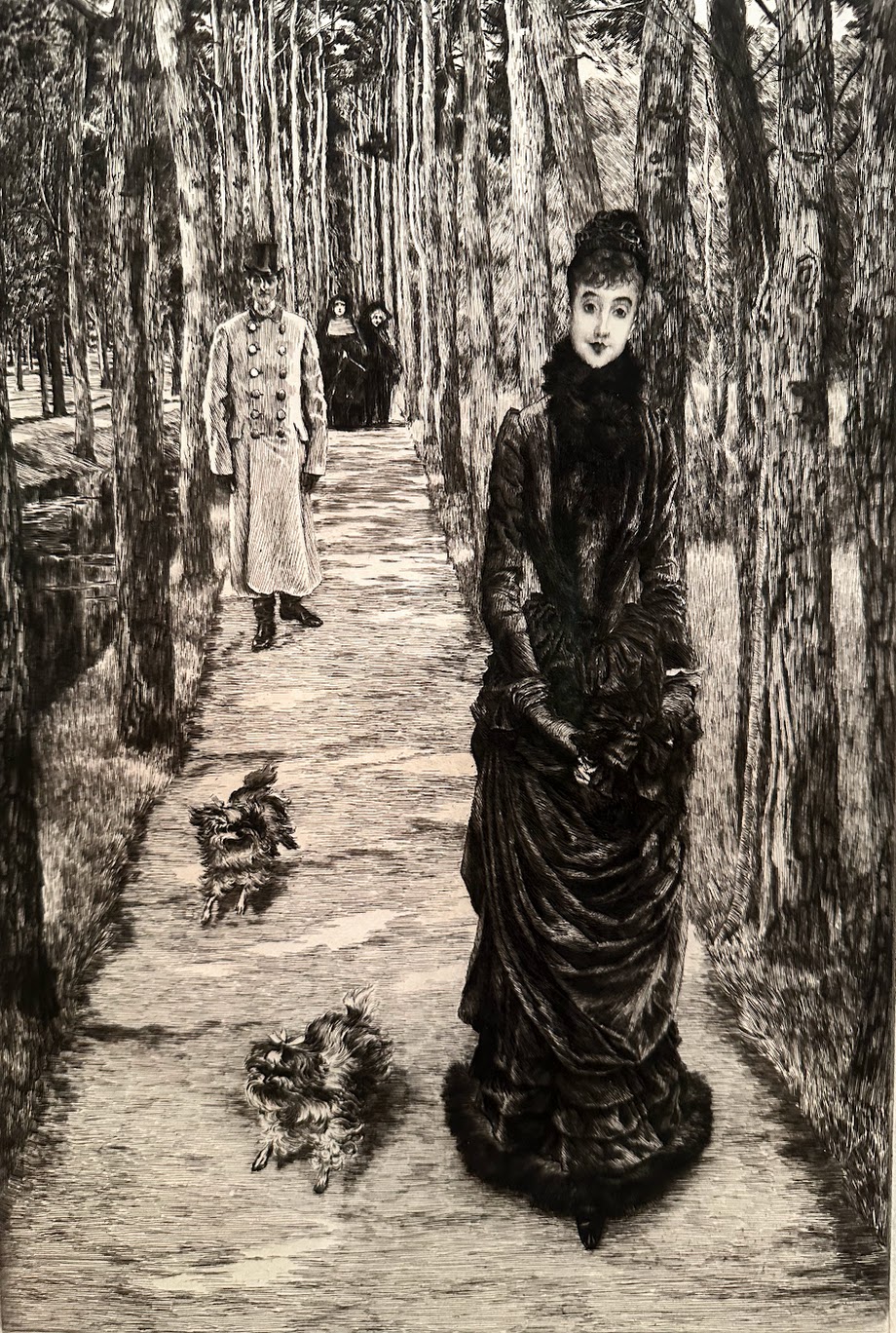
The above image portrays a young woman and her mother in a Parisian park. The black clothing suggests they are mourning a male relative, and are without a dowry. The daughter sits in an available position, while the mother searches the newspapers for marriage offers.

Dreaming (1881)

More About the Artist

“Best known for his paintings of fashionable figures, Tissot began his career in Paris. While he turned down Edgar Degas’s invitation to exhibit with the impressionists, he shared the groups desire to portray scenes of modern life in an innovative style. He moved to London in 1871 after fighting in the Franco-Prussian War, and became a popular painter of Victorian scenes, particularly those showing young women in typically modern moments, before returning to France in 1882.” – Art Gallery of Ontario

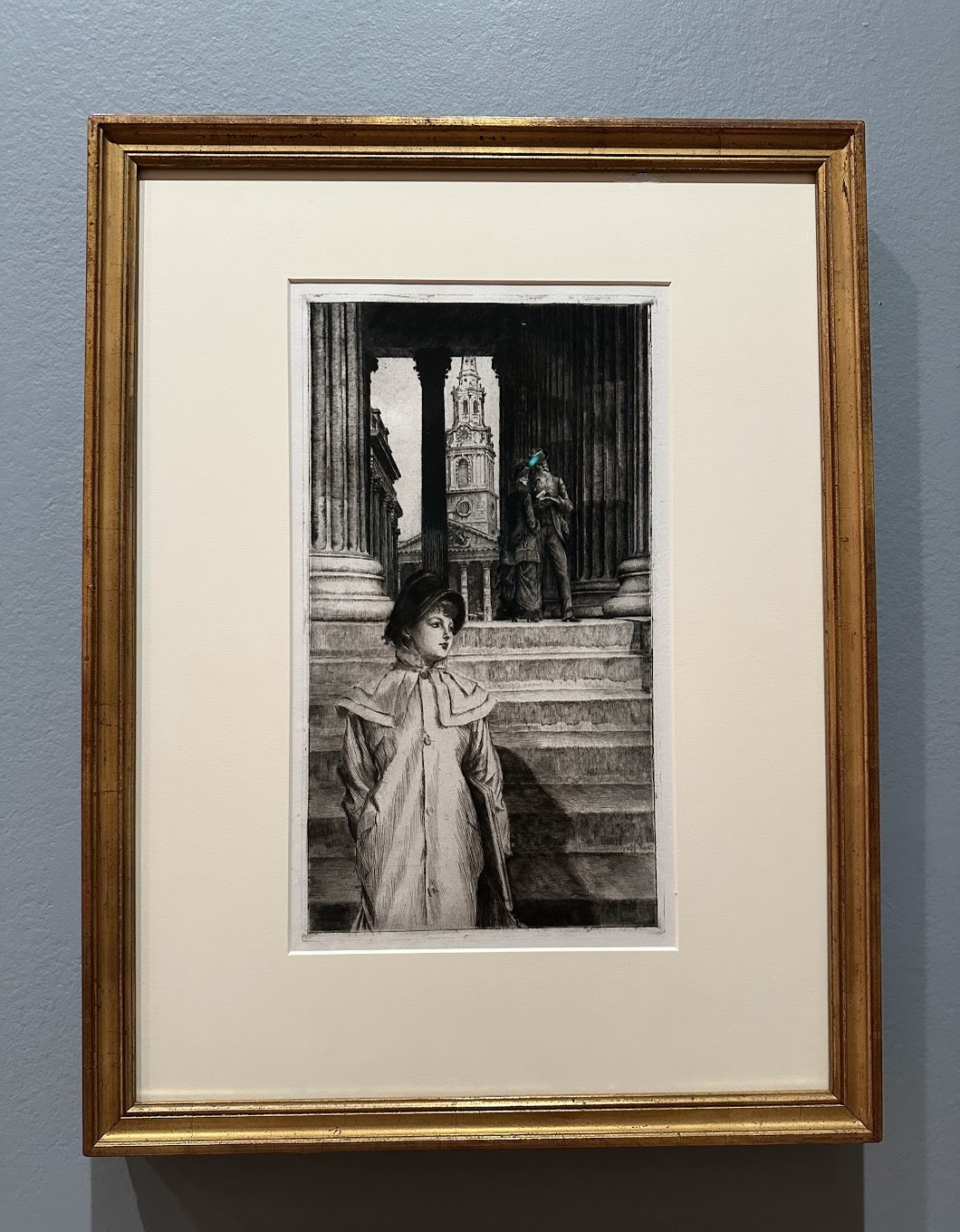
Portico – National Gallery, London (1878)

Moral Ambiguity, a Central Theme

Sunday Morning (1883)

A well dressed young woman walks to church holding a bible. Her raised eyebrows and tentative gaze pose the question, does she need to atone for her sins, or is she nervous about being late for service?

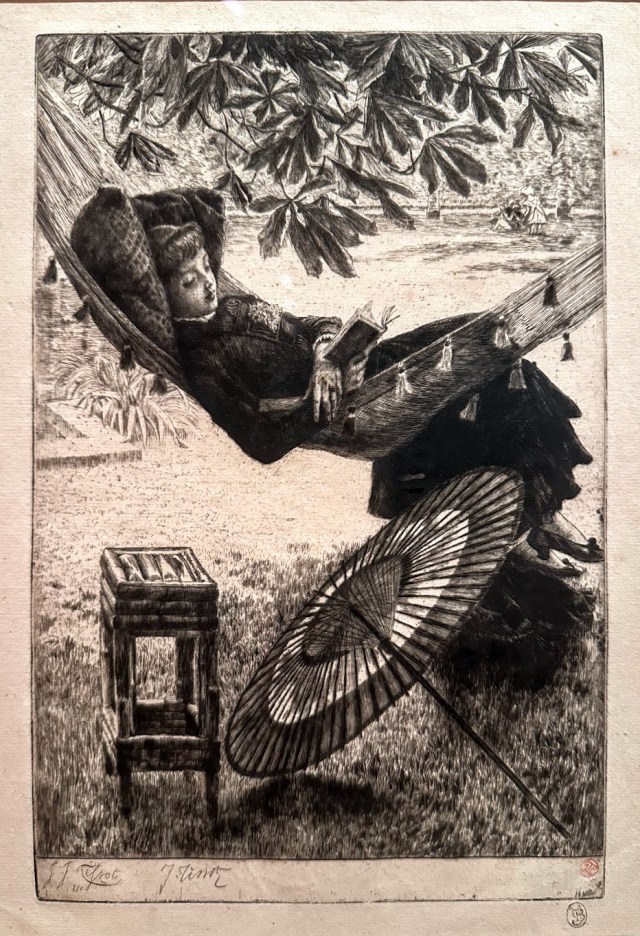
Horizontal women’s bodies were lubricous from a voyeuristic perspective.

Slumbering female figures had erotic connotations in the Victorian Era, especially in semi-conscious states like dreaming or sleeping.

The Fan (1876)

Now discredited – The below woman’s twisted hand was indicative of the pathological disorder – hysteria. This “chic” female disease was considered fashionably feminine and modern.

Sleeping Woman (1876)

The moral ambiguity of Tissot’s images was integral to their popular appeal.

British critics claimed they were too, risqué, too French.

A Personal Fascination

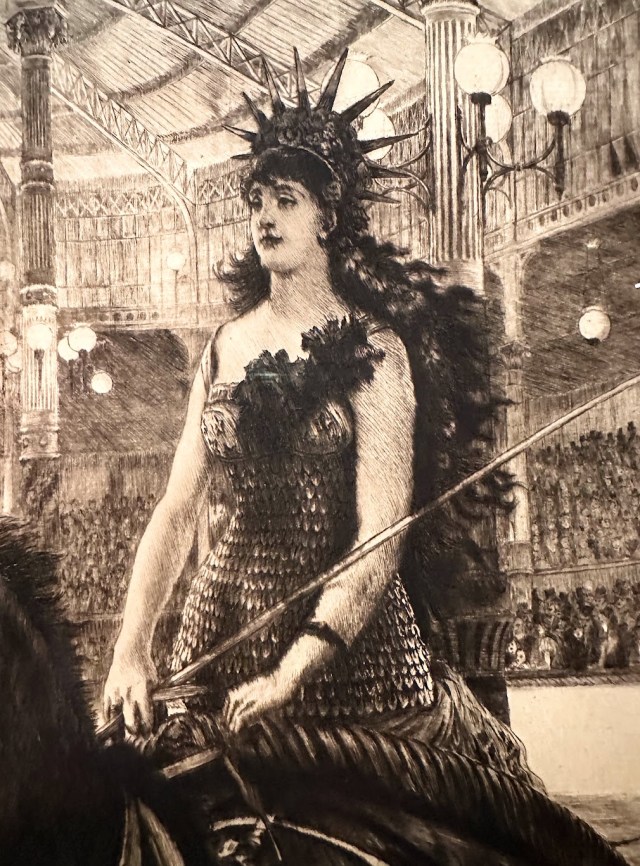
Other than the title, I know only that the etching below is in the Hippodrome (ℹ︎ Met Museum site). I was mesmerized by it. All that skin makes the costumes seem so modern and the Statue of Liberty crowns were piquing.

The Ladies of the Chariots (1885)

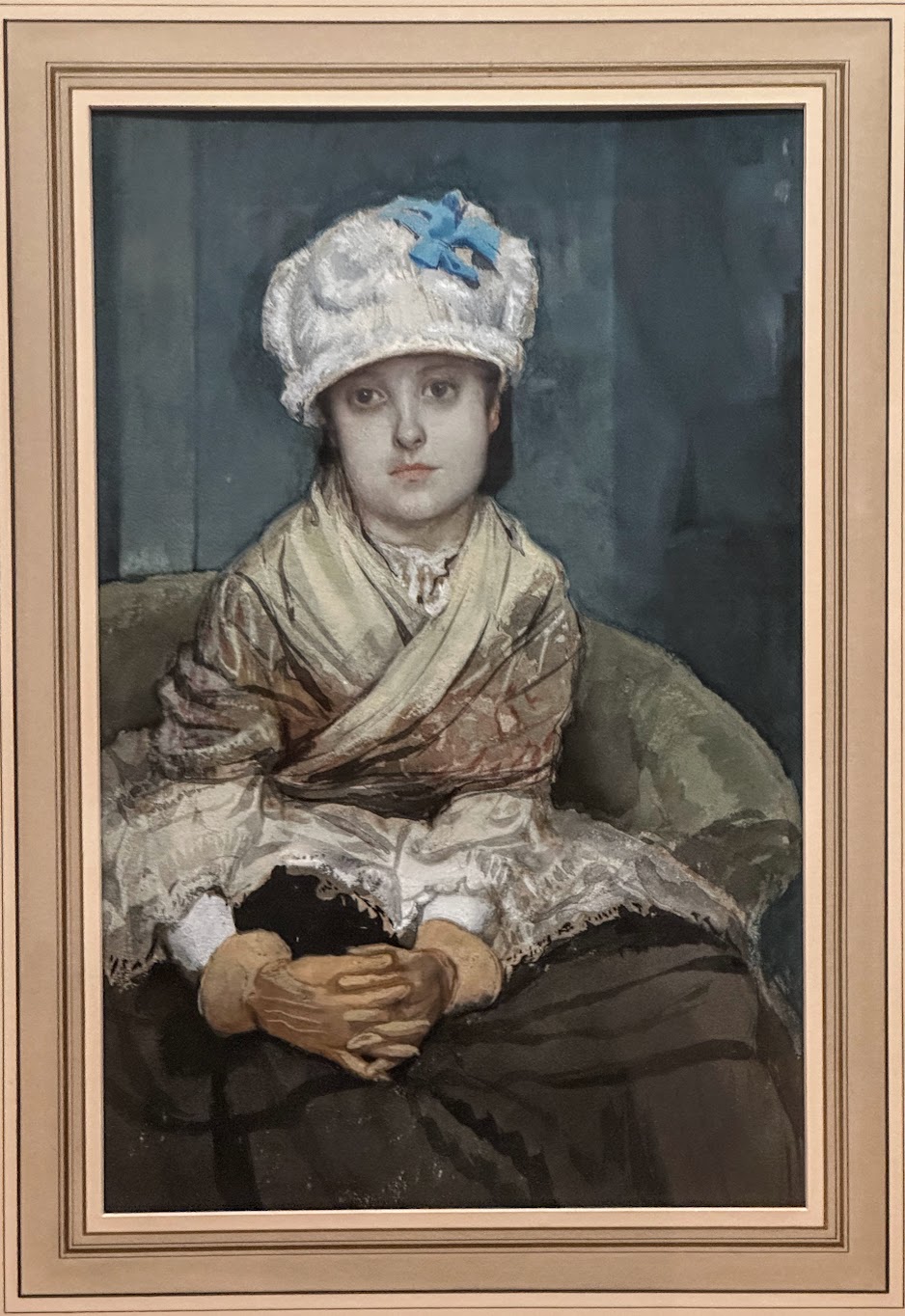
I can’t get everything into 1 post, so there will be a Tissot – II. In the meantime, I leave you with a shot of the 1 watercolour with gouache on paper.

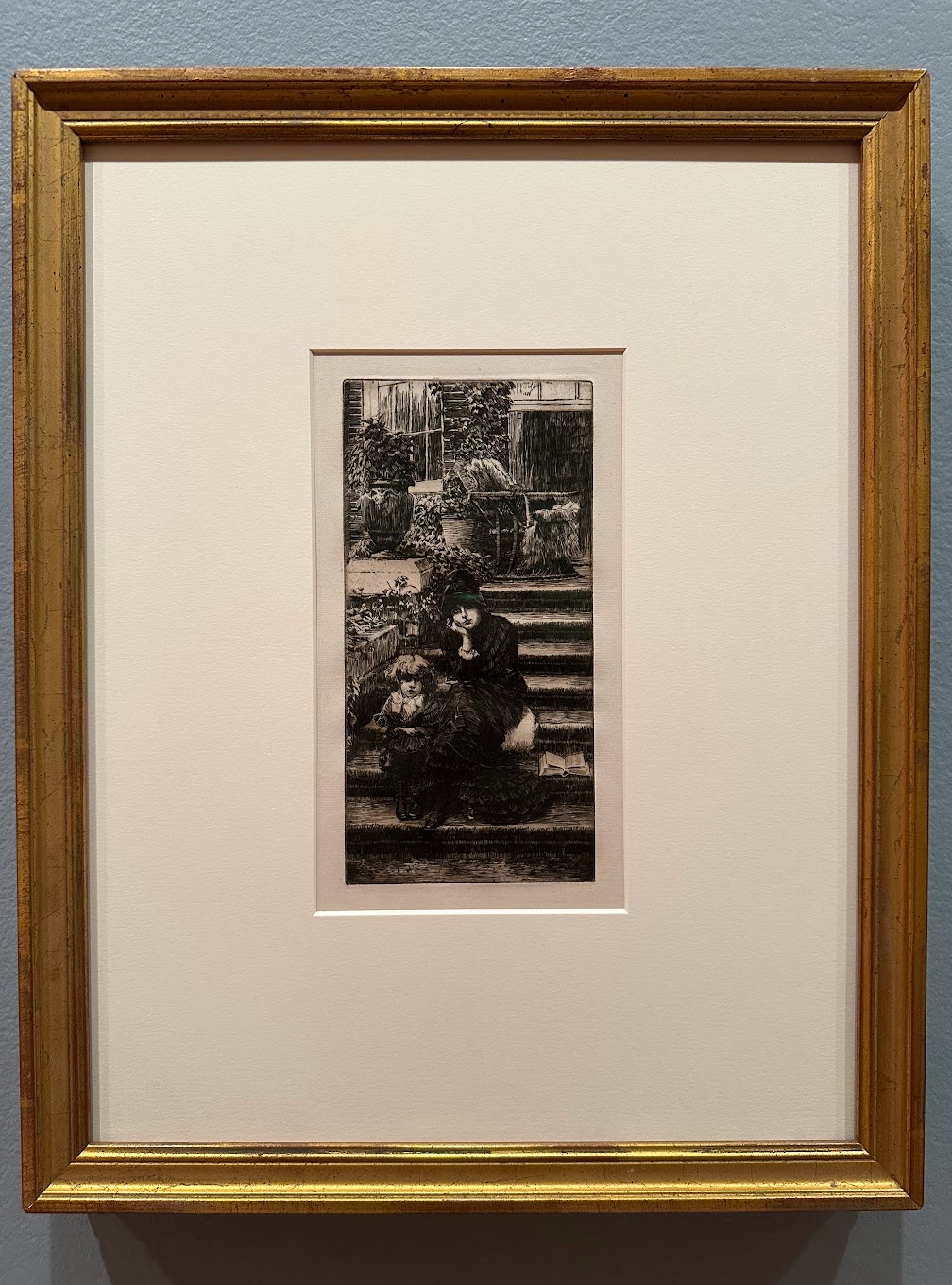
Waiting (late 1800’s)

The young girl’s bored stare, pale skin, under eye circles with oversized bonnet and gloves (highlighting weight loss) suggest tuberculosis.

“Consumption” was coined a term, as it consumed patients, and ate away bodies.

Is she waiting for someone or something?

Is she waiting to heal or die?

Photos © Resa McConaghy – Taken January 7, 2025

Art Gallery of Ontario, Toronto, Canada

Information Source: The Art gallery of Ontario