

This is the painting that lured me to the exhibit.

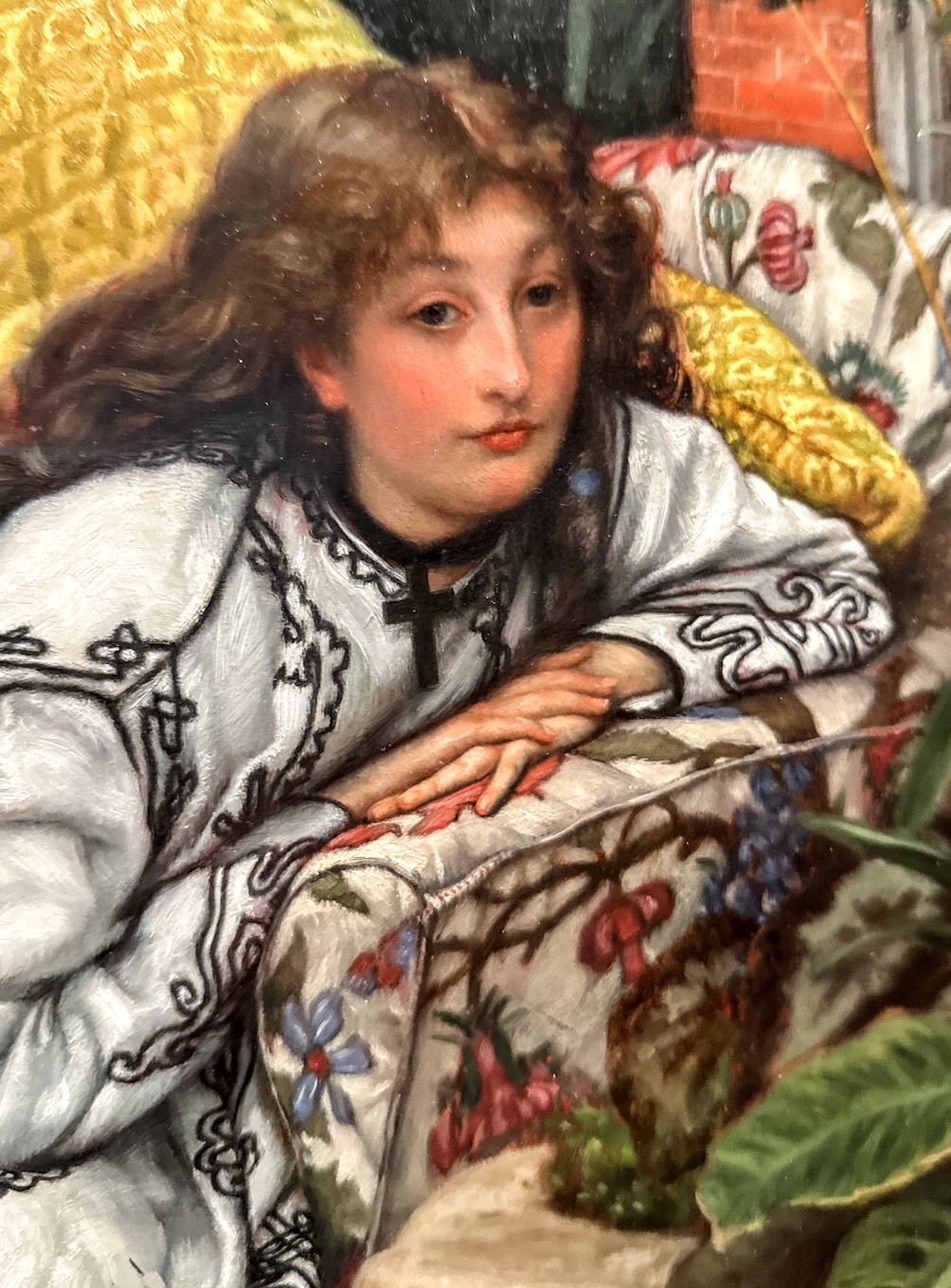
This young woman’s housecoat, patterned yellow pillow and tropical plants were introduced to Europe via colonial conquests in the southern hemisphere.
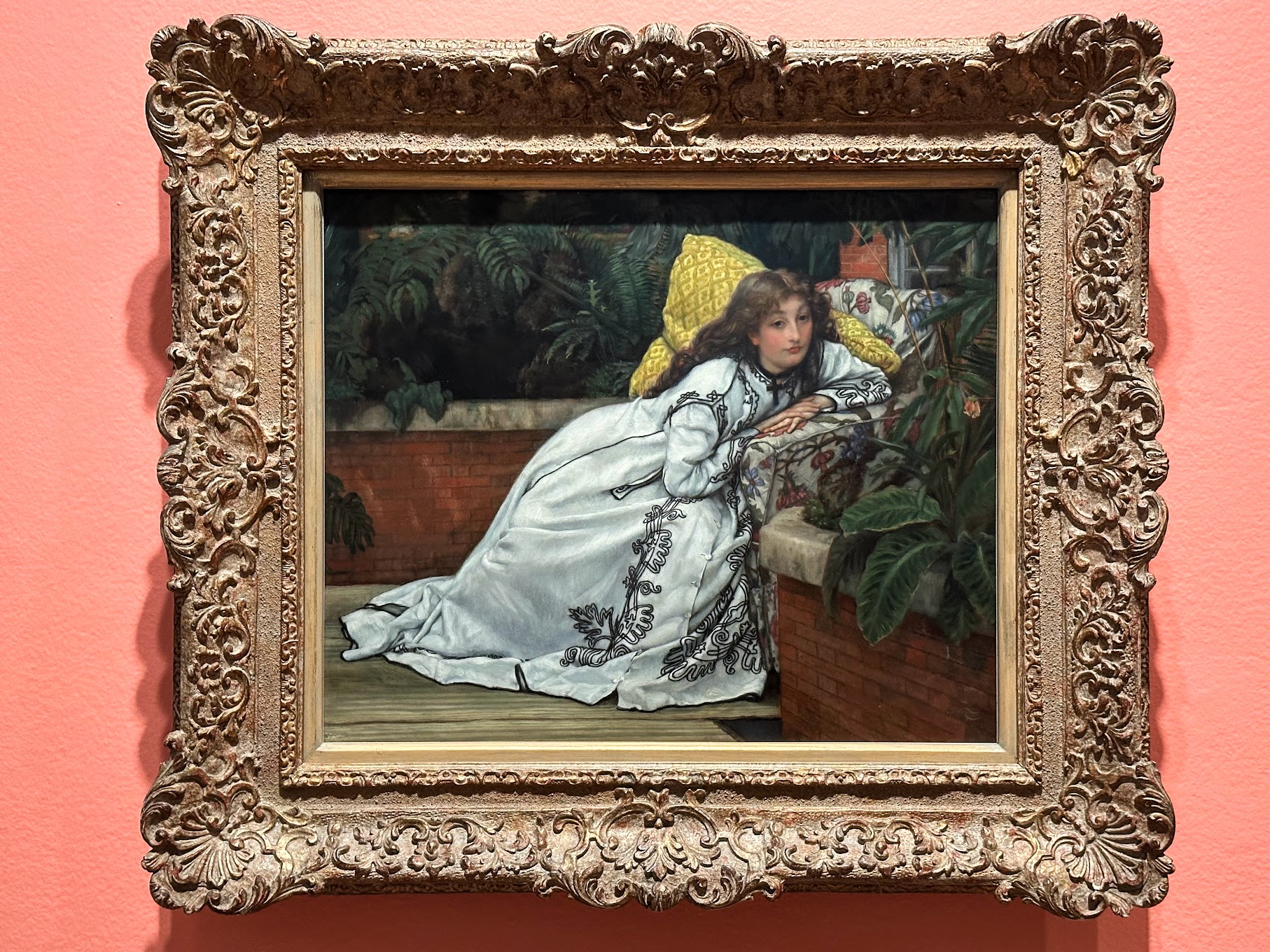
Juxtaposed to these items that signify the speed of travel, trade and fashion are the middle class woman’s long slow hours of recuperating health.
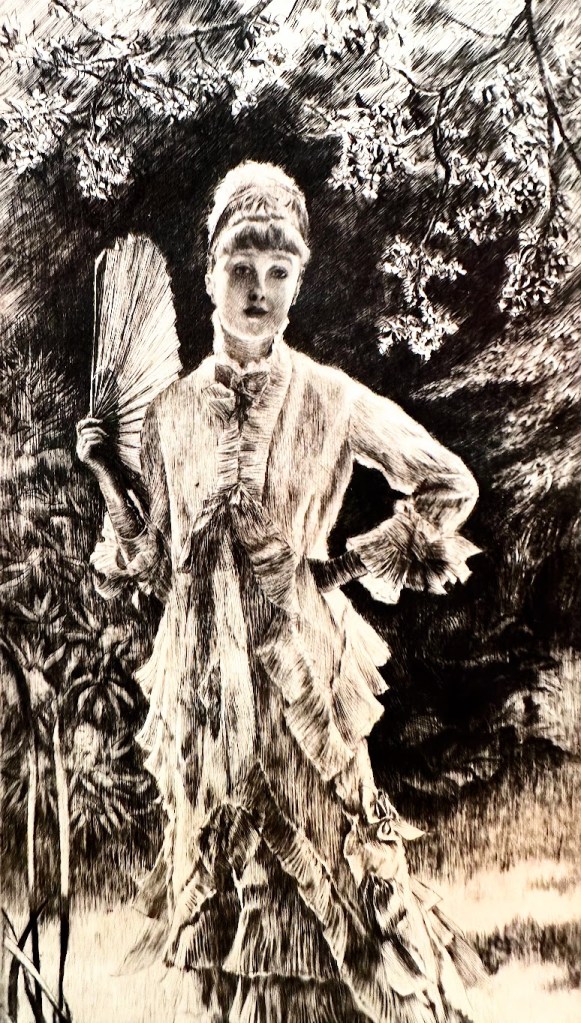
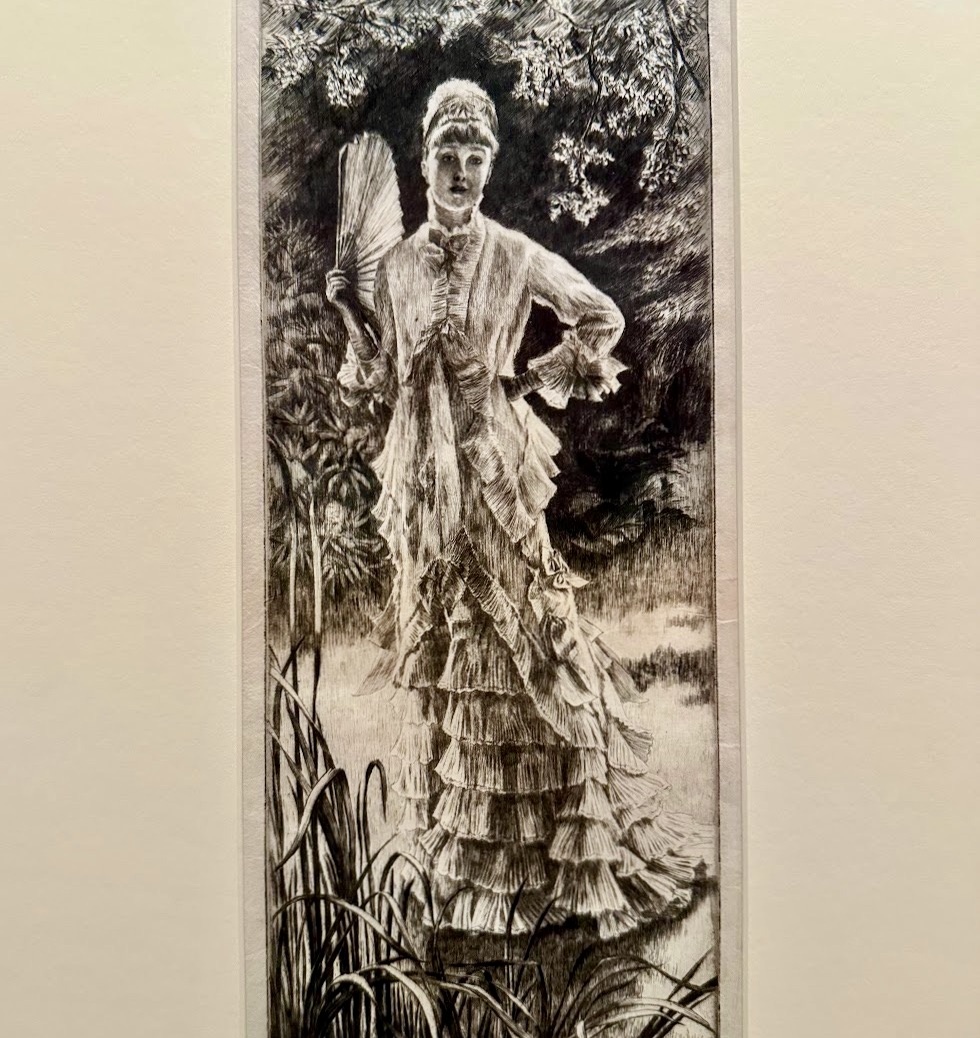
The Seasons
Tissot drew on the art historical tradition of women and natural cycles; ie. young women and spring.

Ippitsusai Buncho (Japanese, active 1765 – 1792), Kabuki. Segawa Kikunojo in female role of Ohatsu in“Yoni Osaka Nitsuino Myoto”
The elongated form, and stylized blades of grass in the foreground shows the influence of Japanese woodblock prints.


Limiting the number of prints to a plate (which adds value through scarcity) was unusual prior to the second half of the 1800’s.


The simplest way to cancel a run is to rut the metal plate with deep lines.


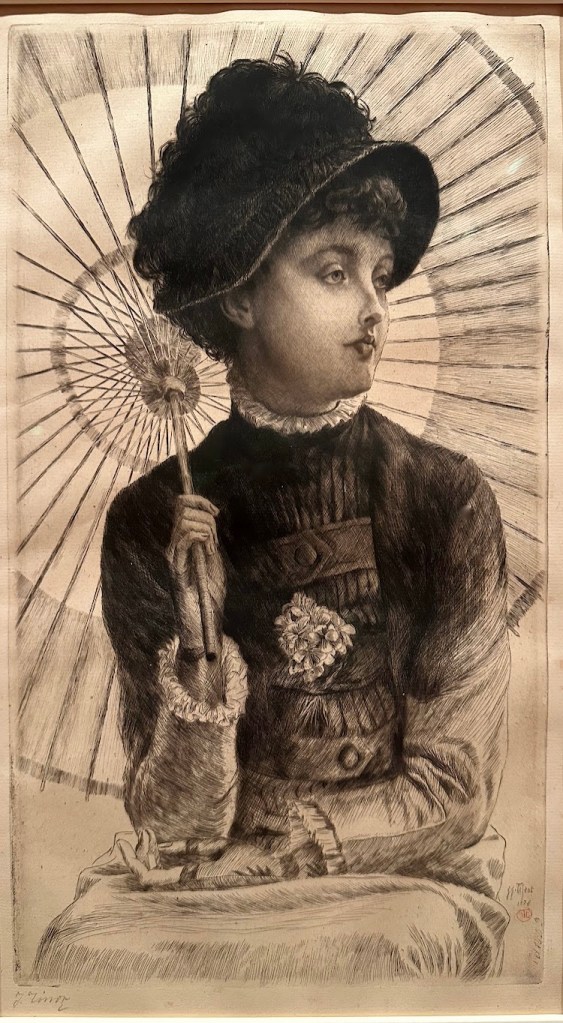

“He also depicted women in current fashions, presenting them as both timeless and contemporary.”
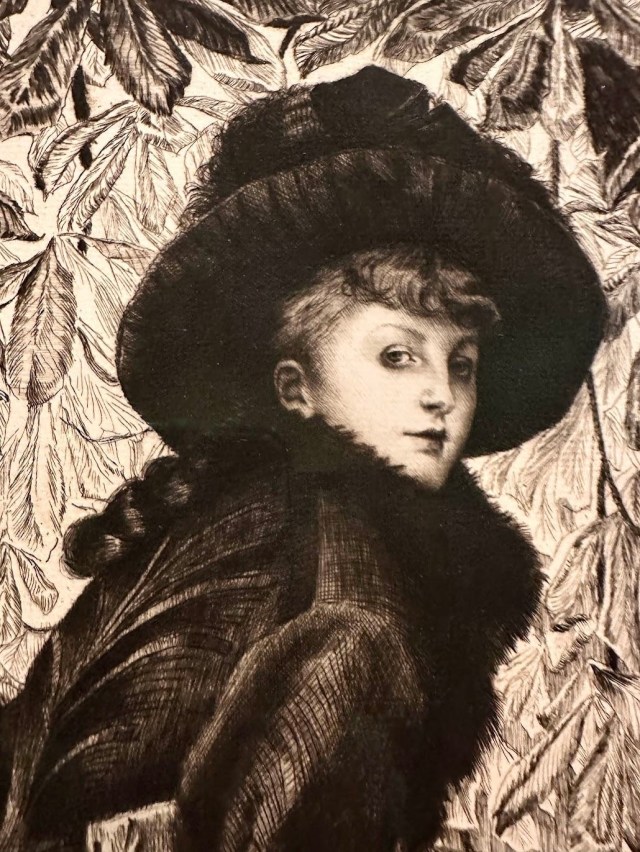

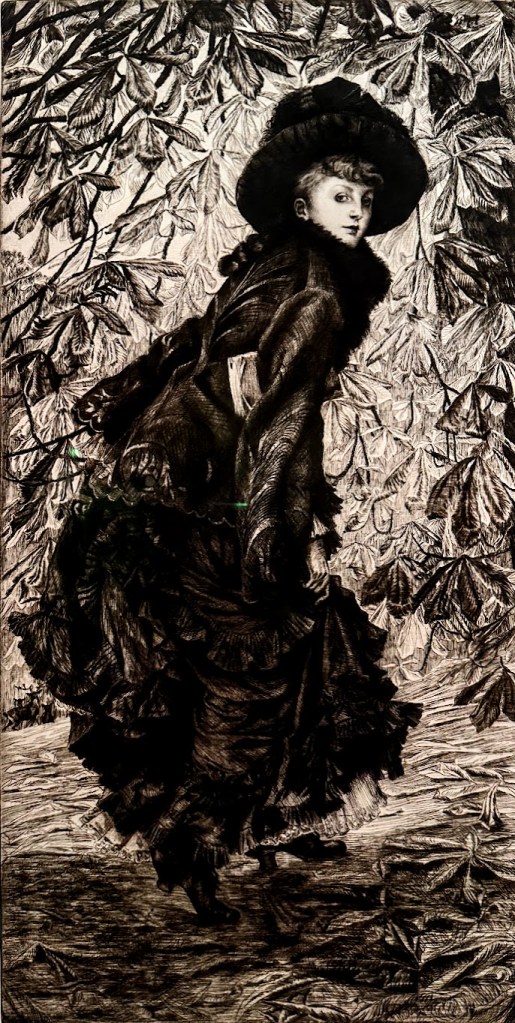
Despite the racial diversity of Europe at the time, Tissot’s artworks focus on white women.
The Thames
This image of a naval officer cruising the polluted Thames River with 2 women (Must be prostitutes!) was deemed “thoroughly and willfully vulgar”by a critic.

The British saw this as immoral French art, which included Impressionism.


Tissot captured the global flow at bustling ports along the Thames.
This print highlights the artist’s expertise in capturing nautical scenes.
Tissot had an infinitude for portraying women in ambiguous situations.
This emigrant woman leaving a ship with her baby makes one wonder where her journey will lead.

Souvenirs of the Siege of Paris
This collection recounts Tissot’s time as a sharpshooter with The French National Guard during the Franco-Prussian War (1870 – 1871)

Tissot’s images of dead or ailing men depict specific historical events and locations. They were viewed by Victorians as accurate reportage.
La Frileuse
Kathleen Newton (1854 – 1882)

Kathleen Turner was a young Irish divorcée and mother, who lived with Tissot in London until her early death at 28 from tuberculosis. Tissot often used her as a model.

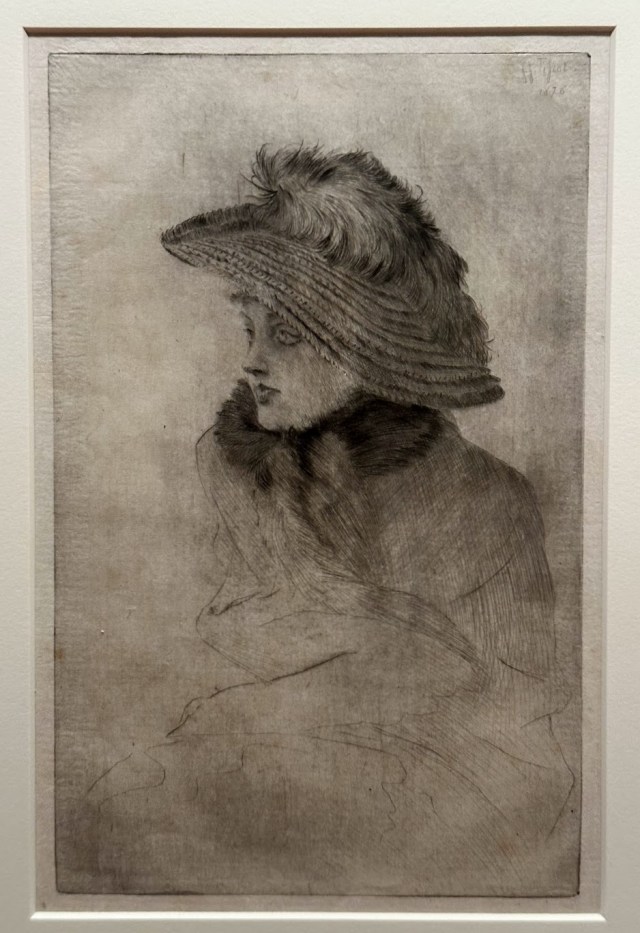

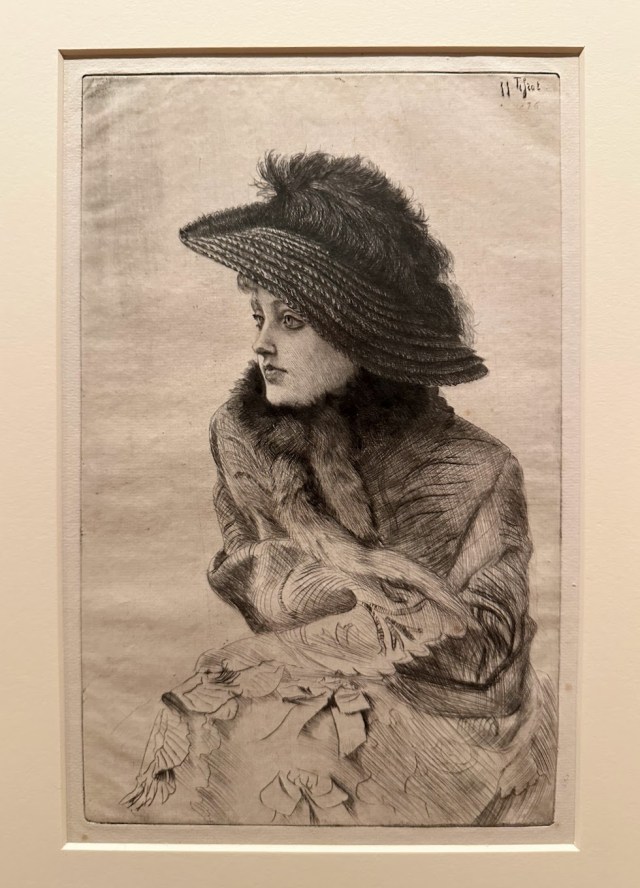
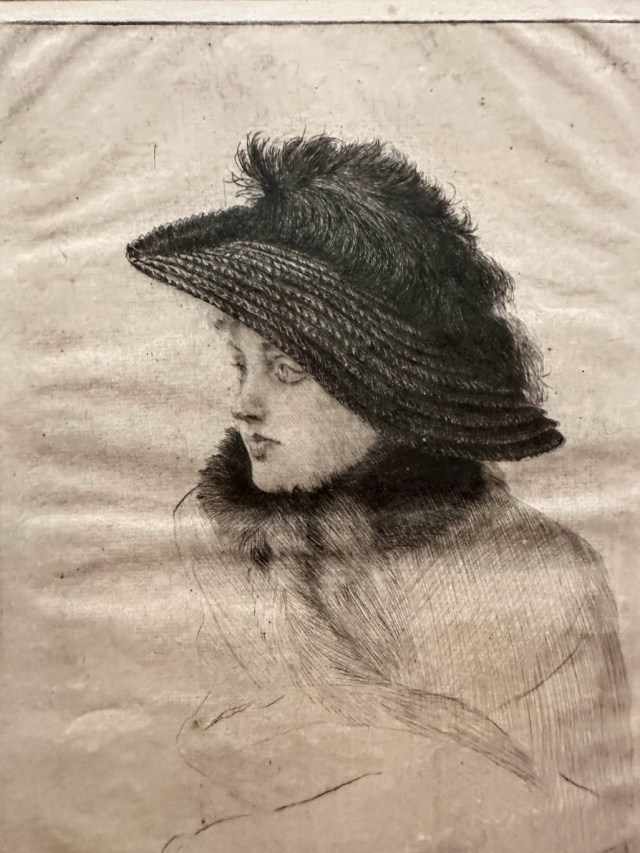

Tissot’s prints were affordable, attracting middle-class and international buyers. His Victorian themes were adored and his prints circulated the globe, amassing the artist a small fortune.
The Women of Paris
Following the death of Kathleen in 1882, Tissot returned to Paris.
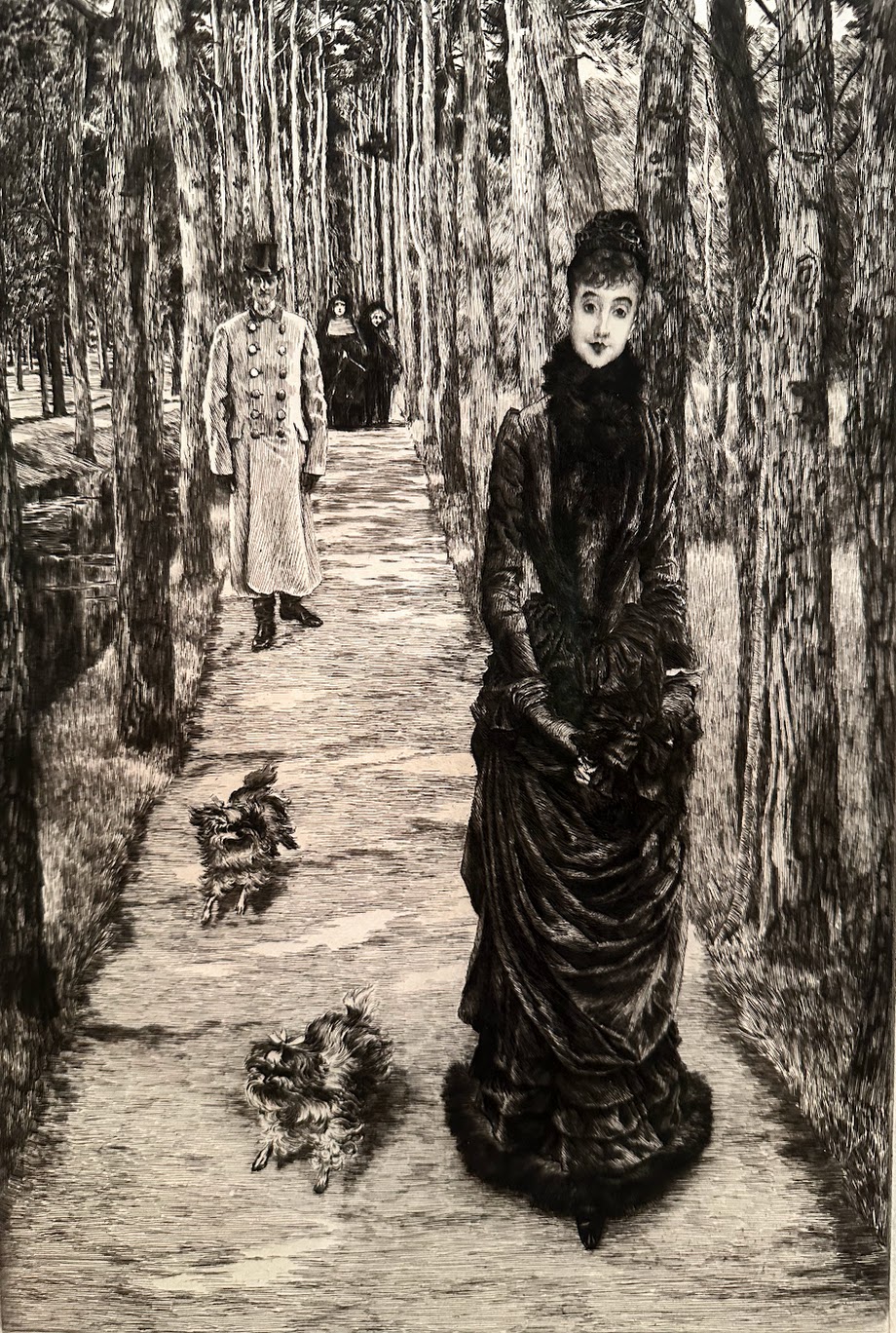
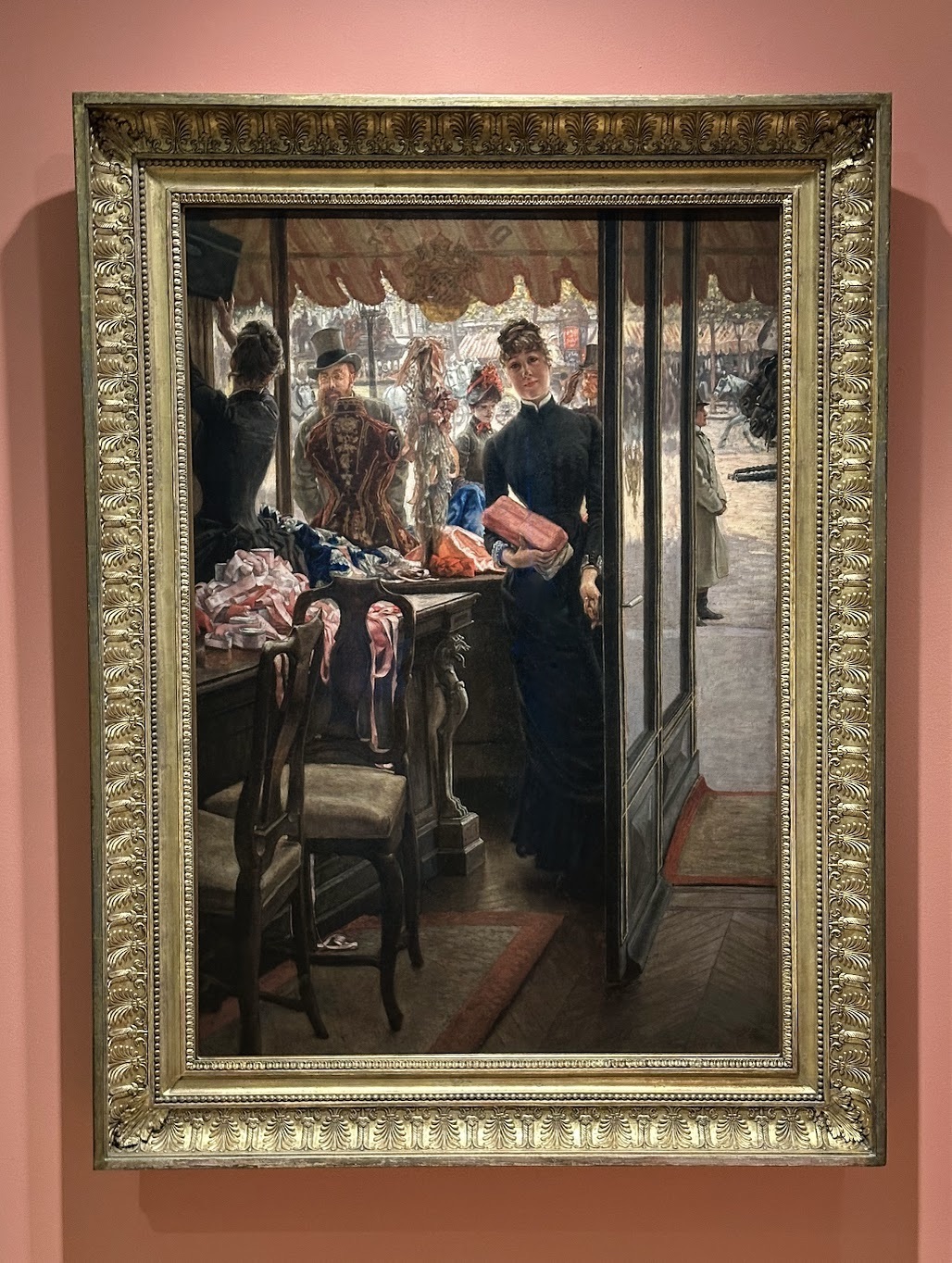
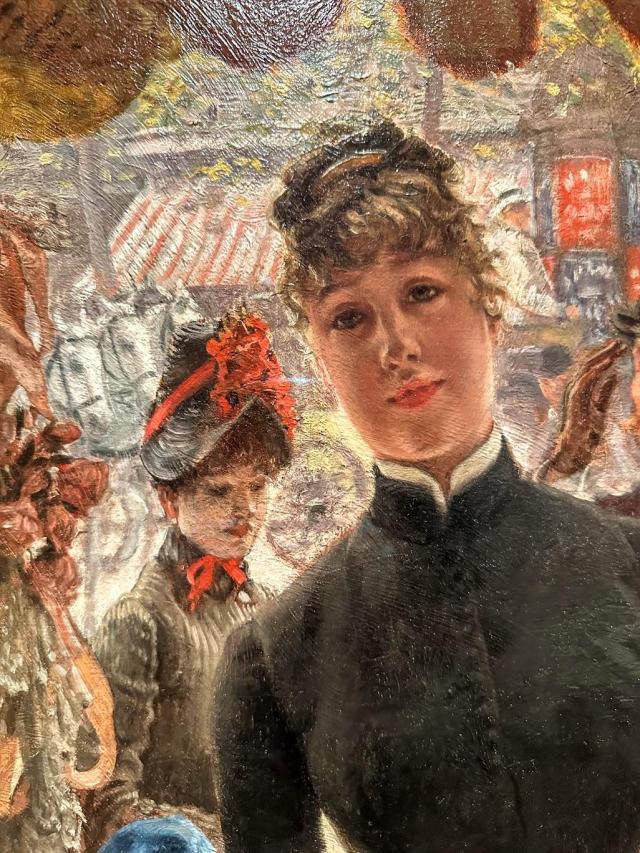
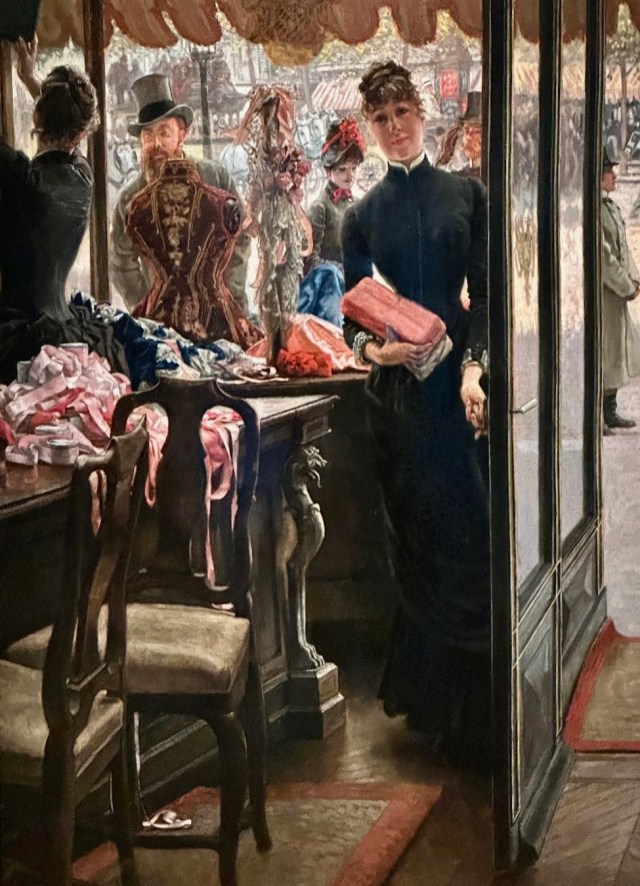
Tissot exhibited 15 paintings and a corresponding print series of modern Parisian women from different social classes, each accompanied by a short essay by a prominent French writer.

Critics panned the show as behind the times. They claimed he painted “the same Englishwoman” repeatedly.
“Following the critical failure of his exhibition, Tissot never focused on the theme of modern womanhood again.”


Photos taken © Resa McConaghy – January 7, 2025
Art Gallery of Ontario, Toronto, Canada
Source material – Art Gallery of Ontario






 Art Gowns
You must be logged in to post a comment.