Tissot – 2

This is the painting that lured me to the exhibit.

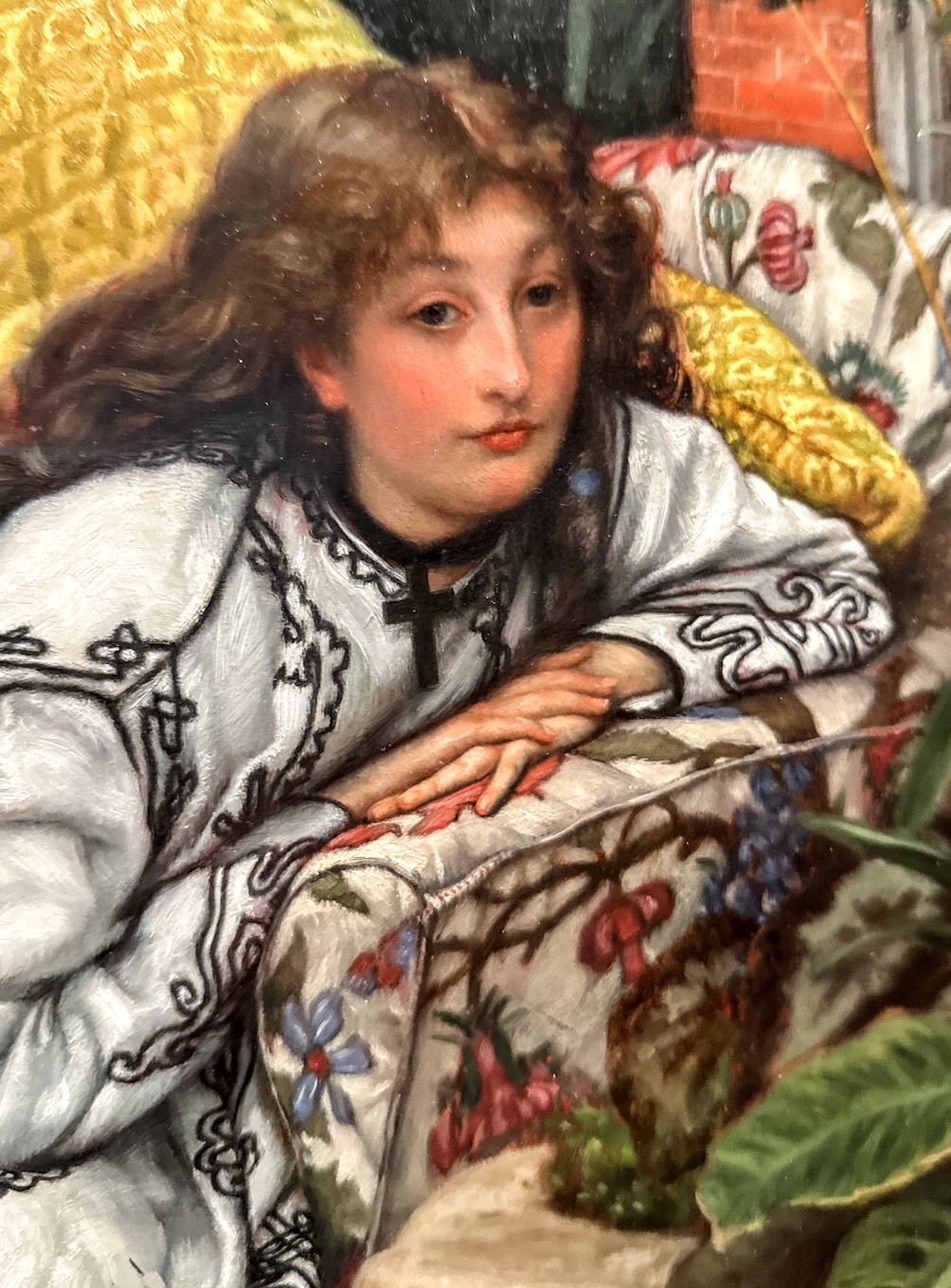
The Convalescent -1872

This young woman’s housecoat, patterned yellow pillow and tropical plants were introduced to Europe via colonial conquests in the southern hemisphere.
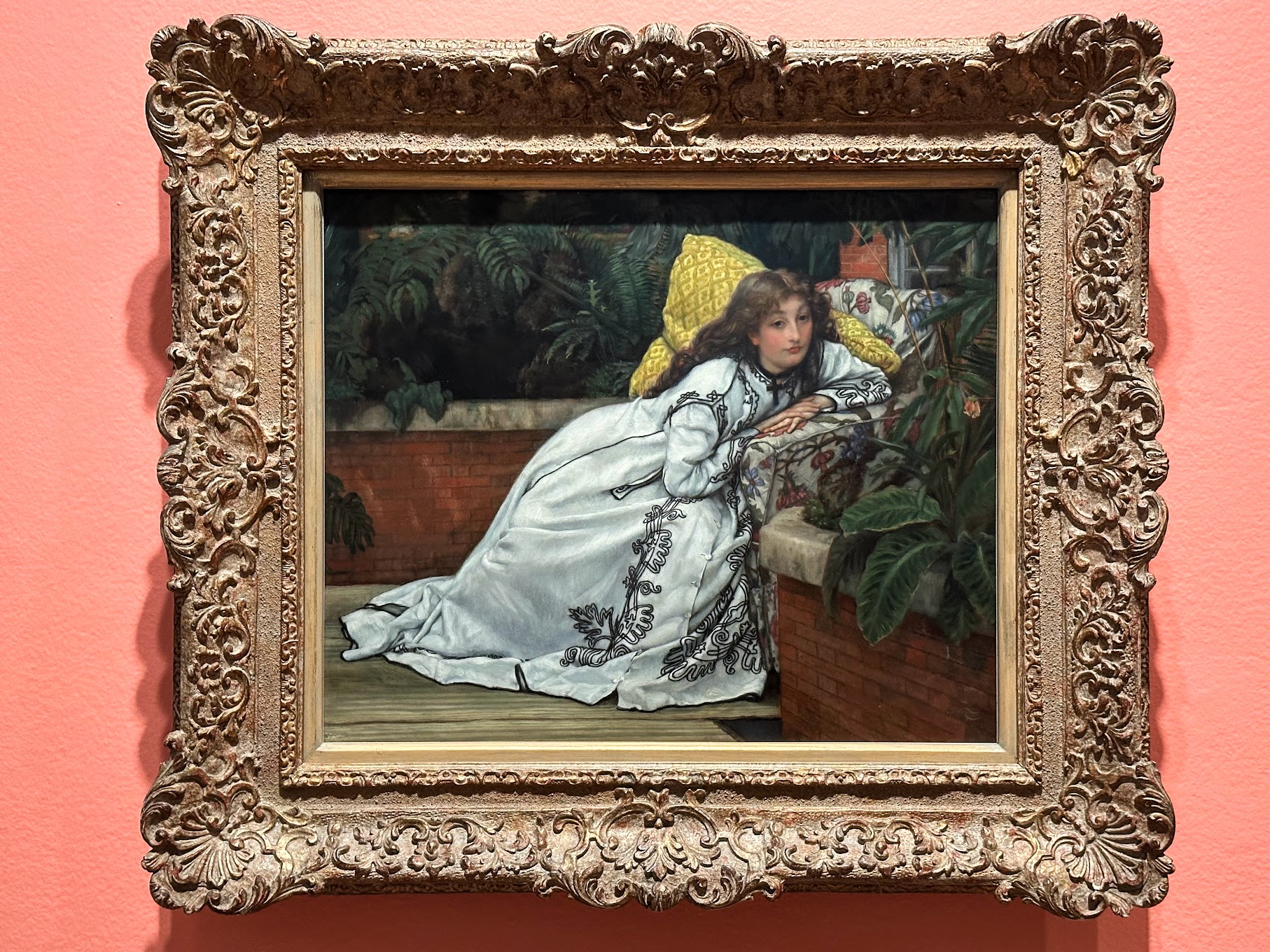
Juxtaposed to these items that signify the speed of travel, trade and fashion are the middle class woman’s long slow hours of recuperating health.
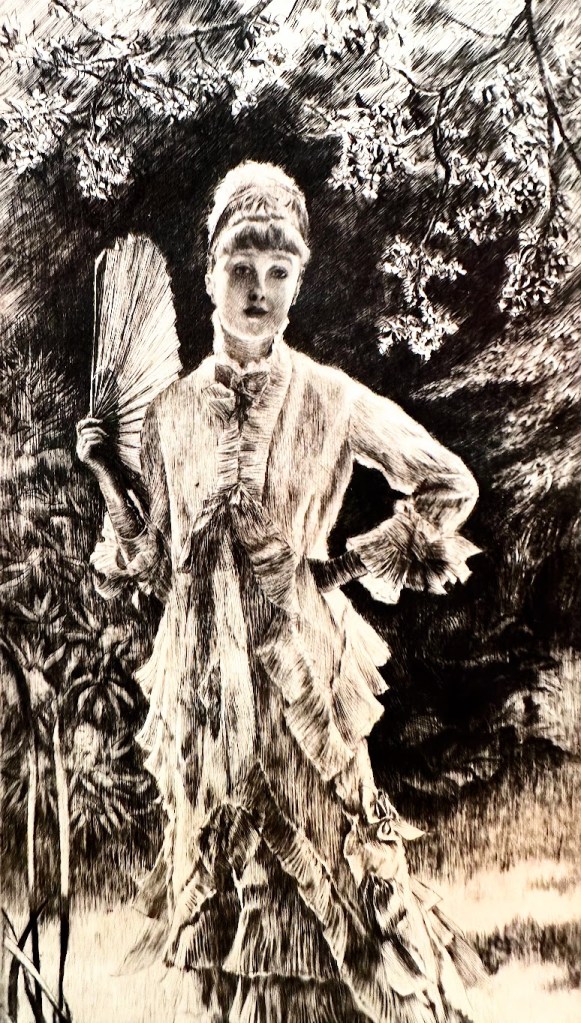
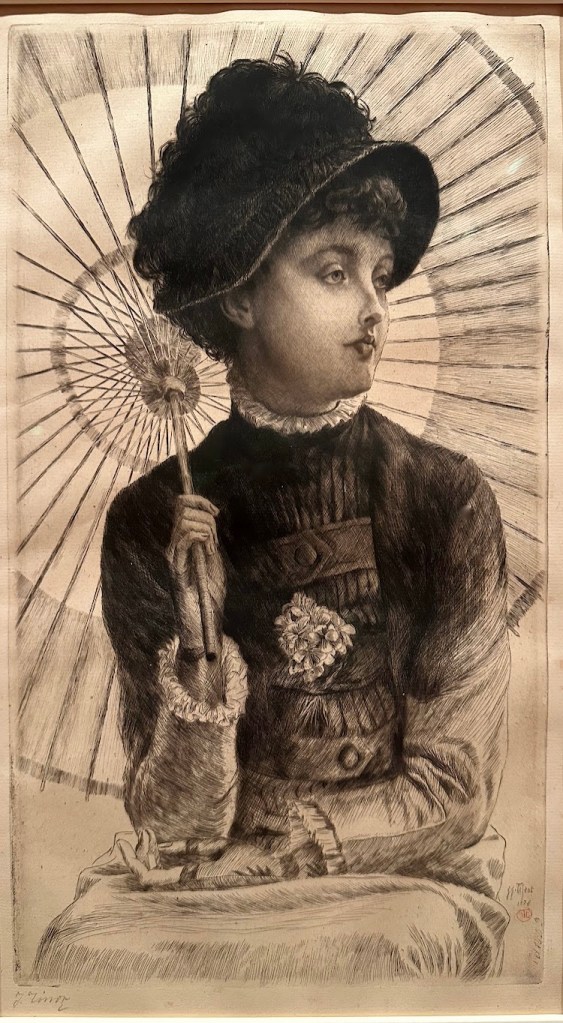
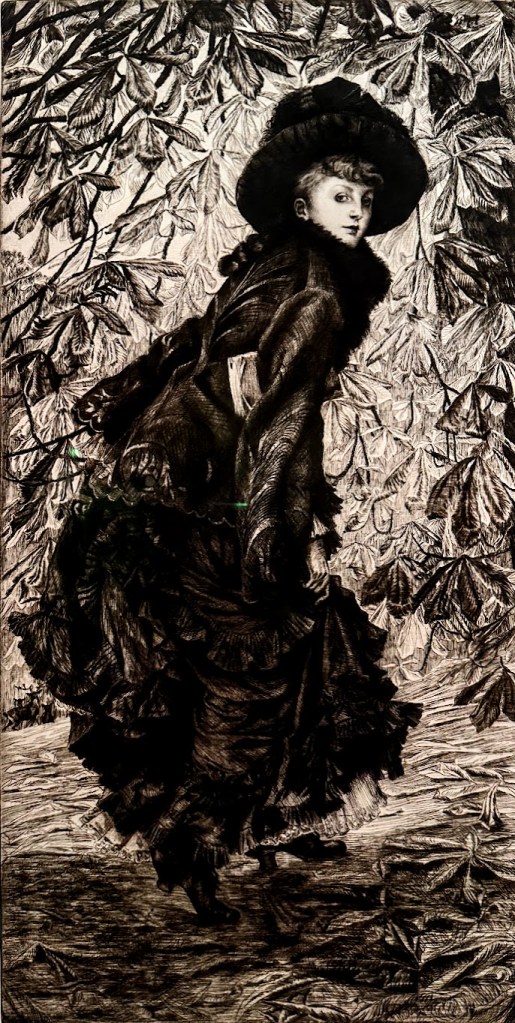
The Seasons

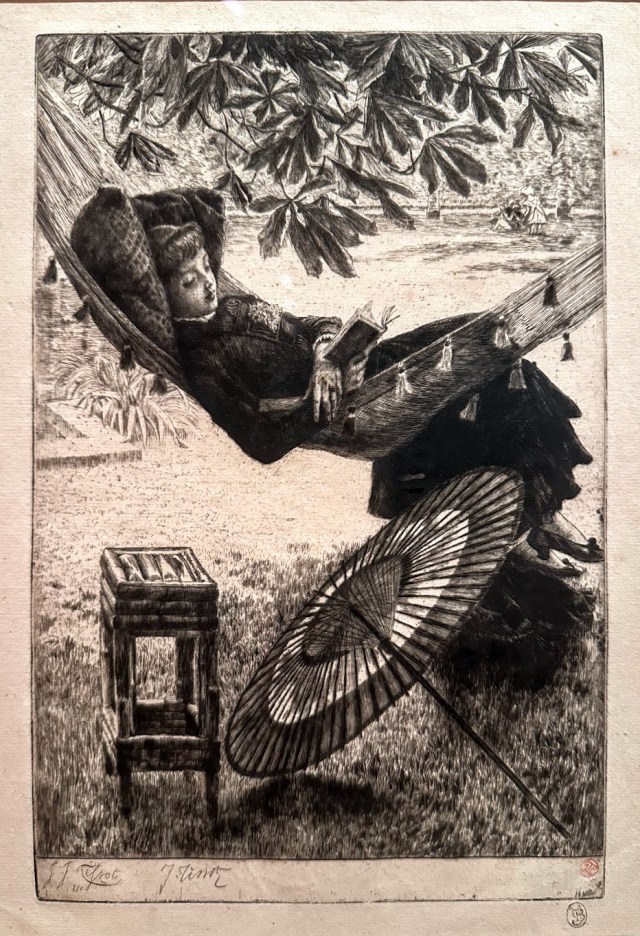
Tissot drew on the art historical tradition of women and natural cycles; ie. young women and spring.

Ippitsusai Buncho (Japanese, active 1765 – 1792), Kabuki. Segawa Kikunojo in female role of Ohatsu in“Yoni Osaka Nitsuino Myoto”

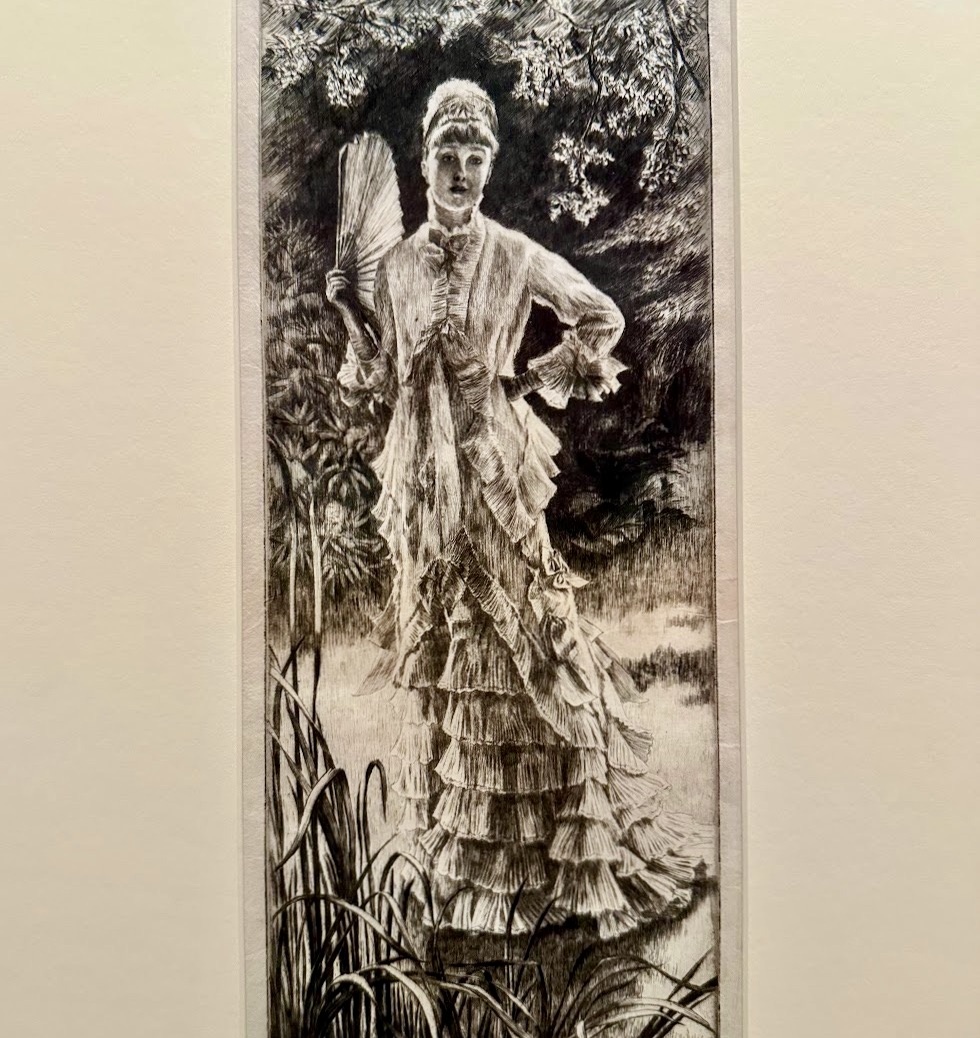
The elongated form, and stylized blades of grass in the foreground shows the influence of Japanese woodblock prints.

Spring Morning (1878)
Spring (1878)

Limiting the number of prints to a plate (which adds value through scarcity) was unusual prior to the second half of the 1800’s.

The simplest way to cancel a run is to rut the metal plate with deep lines.
PRINTS MADE BEFORE & AFTER PLATE CANCELLATION
Summer (1878)
October (1878)

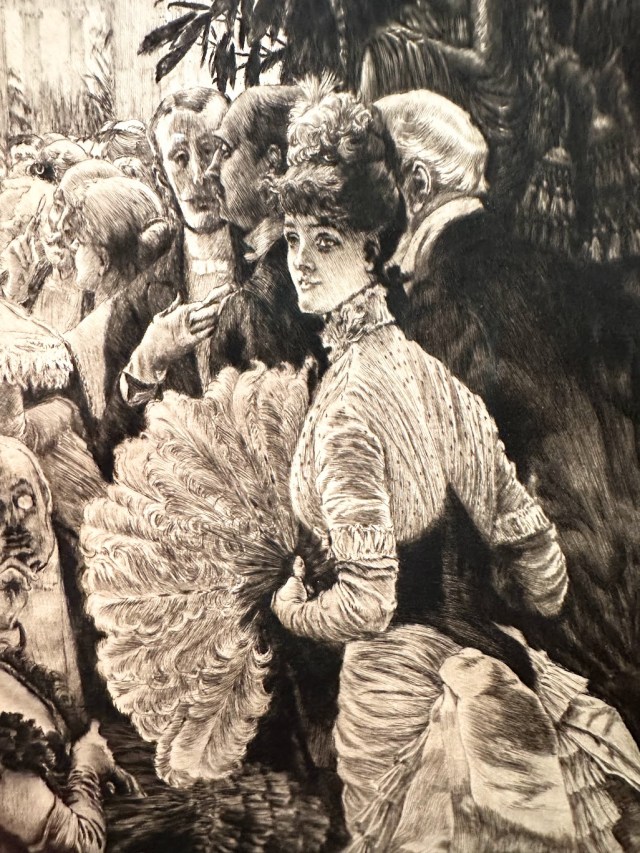
“He also depicted women in current fashions, presenting them as both timeless and contemporary.”
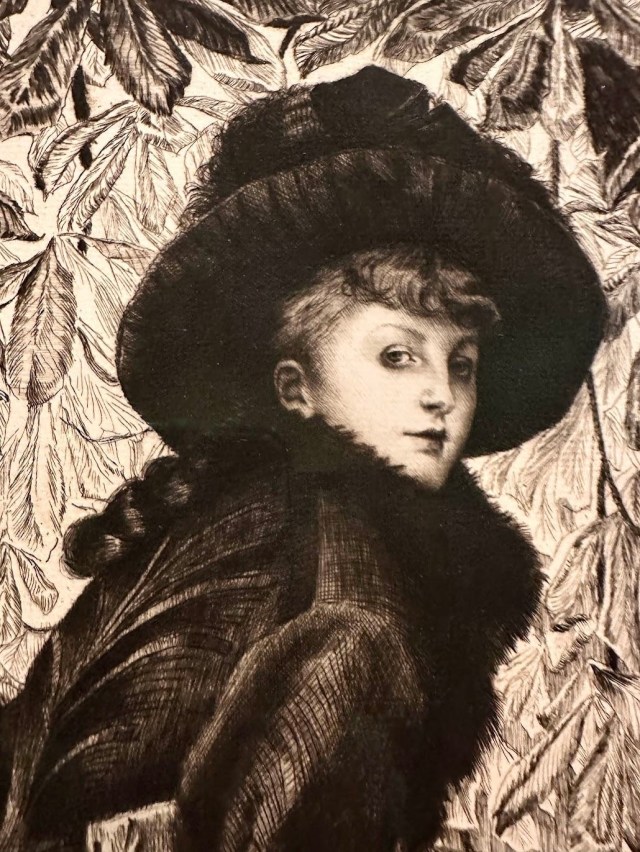
Despite the racial diversity of Europe at the time, Tissot’s artworks focus on white women.

The Thames

This image of a naval officer cruising the polluted Thames River with 2 women (Must be prostitutes!) was deemed “thoroughly and willfully vulgar”by a critic.

The Thames (1876)

The British saw this as immoral French art, which included Impressionism.

Emigrants (1880)

Tissot captured the global flow at bustling ports along the Thames.

This print highlights the artist’s expertise in capturing nautical scenes.

Tissot had an infinitude for portraying women in ambiguous situations.

This emigrant woman leaving a ship with her baby makes one wonder where her journey will lead.

Souvenirs of the Siege of Paris

This collection recounts Tissot’s time as a sharpshooter with The French National Guard during the Franco-Prussian War (1870 – 1871)

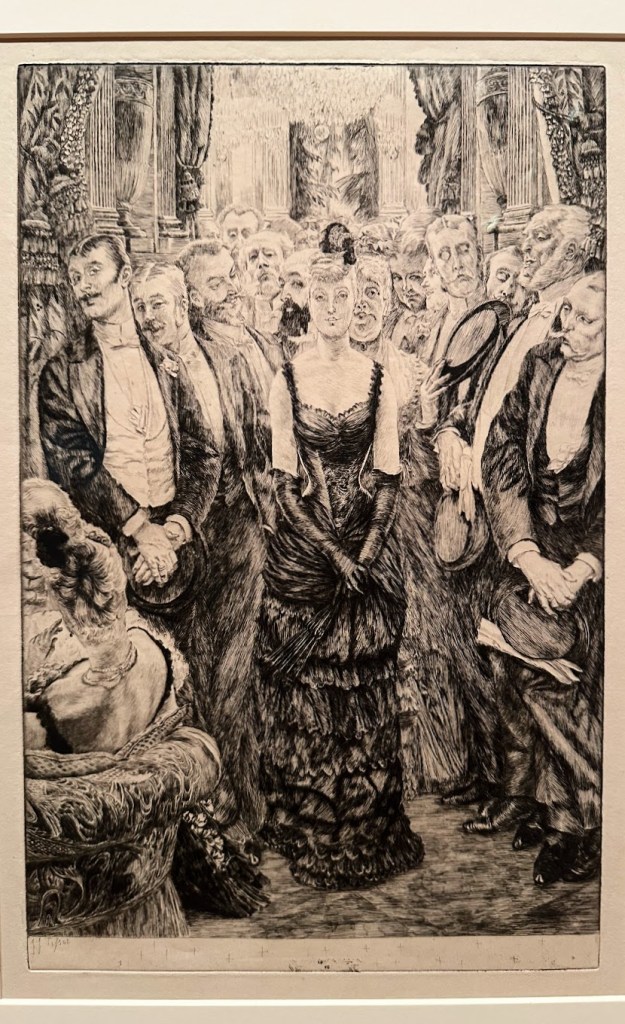
Foyer of the Comédie-Française, Recollection of the Siege of Paris (1877)

Tissot’s images of dead or ailing men depict specific historical events and locations. They were viewed by Victorians as accurate reportage.

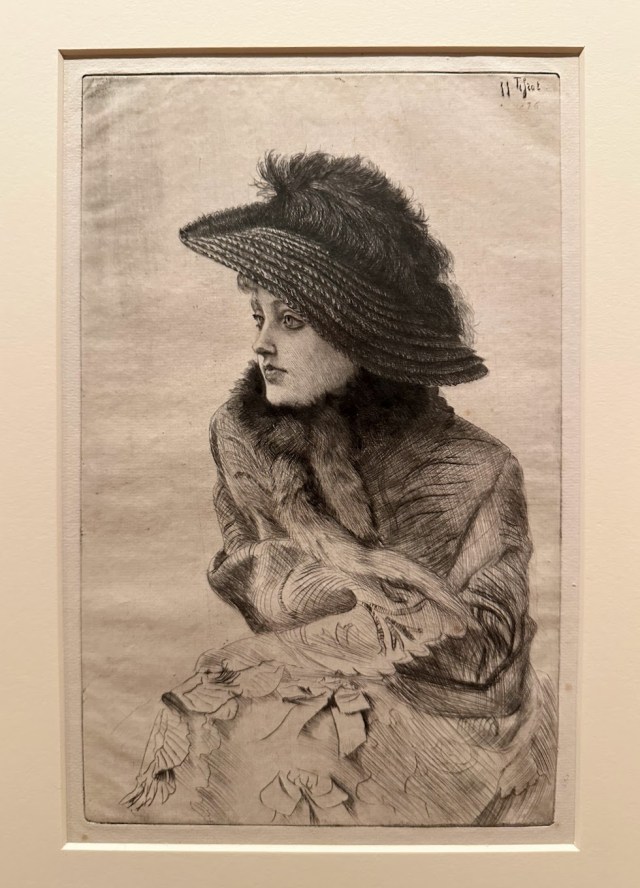
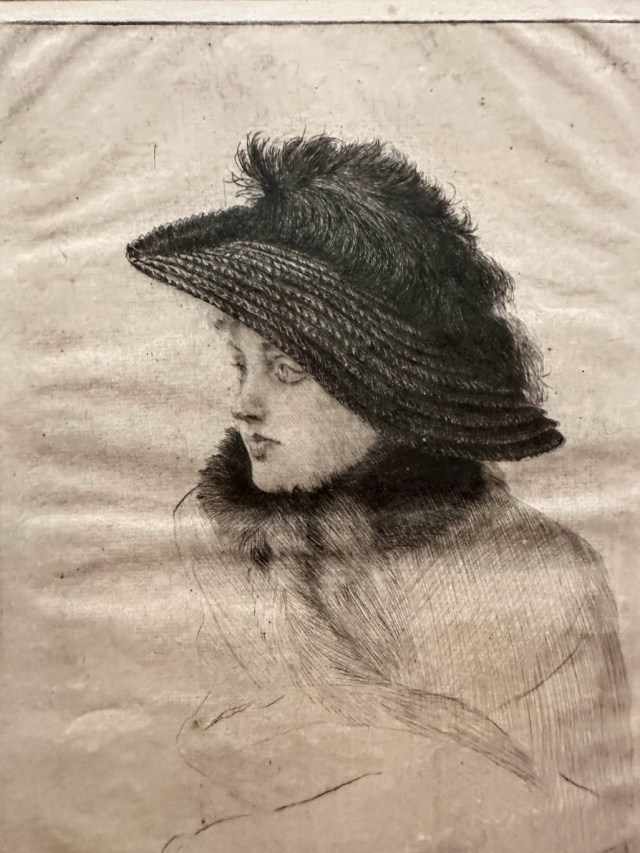
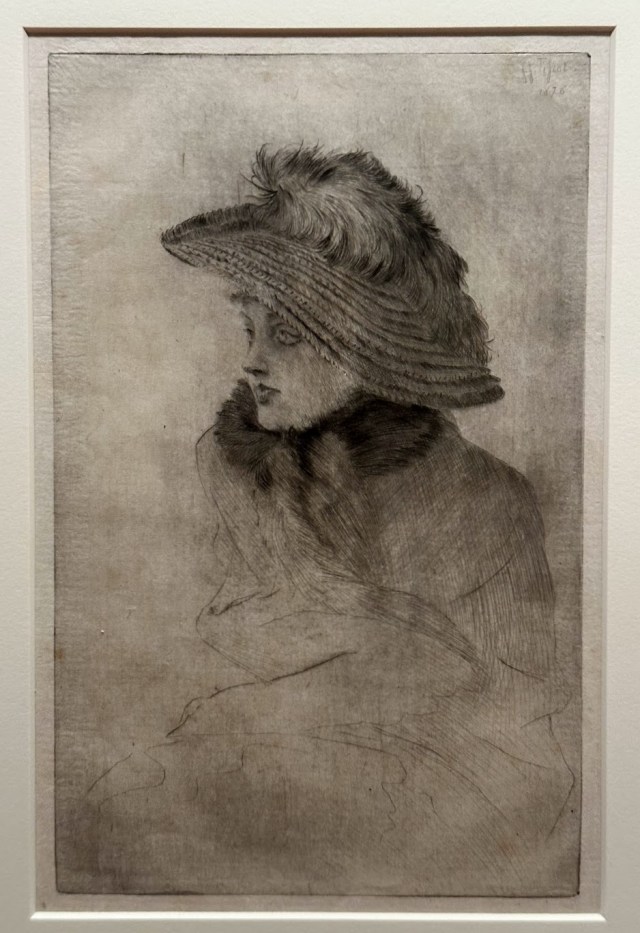
La Frileuse

Kathleen Newton (1854 – 1882)

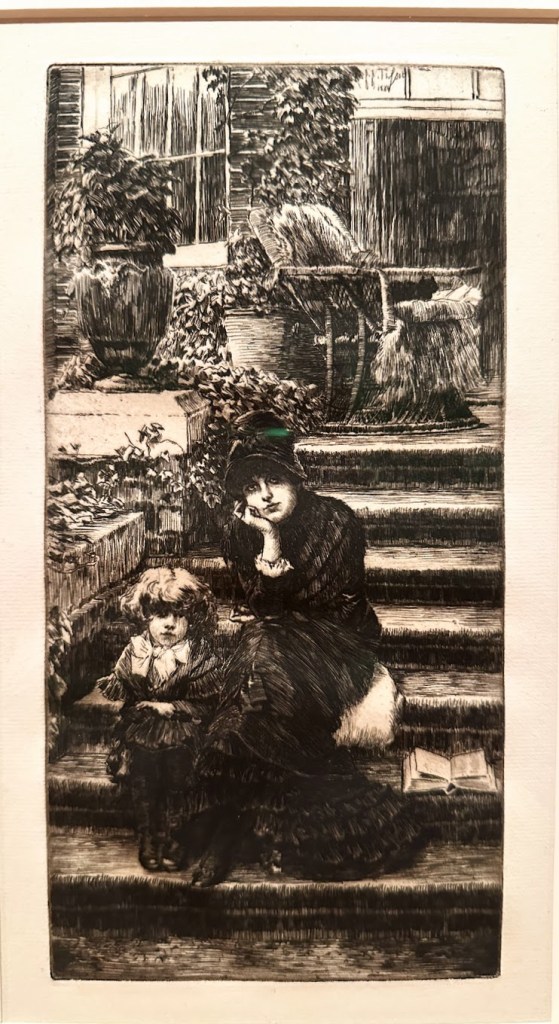
Kathleen Turner was a young Irish divorcée and mother, who lived with Tissot in London until her early death at 28 from tuberculosis. Tissot often used her as a model.

Tissot’s prints were affordable, attracting middle-class and international buyers. His Victorian themes were adored and his prints circulated the globe, amassing the artist a small fortune.

The Women of Paris

Following the death of Kathleen in 1882, Tissot returned to Paris.
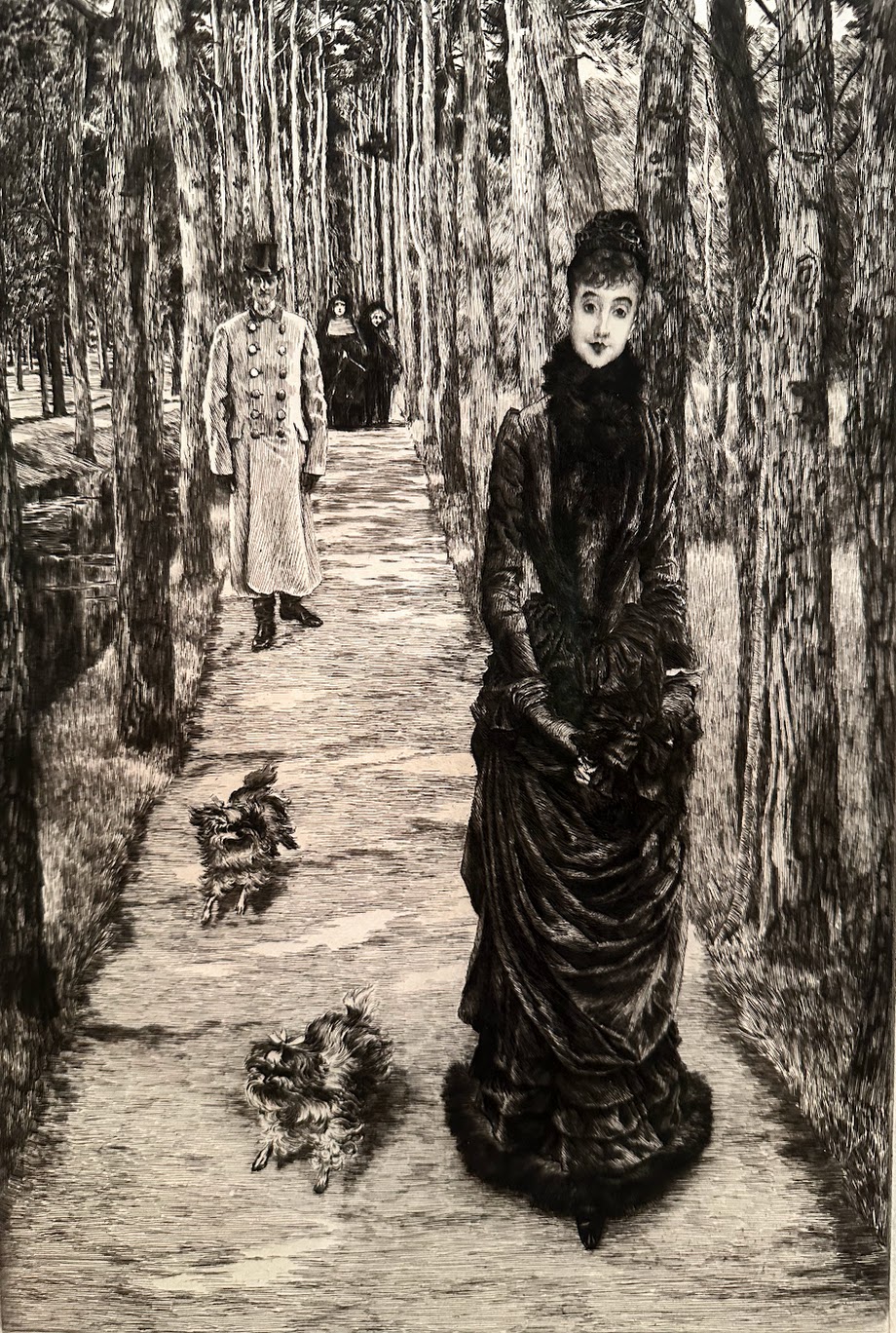
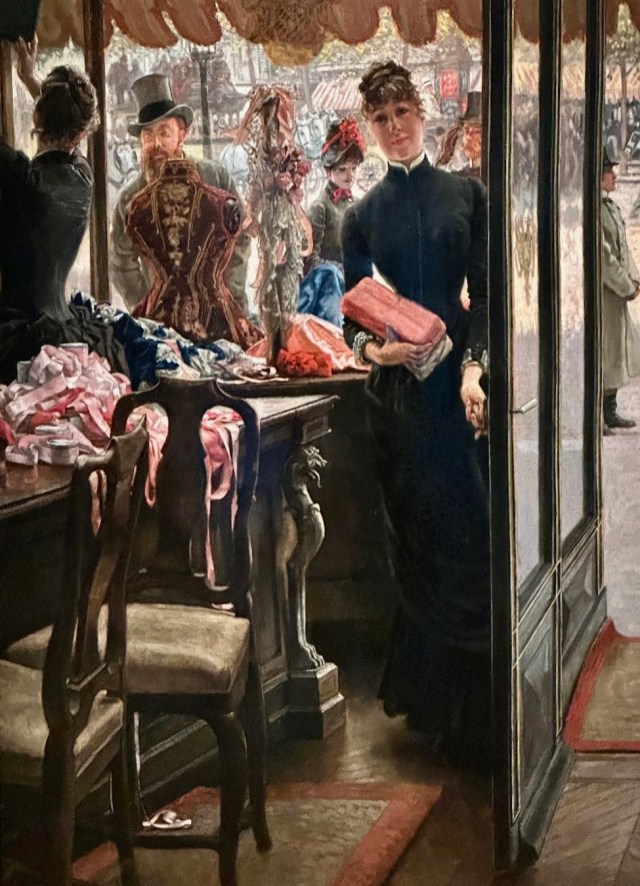
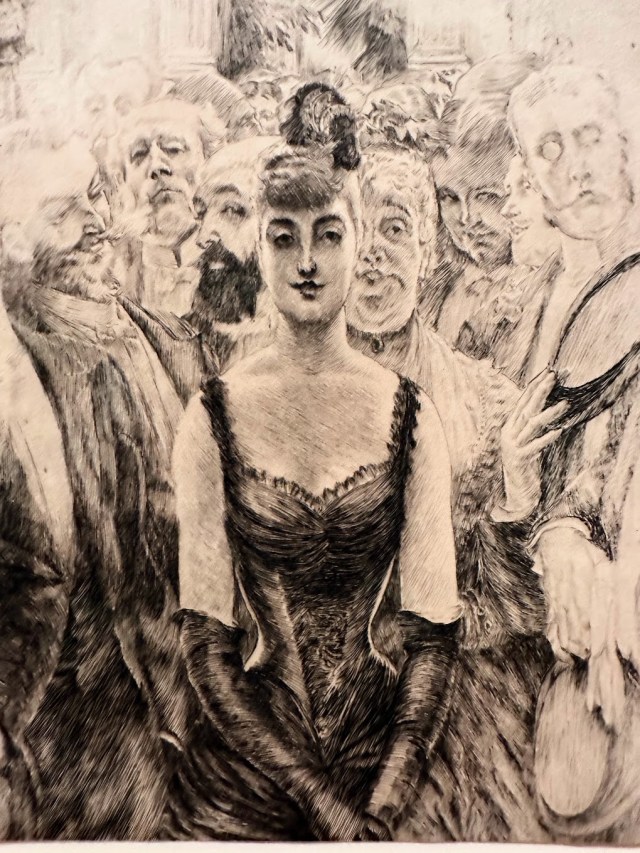
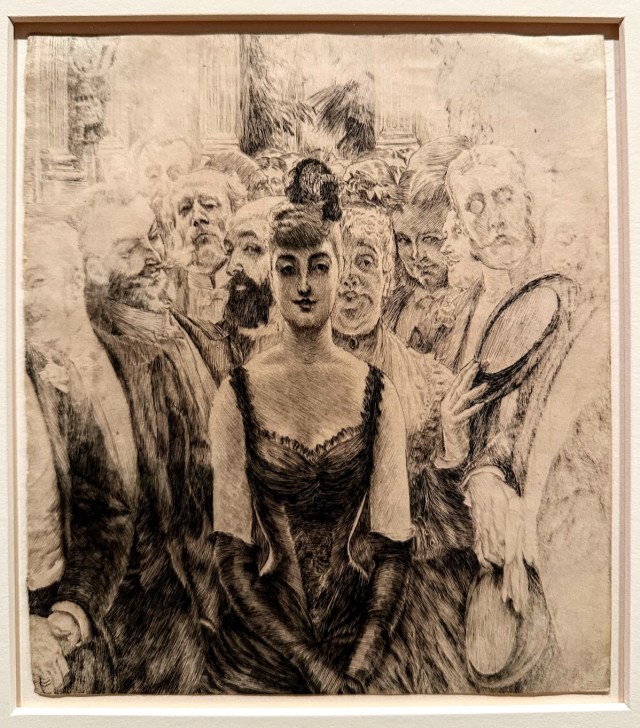
Tissot exhibited 15 paintings and a corresponding print series of modern Parisian women from different social classes, each accompanied by a short essay by a prominent French writer.

Critics panned the show as behind the times. They claimed he painted “the same Englishwoman” repeatedly.

“Following the critical failure of his exhibition, Tissot never focused on the theme of modern womanhood again.”
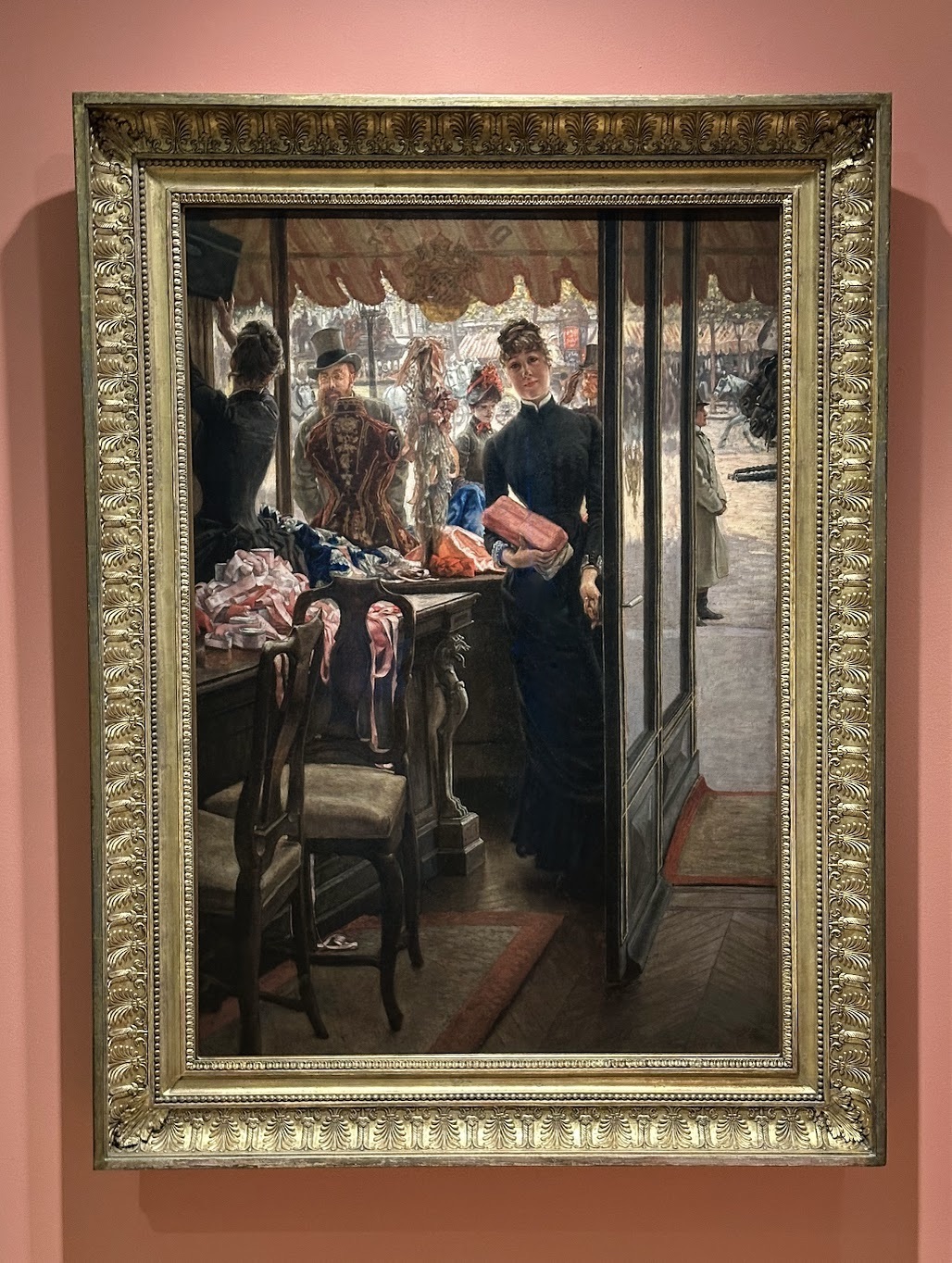
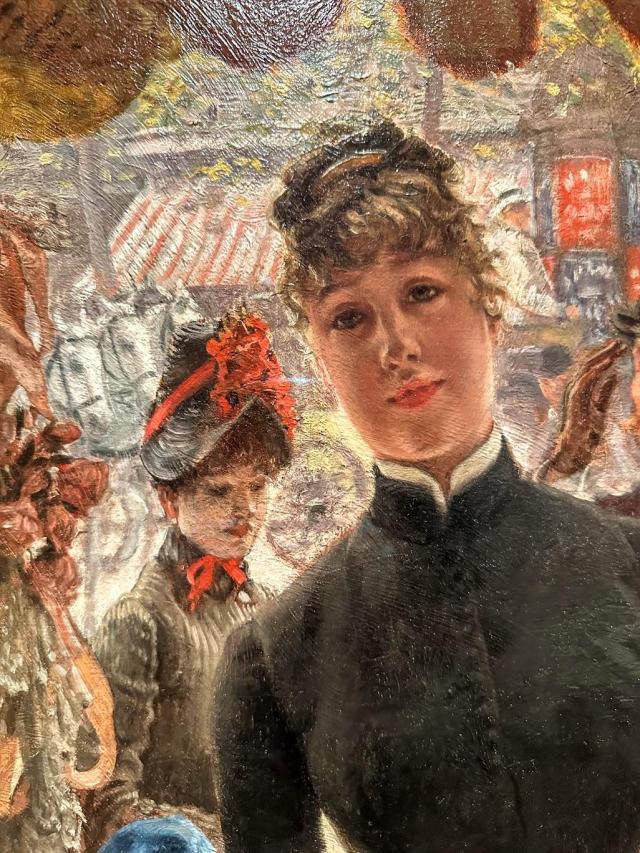
Shop Girl (circa 1884)

Photos taken © Resa McConaghy – January 7, 2025

Art Gallery of Ontario, Toronto, Canada

Source material – Art Gallery of Ontario

Tissot – I

Tissot, a name I hadn’t heard much. Then the AGO announced an exhibit featuring their collection of 2 oil paintings, 1 watercolour and 30 etchings on paper.

A Most Enchanting Day at the AGO

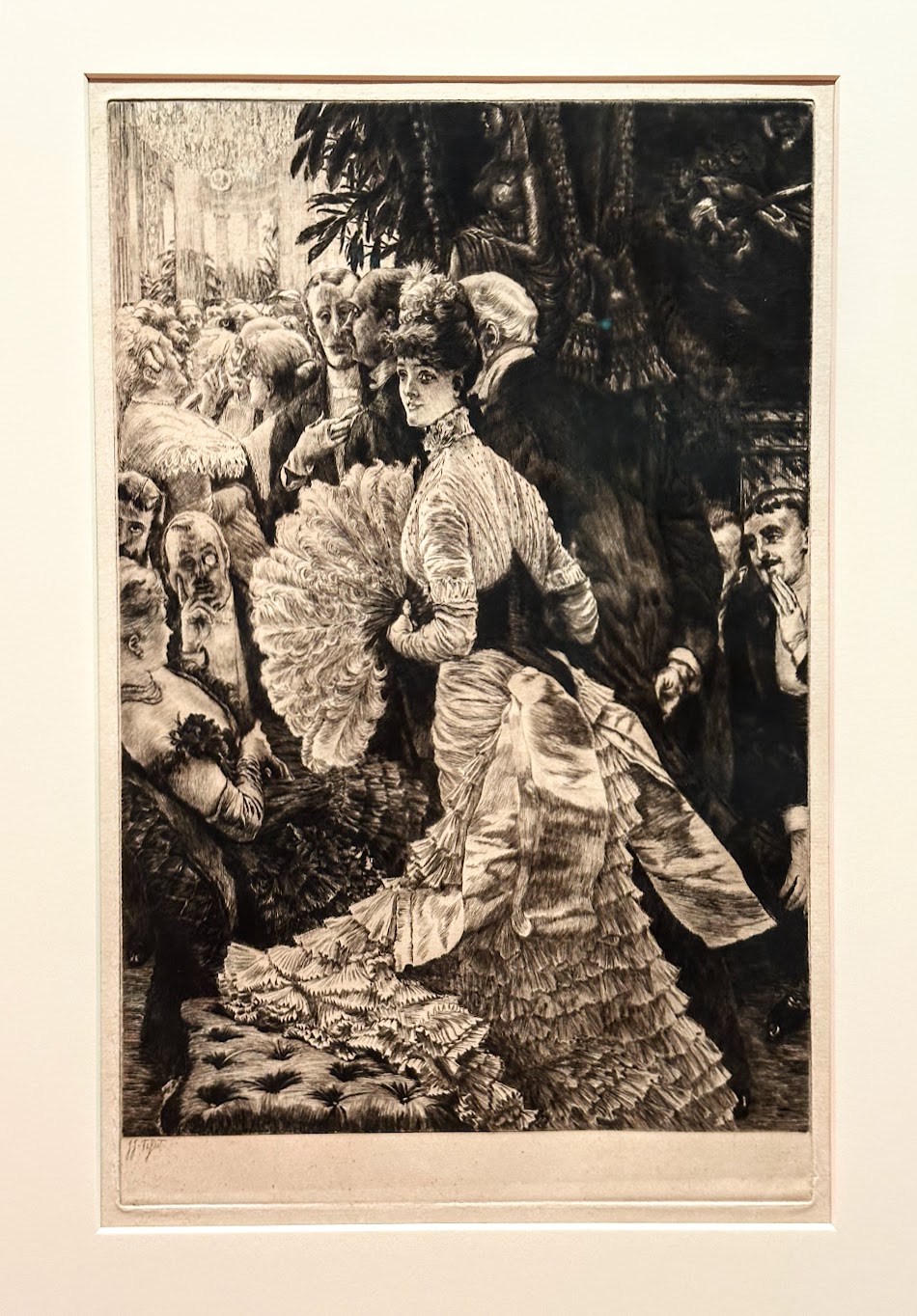
The Fashionable Beauty (1885)

In the last decades of the nineteenth century, James Tissot portrayed women within the contradictions of the period.

Political Woman (1885)

Modernity via the speed of travel, fashion and commodity culture is juxtaposed with the constraint of women’s every day lives.

Flaunting the “Masculine” Realm

A well dressed woman reads a newspaper. The fashionable Japanese-influenced wallpaper lining the wall informs of her engagement with the outside world & knowledge of trends.

Fashion magazines and novels were appropriate for Victorian women.

Newspapers were linked to men, as they symbolized factual knowledge and interest in global politics. Although, the image below depicts another reason a woman would read a newspaper.

Without a Dowry (1885)

The above image portrays a young woman and her mother in a Parisian park. The black clothing suggests they are mourning a male relative, and are without a dowry. The daughter sits in an available position, while the mother searches the newspapers for marriage offers.

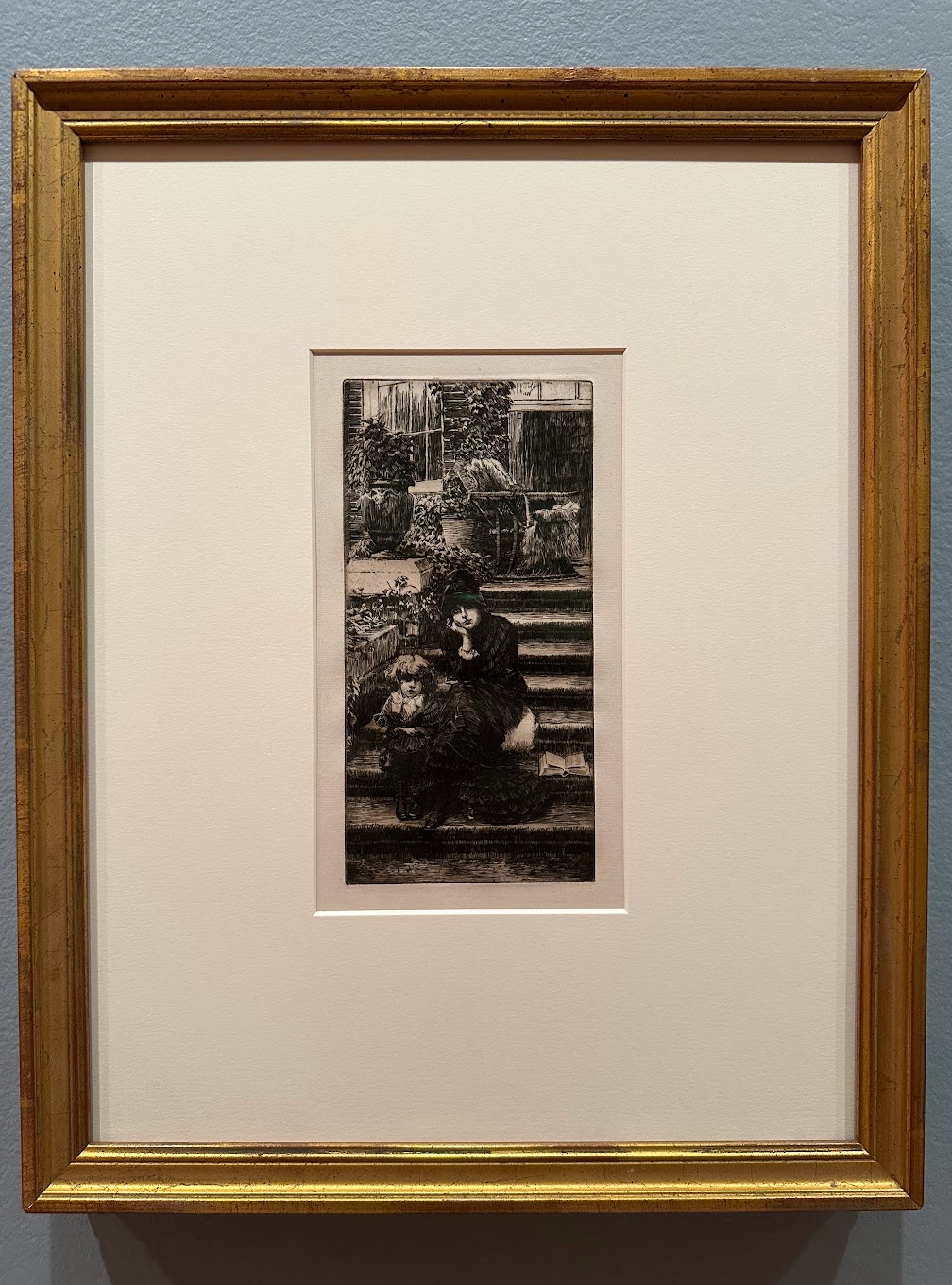
Dreaming (1881)

More About the Artist

“Best known for his paintings of fashionable figures, Tissot began his career in Paris. While he turned down Edgar Degas’s invitation to exhibit with the impressionists, he shared the groups desire to portray scenes of modern life in an innovative style. He moved to London in 1871 after fighting in the Franco-Prussian War, and became a popular painter of Victorian scenes, particularly those showing young women in typically modern moments, before returning to France in 1882.” – Art Gallery of Ontario

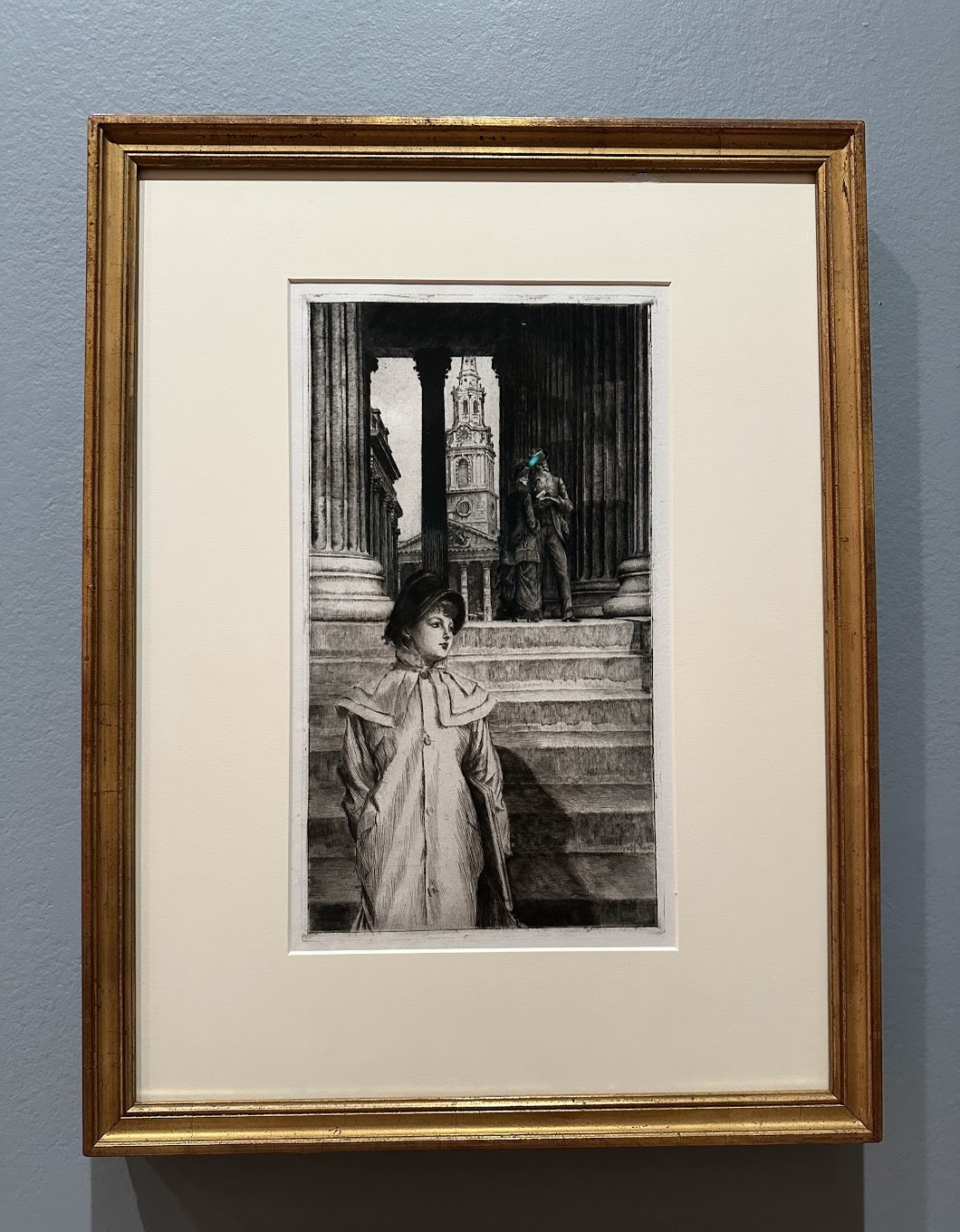
Portico – National Gallery, London (1878)

Moral Ambiguity, a Central Theme

Sunday Morning (1883)

A well dressed young woman walks to church holding a bible. Her raised eyebrows and tentative gaze pose the question, does she need to atone for her sins, or is she nervous about being late for service?

Horizontal women’s bodies were lubricous from a voyeuristic perspective.

Slumbering female figures had erotic connotations in the Victorian Era, especially in semi-conscious states like dreaming or sleeping.

The Fan (1876)

Now discredited – The below woman’s twisted hand was indicative of the pathological disorder – hysteria. This “chic” female disease was considered fashionably feminine and modern.

Sleeping Woman (1876)

The moral ambiguity of Tissot’s images was integral to their popular appeal.

British critics claimed they were too, risqué, too French.

A Personal Fascination

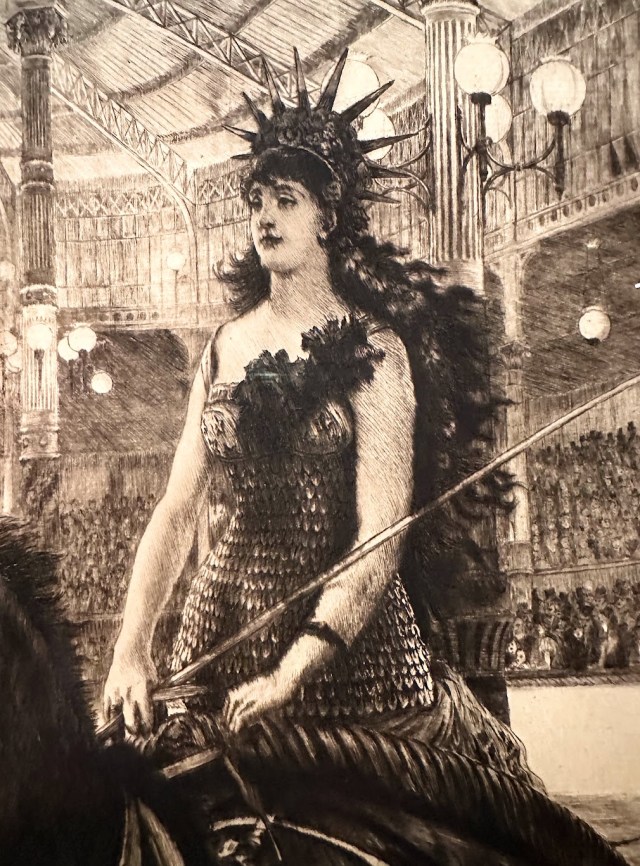
Other than the title, I know only that the etching below is in the Hippodrome (ℹ︎ Met Museum site). I was mesmerized by it. All that skin makes the costumes seem so modern and the Statue of Liberty crowns were piquing.

The Ladies of the Chariots (1885)

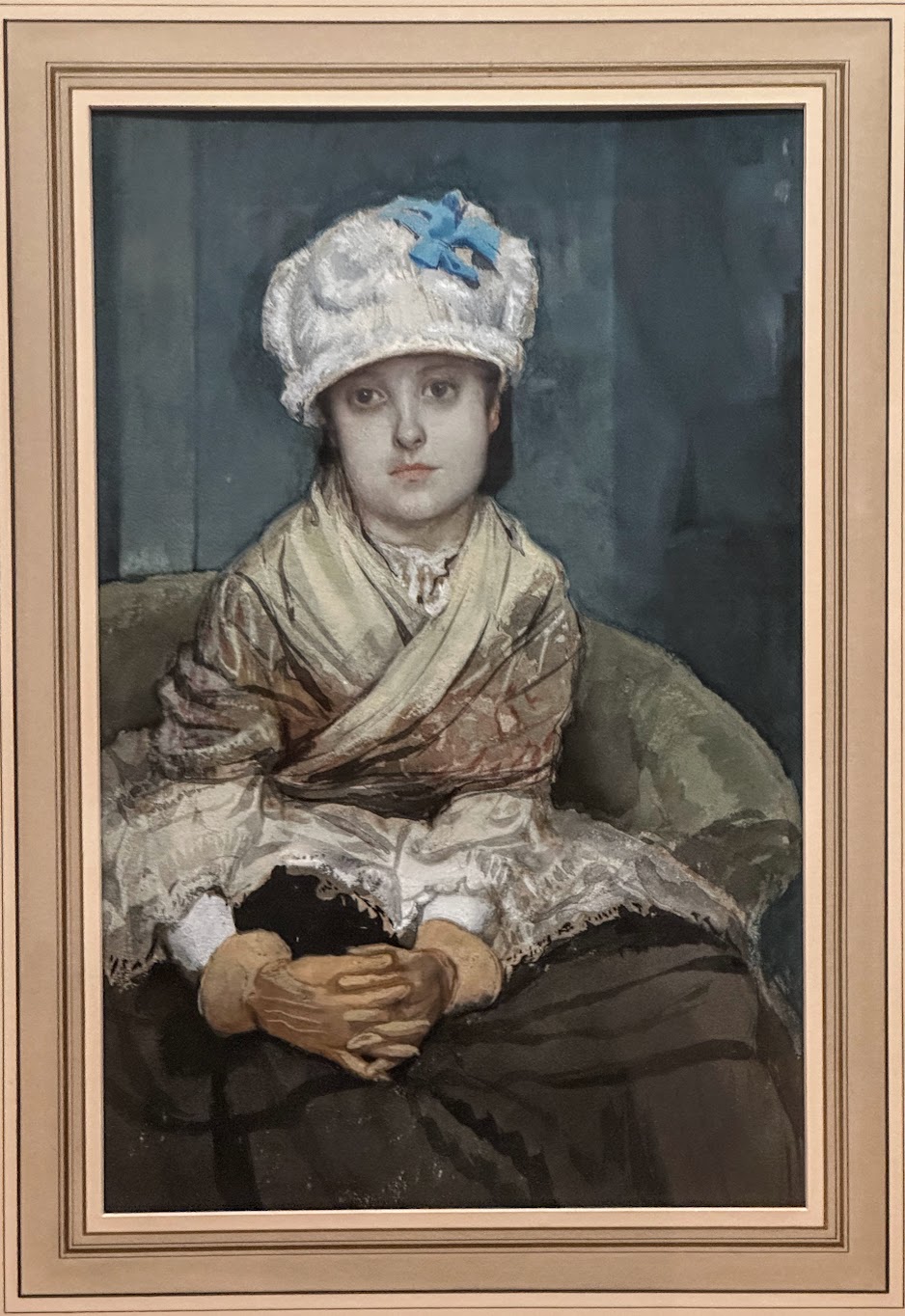
I can’t get everything into 1 post, so there will be a Tissot – II. In the meantime, I leave you with a shot of the 1 watercolour with gouache on paper.

Waiting (late 1800’s)

The young girl’s bored stare, pale skin, under eye circles with oversized bonnet and gloves (highlighting weight loss) suggest tuberculosis.

“Consumption” was coined a term, as it consumed patients, and ate away bodies.

Is she waiting for someone or something?

Is she waiting to heal or die?

Photos © Resa McConaghy – Taken January 7, 2025

Art Gallery of Ontario, Toronto, Canada

Information Source: The Art gallery of Ontario