Check out the latest celebrity post Holly and I have collaborated on!
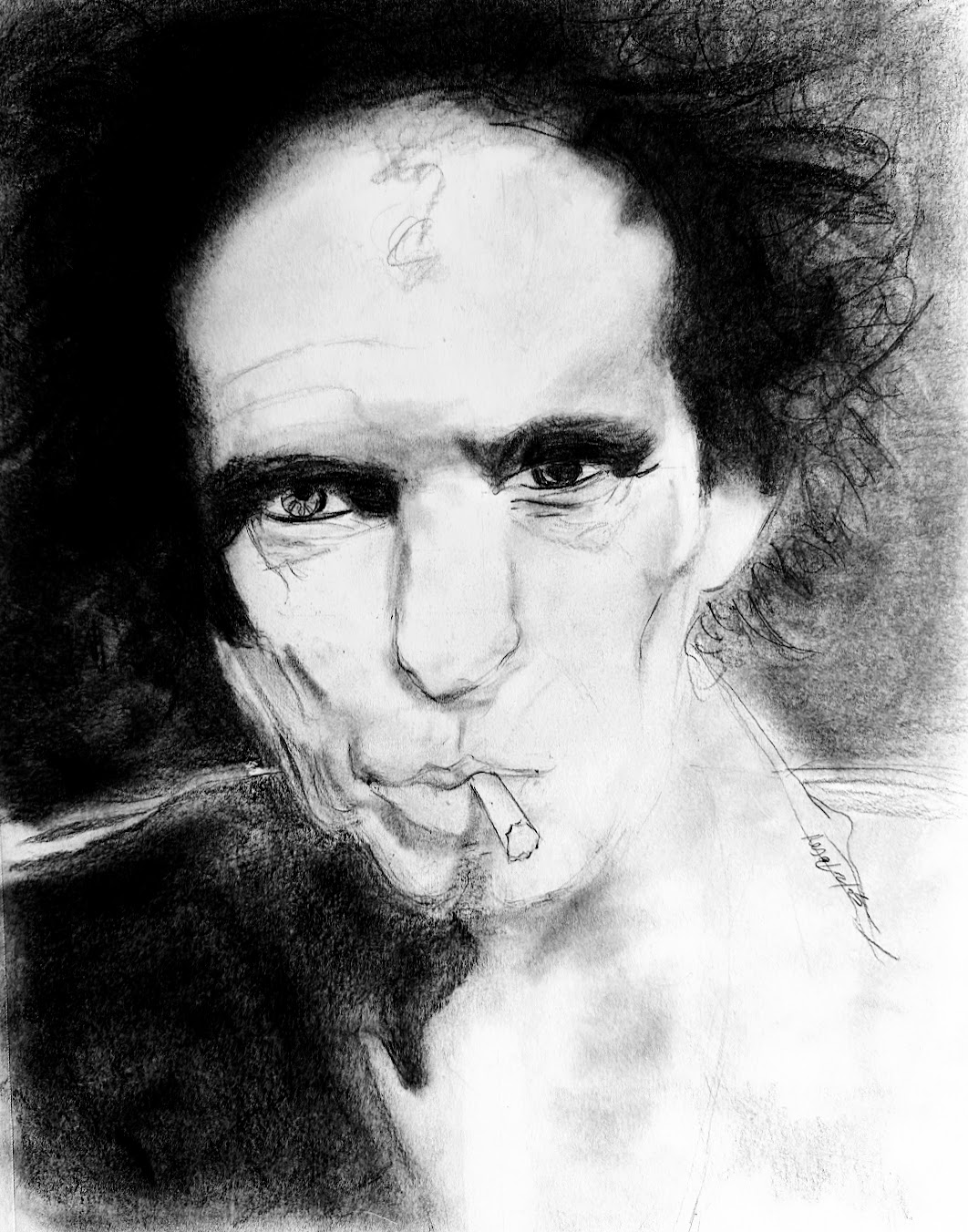
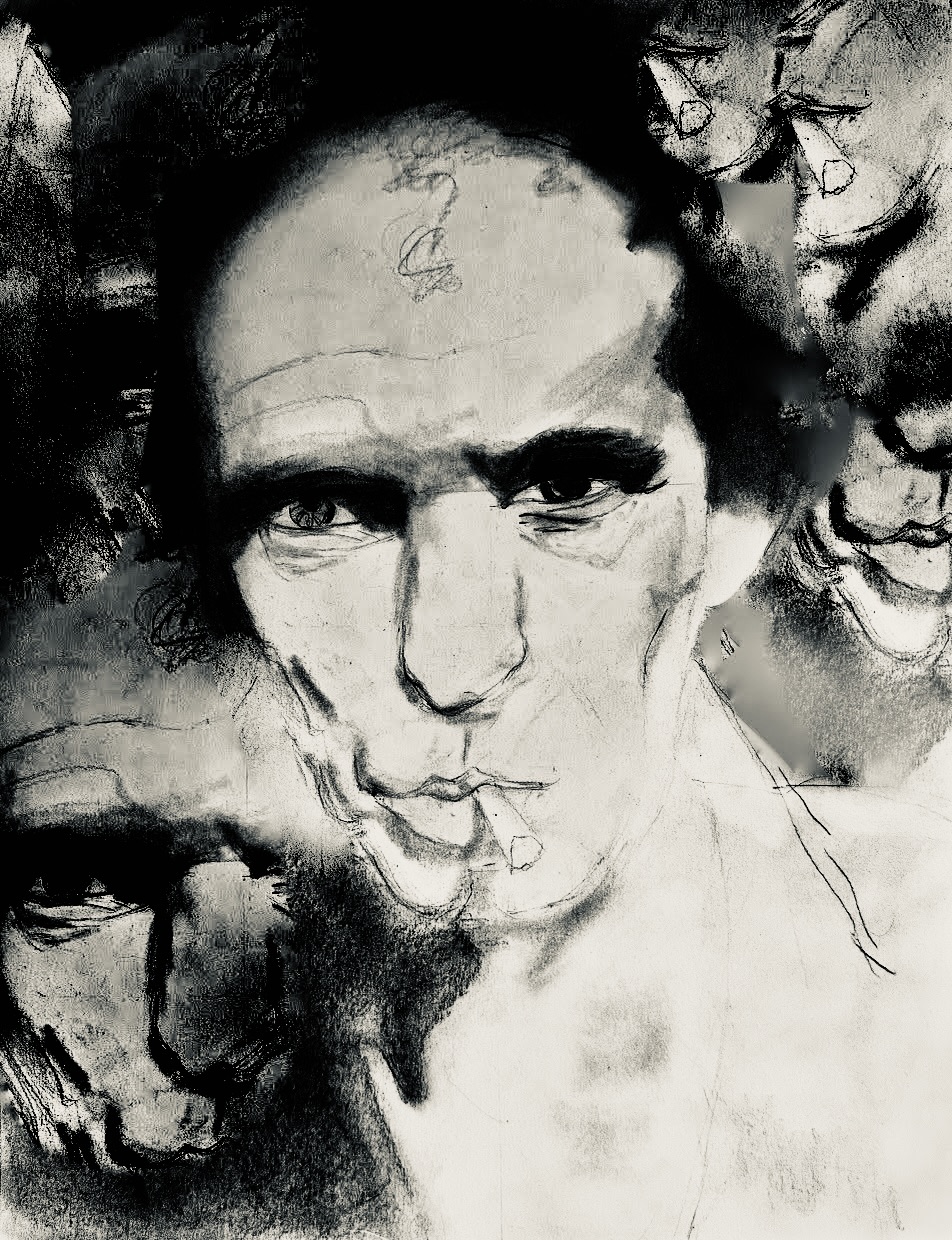
Please leave any comments on Holly’s HOUSE of HEART

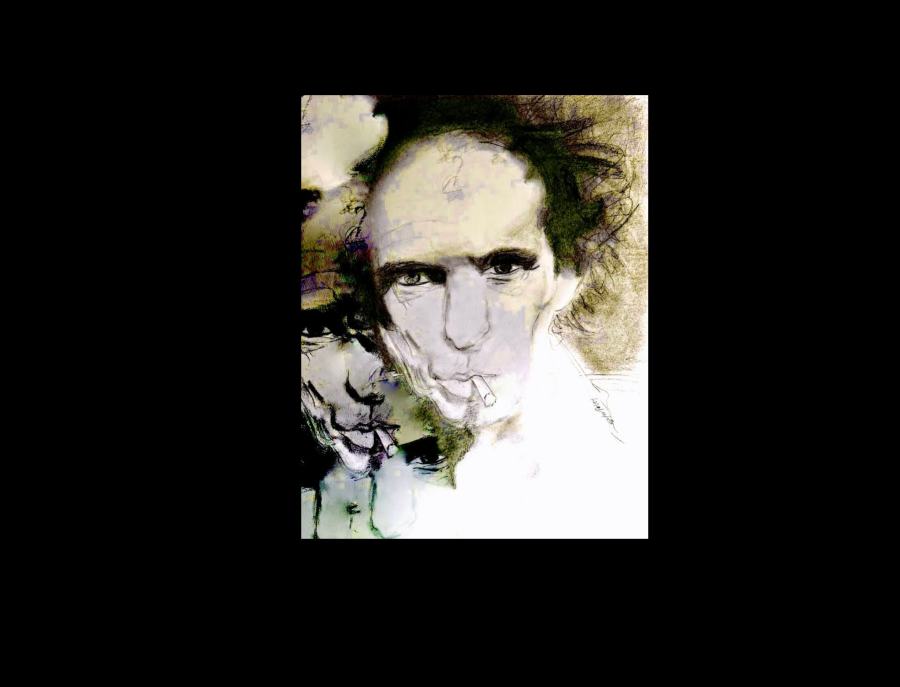
Check out the latest celebrity post Holly and I have collaborated on!
Please leave any comments on Holly’s HOUSE of HEART
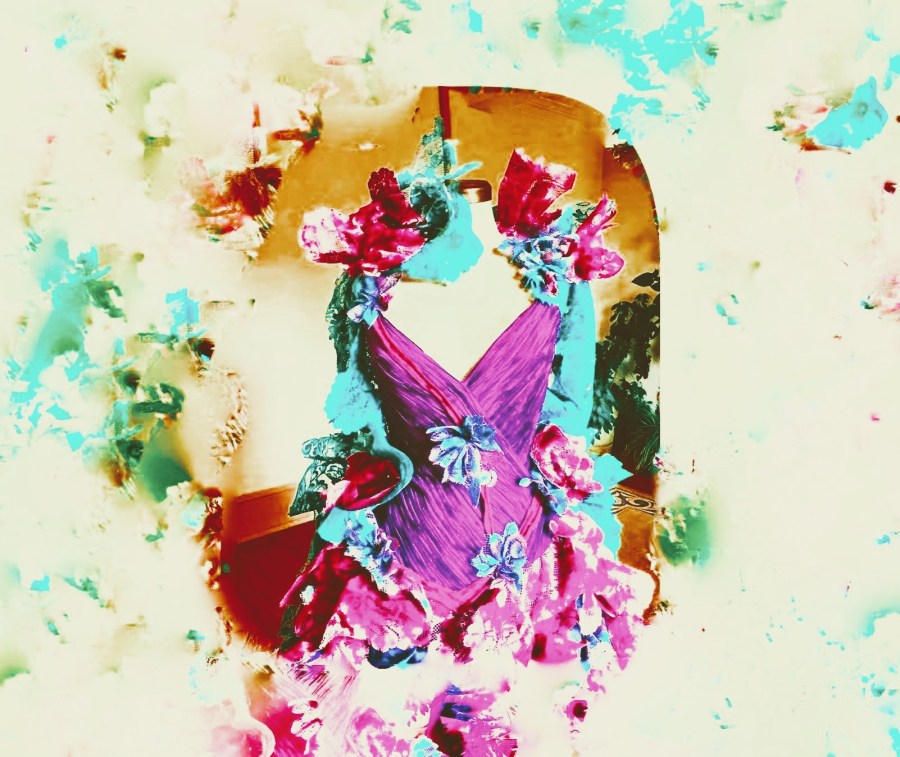

Please leave any comments on Robbie’s blog!

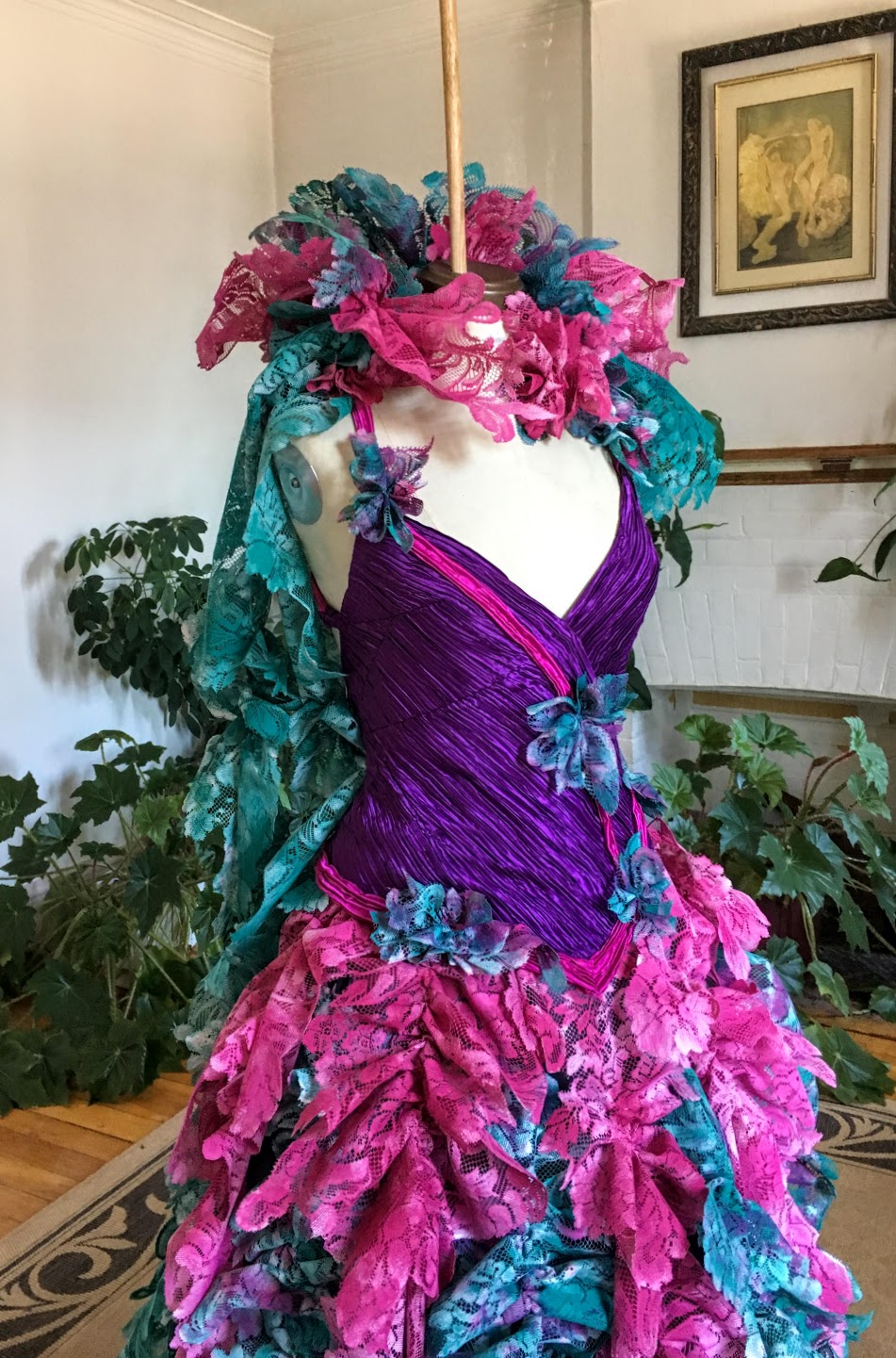
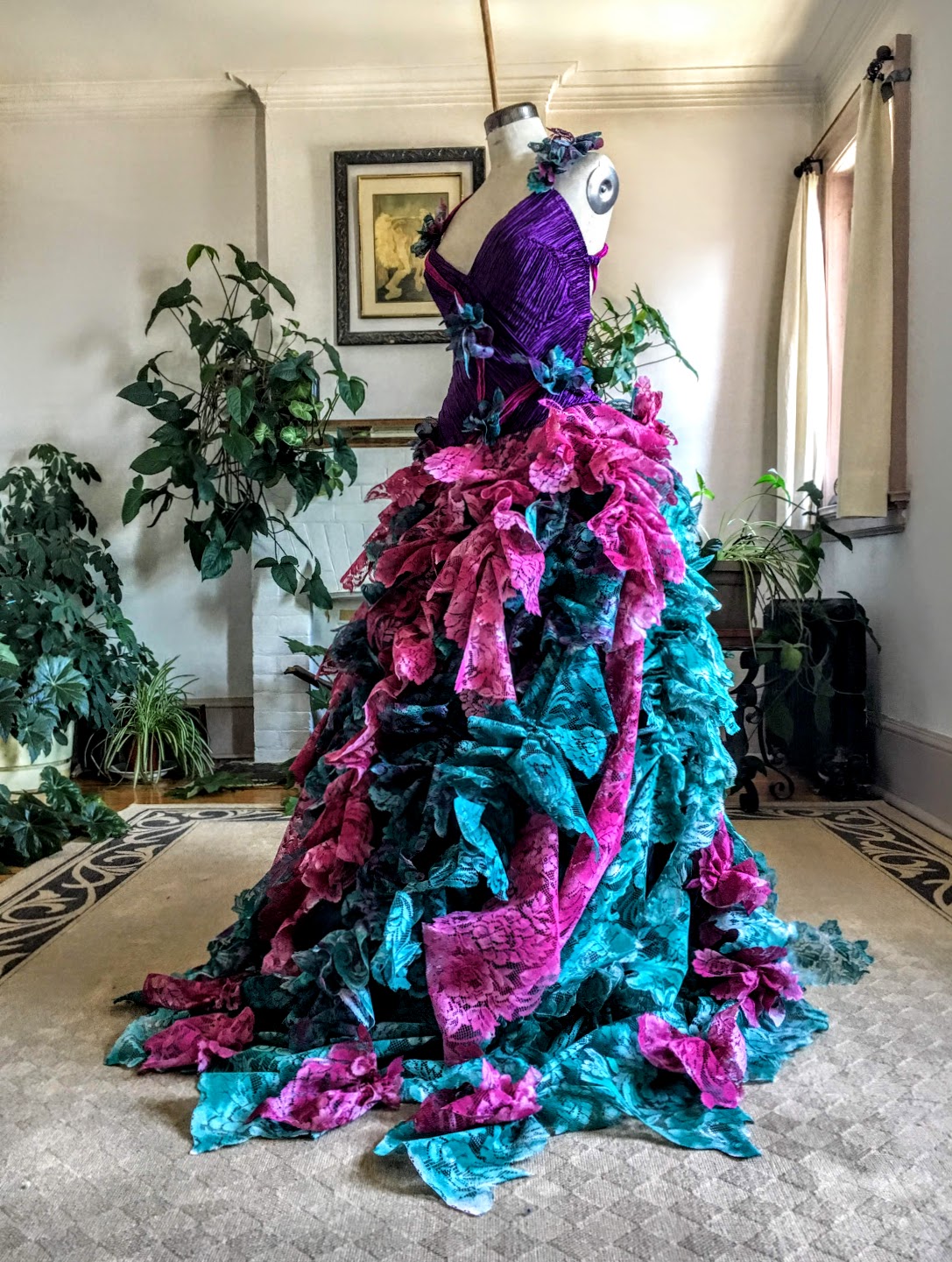
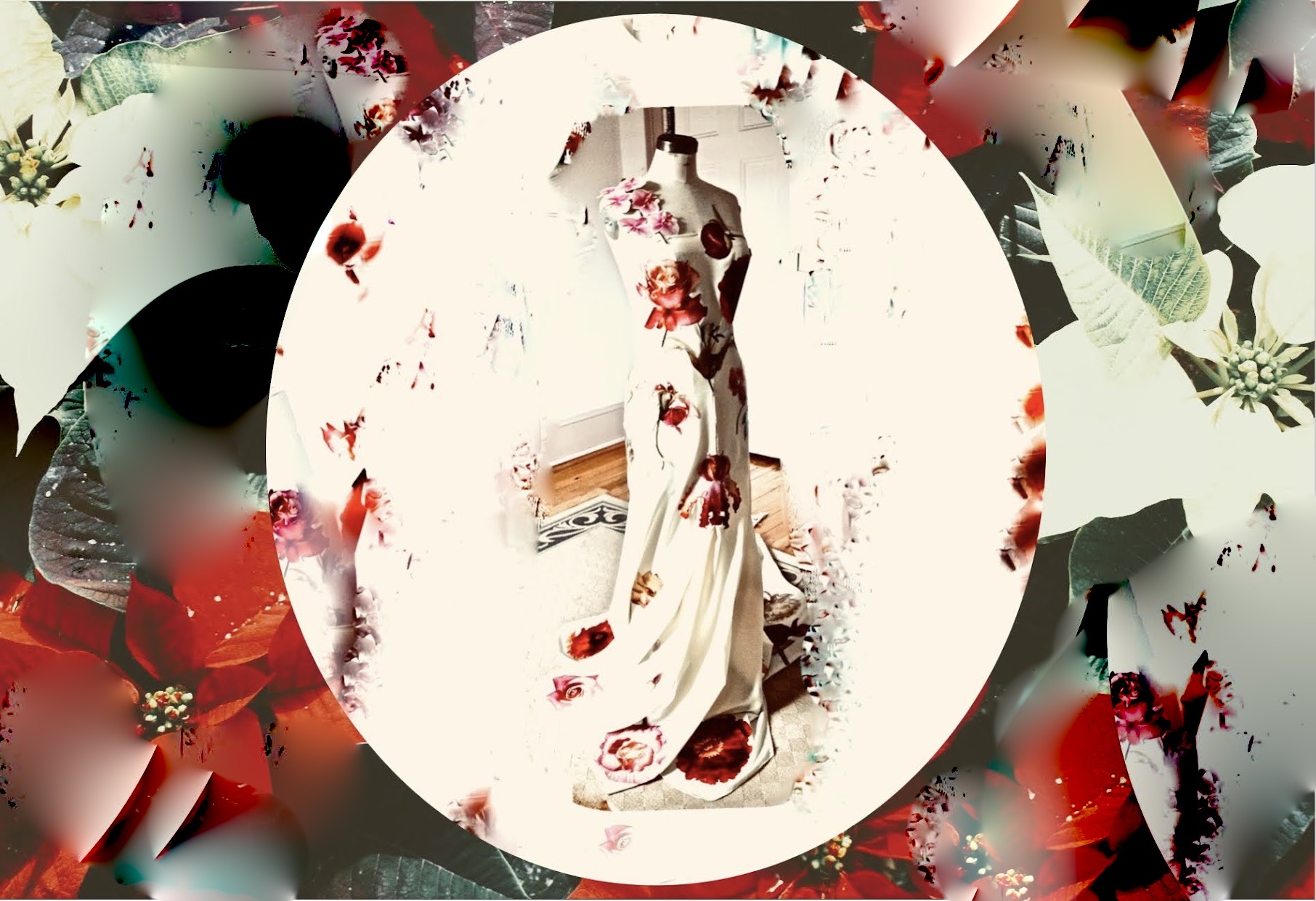
Thank you to Robbie Cheadle and Latinos USA for featuring Flora Blanca this Holiday Season!
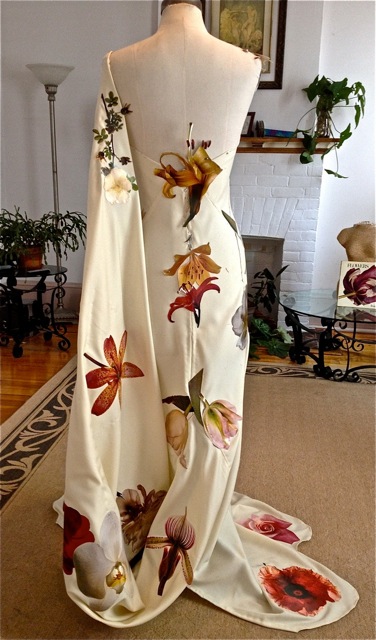
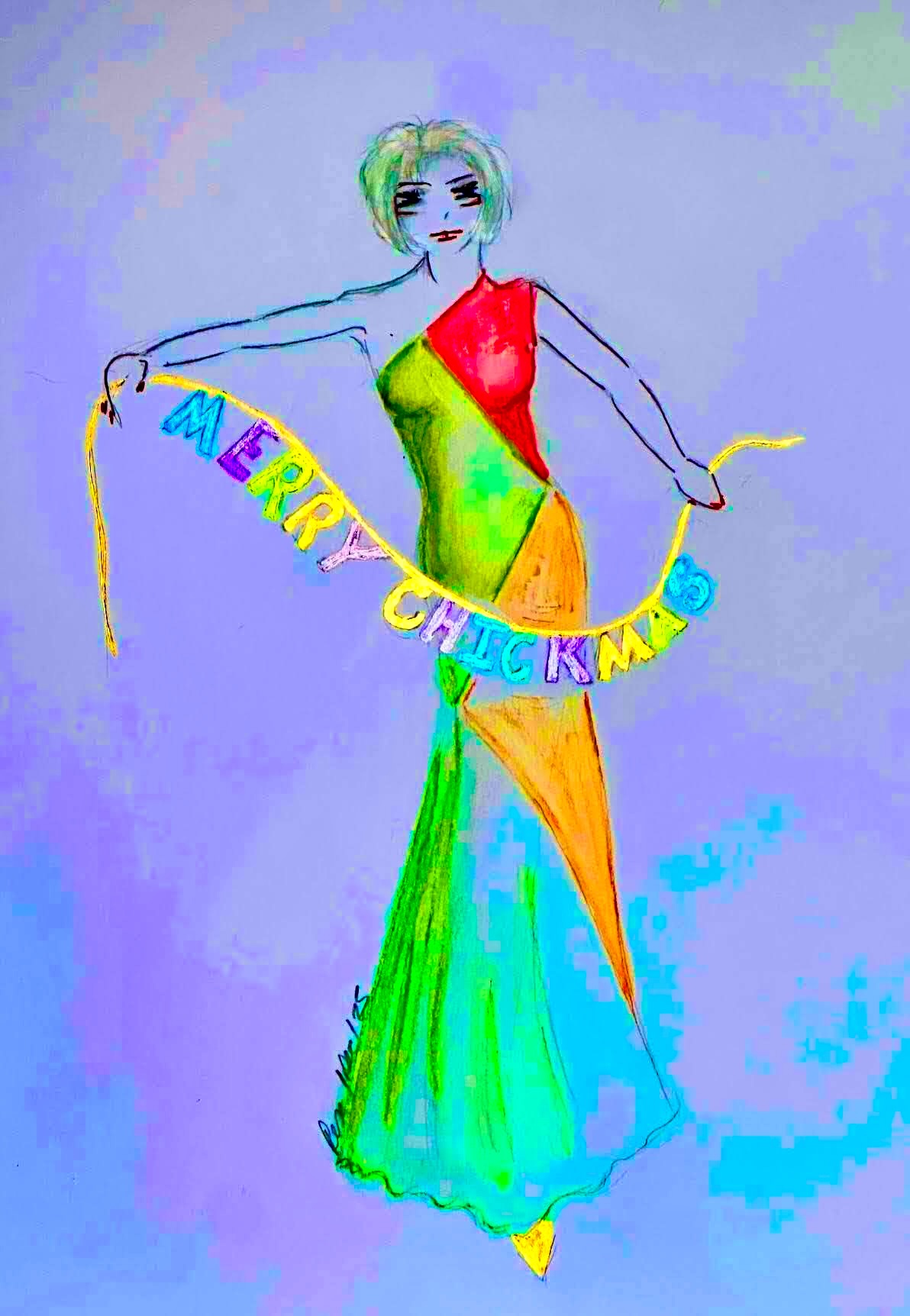
While we are celebrating the Holidays, pop over to Gigi’s for an Art Gowns’ Fashion Show of all original designs, created especially for CHICKMAS at The Coop!

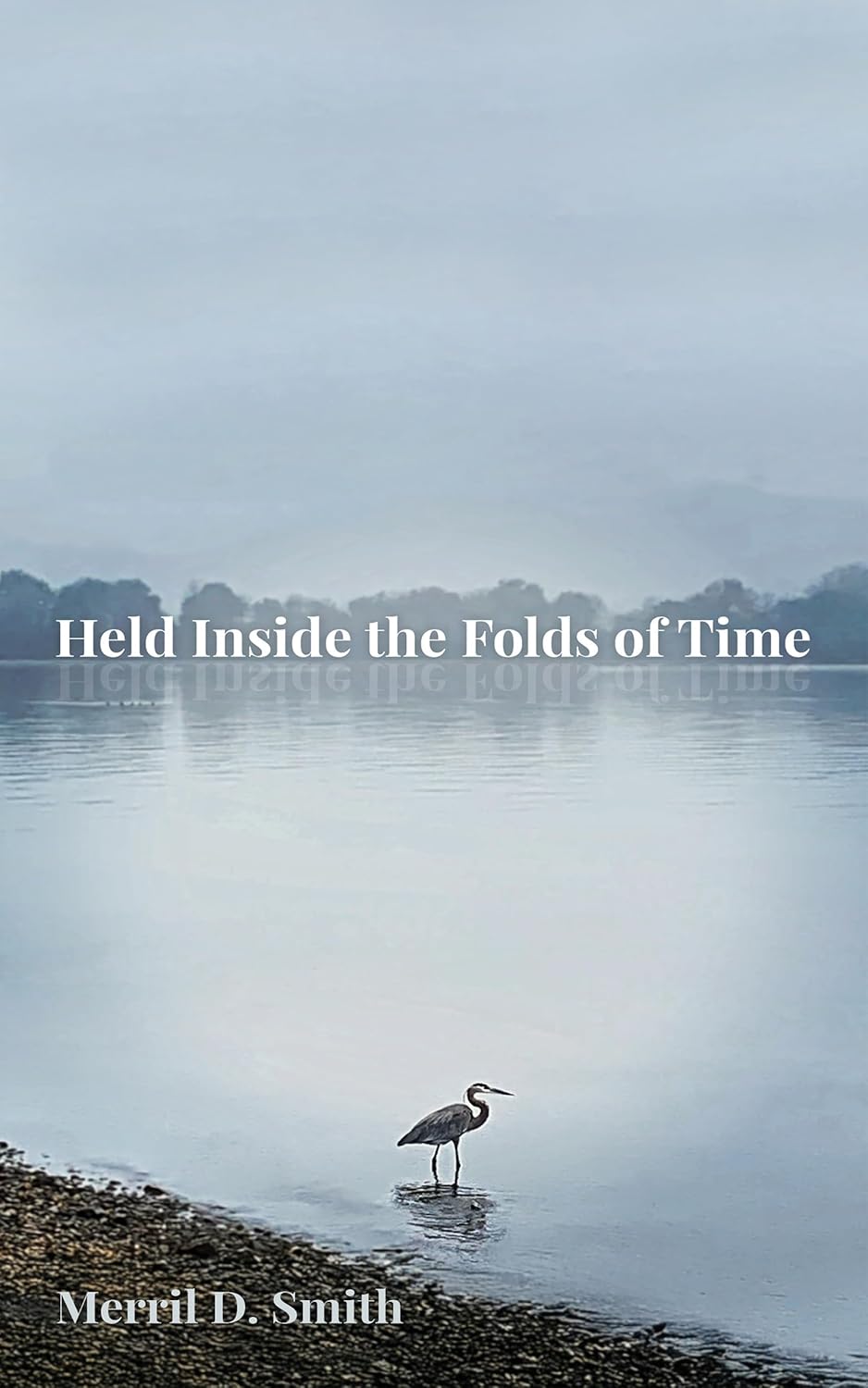
This book of poetry is luscious, rich with words and resplendent with photographs. It inspired me to draw.
This was the first poem that I remembered when I finished reading the book. It’s not long, and Merril was kind enough to send us a recording of her reciting it. So, let’s listen to it, instead of reading it!
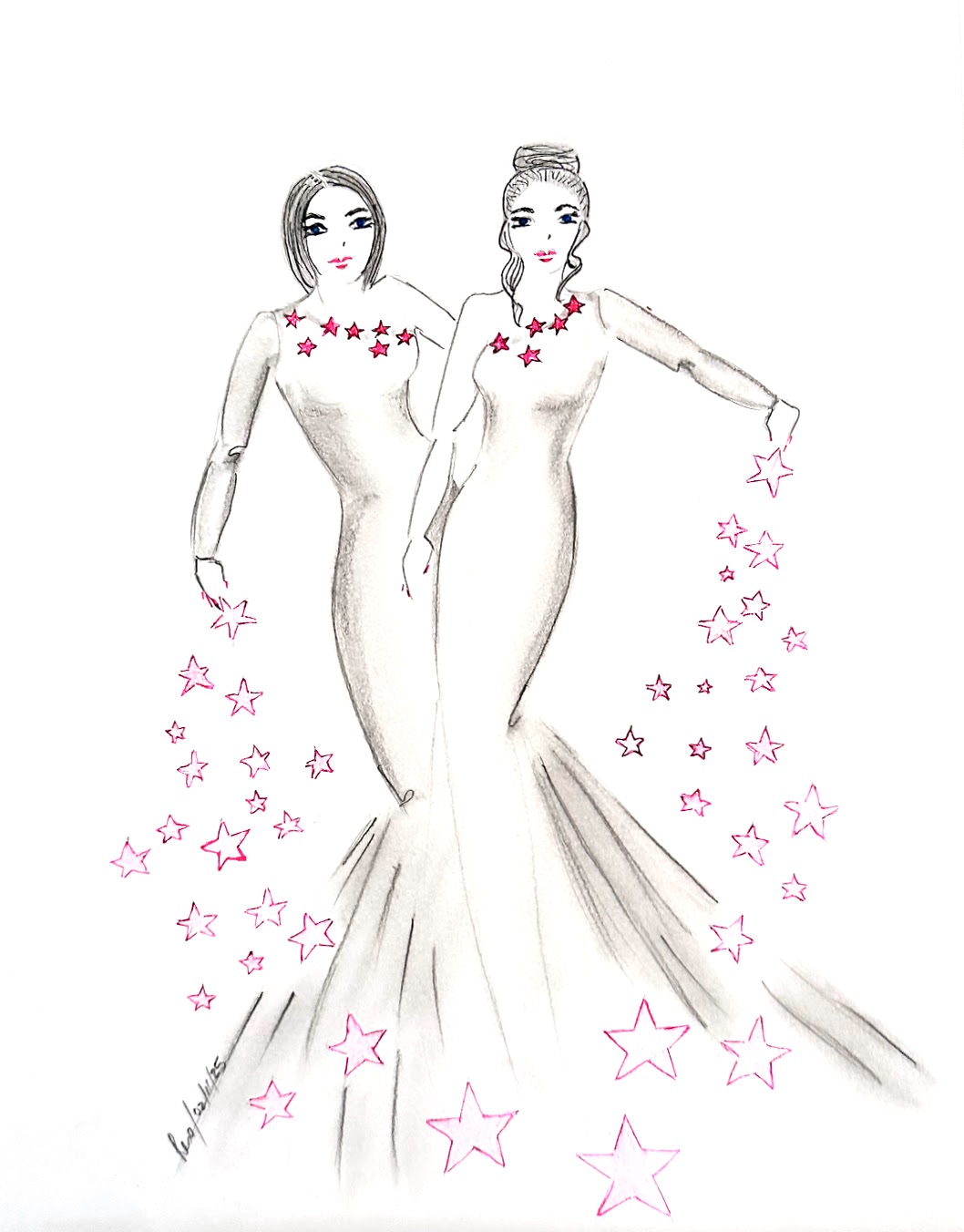
I sent a few photos of the drawing, to Merril. Photos of art are difficult to take. They never look exactly like they do in real life, they change with the light.
Merril – It’s gorgeous in any light! Thank you so much!

Merril -One thing–that you could not possibly know–for me, the poem has three figures. That’s just me, and of course, you wouldn’t know that. [My younger sister, my niece who is like my sister, and I spent a lot of time caring for and coordinating the care for my mom.]
Resa – That’s …. beautiful. Your mom was so loved.
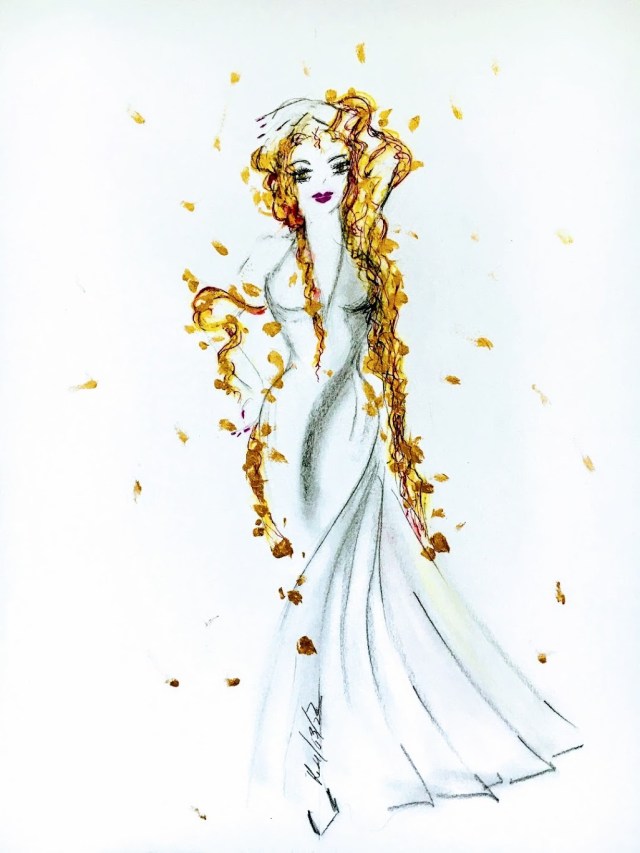
This next drawing is representative of many poems in the book. Merril depicts time through nature; its seasons changing, dying and renewal, family generations, birds, waves, clouds, storms coming… going.

In this regard, she speaks much of the beauty of life. To depict that, I have drawn a beautiful woman, in an earthy gown. The gown turns into an upside down tree. Its branches depict the changing seasons, time.
Question for everyone! I’d love to see some answers in comments.
Spontaneously – What is the colour that comes to your mind when I say TIME?
Think more about it! – Now what colours do you see?
Merril – Well, you’d probably guess that I said blue.
Resa – Yes…I did figure blue!
Merril – Then I see blue–various shades, ombre kind of thing– then darkening with shimmery stars and pops of red and yellow–like space. Like a movie of space.

Resa – I asked a good friend. He said blue. Then, a few moments later he blurted out, green. Later he said he saw time as a sandy colour… not quite gold, but earthy.
Merril – I get what he said, too. I like that his changes, too, because time moves.
(inspired by “French Lavender Head,” an art piece by Karen Pierce Gonzalez)
In her hands-jolts of electric blue--
The incense of ocean and earth, lavender
and brine, seaweed and peat. A pop of red chilies,
some saffron, spring greens, roses--
this is my world, she thinks,
clutches it tighter.

Resa – To me, a fascination lies in “art inspiring art”. In the case of “French Lavender Head”, the art inspired a poem, then the poem inspired art. It’s cycling: Art to poetry to art.
Merril – I like the idea of circling inspiration–art to poetry to art. Isn’t that the way? We’re all inspired by what we see, hear, smell, taste, read about. . .and then each individual interprets these things, that then get reinterpreted, and on and on.
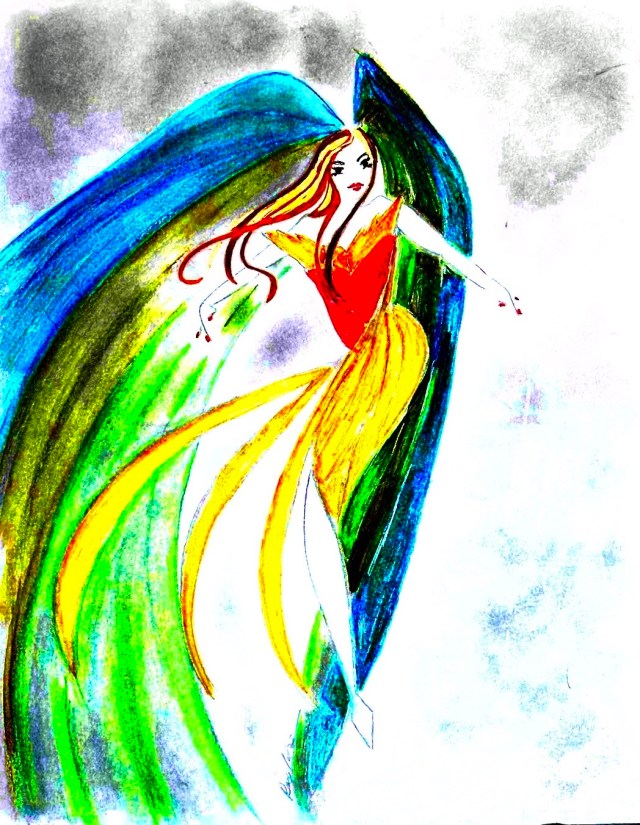
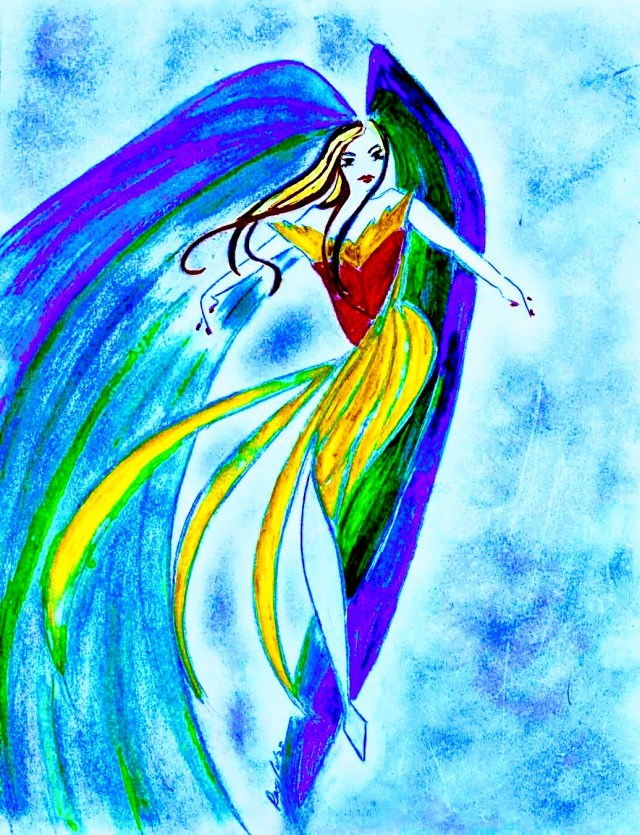
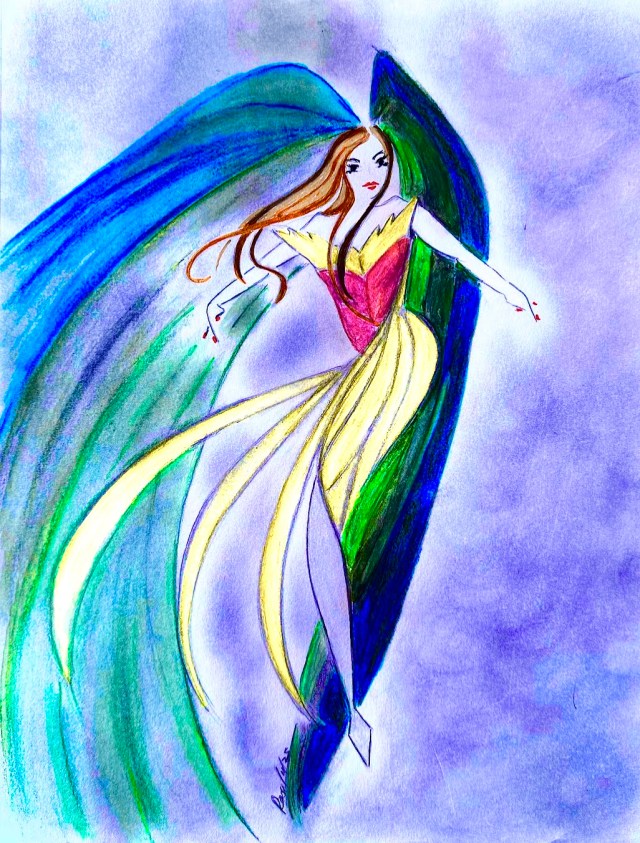
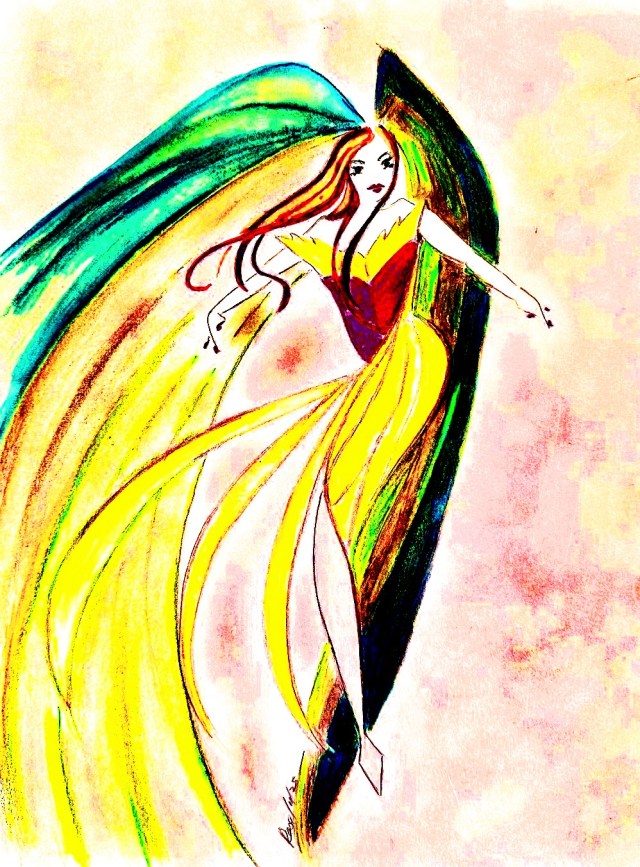
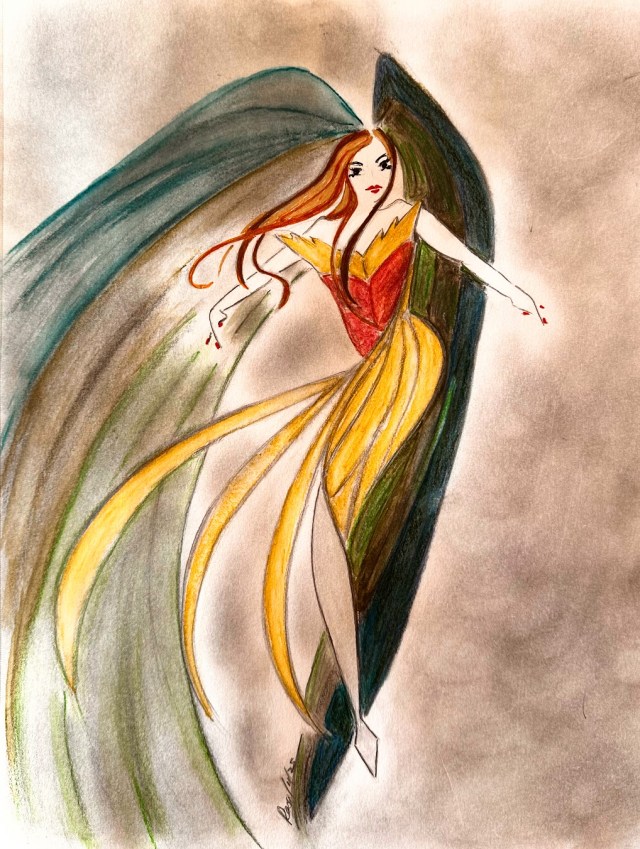
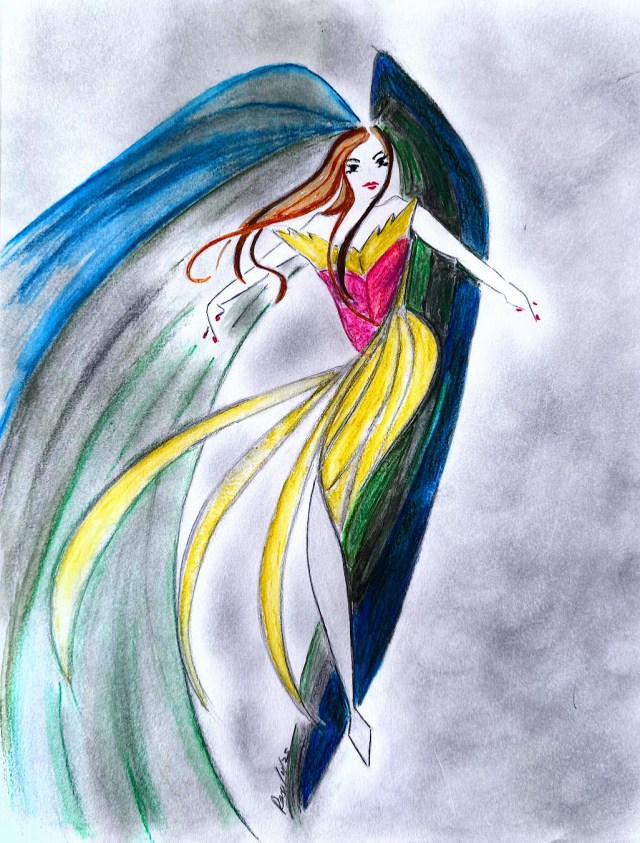
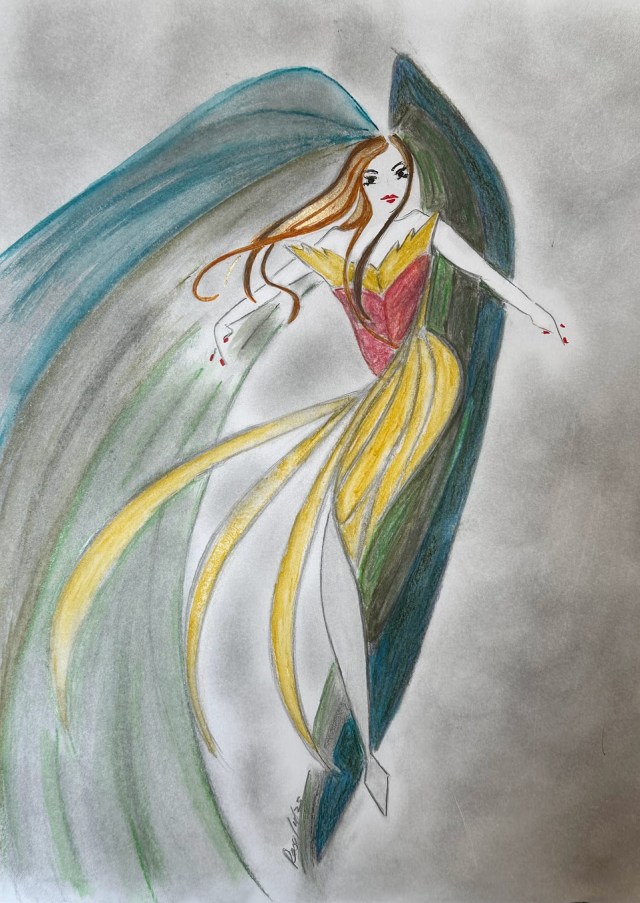
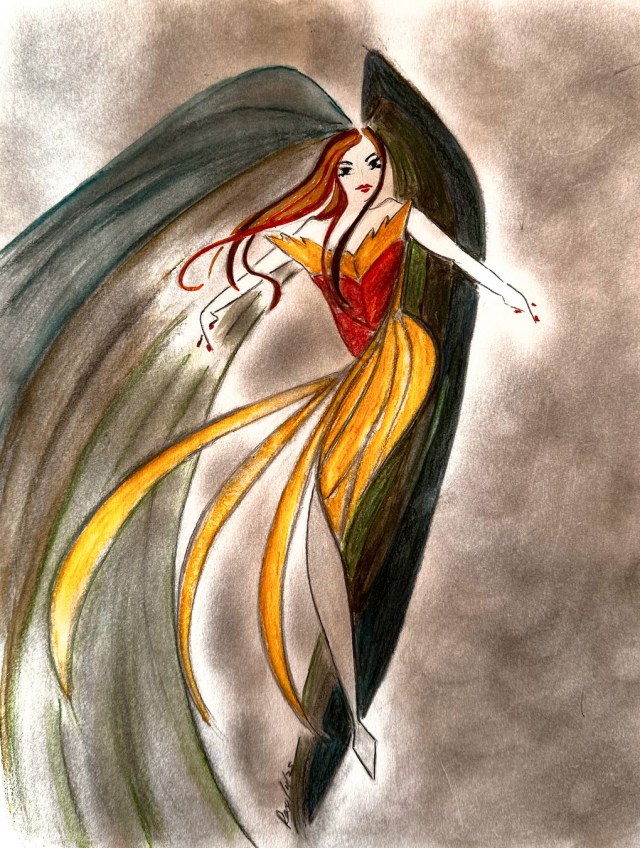
The first image I drew was this flying woman against an unknown mystery background. It’s inspired by a feel in the book, and of specific lines, but not any 1 poem.
but my ancestors spread wings
that covered centuries
to catch me, guide me,

You can, they said,
as they showed me that I have my own wings-
unfold them, fly. This, too, is part of the pattern.
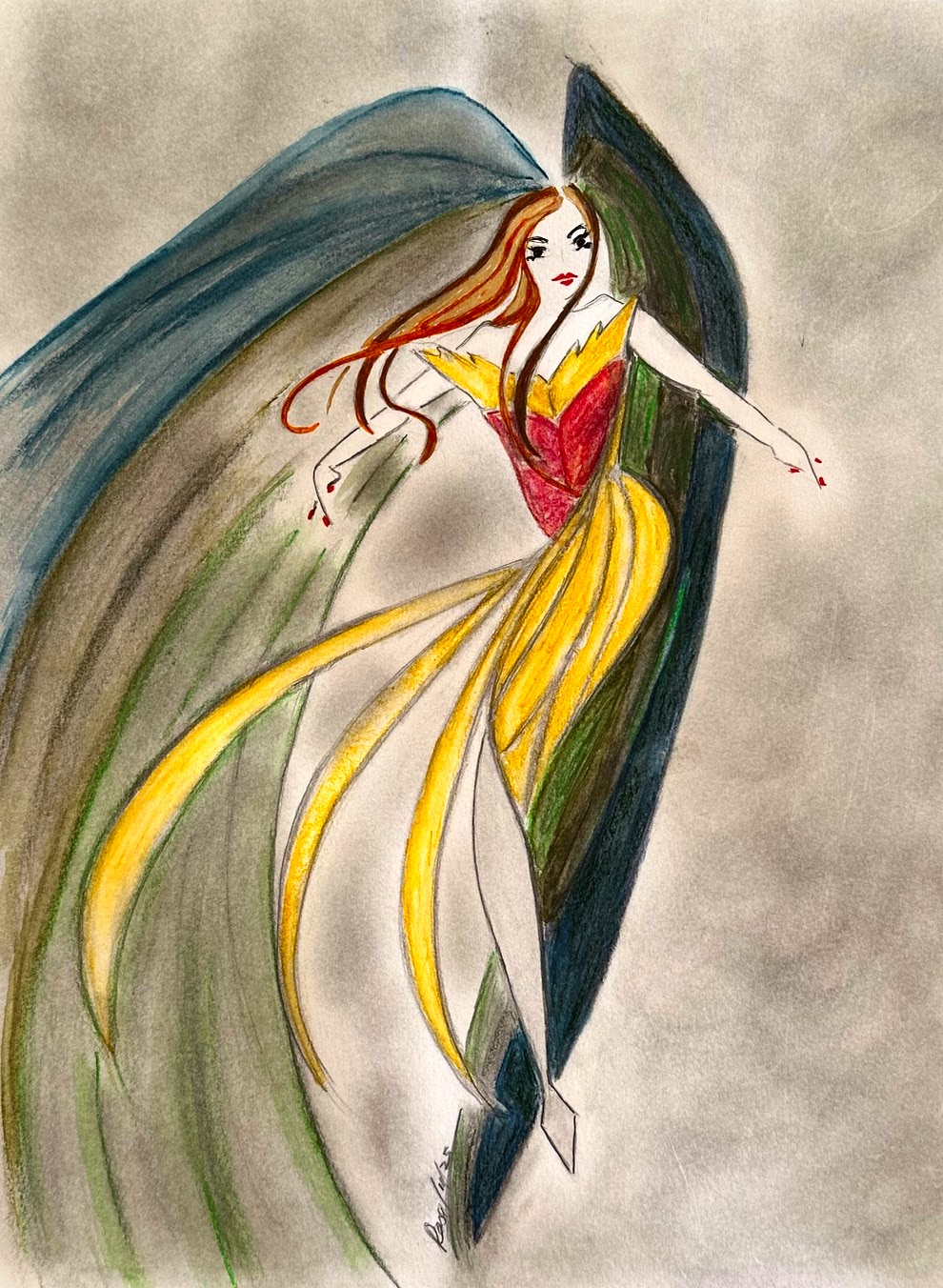
I took the shot on a cloudy day and closed the aperture to get a mystery feel.
Crushed beneath
an un-mooned sky
black shapes drift inside
of grey
who finally see the shadows
like storm clouds-and the bitter rain,
a tidal surge,
Then I thought, but it’s too dark. People will get the wrong impression. After all, there’s lots of light in this book.
There are days I want to remember I-we-
are made of starry specks, stellar dust,
and feel the light we carry within.
So, I opened the aperture on a sunny day, and took more pics. Nothing seemed like “stellar dust”, so I did editing until:
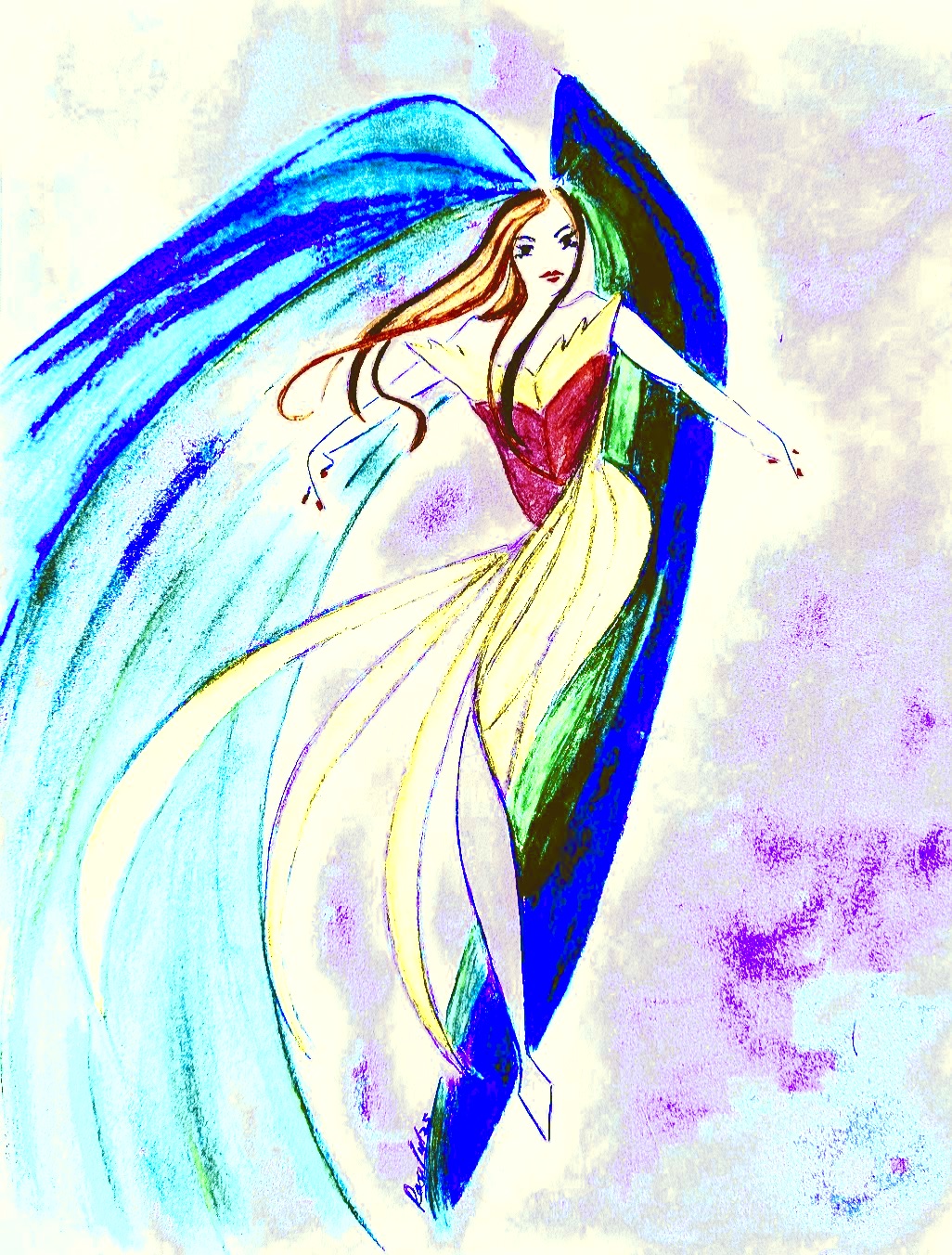
Then I thought, “that’s not it either.” Having taken shots in different light, then editing all the different shots… I ended up with a couple dozen different versions of the same drawing.
Then I realized why I couldn’t get a grip! Time slips through our fingers. Only time can hold time, within its folds.
CHANGING SPIRIT OF FLYING WOMAN SLIDESHOW
Time moves on, and things keep changing, changing, changing…. That is why my flying woman kept changing. She’s flowing with the spirit of this book.
To learn more about this amazing writer & poet, just click on her pic below and go to her website.
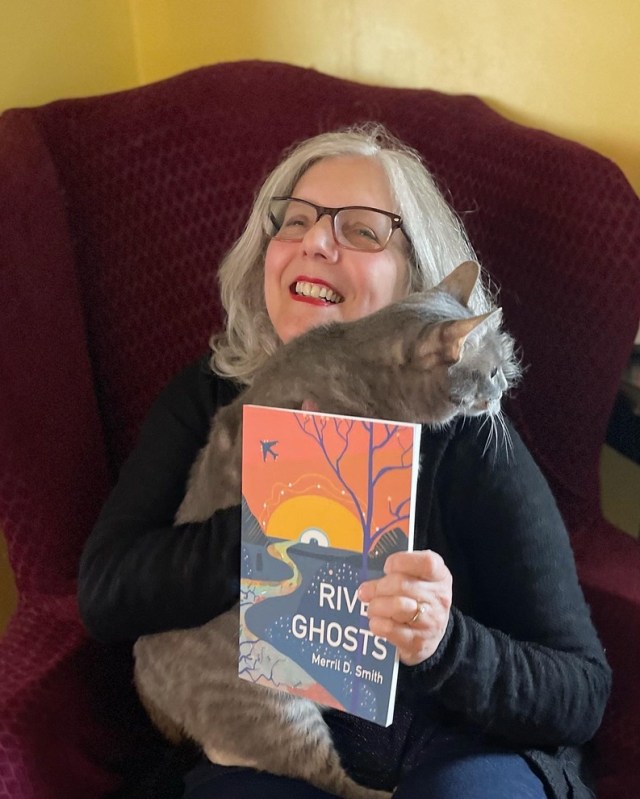
You can also click here and visit Merril on her blog!
Held Within the Folds of Time is available in hardcover and ebook format on Amazon. Click on the cover and go there!
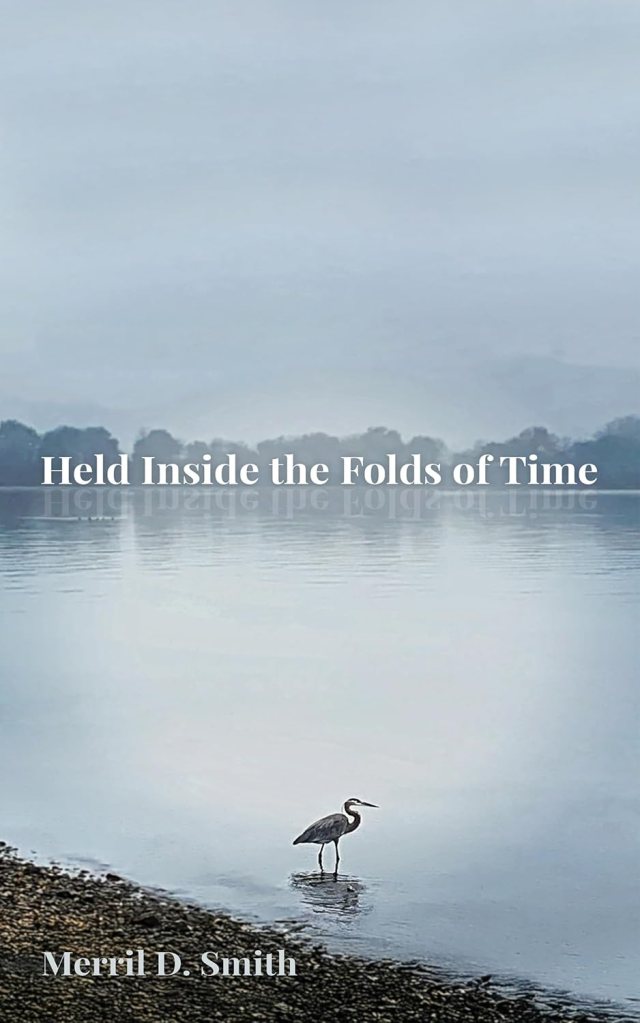
THANK YOU MERRIL FOR WRITING AMAZING POETRY!
… and taking wonderful photos …
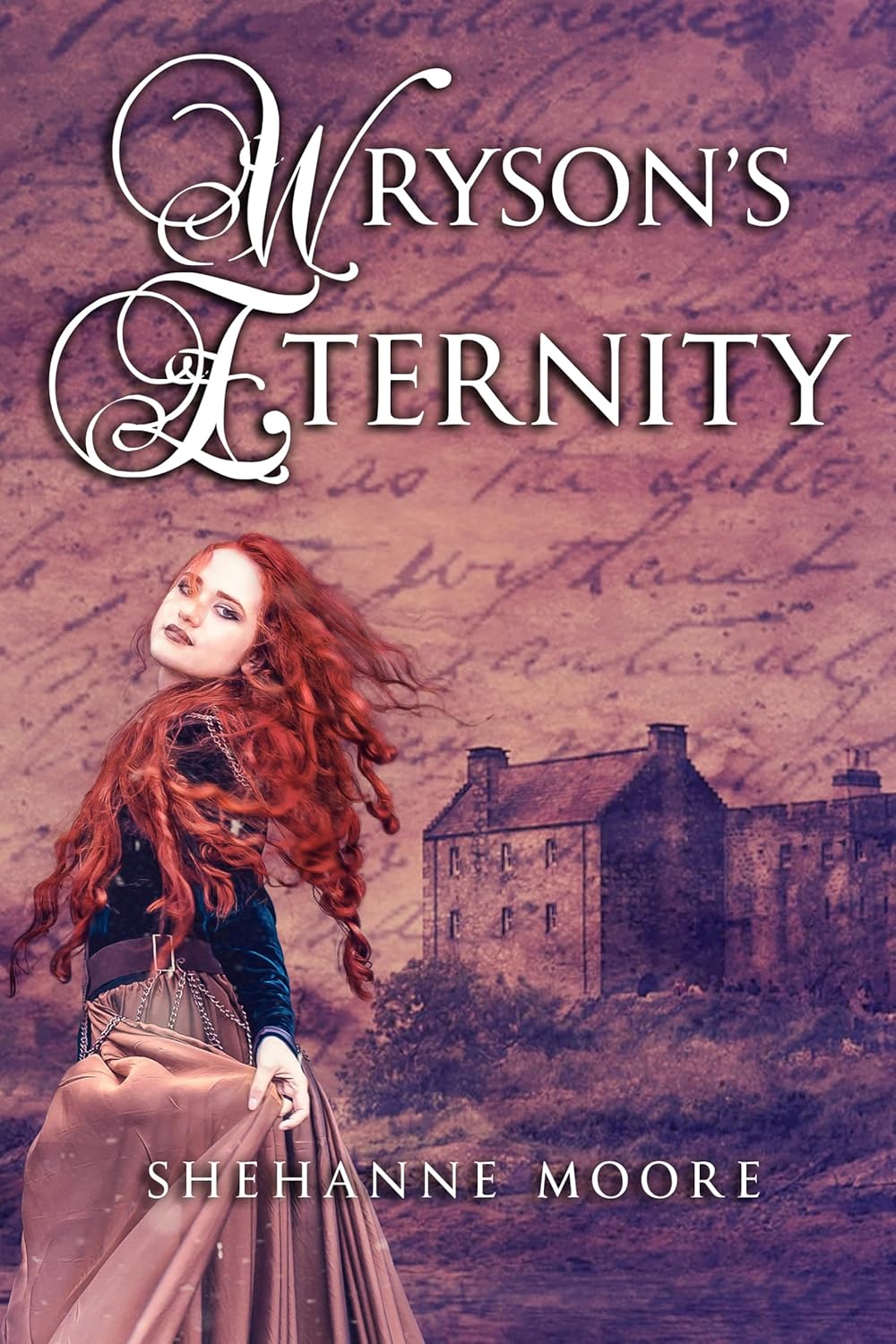
As a huge fan of Shehanne Moore’s spirited, independent female characters in her period romance novels, this book has been long awaited.
“If it is worth having, it is worth waiting for.” –Oscar Wilde
Oppressed & beaten by a beastly husband (Baronet Byron Jones), Lady Jones flees. To afford her vagabond lifestyle, she engages in petty thievery, lying, sleeping in forests and dealing with the less than savoury.

As she uses her coat like a tote bag for her nicked loot, I figured a man’s frock coat would have large pockets and the roominess required.
Shehanne – I just love the coat and hat. So her. I do love you calling her coat the ‘nicking coat.’ The woman lived rough for a bit.
Resa – Then one day, she haps upon a deserted cottage; where Gil Wryson haps upon her.
Shehanne – And that was it, but she had to like the wee life she’d set up for herself in Pencliff enough not to bolt and go back to the awfulness of life on the road. AND everything…even the way the mail worked and money worked with regard to banks in these days– all the things that made her life so difficult on the run– fitted..
In terms of defining what Eternity might wear, I looked at the out going Georgian era and the incoming Regency era.
Resa – I was tortured waiting! Was the ball in, or out? Why did you end up putting the Ball in, and how did it serve the story?
Shey – … Okay Resa, well the simple answer to why I put it in, having decided for her to leave beforehand, is YOU. Yeah, there you go. I thought about the fact that I’ve a ball or a dance/party, or a feast/dance in quite a few books and these are tied with pivotal moments in the plot.
I also thought if she leaves after saying she’s going, then he is going to find it hard to forgive her–they have somehow come together in the planning and prep for this ball. And she has a huge reason to quit while she’s ahead here in terms of news she gets that very day. But then I thought of you and the beautiful gowns you have designed for my ladies down the years and I thought what is a book without a ball and what is a ball without one of your gowns?

Shehanne -I also thought when it comes to Wryson ever forgiving her, when it comes to her thinking, she just might have got something in the bag, with regard to ‘the future?’ Him too. ’Well? That ball then sets up everything in terms of her state of mind as she goes to tackle what she must tackle. It paves the way for how she is only paying half attention to what she really needs to have her eyes fully on because she’s let something into her life she can’t let in.
Shehanne – It let me trowel on a bit of passion and anguish and quite a mess, shall we say, regarding what happens next? Things she feels responsible for, secrets she is going to have to keep, things about herself, she doesn’t know she can overcome. SO yeah, I think sticking to my original plan would have been wishy washy.
Resa – When her ball gown was first spotted in Gonetta’s, before I read on to any description of the gown, I immediately saw the green one in my mind.
Shehanne – OOOOHHHHHH… the one Wryson had to pay from Gonetta’s cos she’d have nicked it otherwise.
Resa – YES, the one Wryson pays for – BUT – it is the image I got in my mind (being a costume designer) before I got to the parts where you describe the gown – a backless cream gown. . Can you believe how different our visions are? What do you think about that?

Shehanne – I think it is great actually that the visions were different. It said to me that you were really picturing her–and green is a noted color she wears. I imagined she was drawn to the shop and it reminded her of past balls, even if the main one she remembers was the night she got pitched into a Turkey oak, after first chucking herself at the man she loved.
--this is backstory before Wryson lands on her doorstep--

It reminded her of not living  hand to mouth on the road. So she wandered in and got herself a fitting with the intention of   dancing  on her own in Dark Falls--which we know she does-- in that gown.

Alas it defied her nicking abilities. But she probably told herself she could maybe nick the dosh. She’s very good at NOT getting things done too. But being her she probably got fitted for more than one.

So it was kind of deliberate on my part not to describe the gown at that point, because she is also capable of going there and nicking some other  gown off a rail of made but not paid for gowns.

Resa – I honestly like your gown better. What do you think about that?
Shehanne – What can I say but awwww…. truly, and you know a description can always be changed in a book.
Resa – Well, I am thrilled you had a ball. It is a pivotal bit, and if it was a movie, the big money beauty scene. Of course the carriage bit is the big money stunt scene.
Shehanne – Alas, I always see book scenes as movies. One of my fav freelance regular writing gigs ever was for girl’s comics for DC Thomsons. YOU HAD TO WRITE IN STORYBOARDS. YES!! So many frames per episode, dialogue/thoughts and instructions to the artist only on each frame. Always end with a cliff hanger.
Resa – Here are the drawings, for court & carriage! The full skirt outfit would have already been in her closet before she escaped. The other, would be a new dress, the latest Regency fashion.

Shehanne – Yes, I forgot she has a fancy new coat for the court scene, her ‘other’ fellah having had enough of her special one.

Shehanne – It is what I imagined… Fashionable, dressy because she would need to be both and not look like a ragbag.. There is the bit about Billy having taken her famous coat —obvi she left the cottage in that coat and he would have seen to it that she got some decent clothes in London. And yes the first would have been the kind of dress she’d have worn to balls before and during Byron.
Resa – So I was inspired to draw Eternity in a metaphoric sense. I had thought “Hair of flames” because what comes out of her mind and mouth is so fiery, literally, but this came out of me. Did I capture her in that metaphoric sense?

Shehanne – You have captured her perfectly. You always have the sense of my ladies but she’s off the scale in many ways.
She’s wild, she’s free, she’s guarded, she’s bruised, she’s moody, she’s mouthy. She walks tightropes when it comes to functioning. She is her own worst enemy, Above all else she is a survivor and it has been of some horrific things. She is really very difficult and you have amazingly captured all of that. Wryson is of course not in the best of places himself, but even if he was he’d still be emotionally confused by her.
Resa – You recently posted about Mary Eleanor Bowes, the great-great-great-great-grandmother of Queen Elizabeth the Second. At 11, she was left the richest heiress in England, between 80 and 120 million in today’s terms. Twice married, she was beaten, burned and more by her husbands.
Shehanne – I thought I’d blog a little of some of the inspirations cos I started as I aye do, with no plot just the idea of picking up the woman who makes a very fleeting, at a distance, appearance in “O’Roarke’s Destiny” and setting her in an abandoned house cos I love abandoned houses.
“Suppose she is sitting there and passing herself off as whatever and then Wryson turns up and says it’s his house,” I thought. Then I obvi had to suss it out from there and I also thought at that point of the dreadful hubby and the unhappy countess.
Read about Mary Eleanor Bowes on Shehanne’s blog
Shehanne – Despite a descendant marrying into royalty and giving birth to Elizabeth 2nd, the story is not THAT well known. But it is interesting on so many levels. I primarily used the violent hubby because I needed a reason for Lyon to have a hold on her.
Resa – You built a strong, feisty female character, in a time where women had no rights. It’s inspirational.
Shehanne– You are right re: the lack of rights. I gather that Mary was not sympathized with because of the lovers, because of a lot of things she did and it was something that she actually got a ruling in her favor.
“I christen all my characters with care. I actually love thinking of what their name is going to be.“


Wryson’s Eternity is available on Amazon. Just click on the book cover and go there!
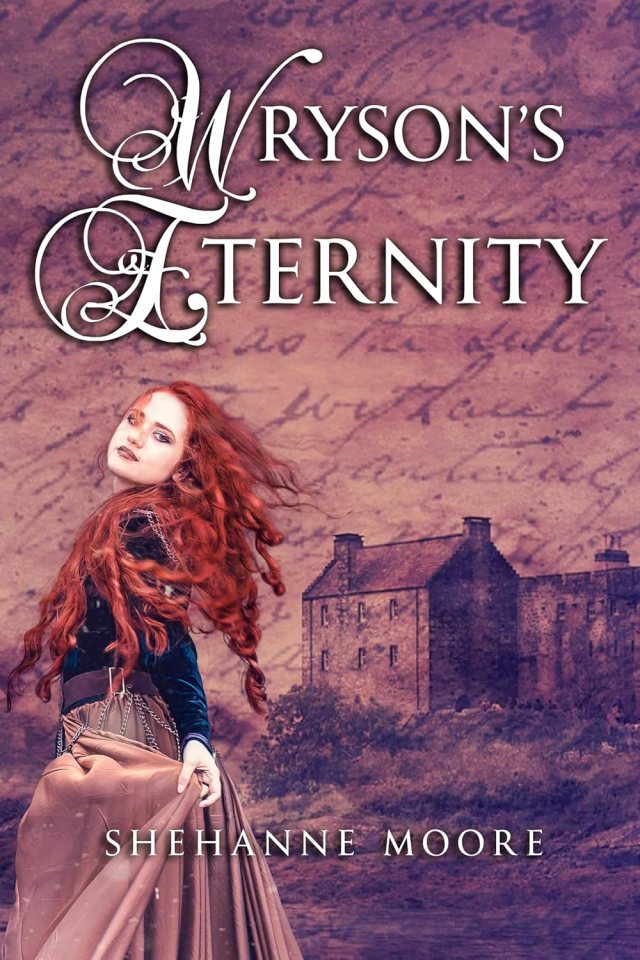
Shehanne – I did do a play list for the story… it is a bit long, possibly the longest I’ve done for a book play list.
Resa– It’s a fab Play List. If anyone cares to listen just click on the enhanced drawing of Eternity on the right, and it will take you there!
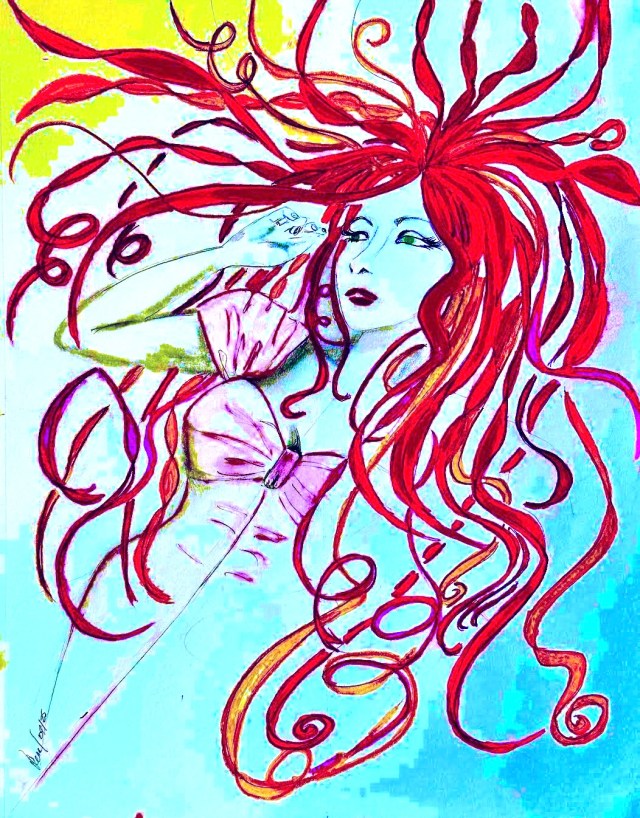
From Shehanne’s Play List!
🌟🌟I have read all of these fab Shehanne Moore Books. 🌟🌟 Just go to an Amazon anywhere, to find them!
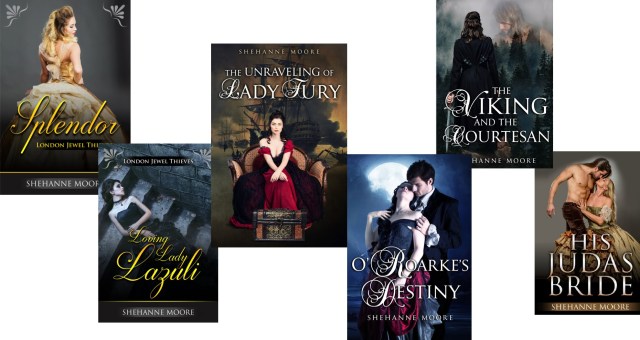
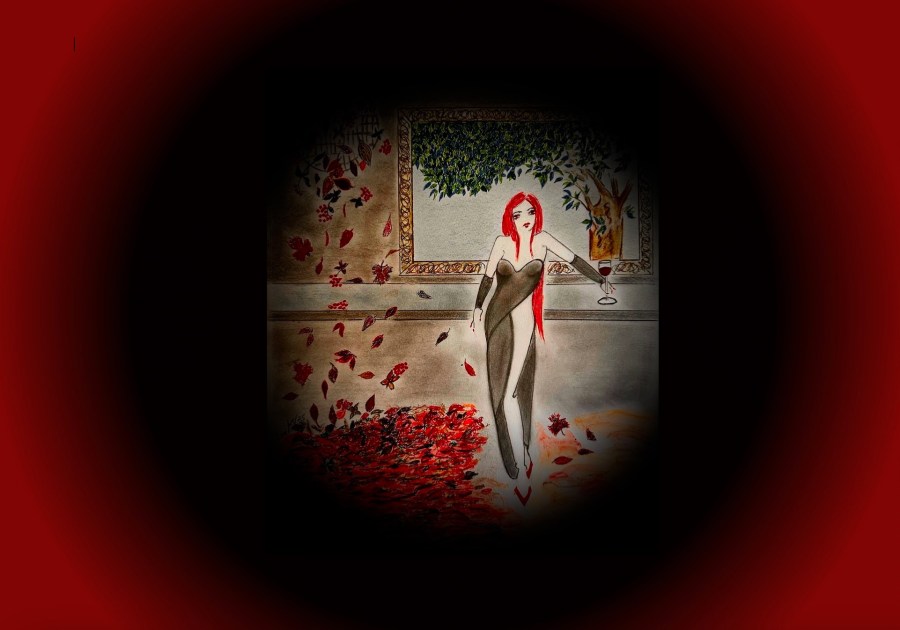
& Allegorical Drawings by Resa




There is music. The cafe is filled with revellers. Their drunken laughter is loud, but the seasons slip away, and they need something to remember.
A year has passed, and I still light my candles for the window and hope fades like summer into fall.
The mirror has no mercy, a reminder of all that has passed through these hands. There is no holding back the past or what lies ahead.
The night deepens as we raise our glasses to the seasons of honey and fire and the aching memory of lovers slipped away.



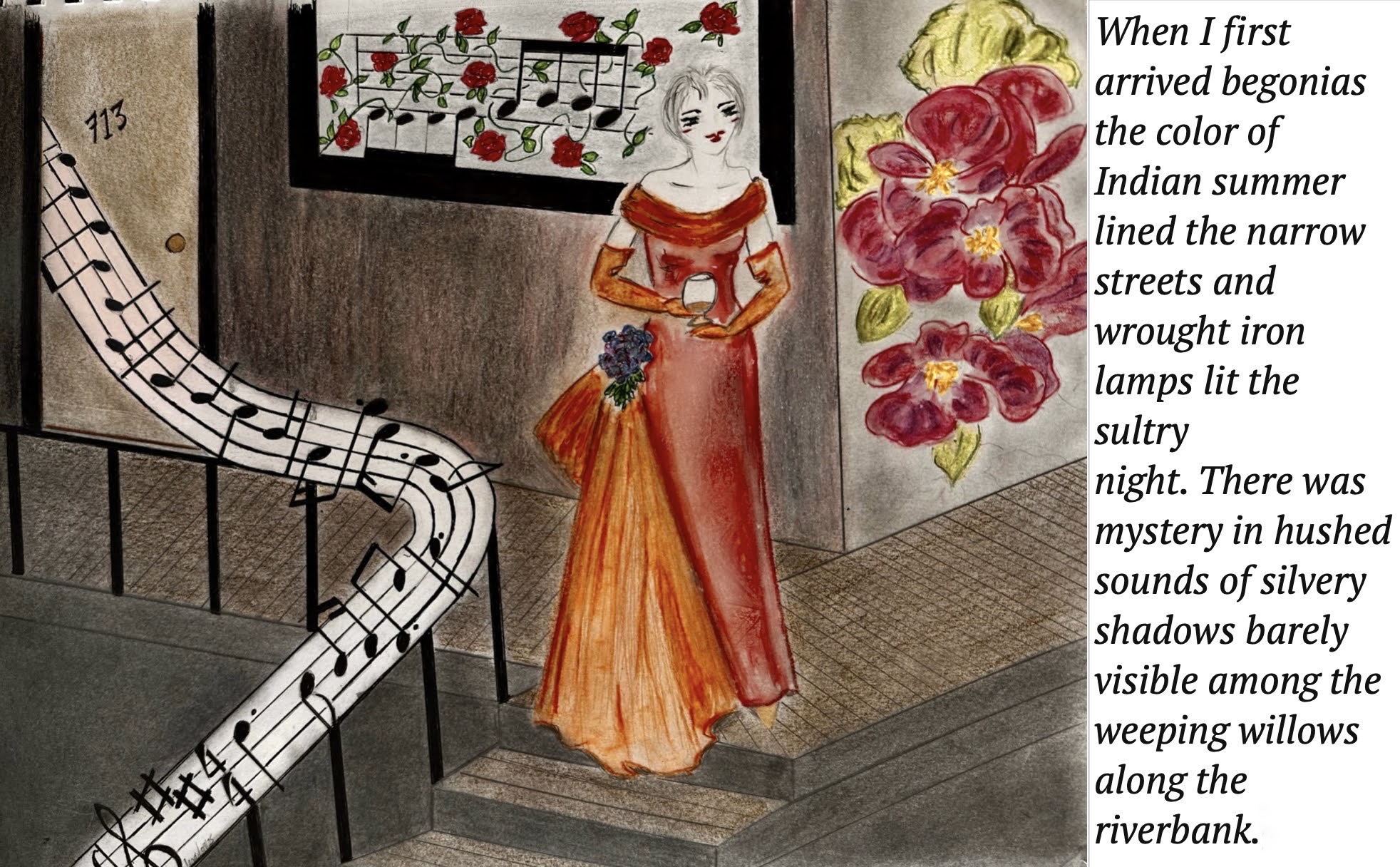
At the top of the stairs the hours pass hurriedly, lovers flee the break of dawn. Subdued seduction , silhouettes in flickering candlelight.
In black tie and silk gowns, the bourgeoisie sip cognac , exhale circlets of smoke from cigarillos into the softly whirring blades of a bamboo fan.
The walls are thin and the wood floor is bare. Music drifts upward, slips under my door, “La Vie En Rose”, the sighs of desperate lovers , their bodies pressed against one another.

At my mirror I braid silver thread through my hair. Should the Frenchman return I am wearing the dress he likes. Last night he signaled with a stone at my window .
He has taught me how to say I love you and other endearing terms in his tongue.
At the hollow of my throat I dab a bit of the perfume he bought for me in Berlin. I’m not sure that is true but I like the scent.
He wants me to follow him but he is not my kind. The weak can not survive love that is bound to die nor can they forgive.
All Poetry © Holly Rene Hunter – Visit House of Heart to read more of her fabulous poetry!
All drawings © Resa McConaghy
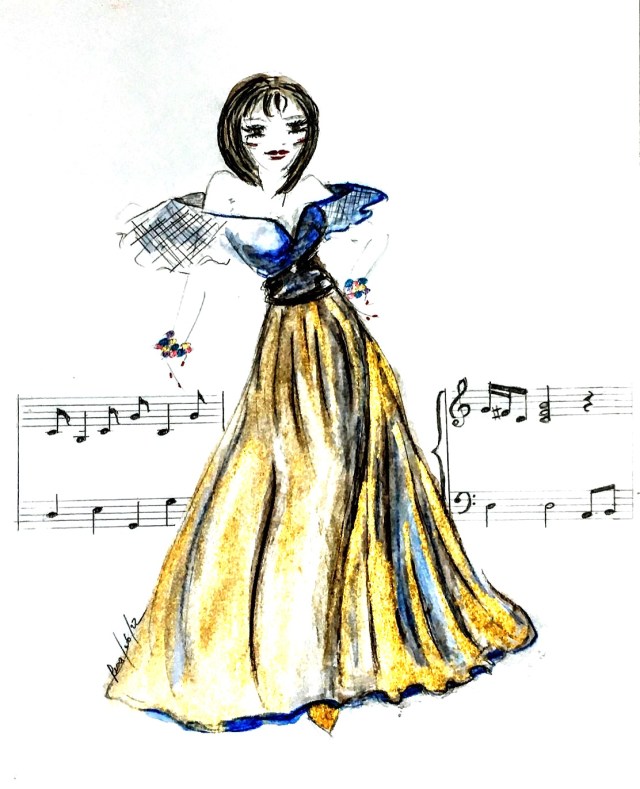
Holly for contributing your luscious poems to this collaboration & to Gigi for being the hallway model (where the music notation is actually the first 5 bars to La Vie en Rose).

JOIN HOLLY ON HER BLOG for a PANEGYRIC to STEVEN TYLER ft. Portrait by Resa
I just loved drawing him!

Holly chose this Aerosmith classic for the post, but there is a very cool surprise video there as well!
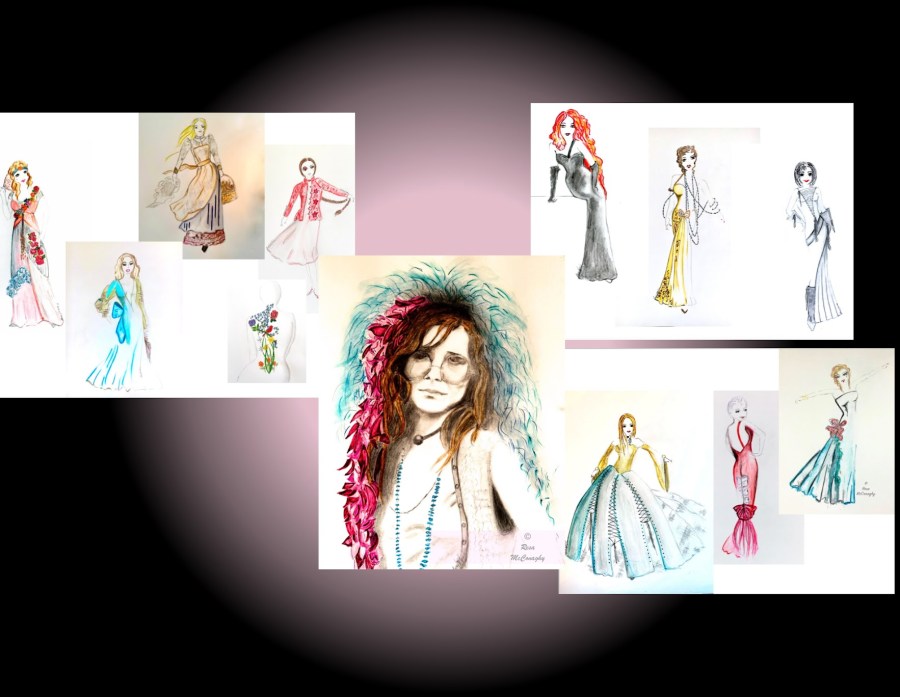
Robbie invited me to chat technique about my fashion drawings and portraits on her blog. I’m having a blast over there, so if you haven’t already pop over and enjoy the groove!
One day soon, I will draw Mademoiselle Emily!
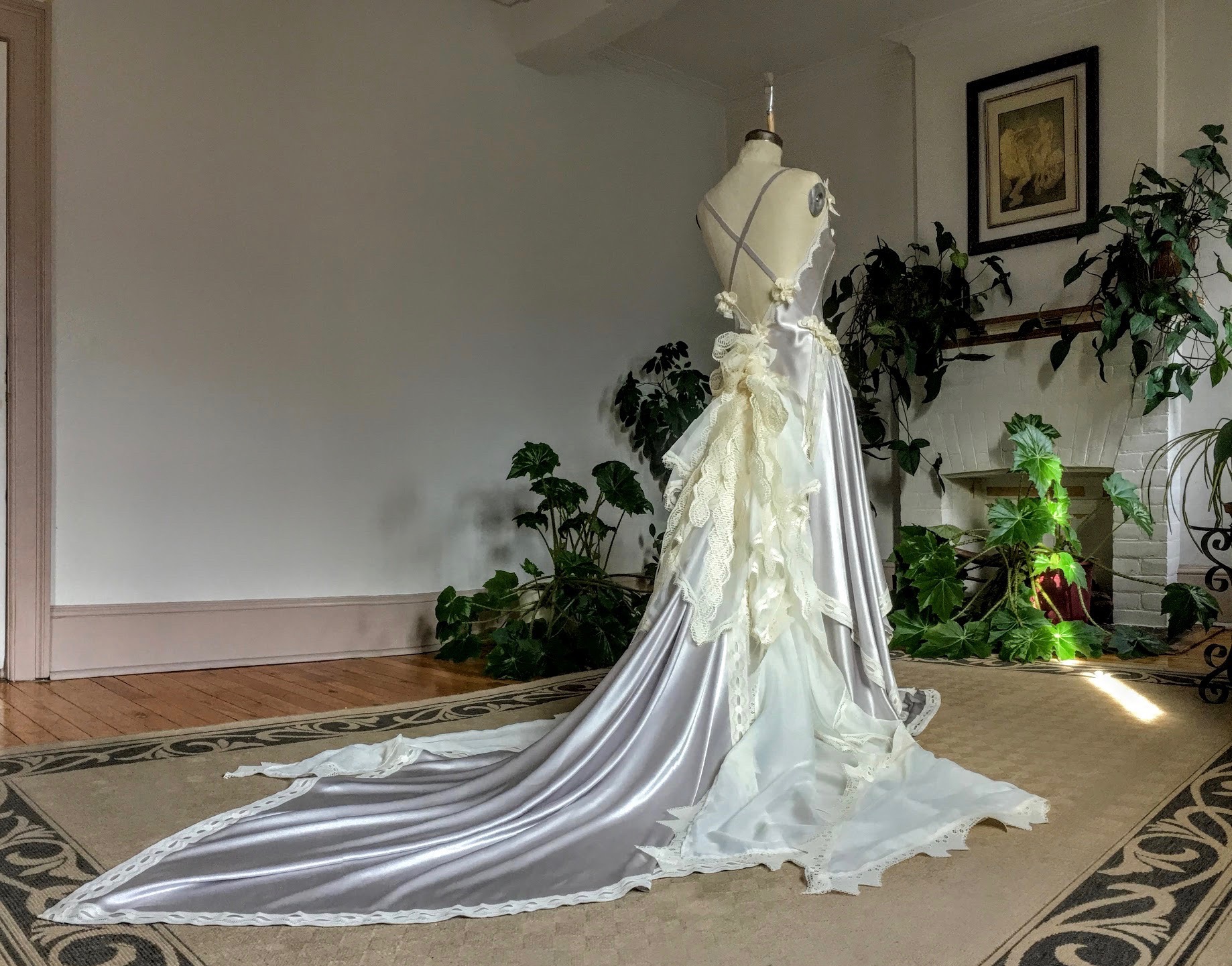
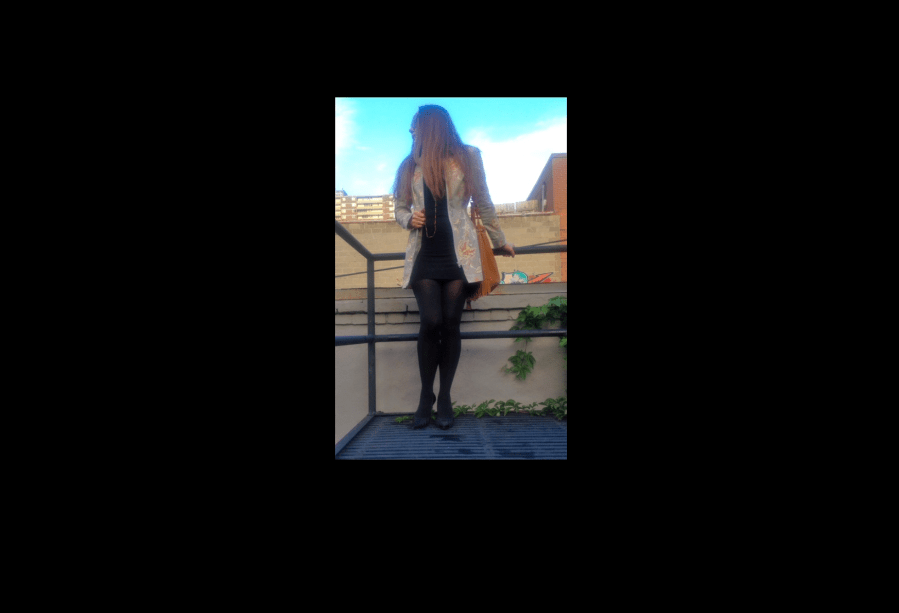
Dahlings, welcome to Teagan’s “Reinvention Series”! I am honoured to be her third guest.

One thing about gathering the reinvention pics is one does go back over a part of a life. Lots of reflecting ensues. For me this has been a positive experience. So head over to Teagan’s and check it all out!
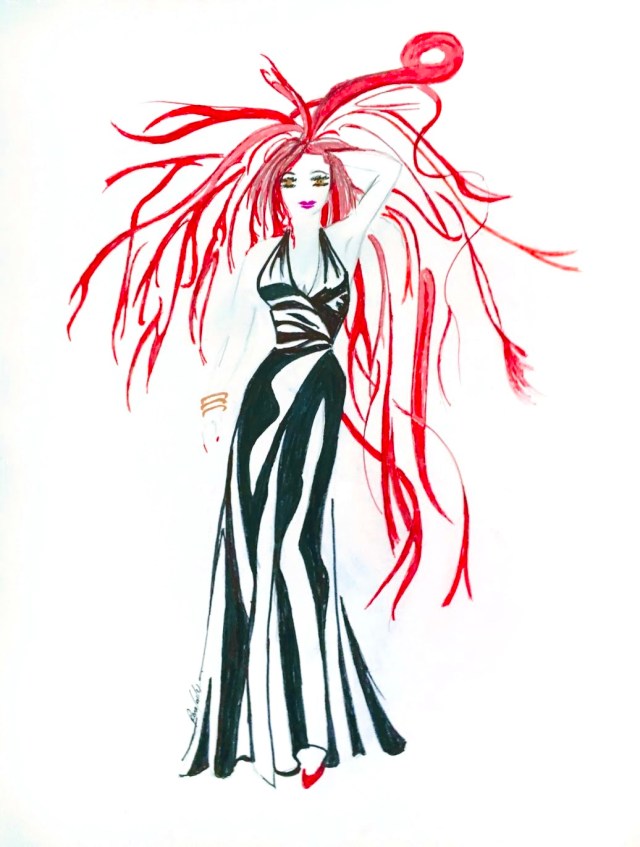
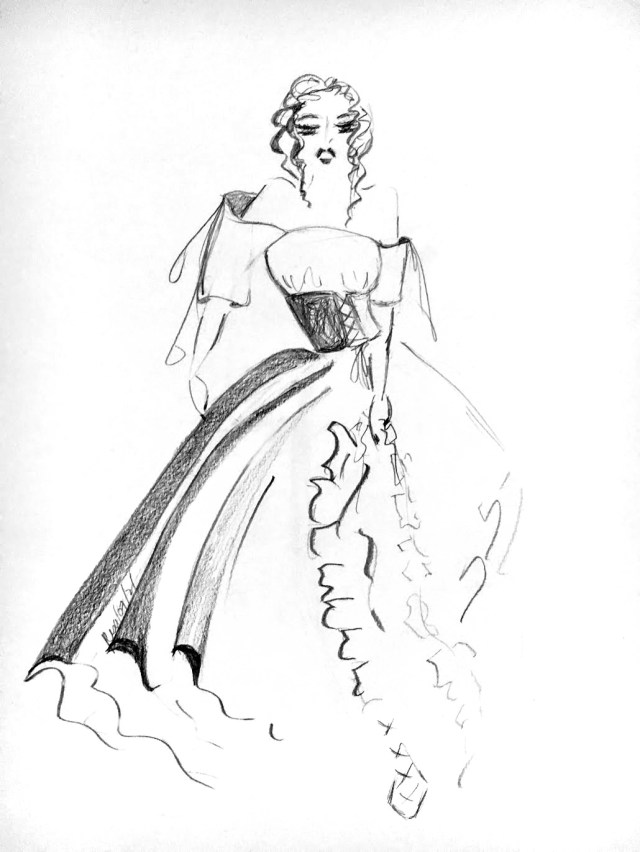
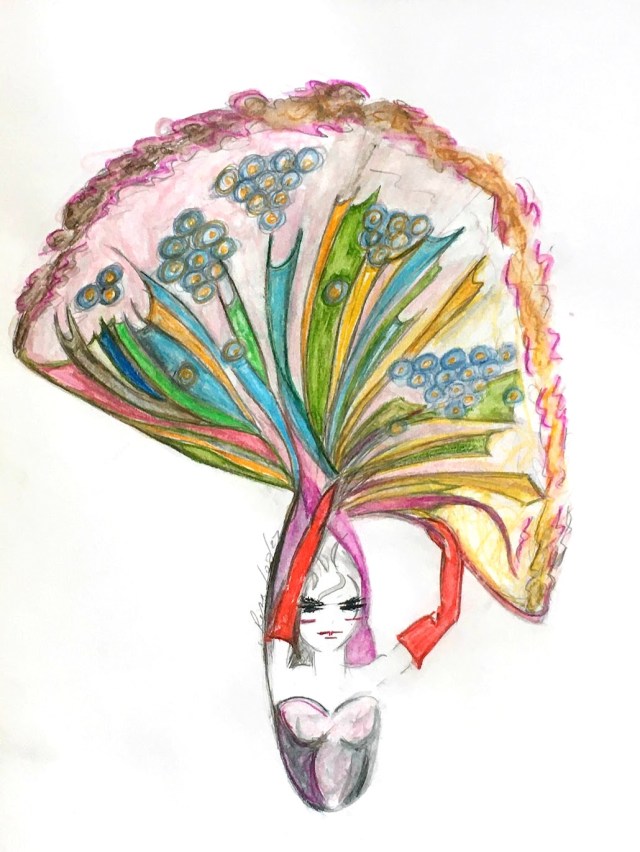
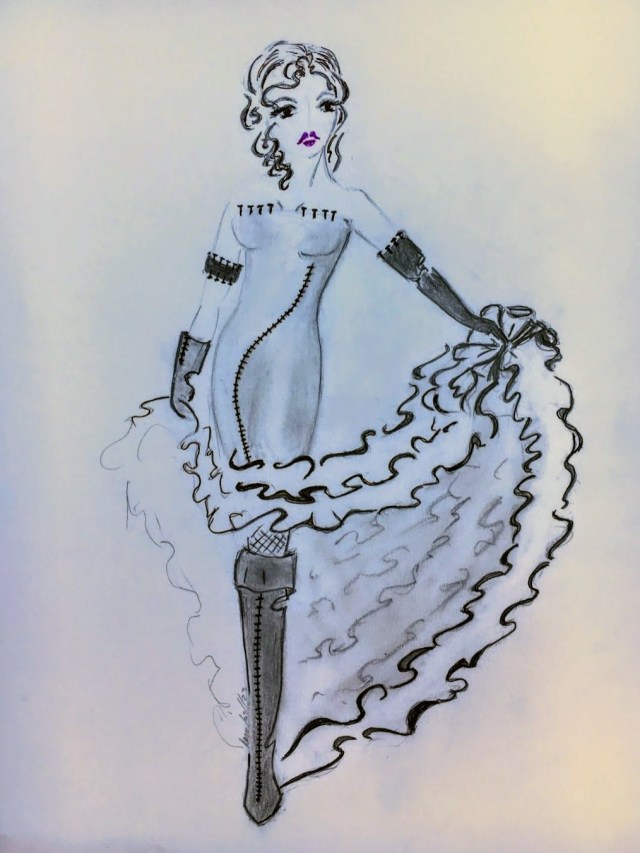
To kick things off, Teagan’s Reinvention Androids put on a fashion show for us. One good show deserves another! So, here’s a retro collection of Art Gowns drawings – just for fun!
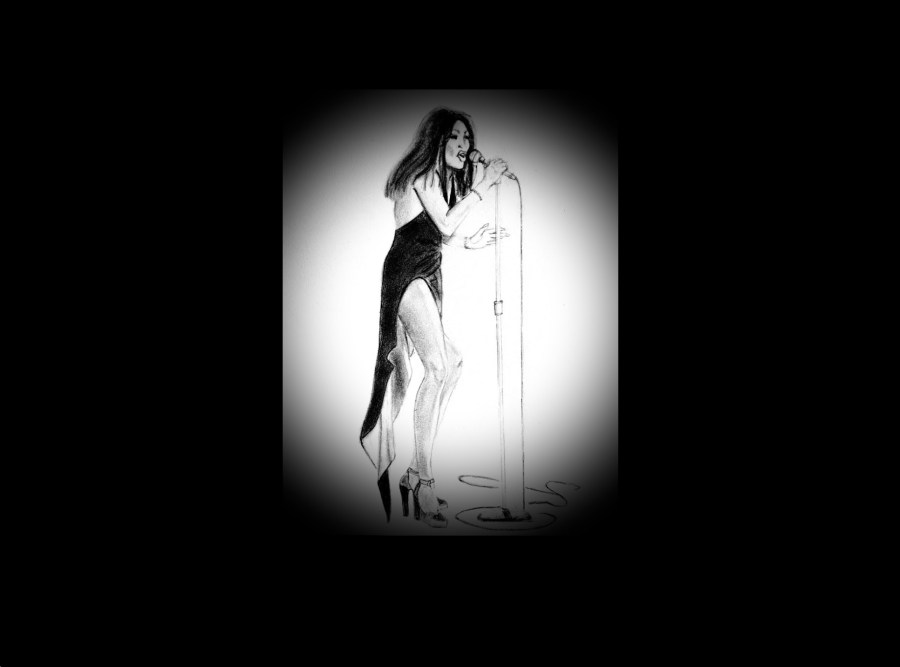
Holly has done another fab bio. This time it is on the late great Tina Turner. It is again an honour to provide the drawing for the article.
Head on over and give it a read!
What an inspirational person!







You must be logged in to post a comment.