Lo, in the east is a glamour and gleam,
Like waves that lap on the shores of a dream,
Or voice their lure in a poet's theme!
                                                                     - L.M. Montgomery
Maple Moonrise is a neo-goddess; Canadian born simultaneously on the Pacific beaches of British Columbia and Atlantic shores of Prince Edward Island.
Maple Moonrise throws her beams on the all of the arts: poetry, story telling, painting, drawing, music, dance, sculpture, and more.
She decrees – Make Art not War!
It is in this spirit of arts appreciation, and a desire for Peace on Earth, that she is dedicated to Rebecca Budd.
The Making Of
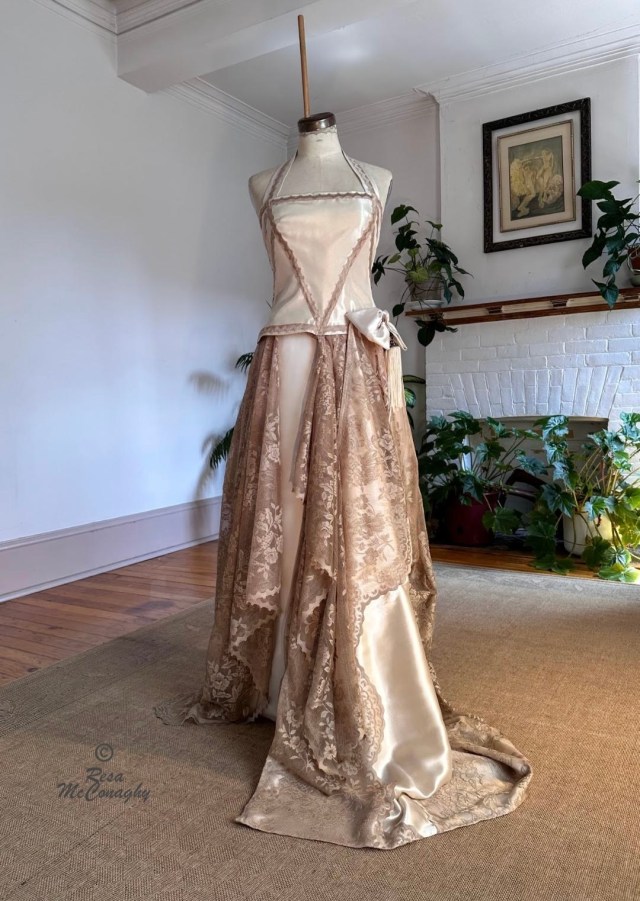
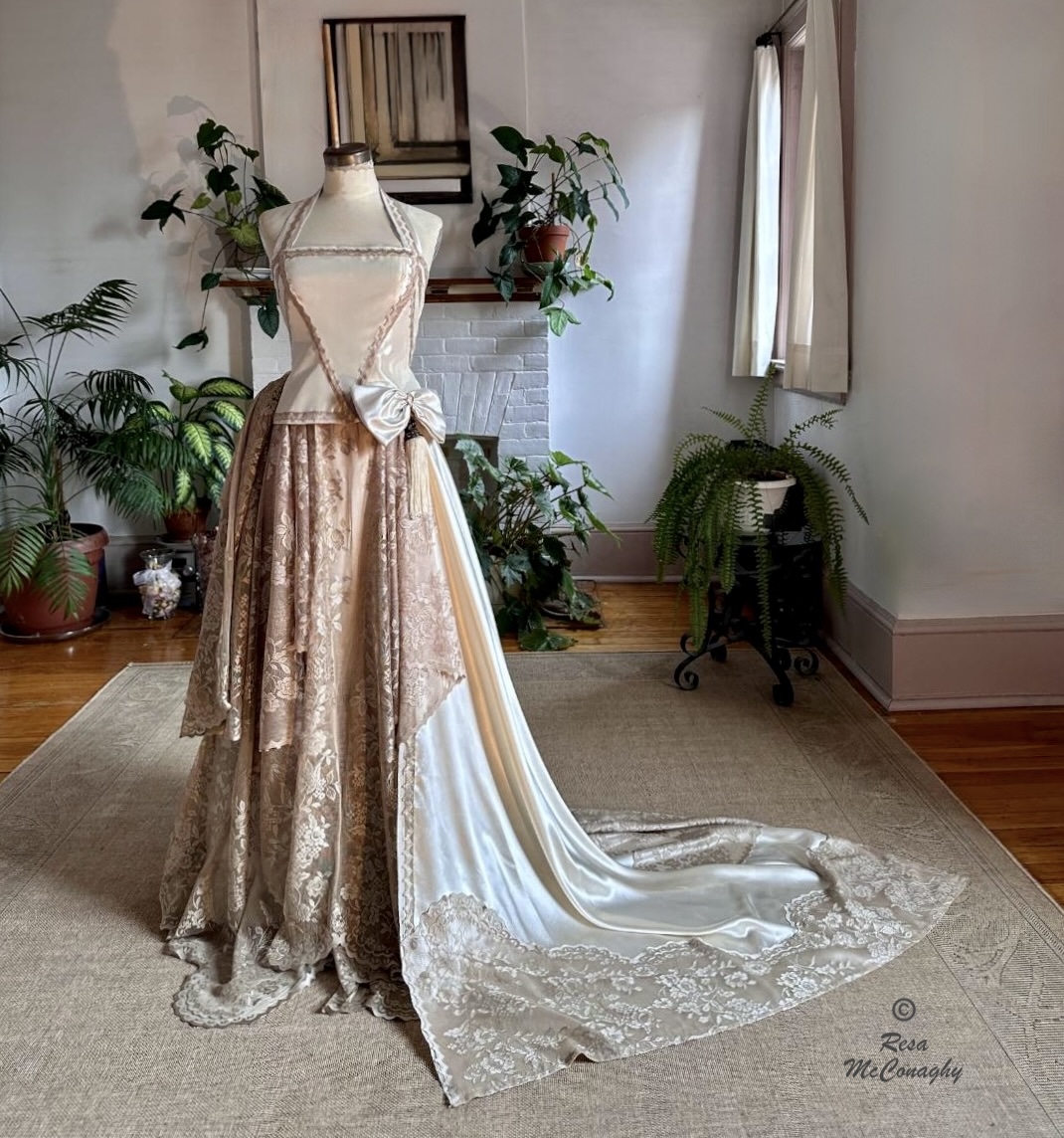
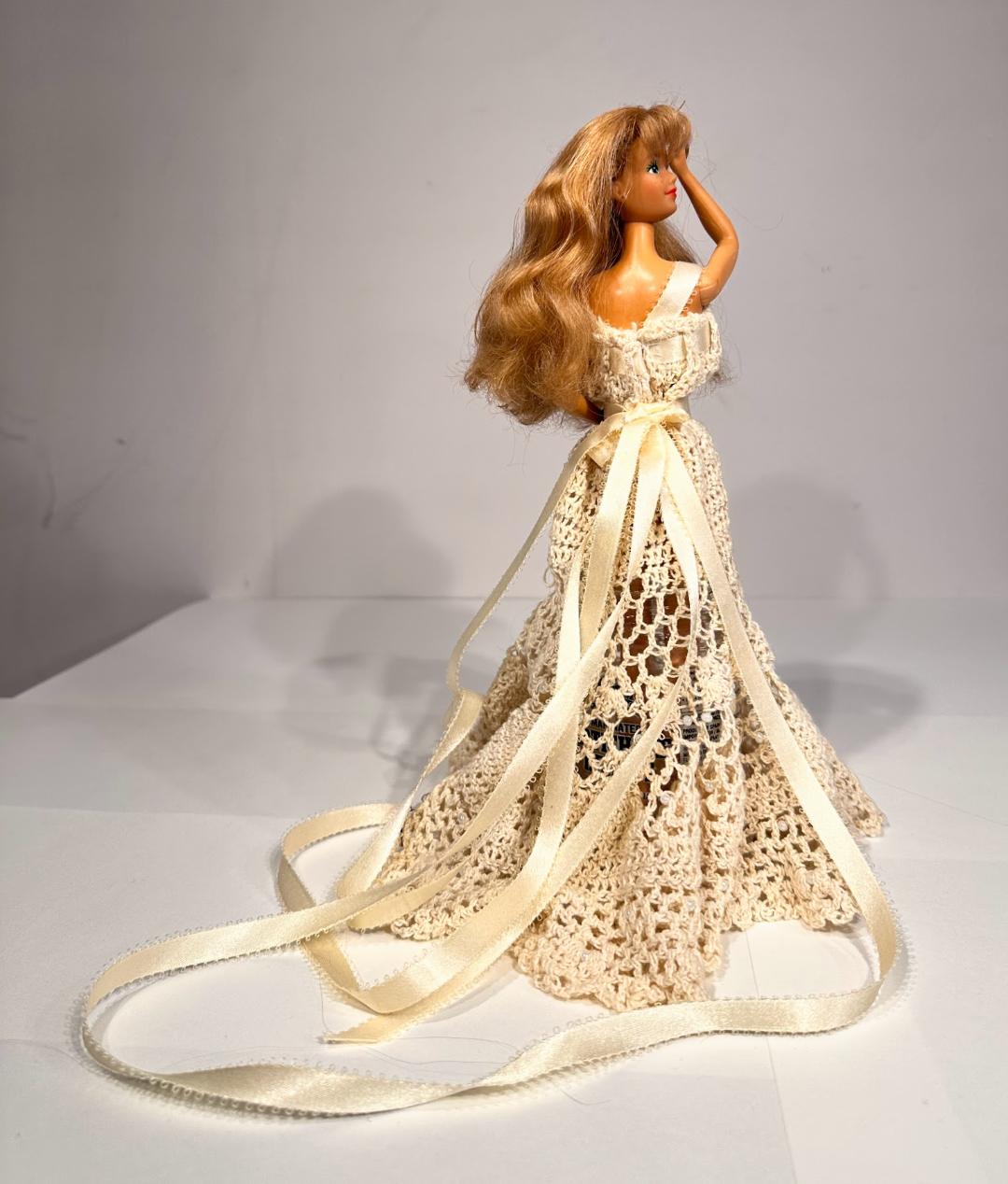
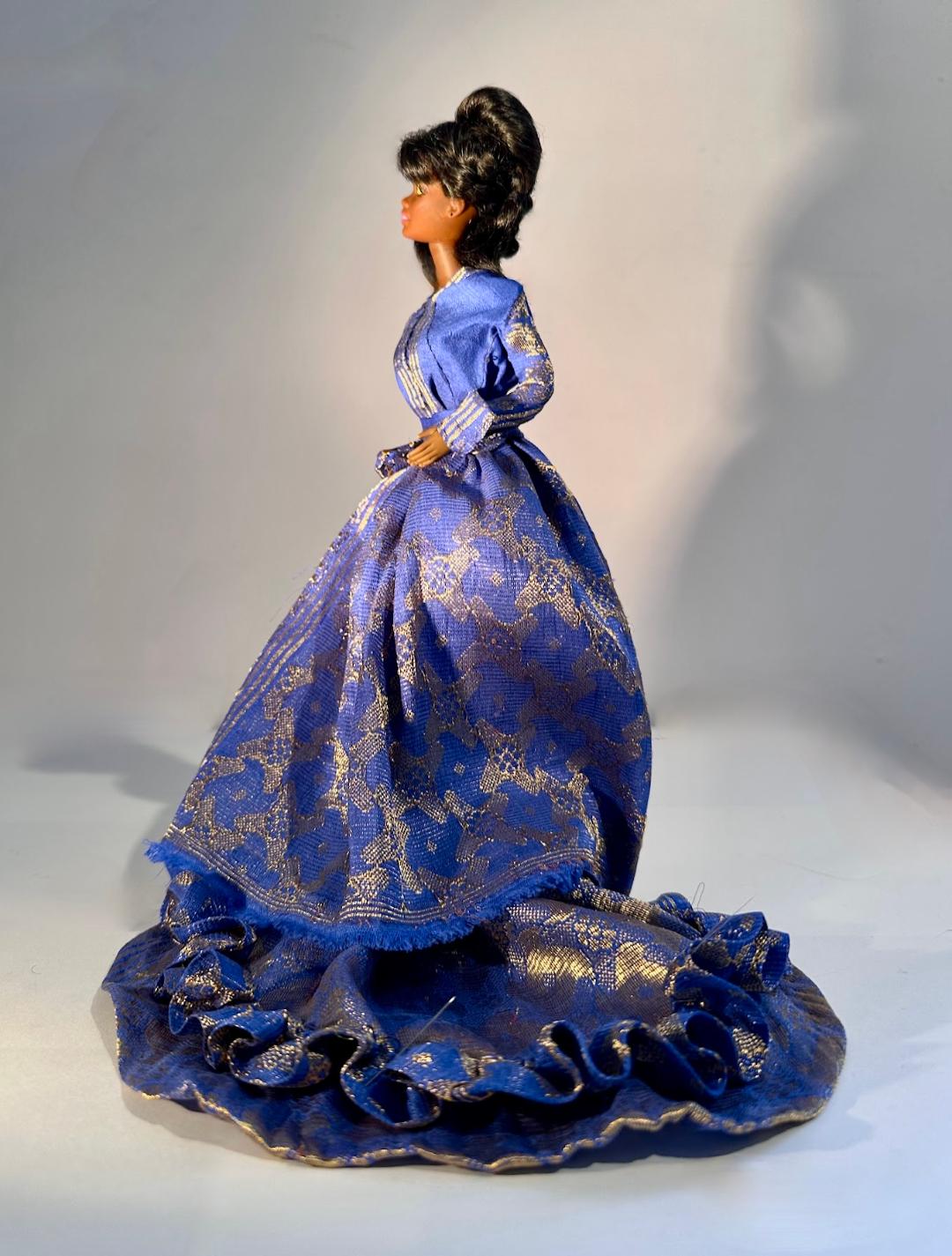
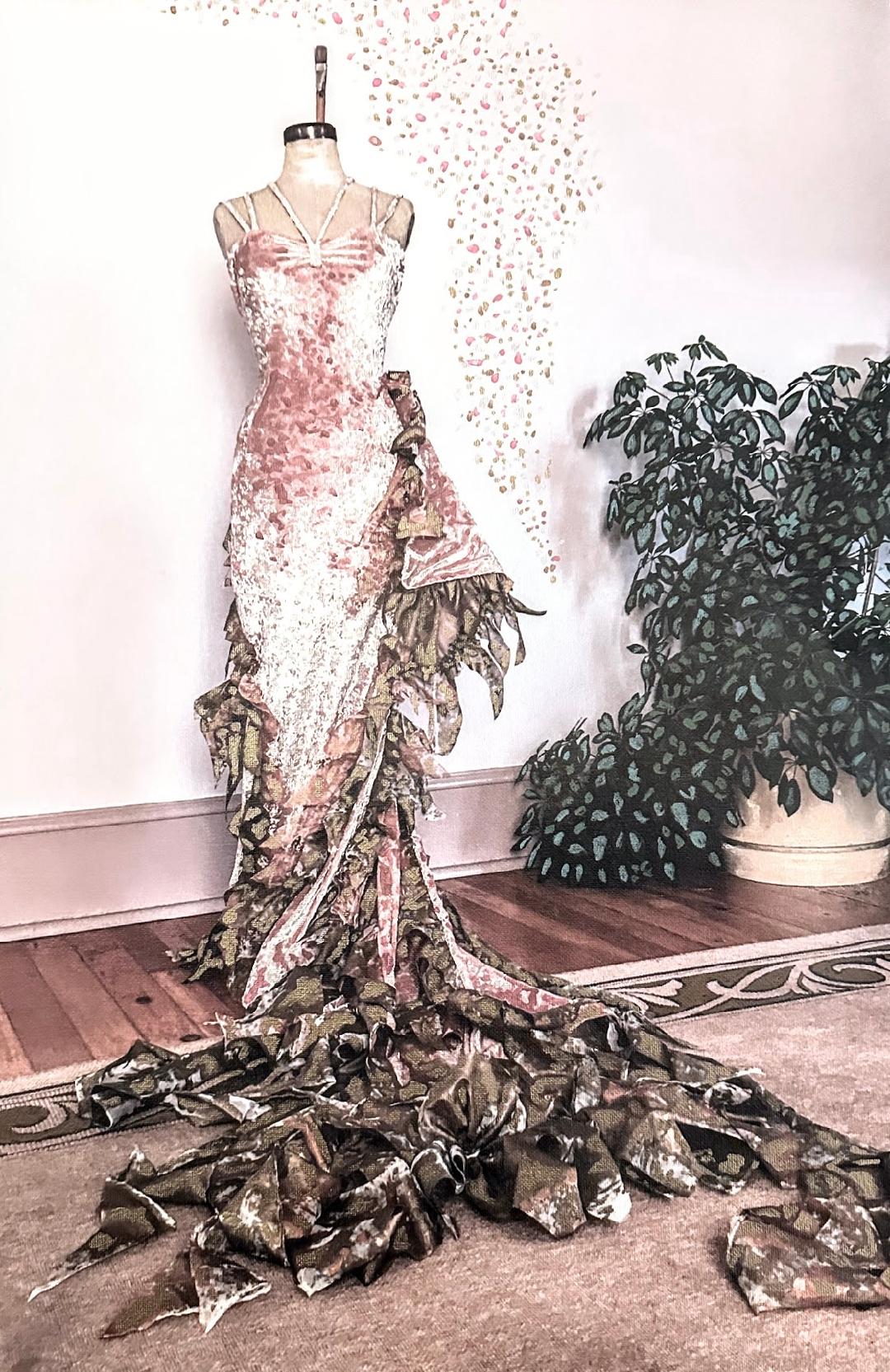
It began when I opened a gift box & found 4 massive lace curtains. From the colour, fabric & finish, I’d date it mid-late 70’s.
The box arrived while I was preparing the post – La Belle Époque .
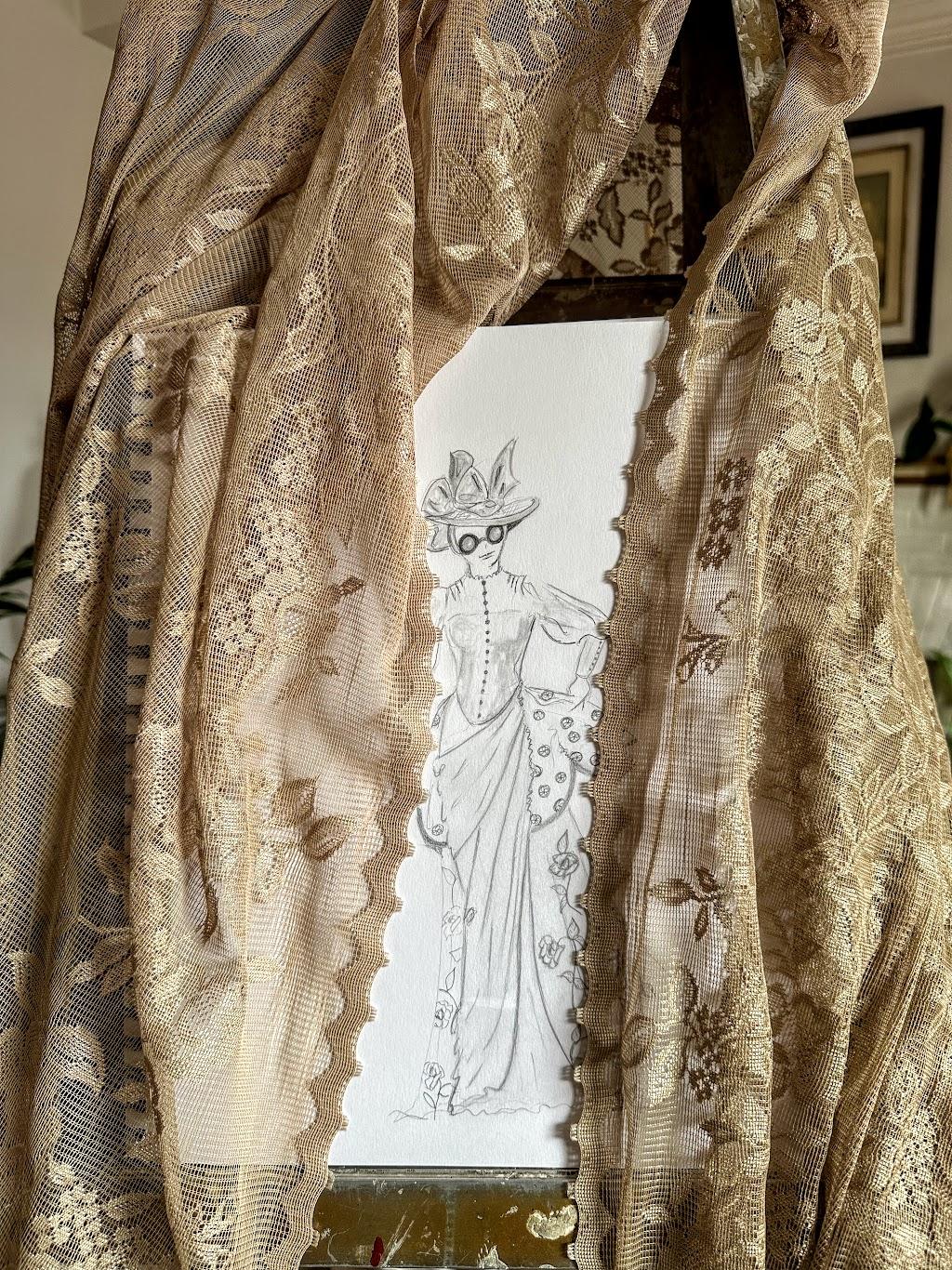
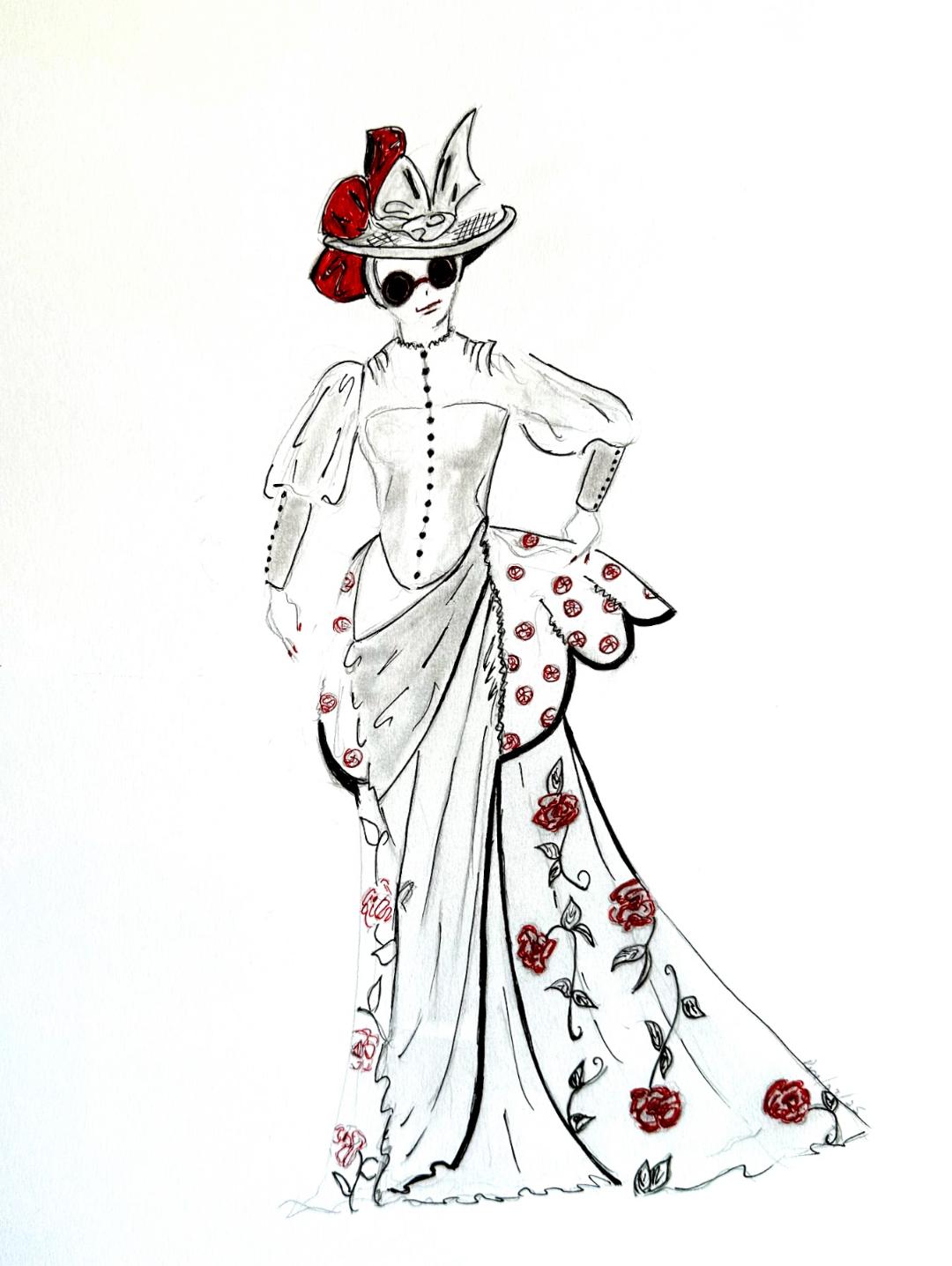
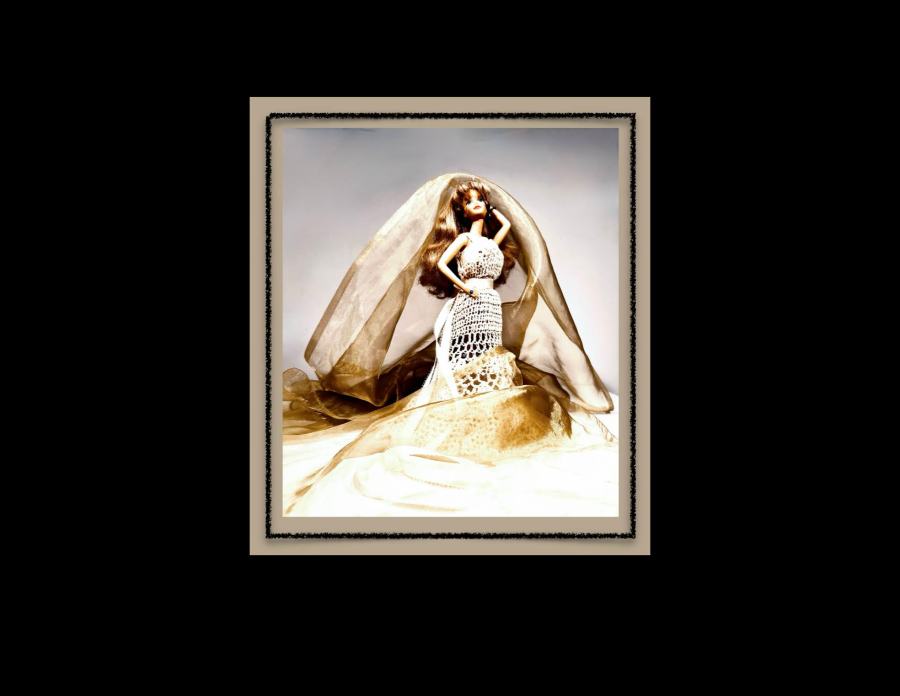
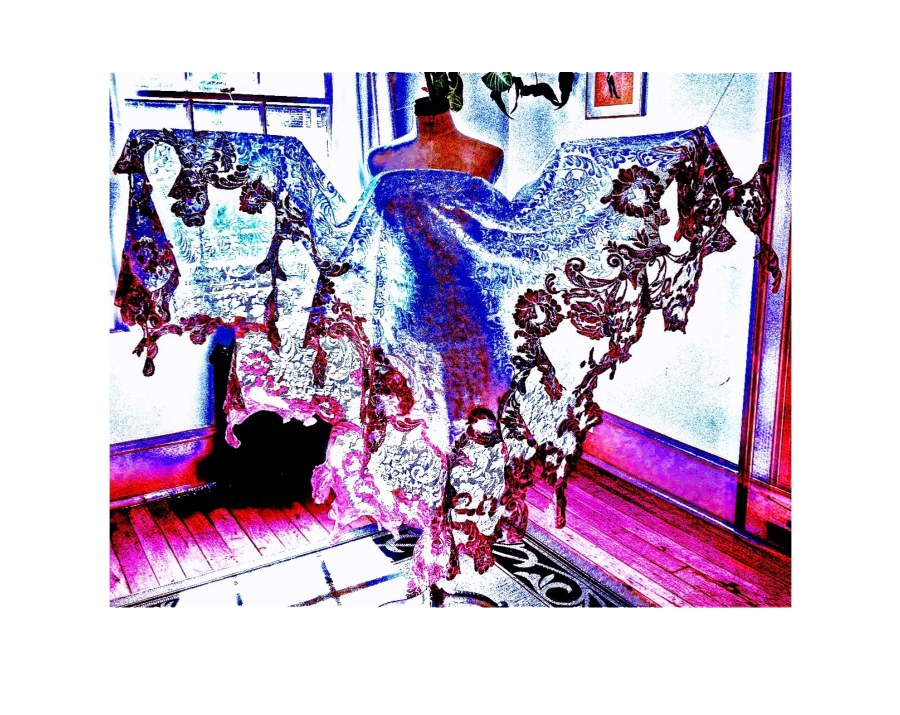
The drawing of Rebecca I was working on came to mind. The fabric was draped over it, a pic was taken and an Art Gown idea was born.
As you can see, the fabric arrived after the sketch was done, but before the colour was added.
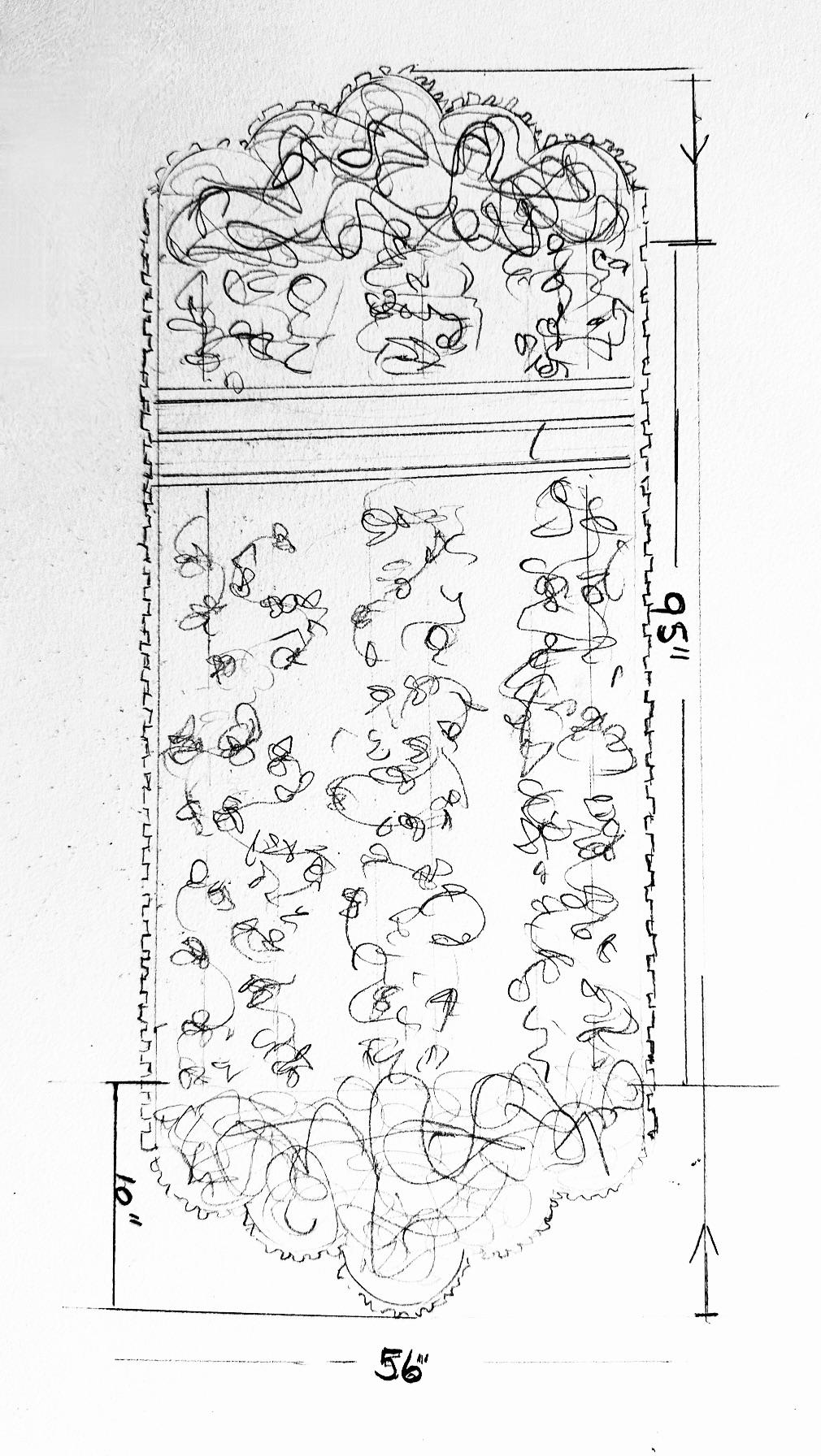
There were 4 panels, all the same. They were 56″ wide & at the deepest points 115′ long.
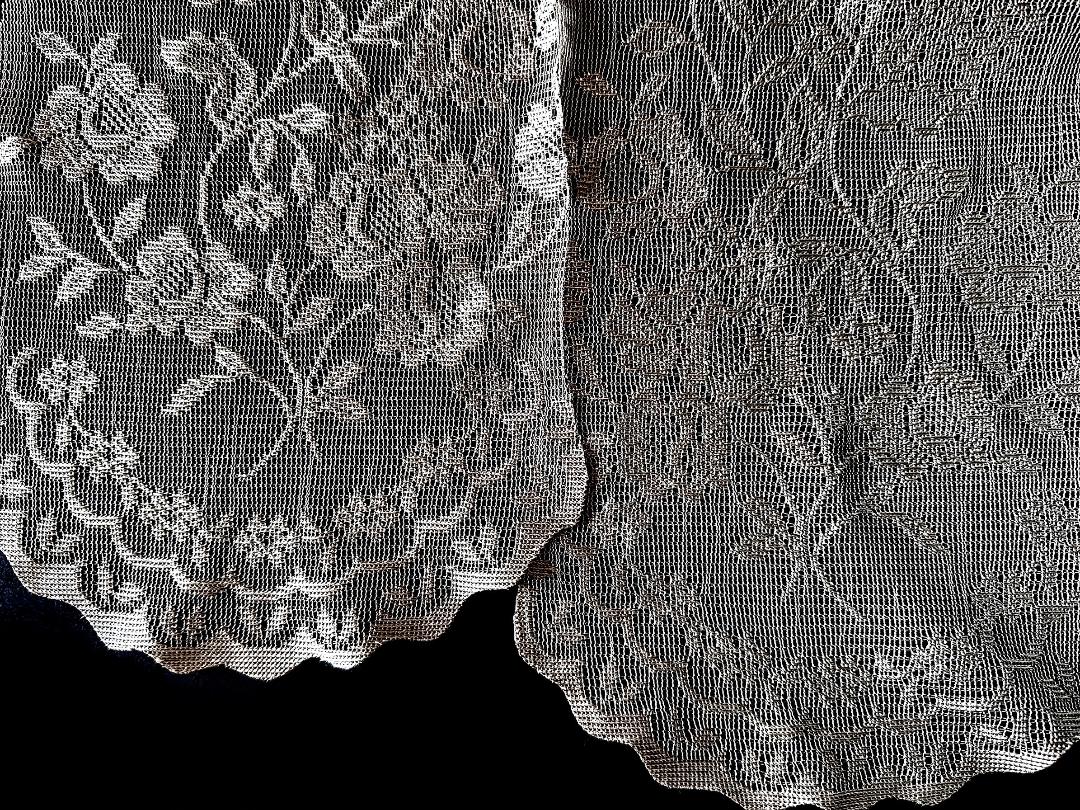
As you can see from the drawing of the panels, there are no cut ends, so these pieces were custom woven.
Selvages were woven into a geometric picot.
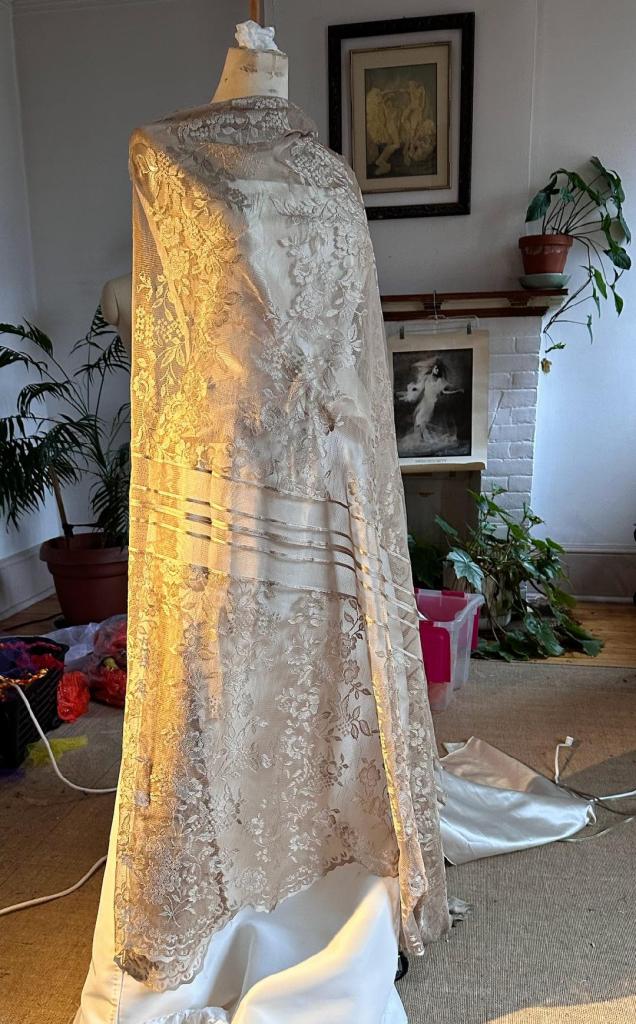
The ends were scalloped. The scallops were scalloped. The lace is a floral repeat pattern, not overall. There’s a mesh type drop out with 3 solid lines at about the 3/4 point.
The fabric was one sided. Although the pattern showed on both sides, when light hit – one side shone, the other died.
There were several pieces of older, varying in shades of white, acetate satin & one piece of nasty modern poly satin in the stash baskets.
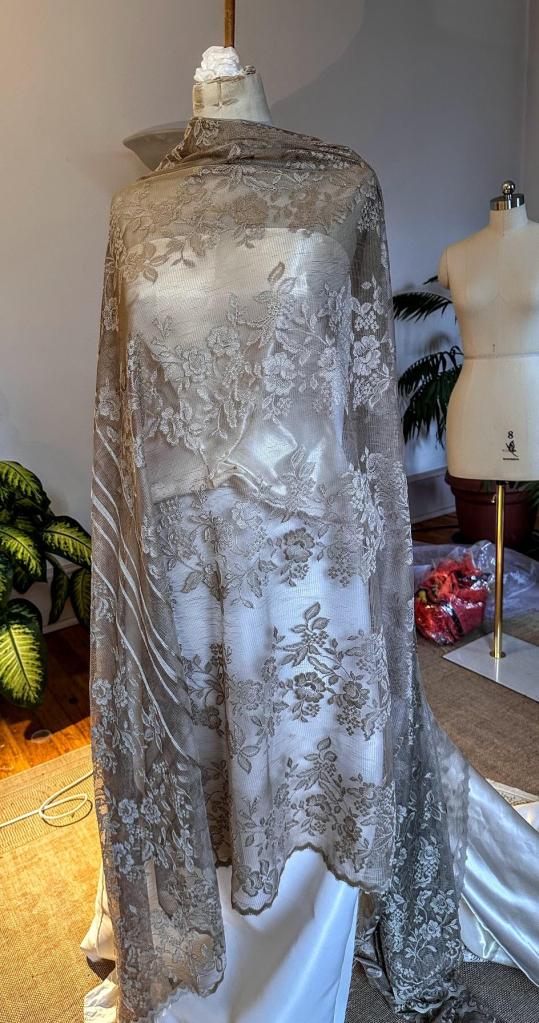
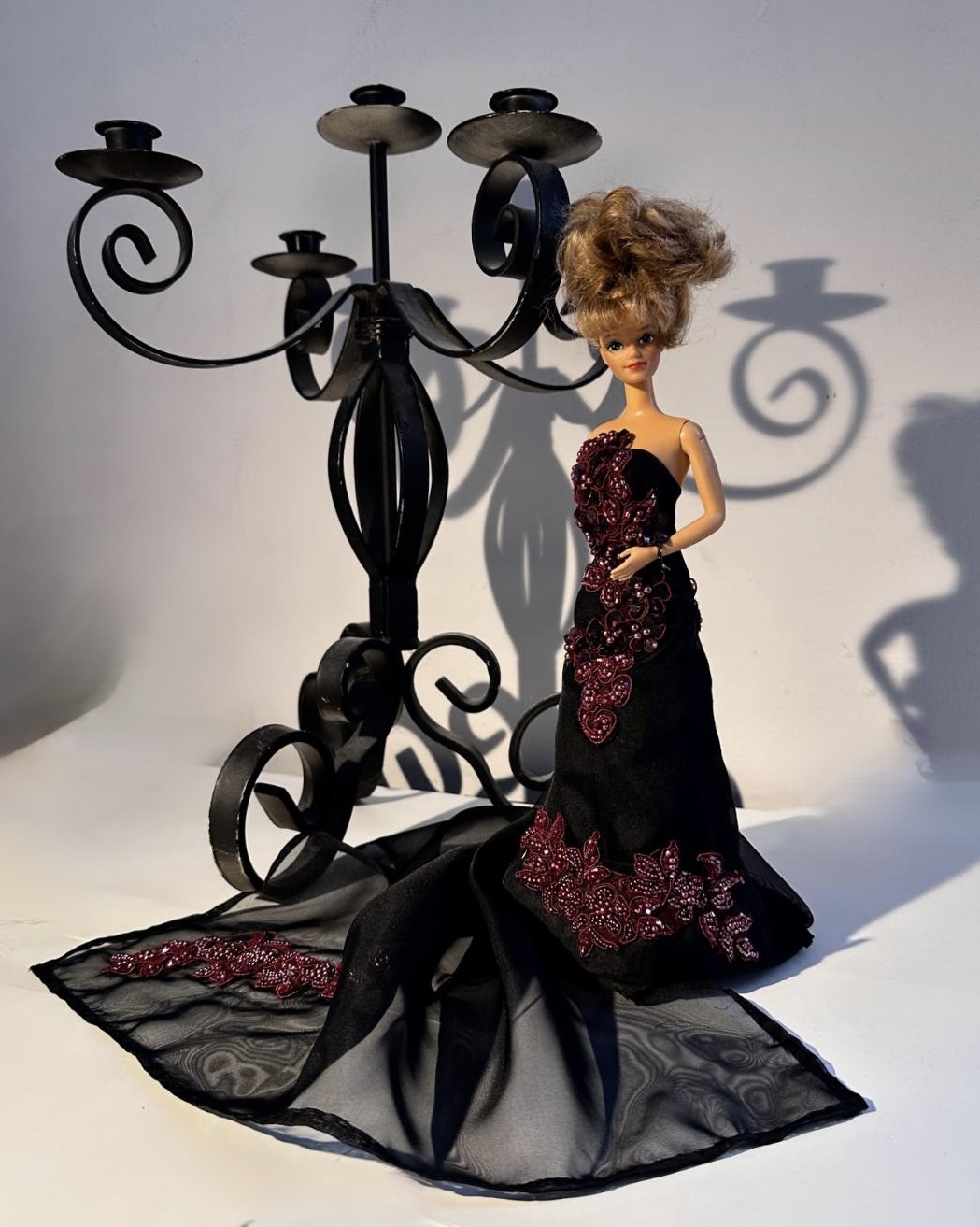
Those were pinned to Judy and the lace was thrown on top.
Test shots were taken.
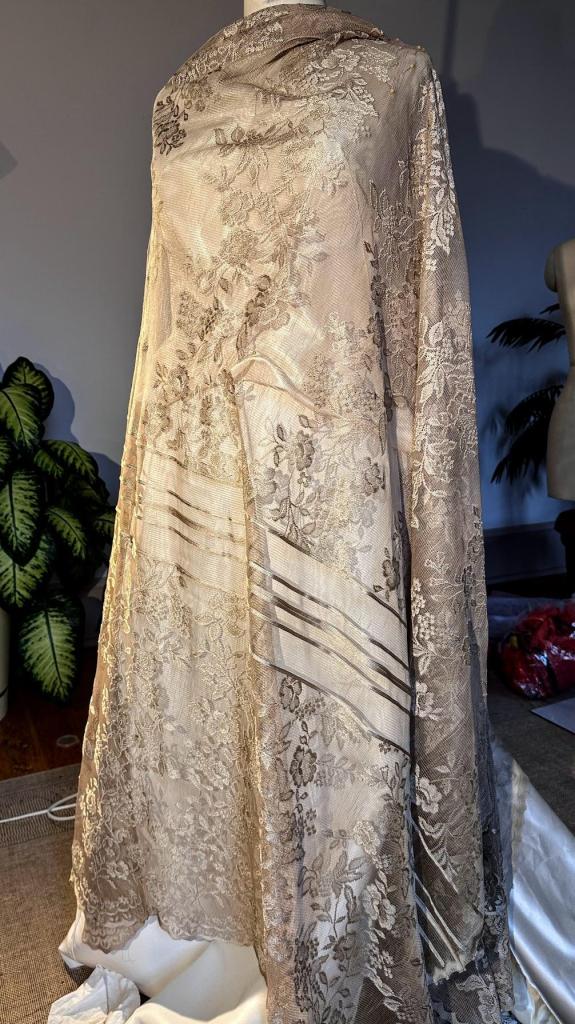
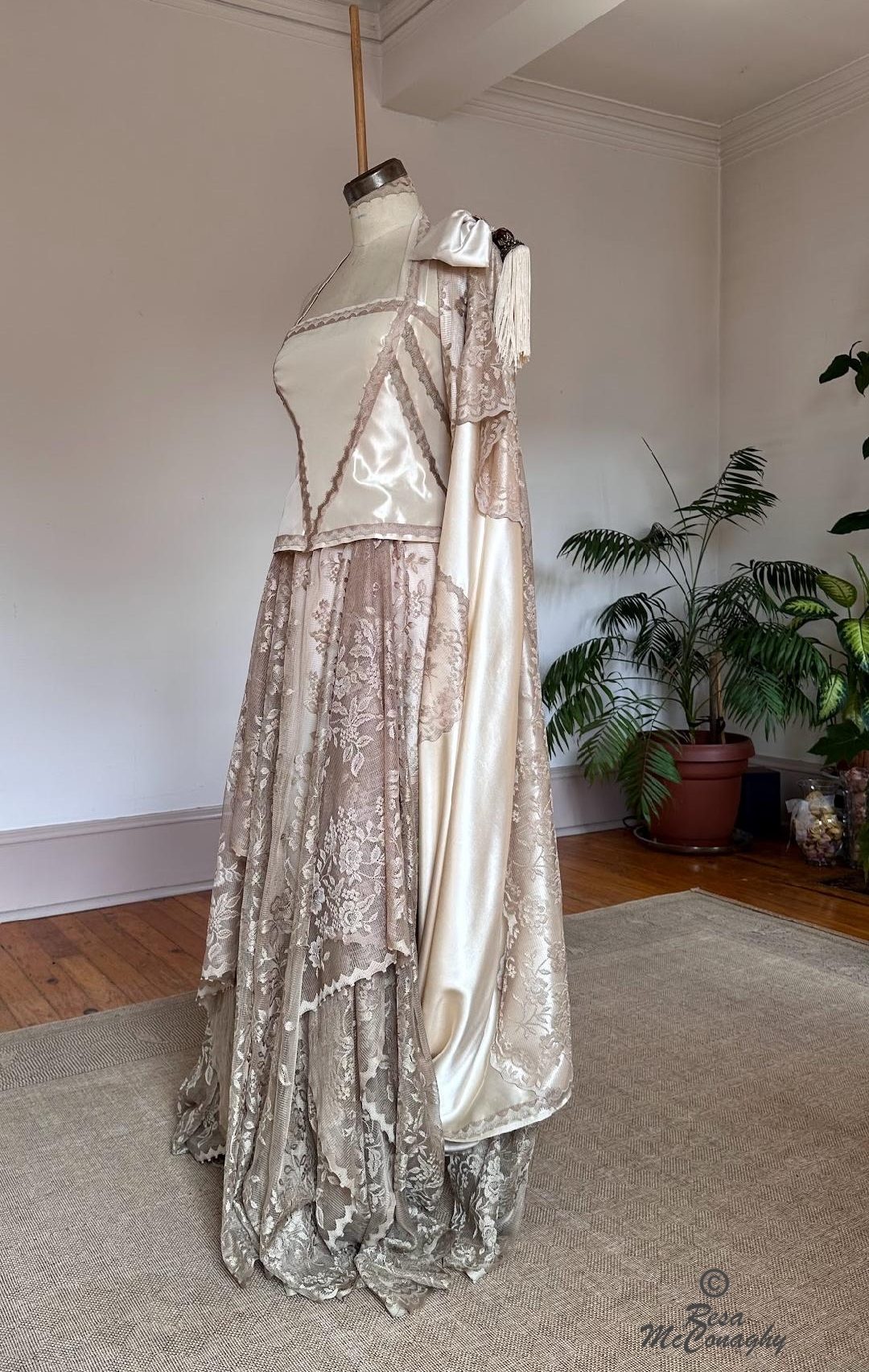
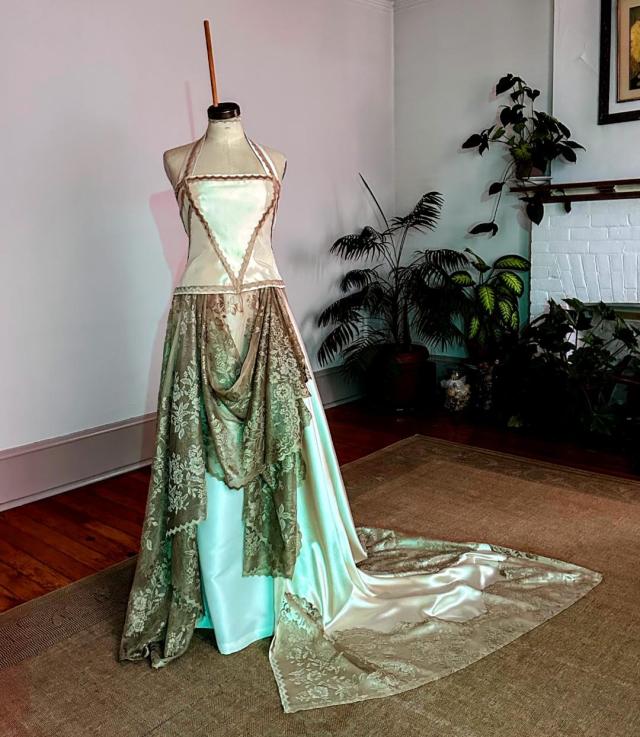
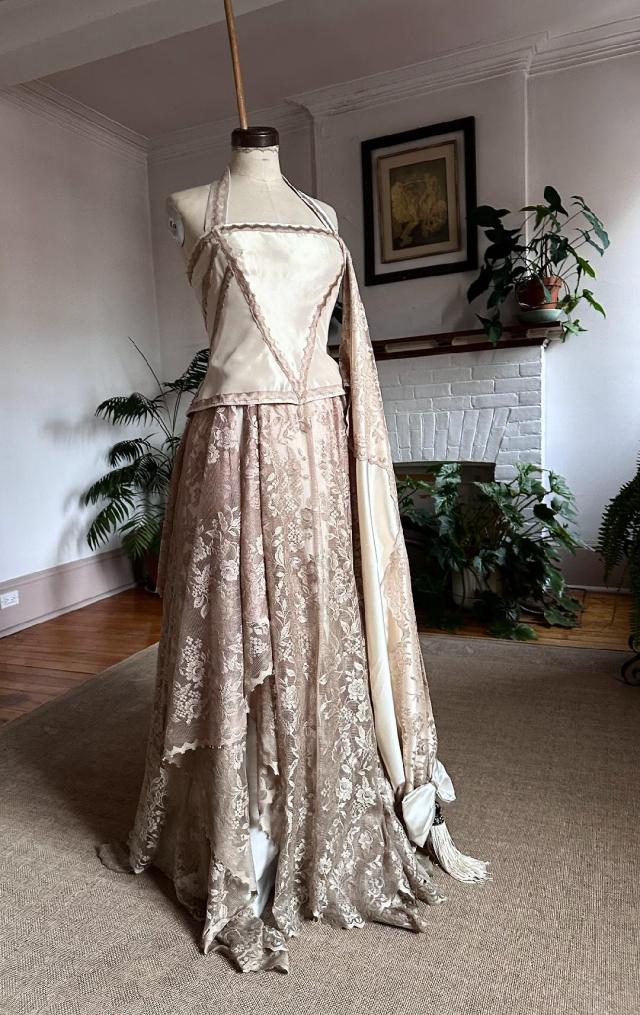
Sometimes the lace lit like various shades of maple syrup: a light golden to dark brown to shades of reddish brown.
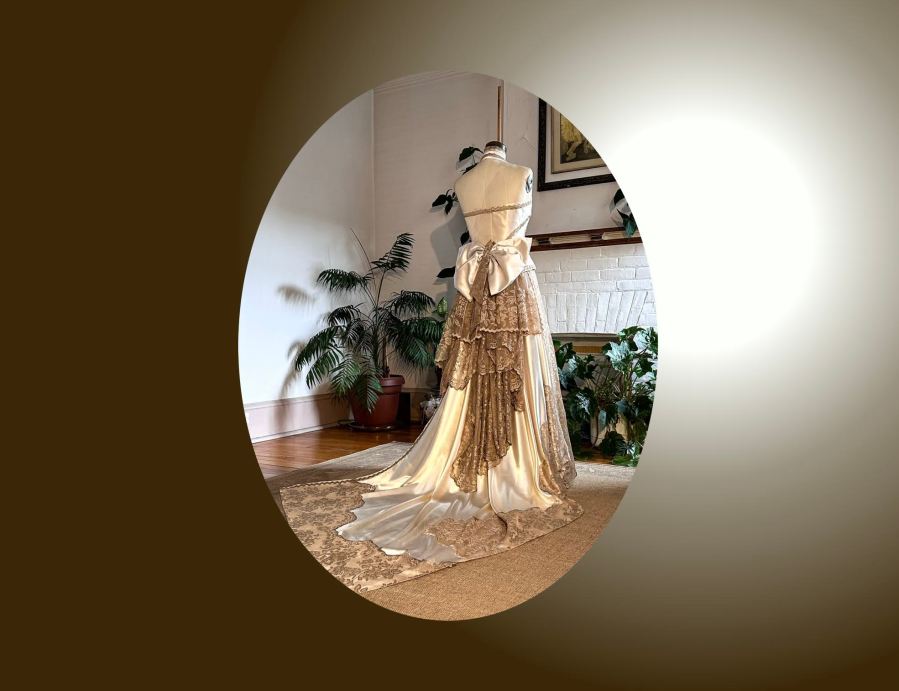
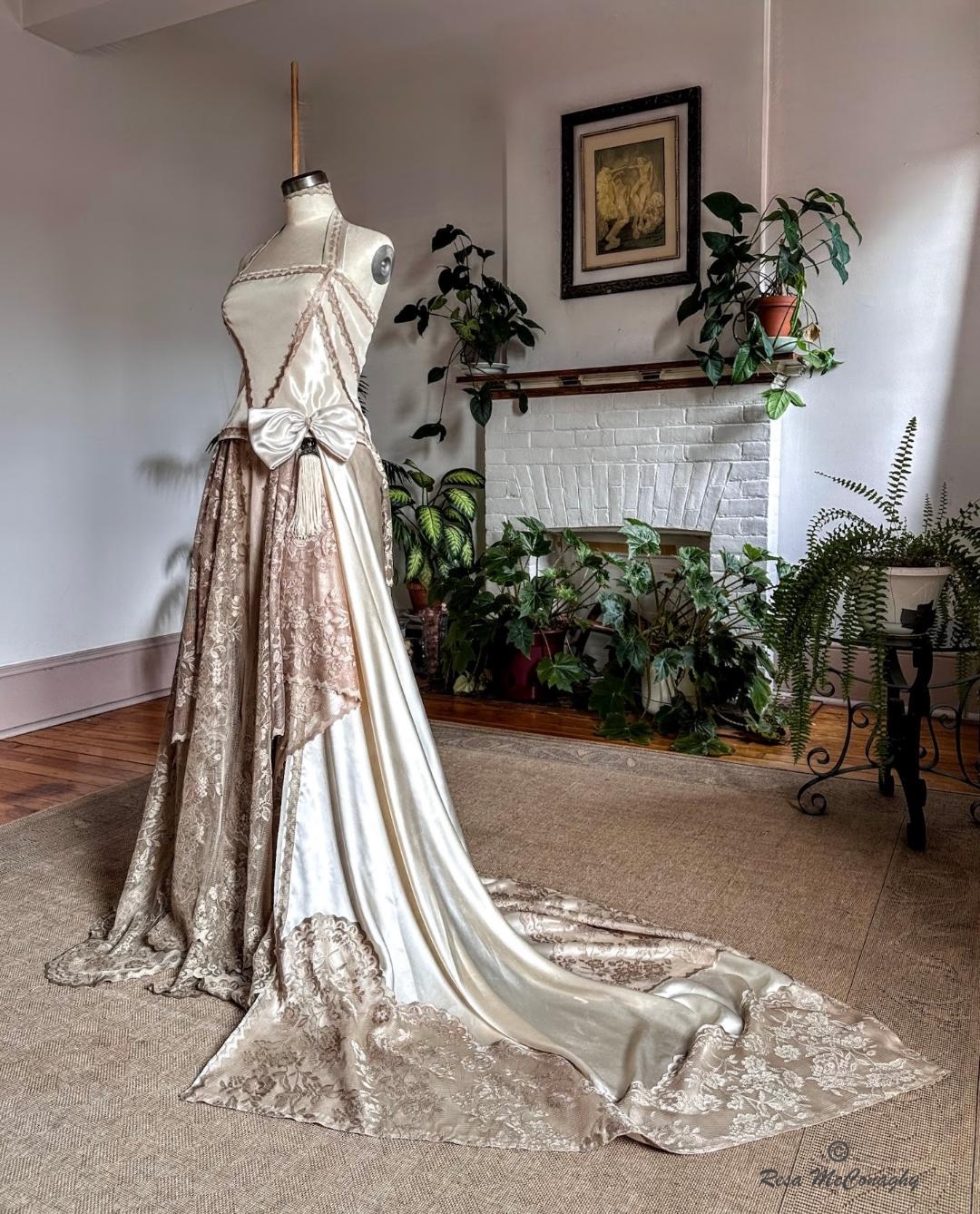
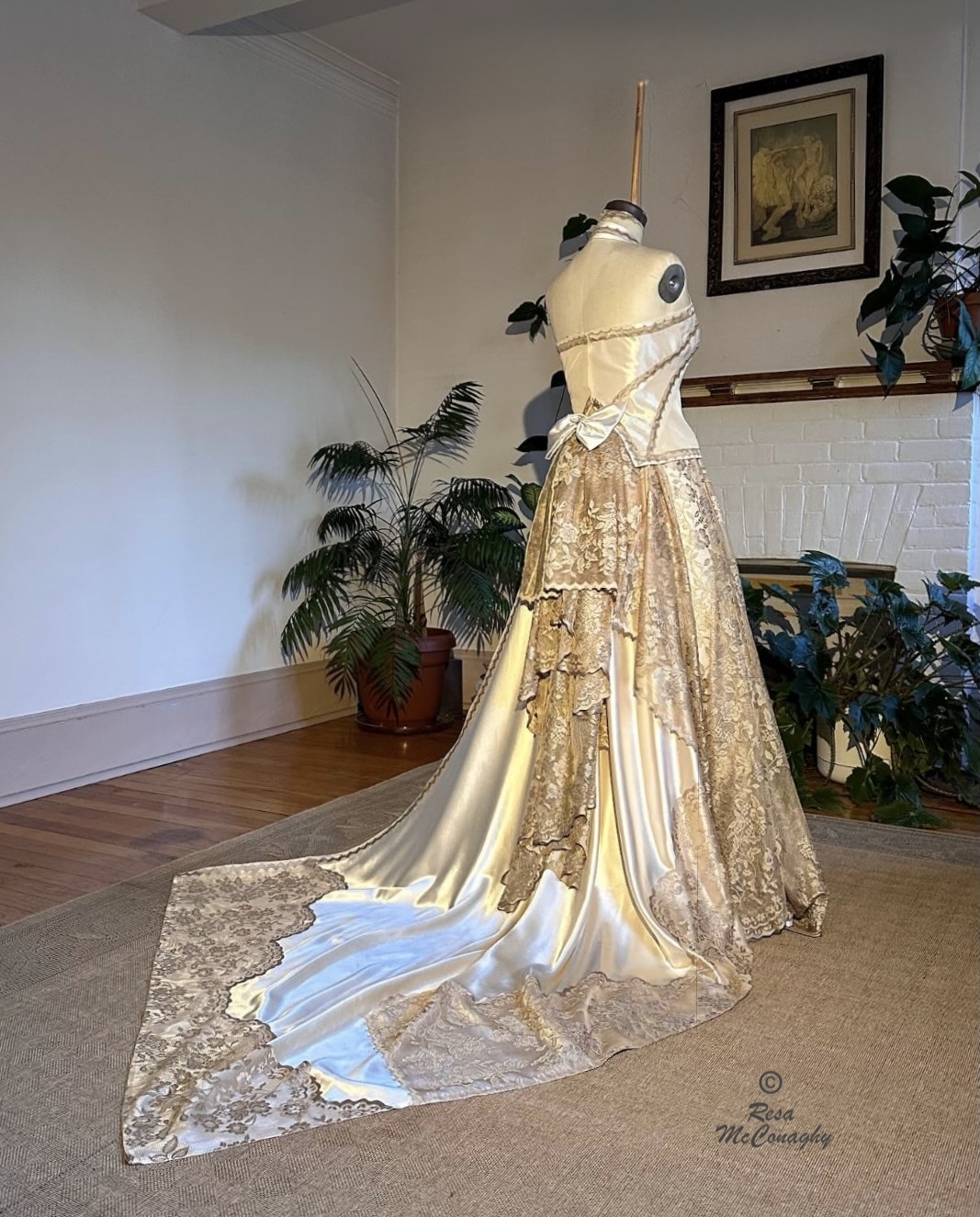
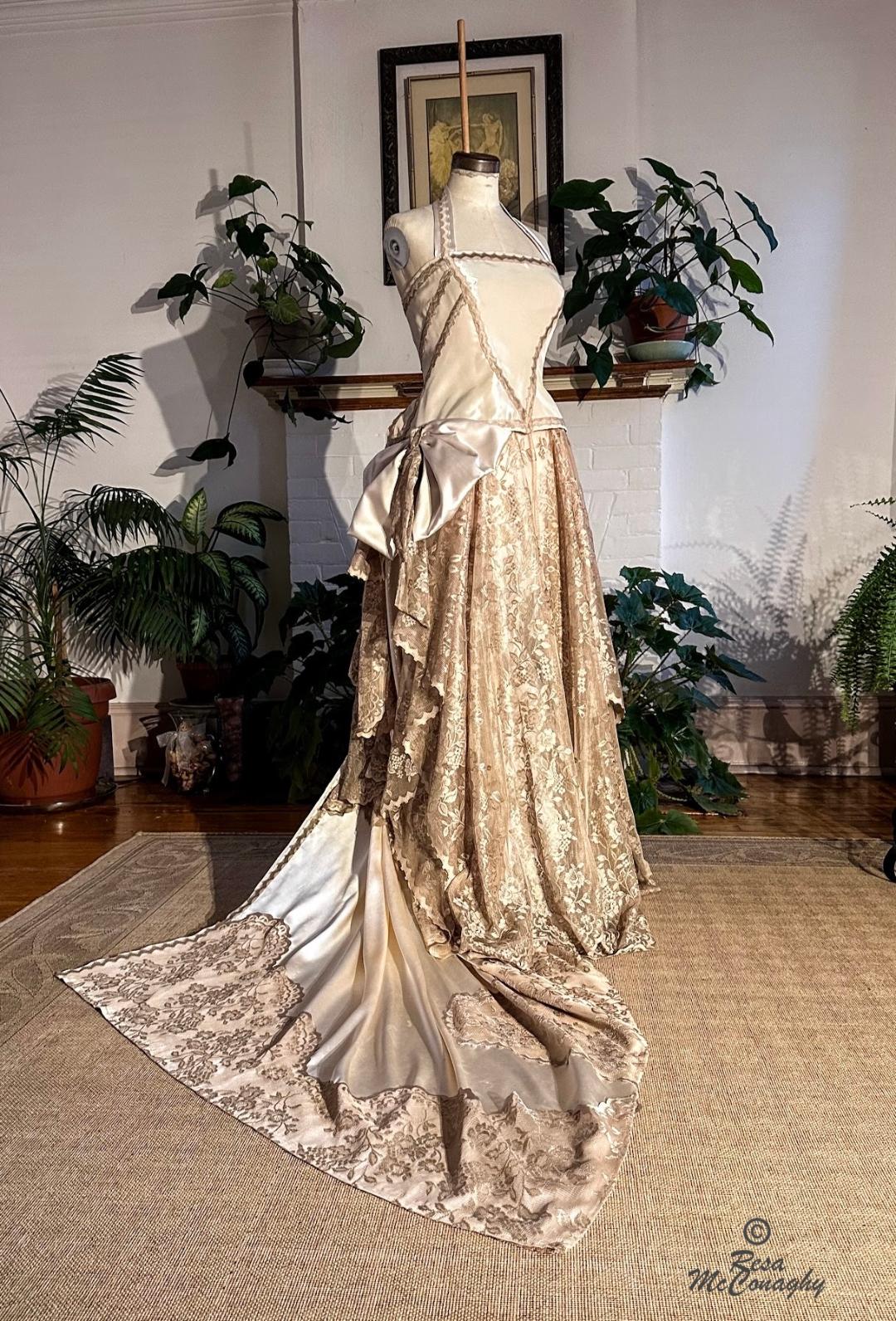
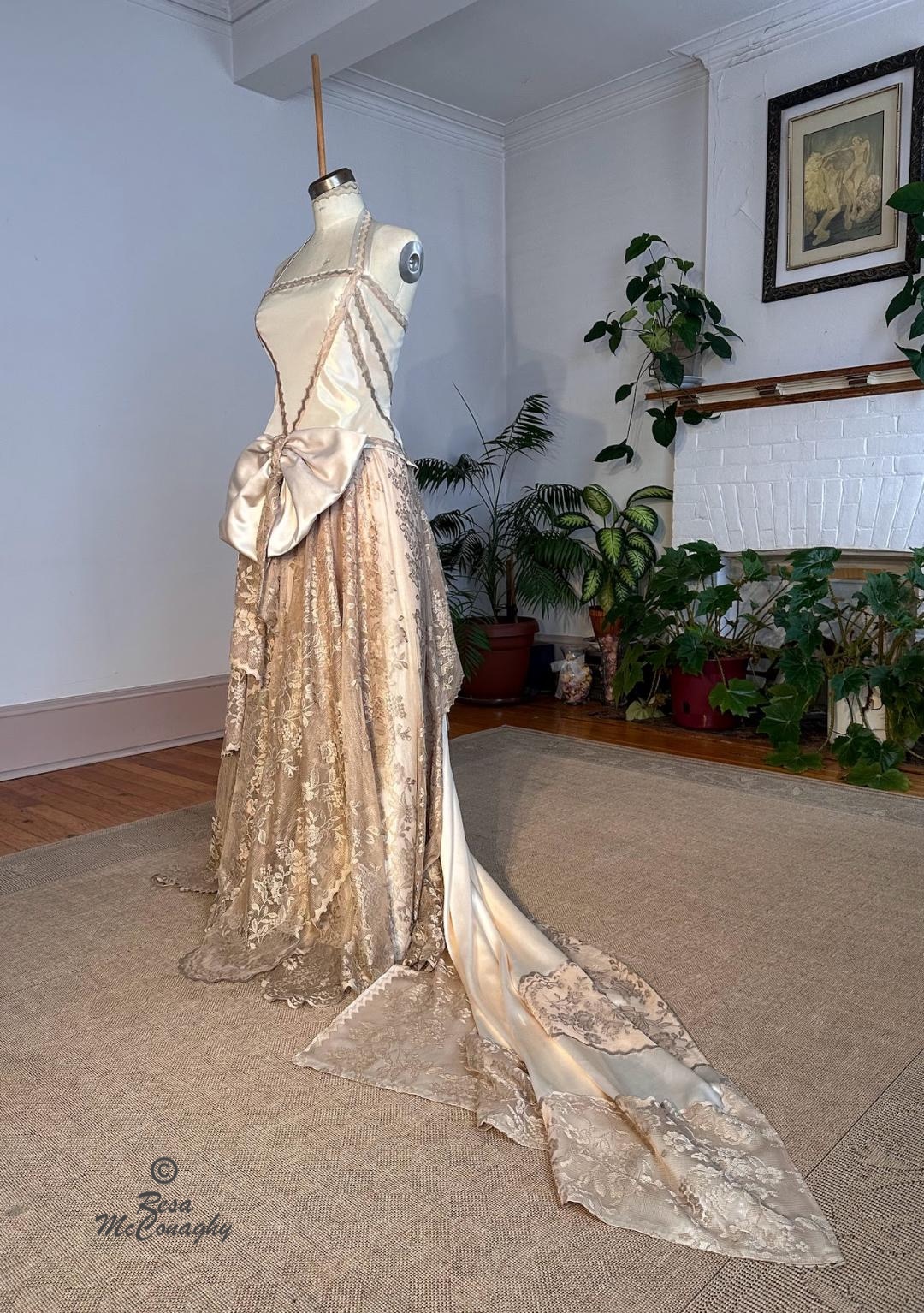
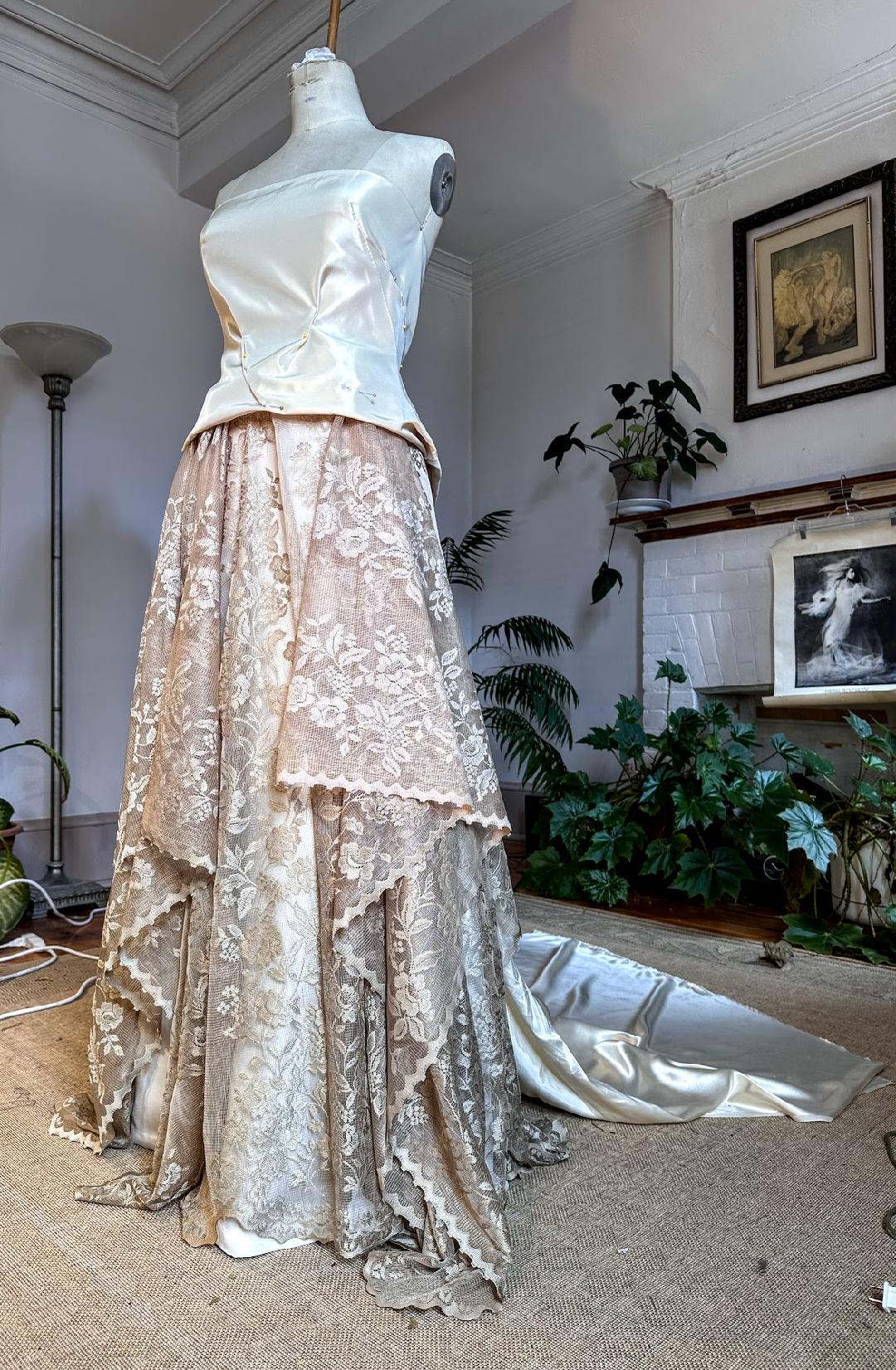
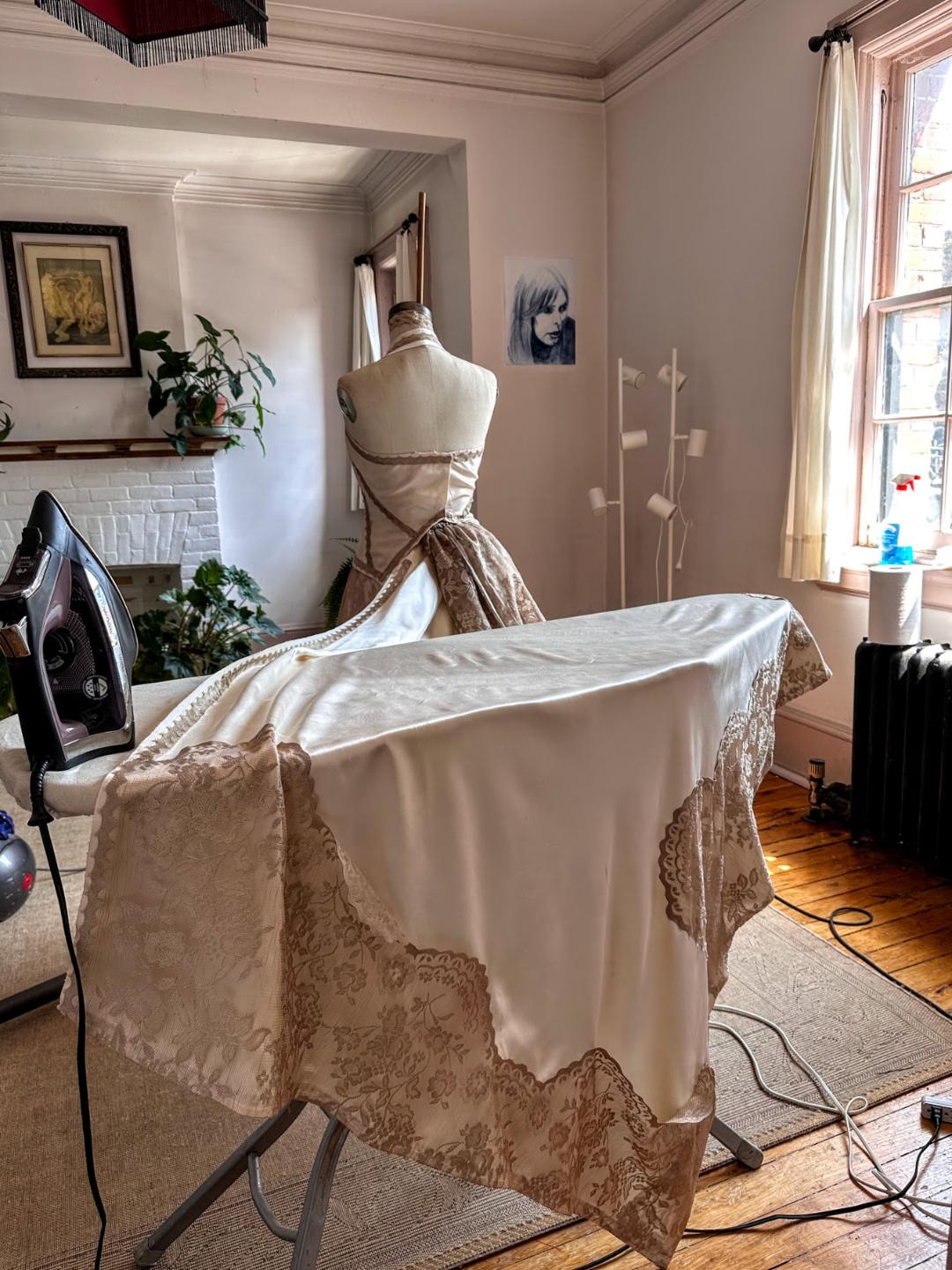
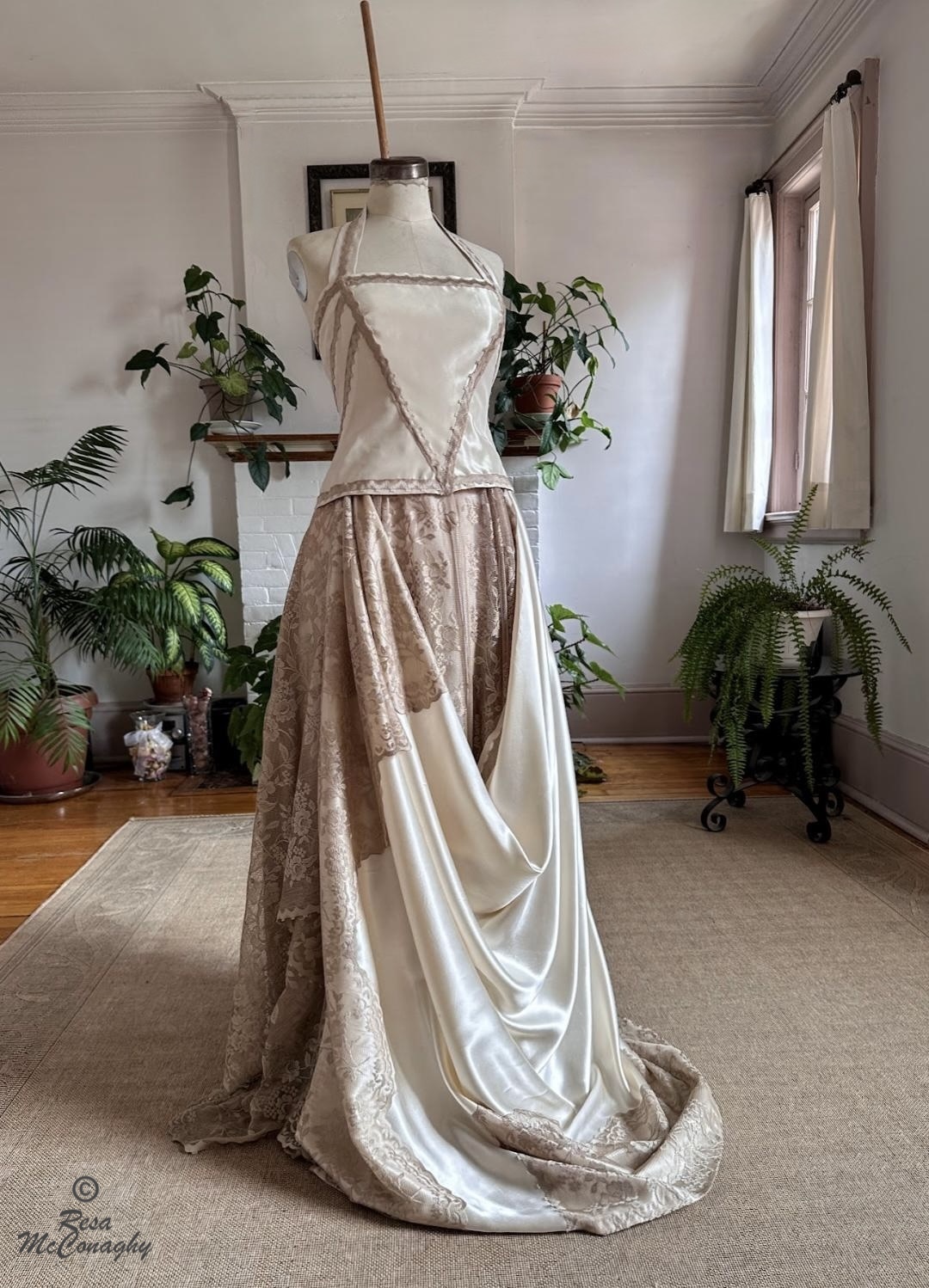
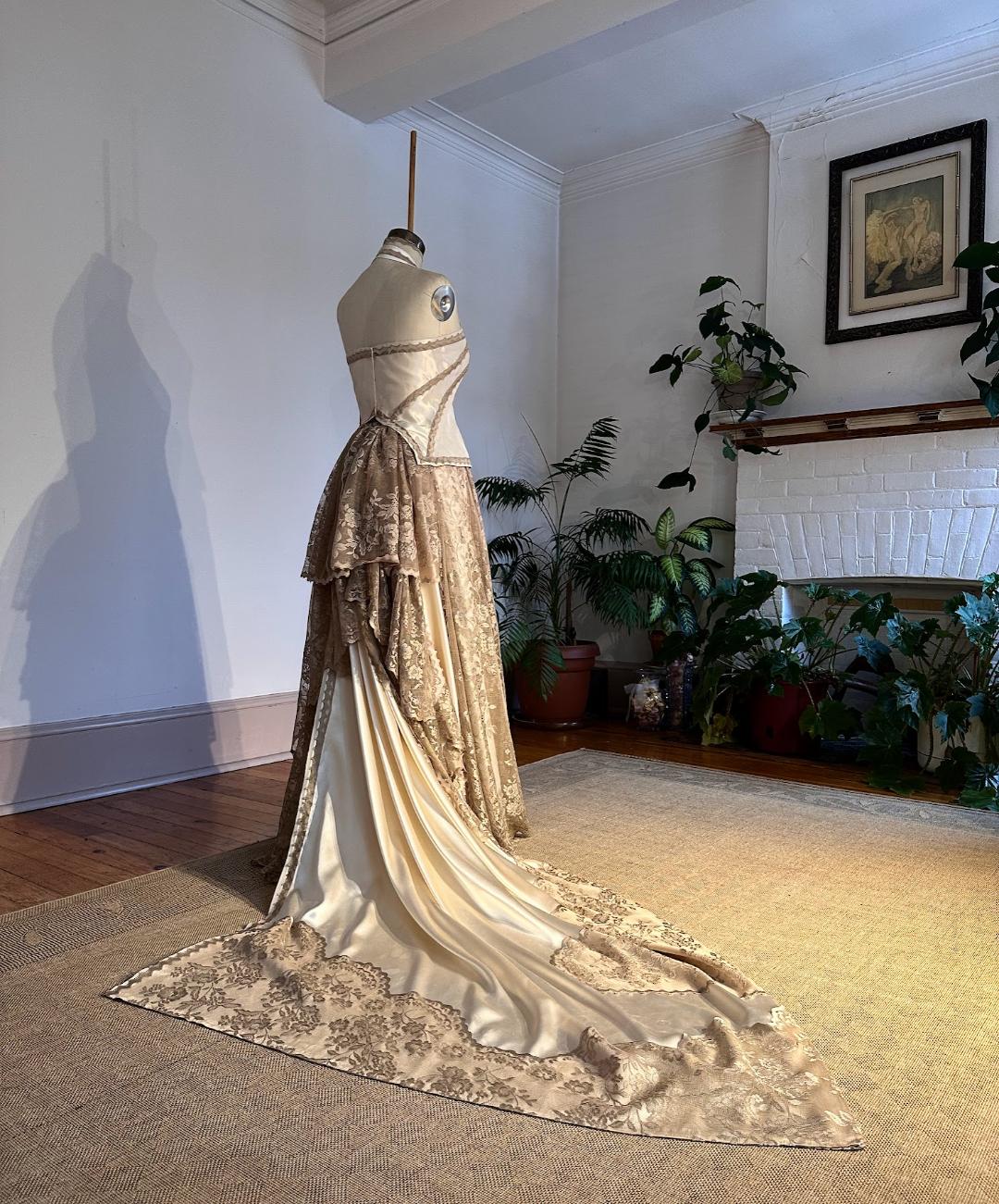
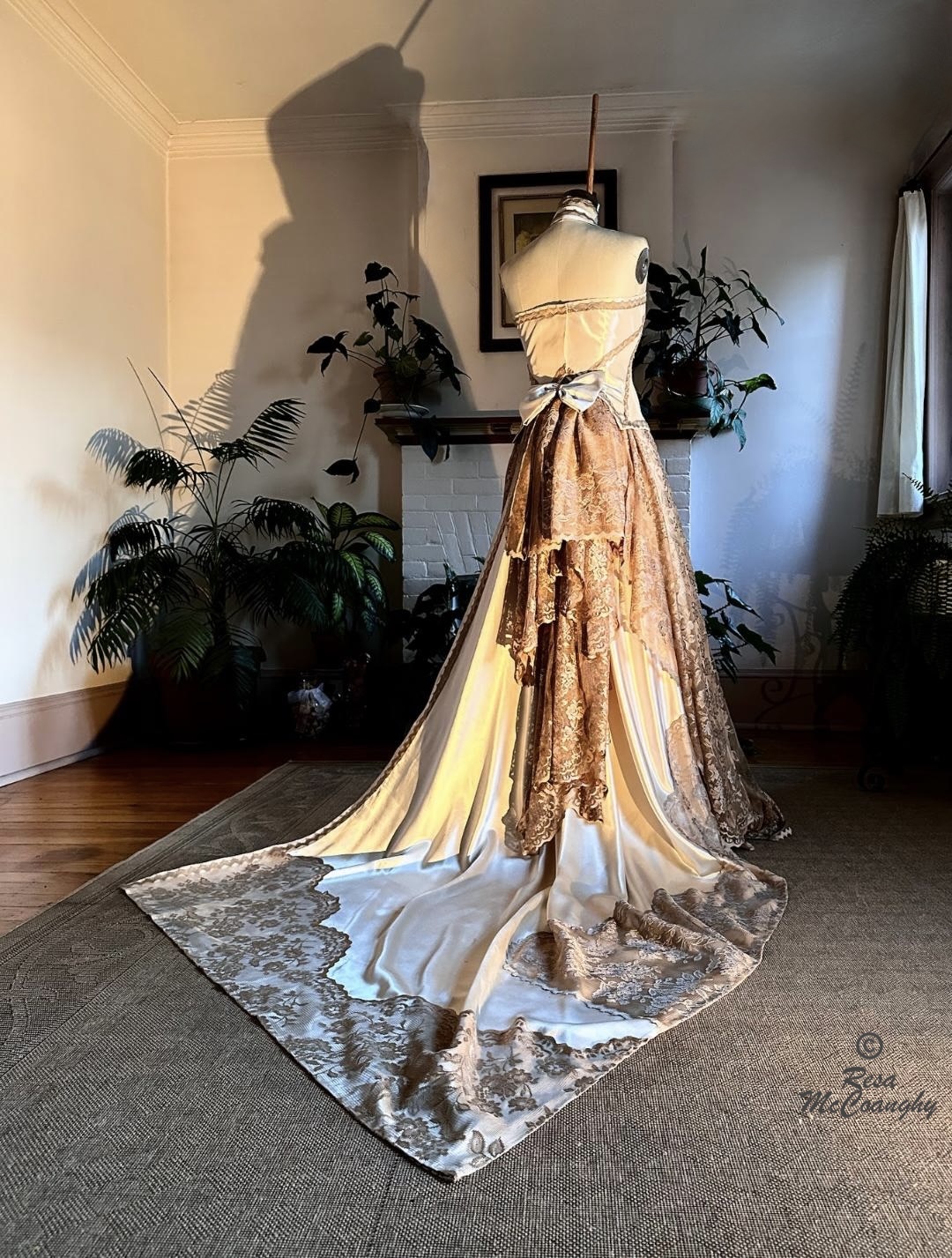
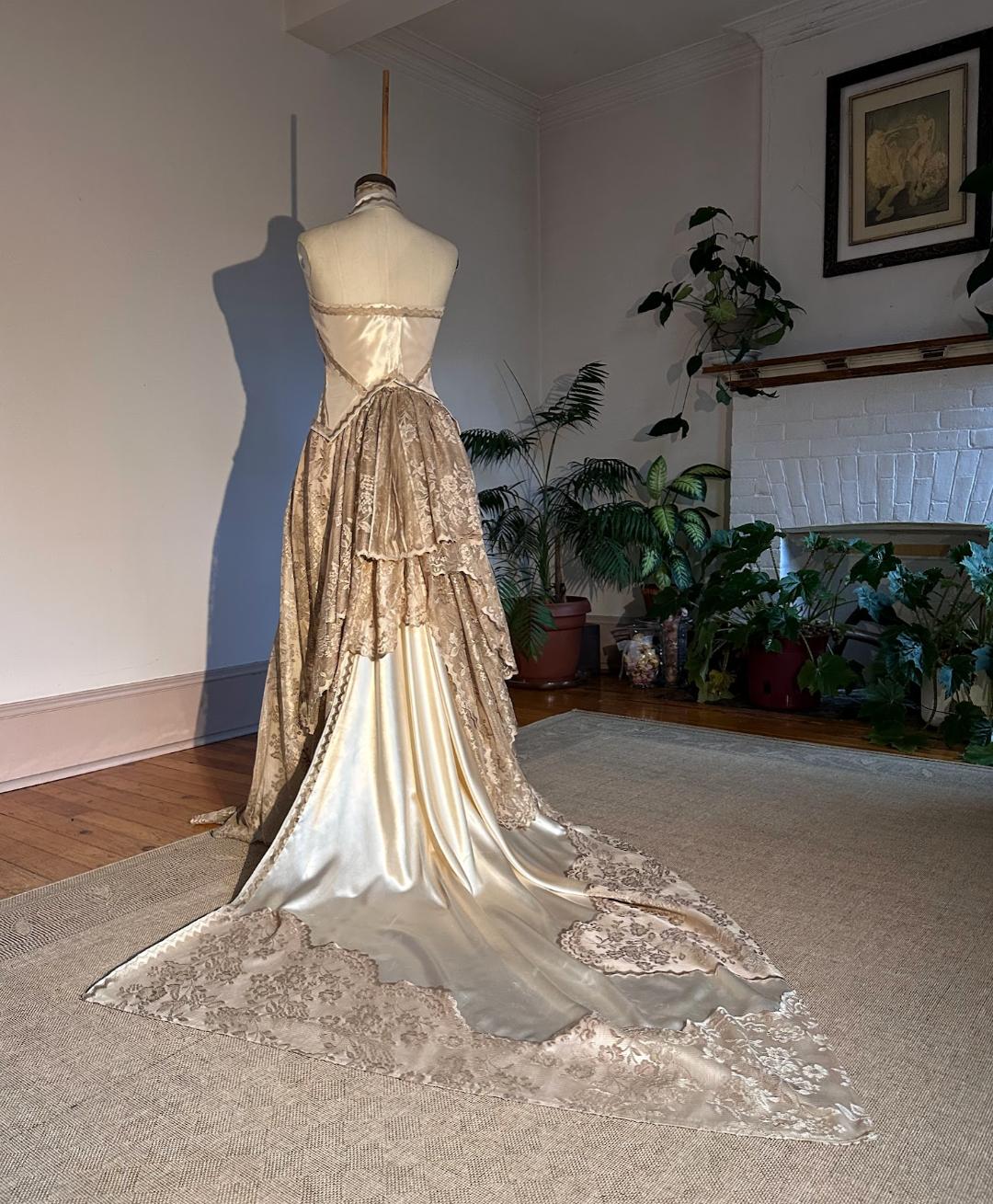
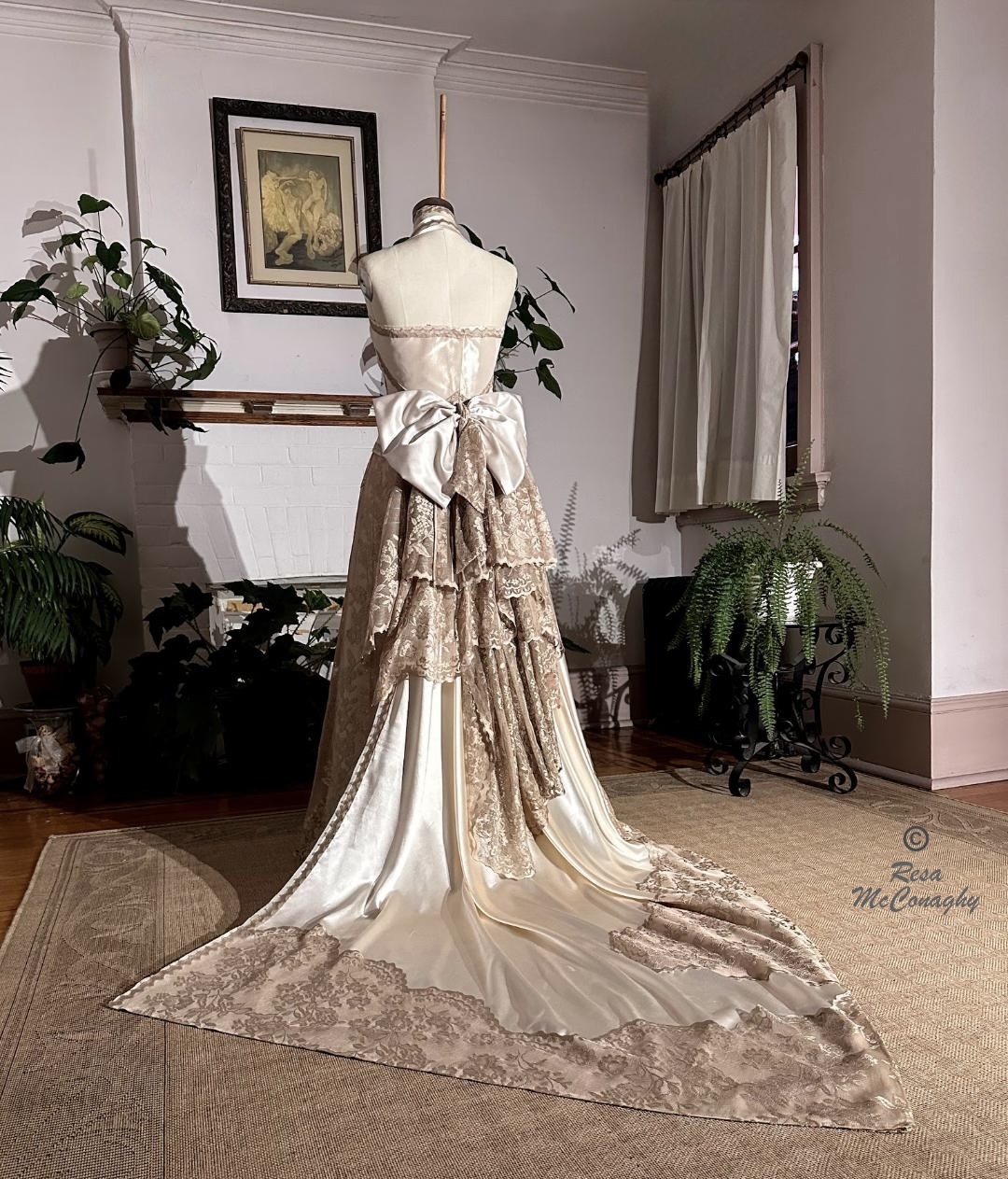
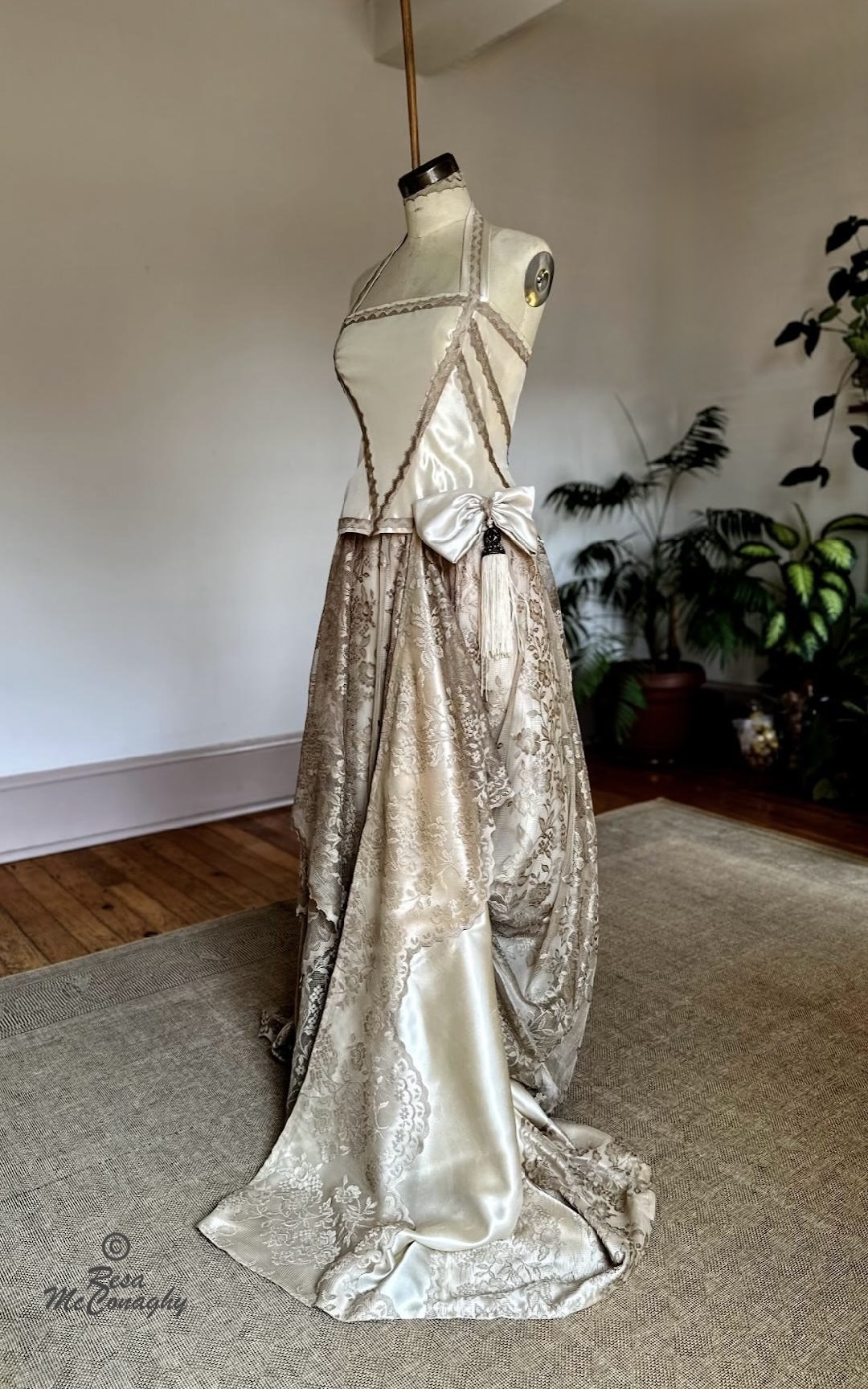
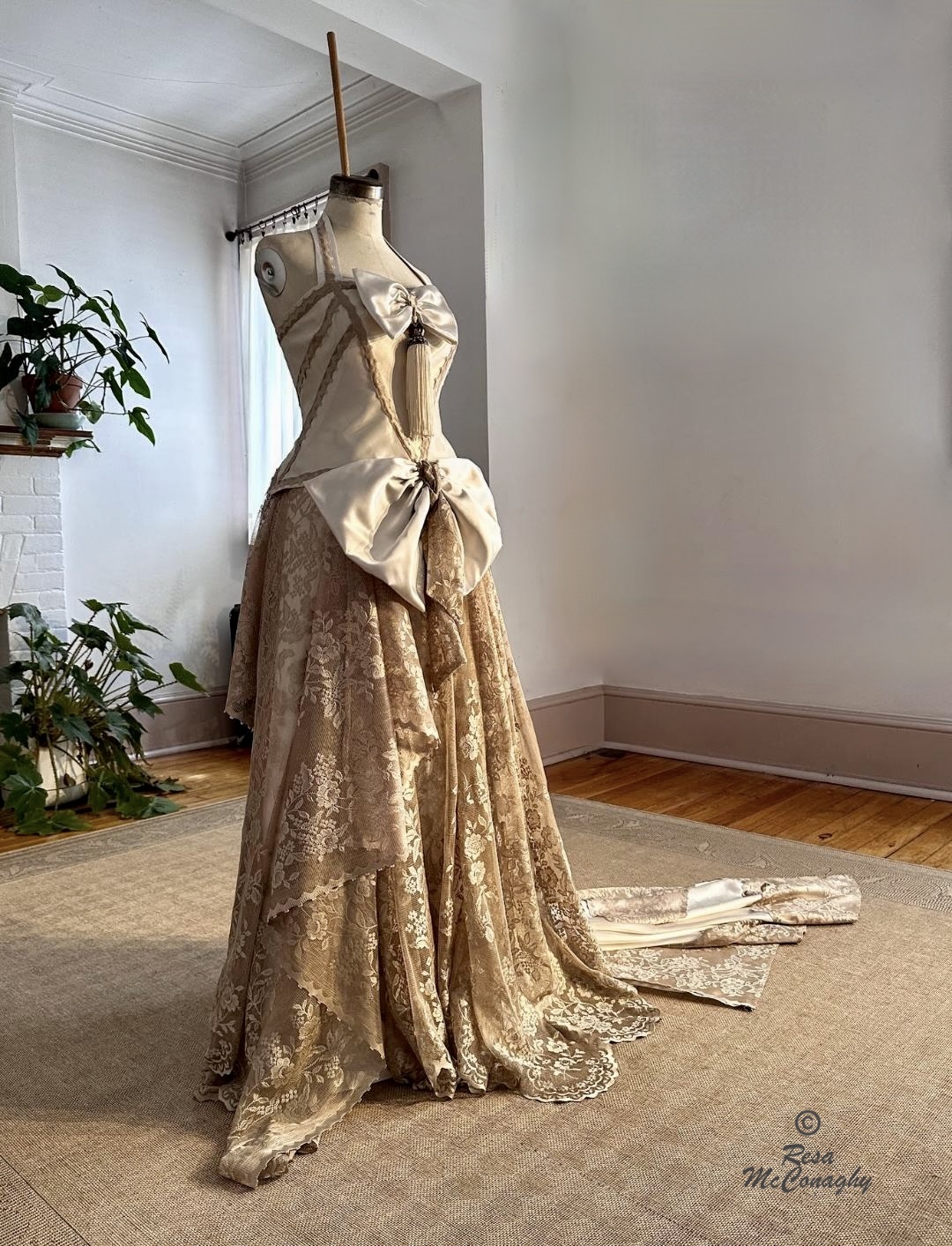
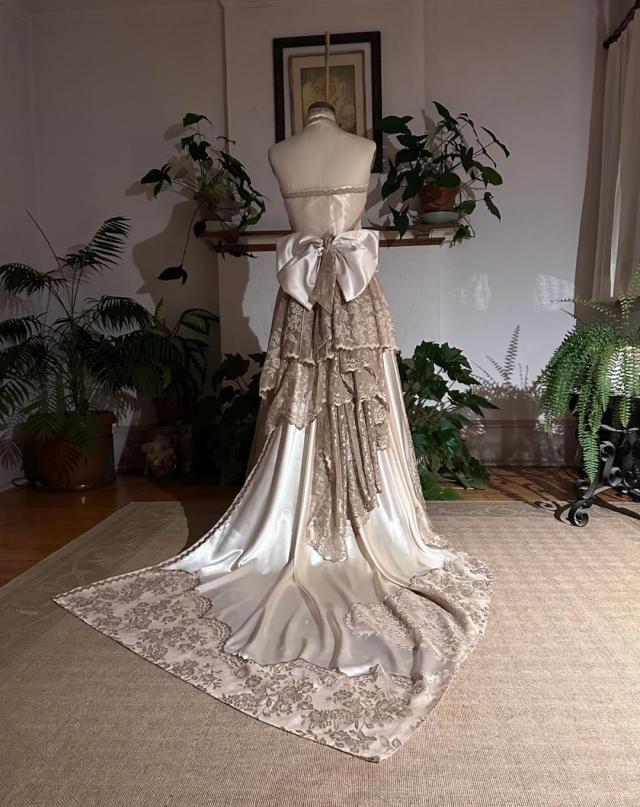
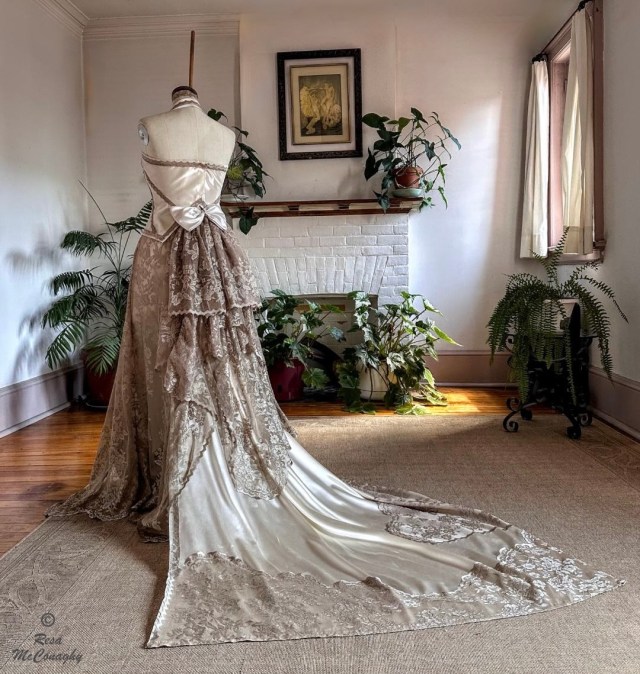
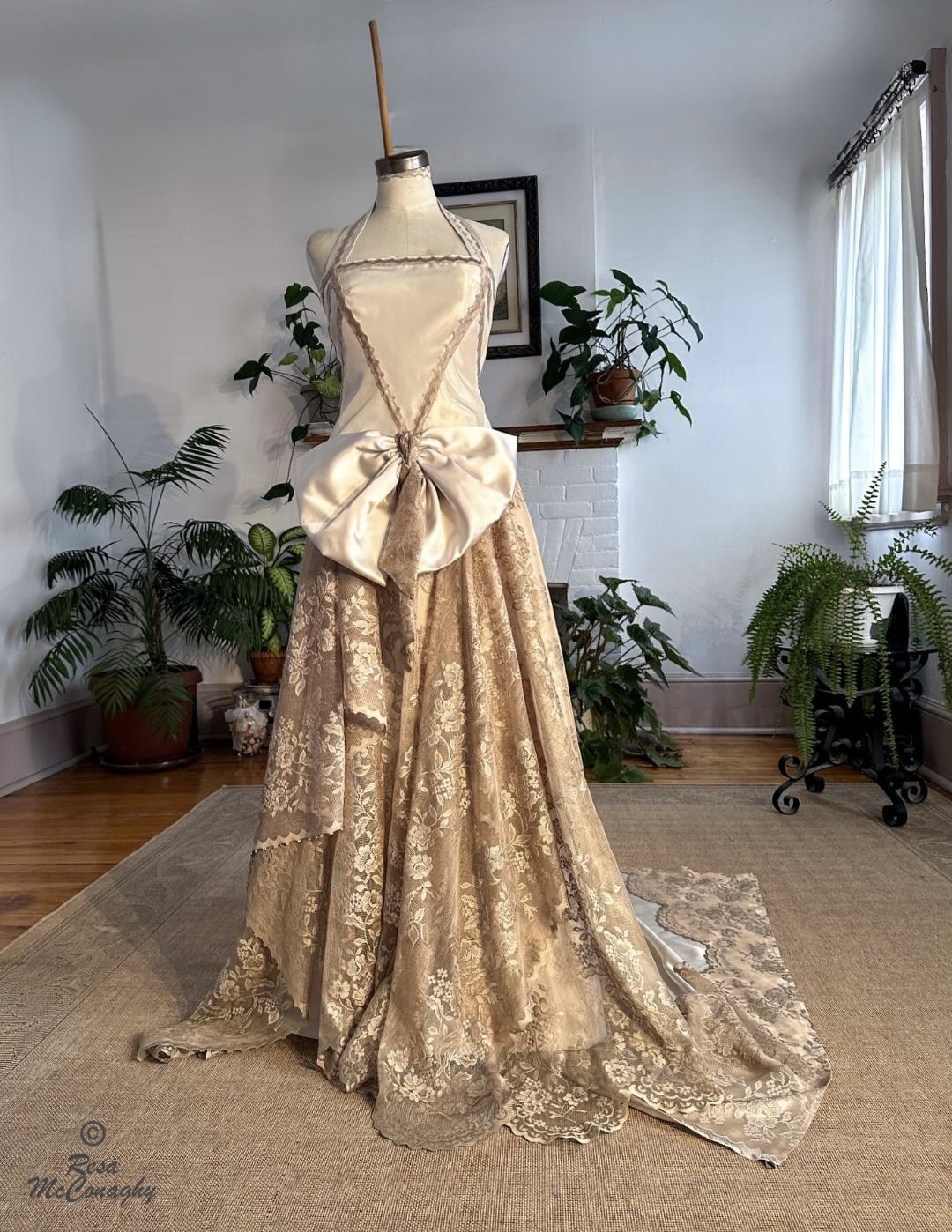
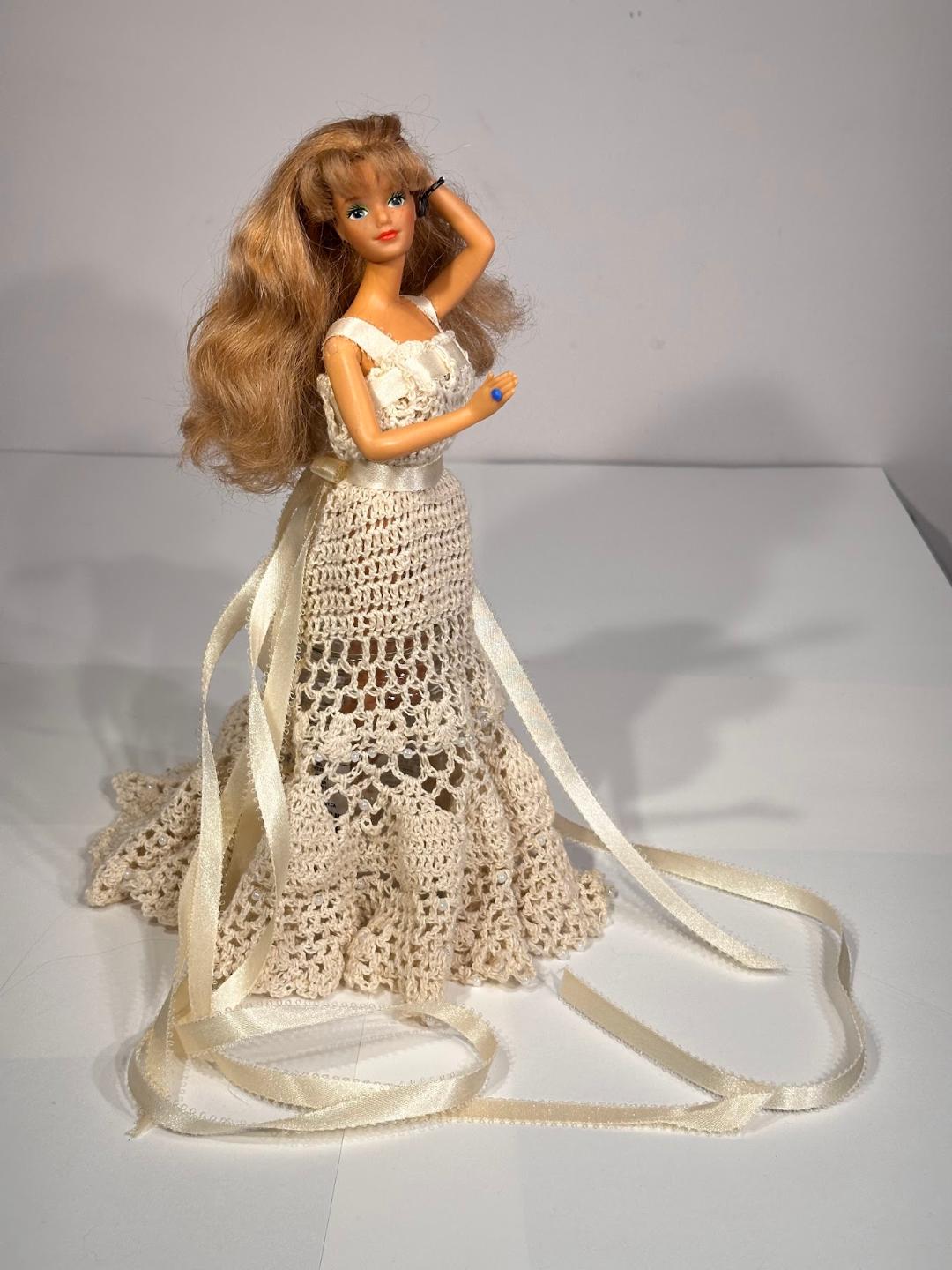
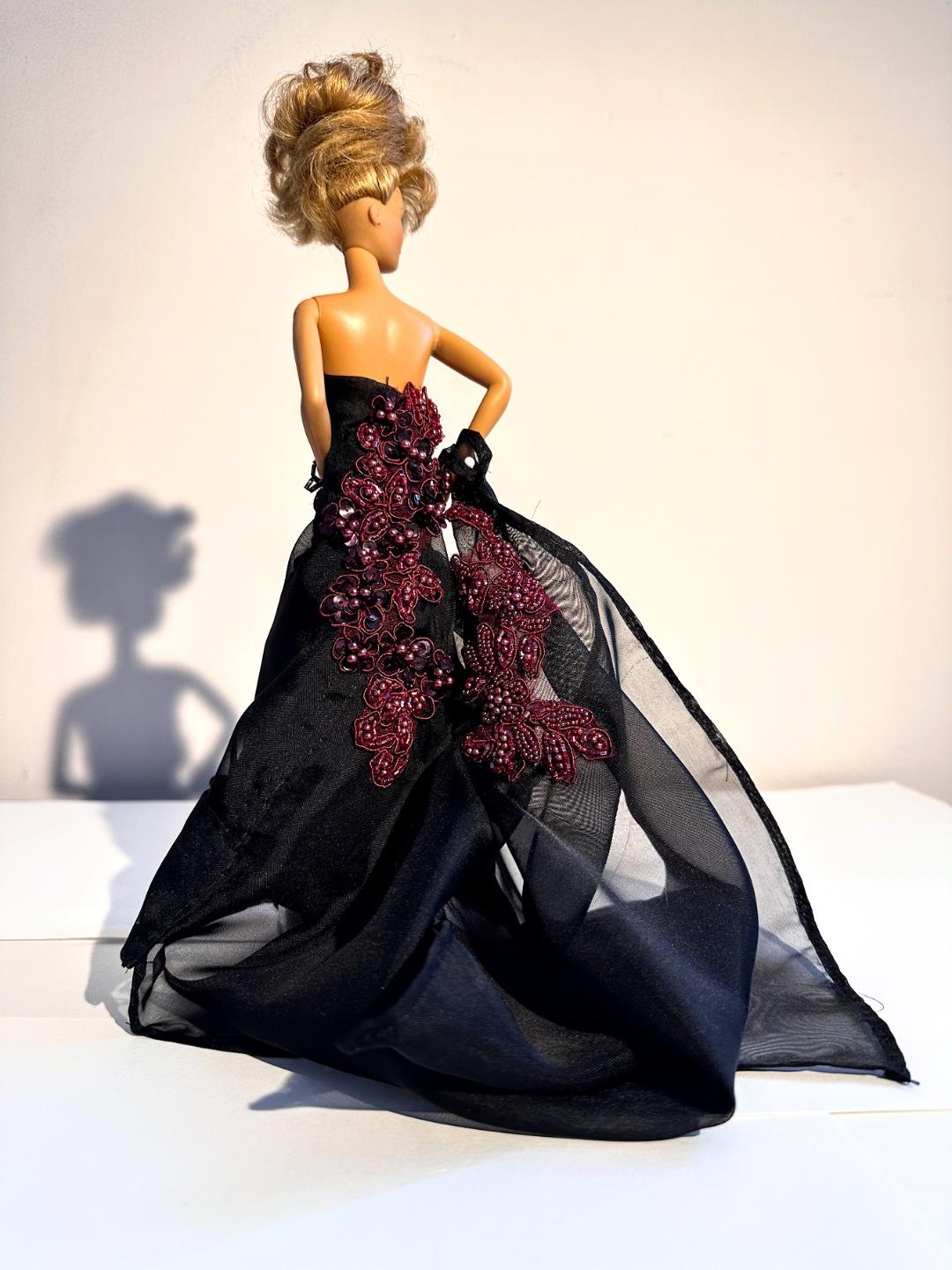
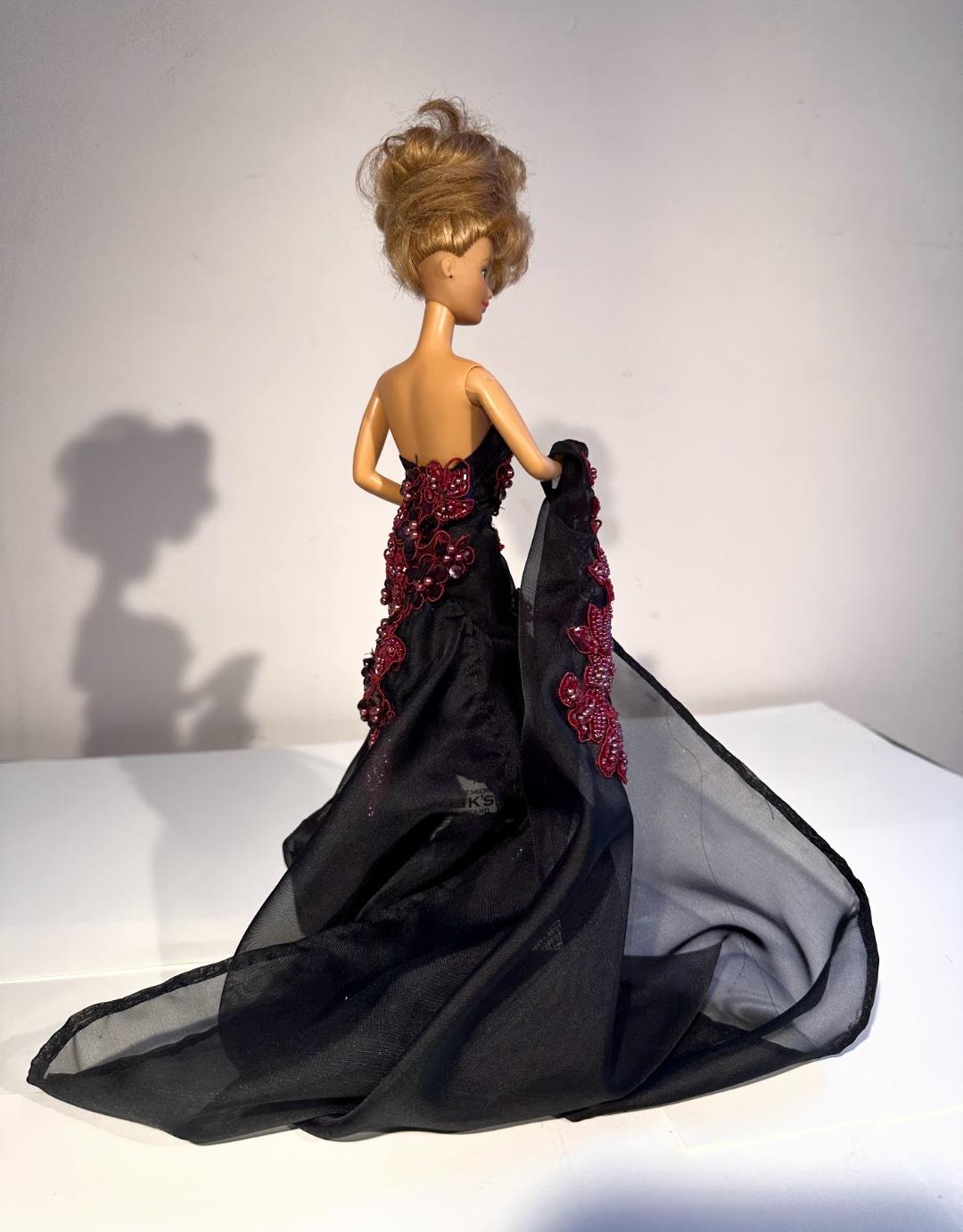
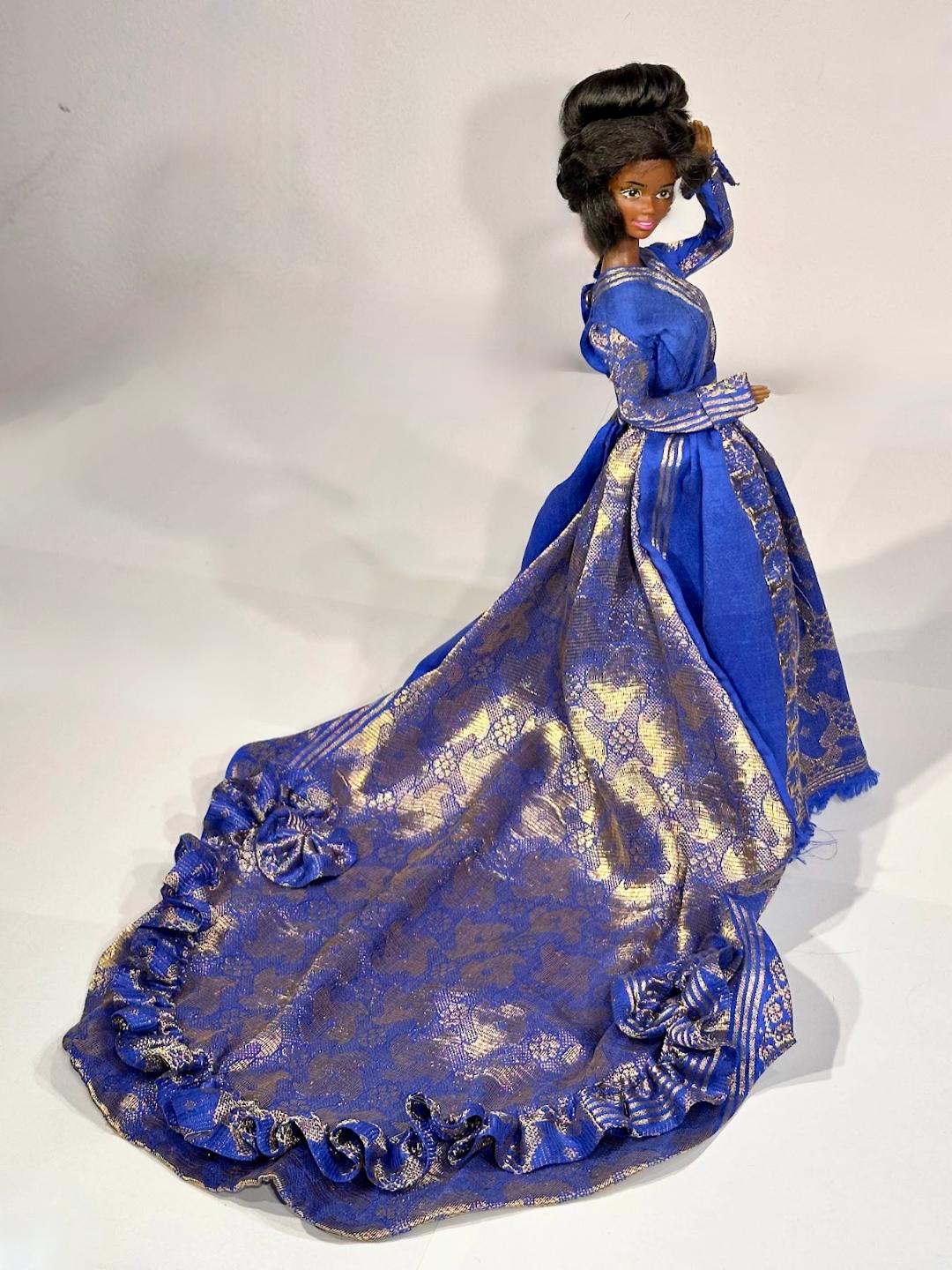
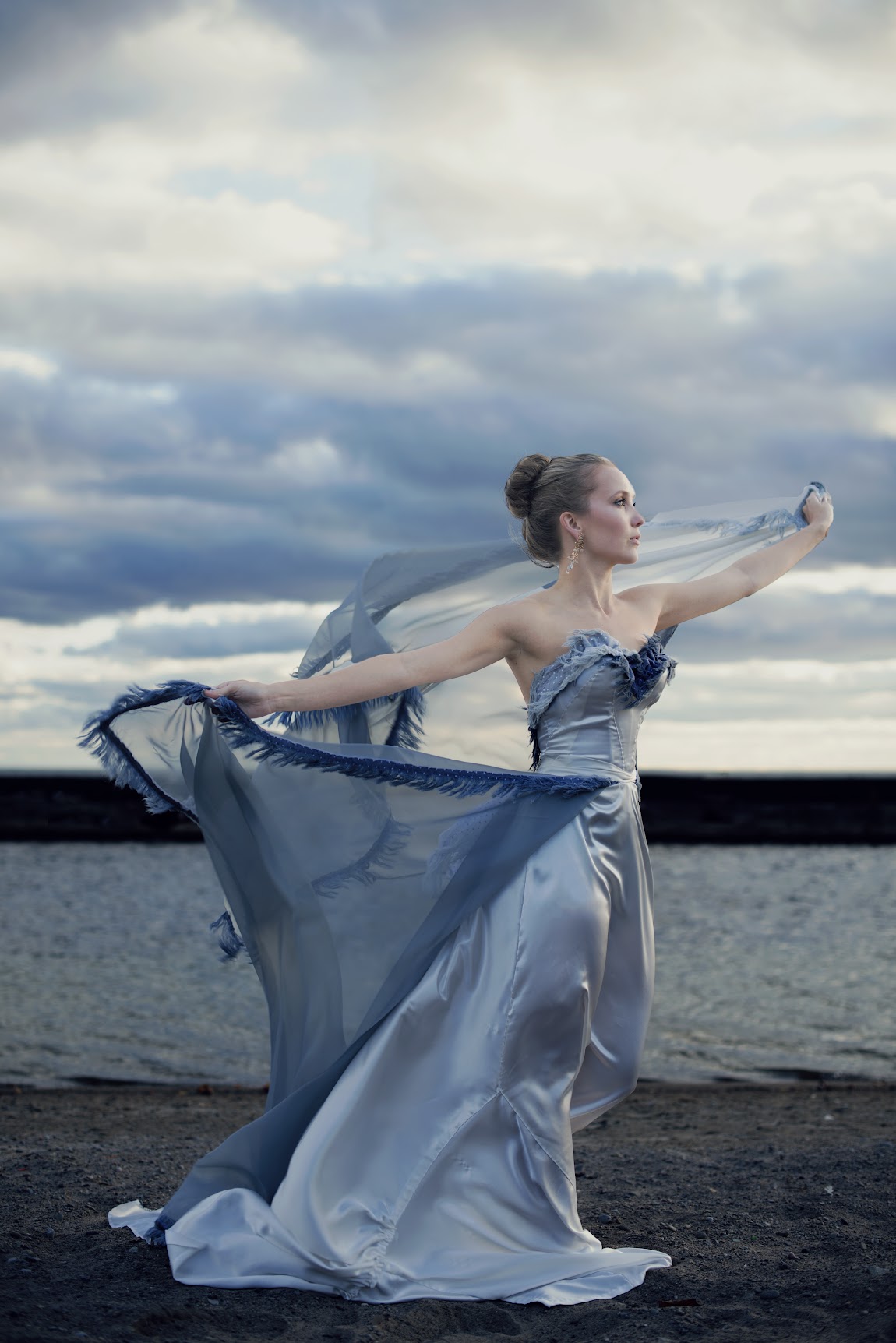
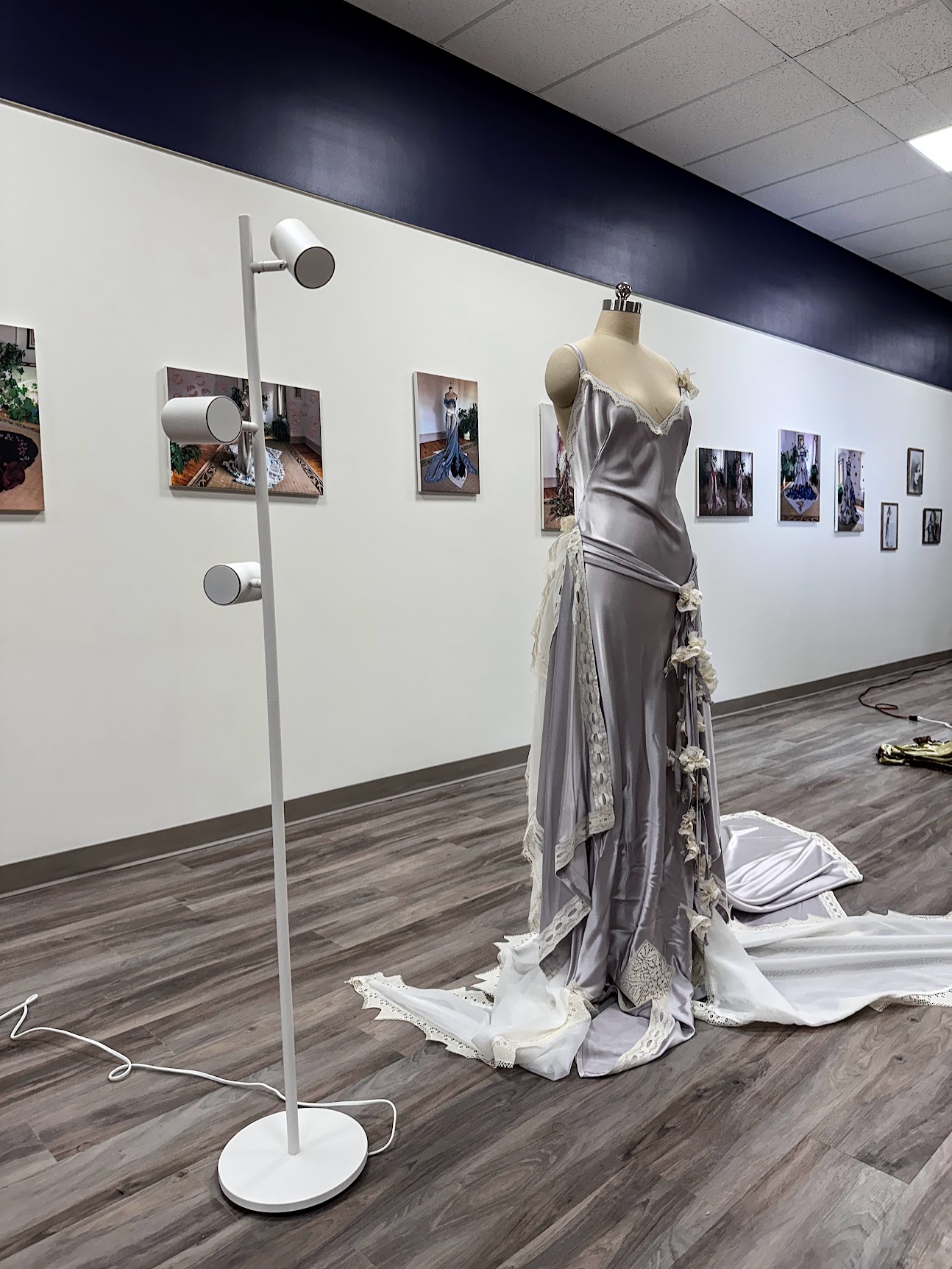
The fabric of 3 panels was cut across the mesh drop out.. A skirt was draped from these. The scallops were used to trim the gown’s tail.
There’s nothing like a creative mess!
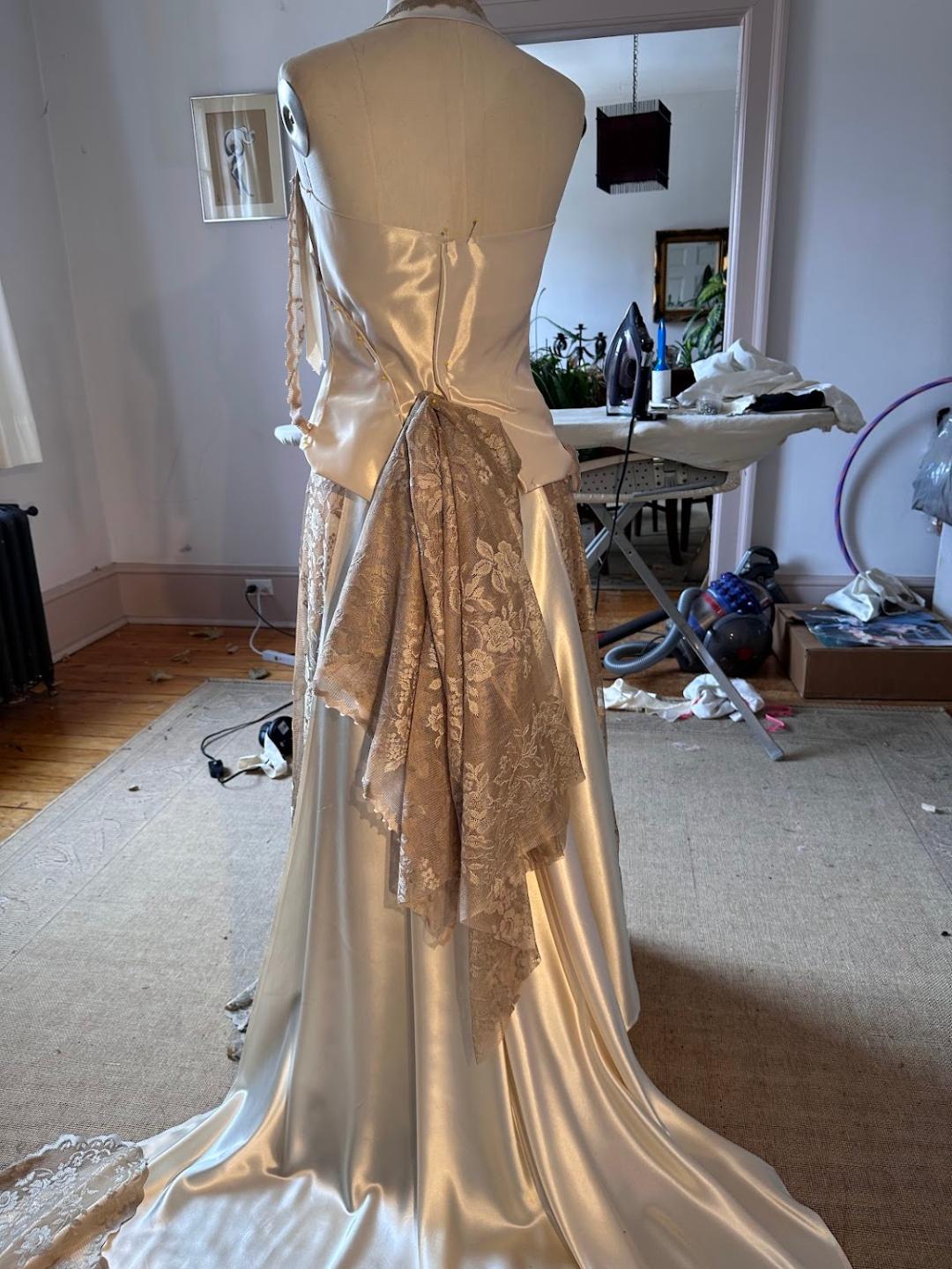
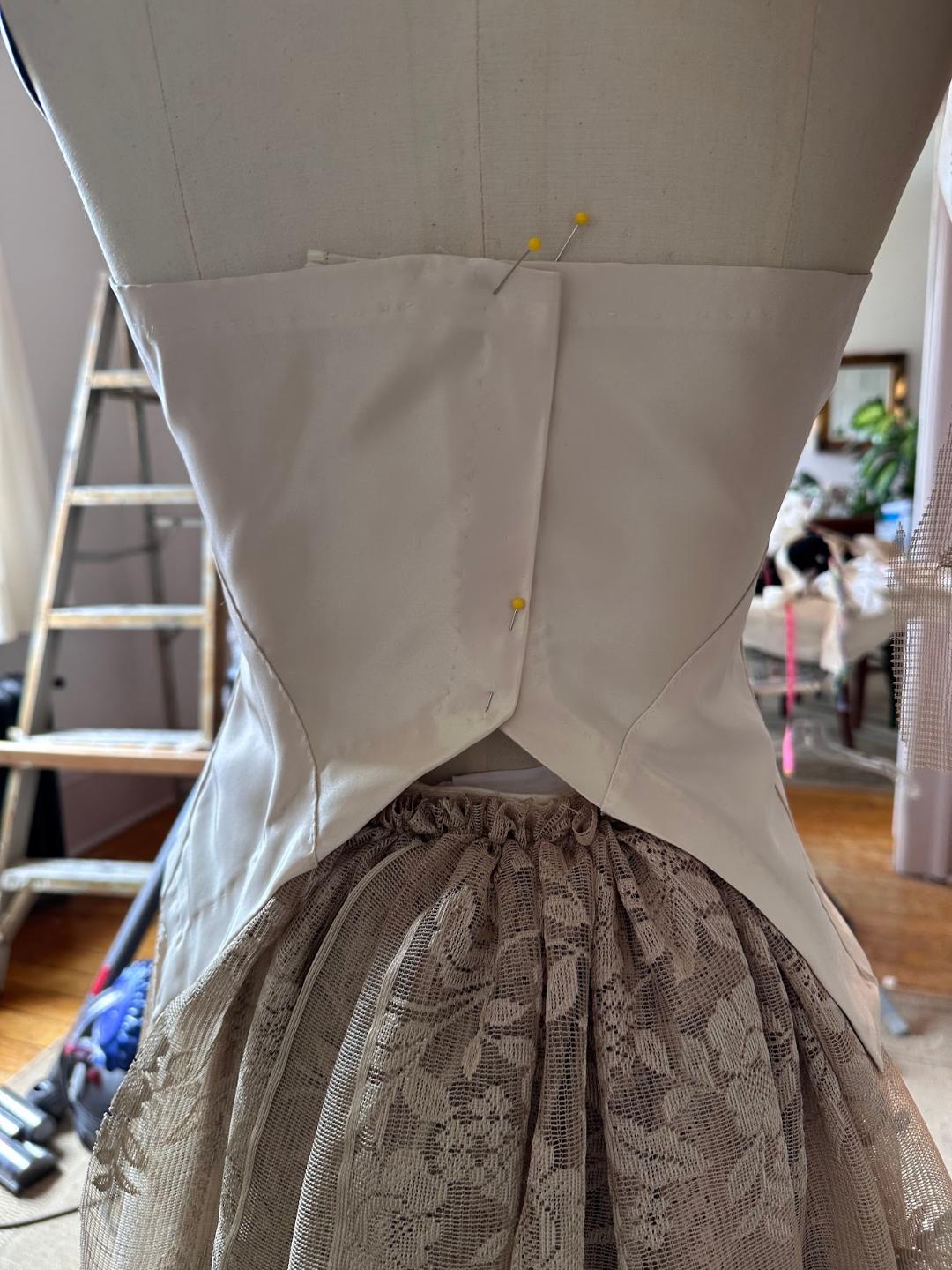
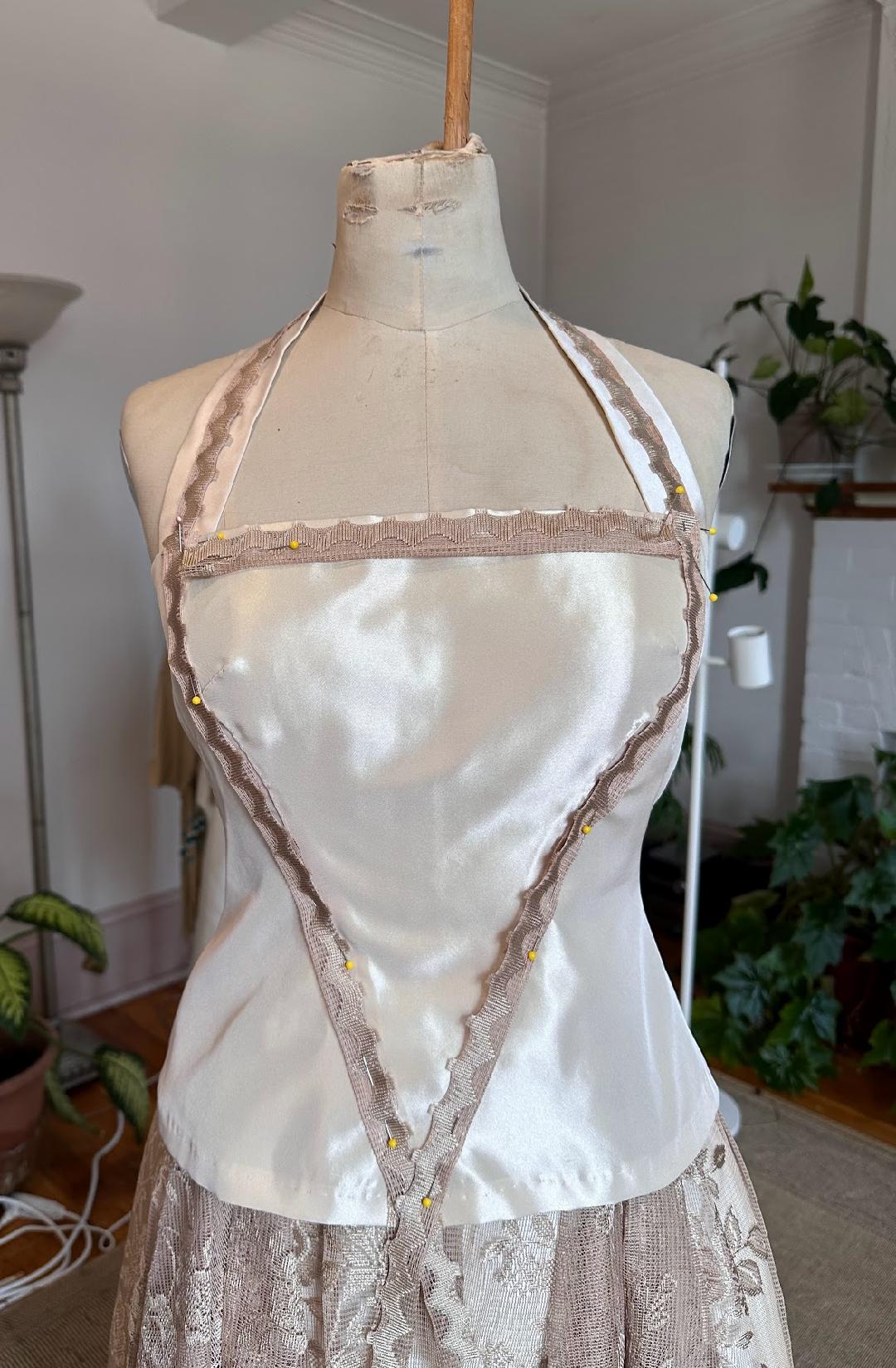
The last panel was cut up for the bussell, and the picot selvage was used to trim the bodice.
The tail is asymmetric due to the shape of the last large scrap of fabric. No waste here!
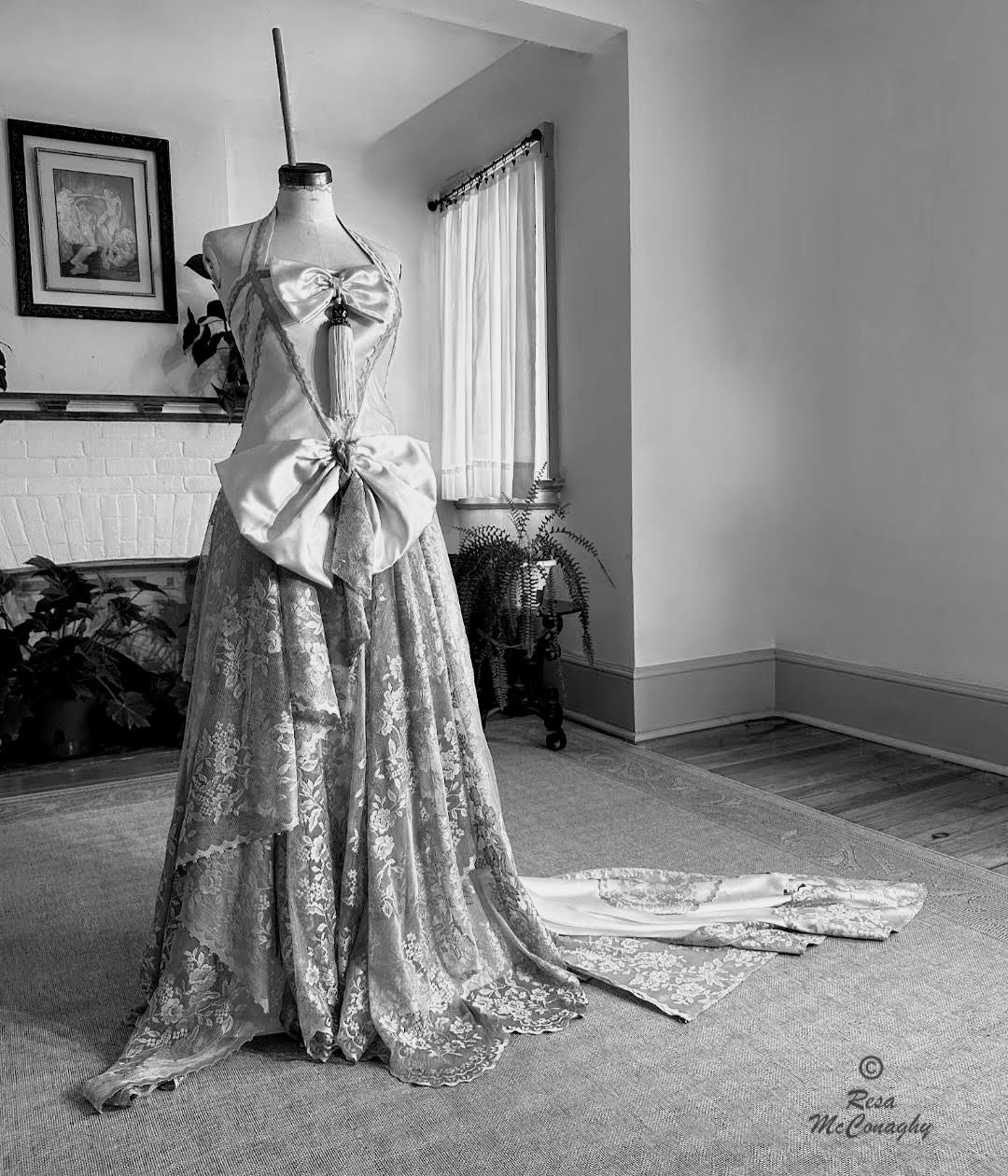
The left over satin became bows.
Her self adorned beauty …
… tried a small bow.
… and a Big Bow
Then a tassel got involved.
The bows and the tassel decided to work together
One bow said to the other bow, “at least we’re not tied up in knots! Even the tassel is hanging around.”
The tassel, dangling a truth, thought;”I’m so glad they’re ribbon each other, because they just drain the colour out of everything when they tangle.!”
Attempts at Novelty Shots & Outtakes
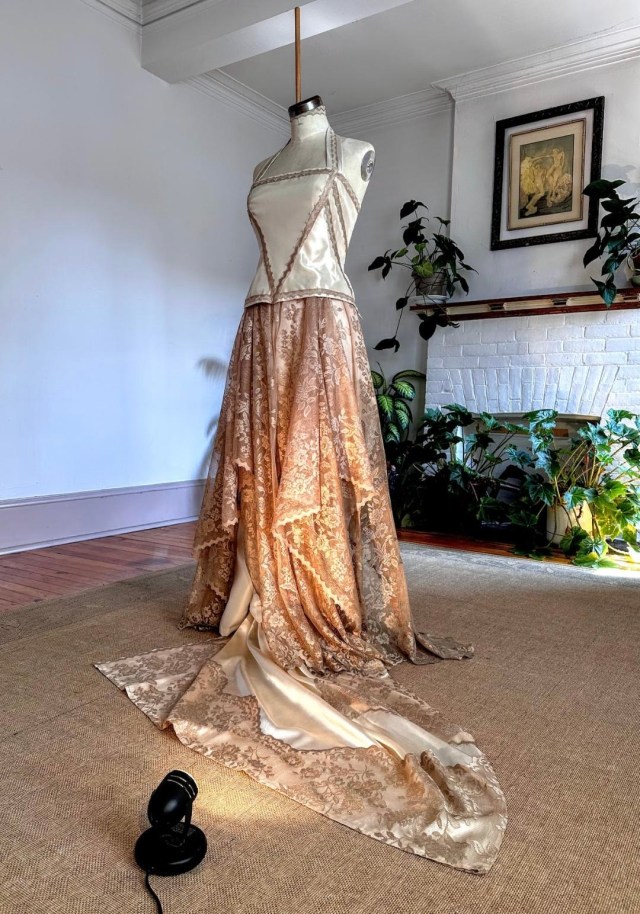
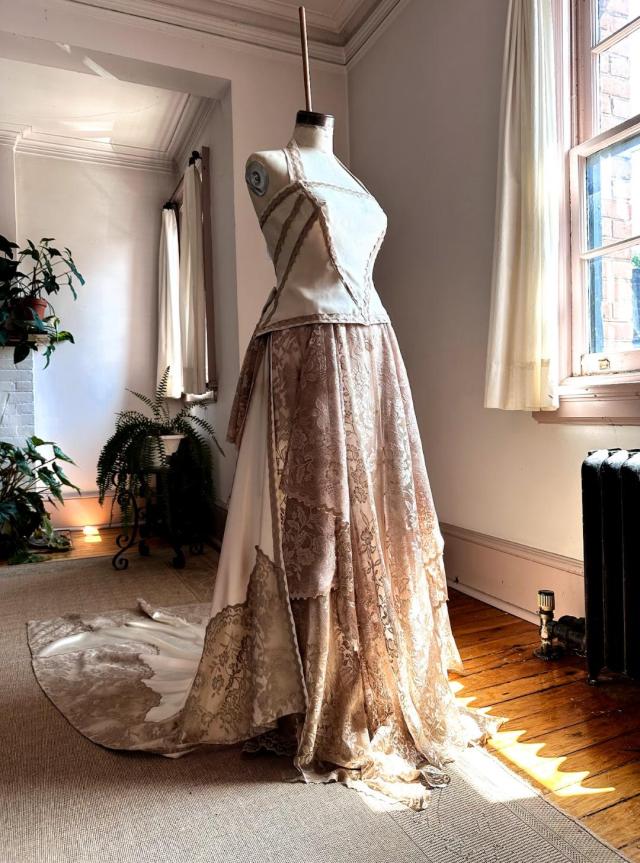
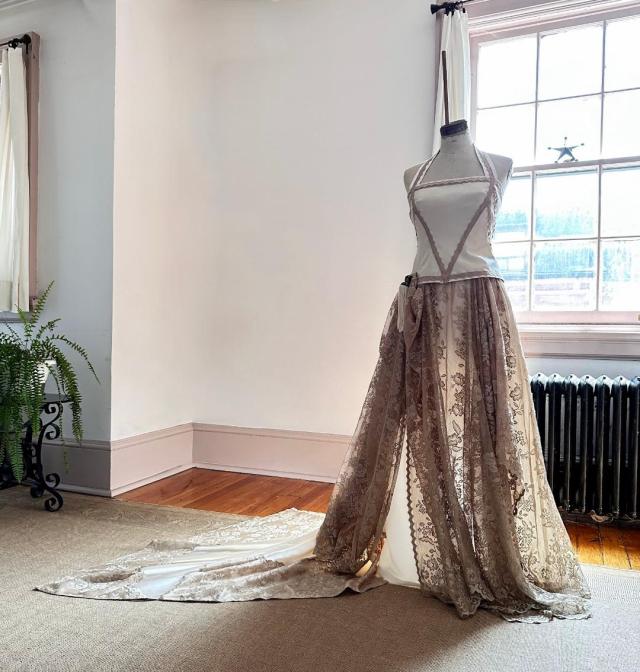
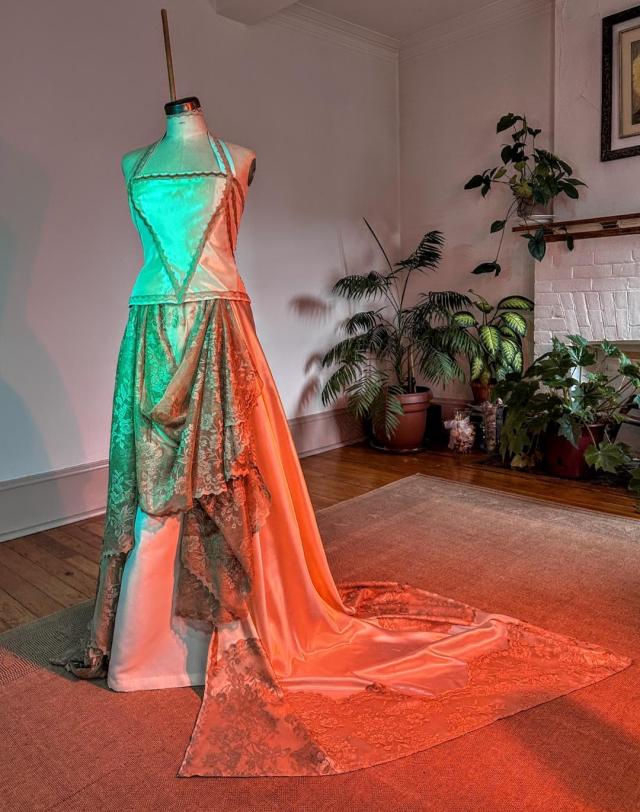
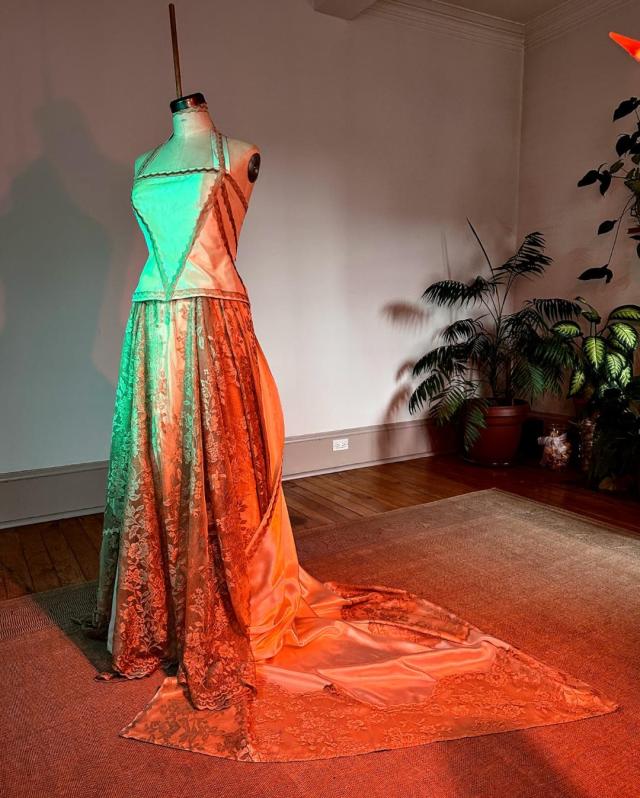
Front lit w/warm floor flood
Back lit w/warm floor flood
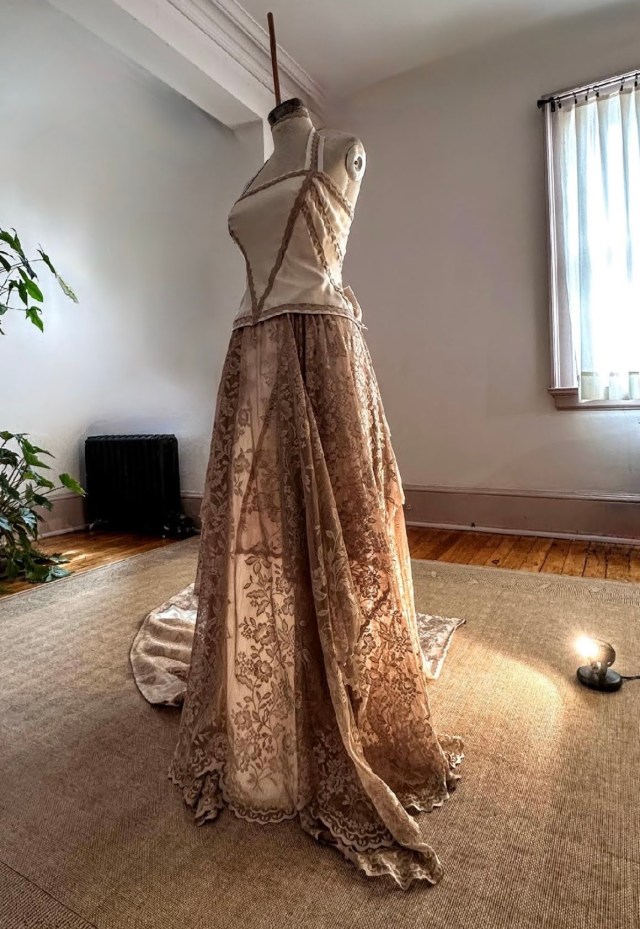
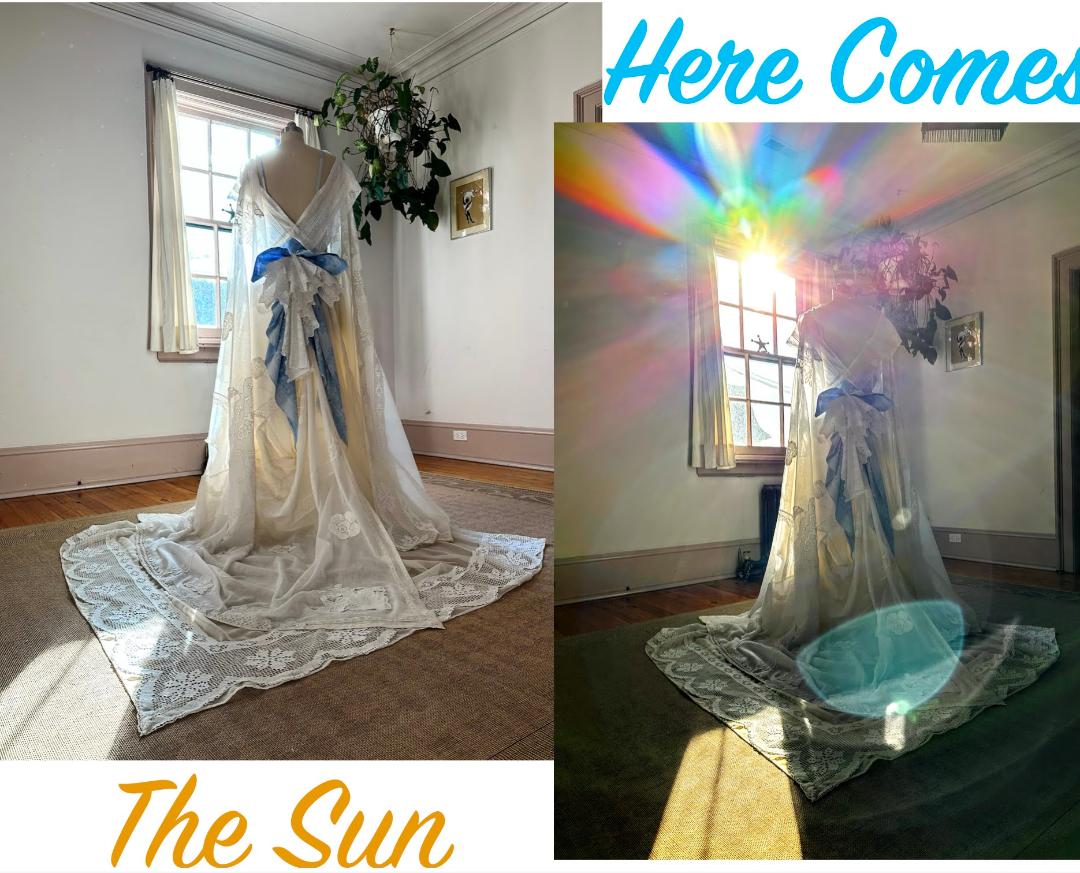
Front lit w/ sunny window
Back lit w/ sunny window
Red & blue gels over warm light
Red & blue gels over warm light
Blue gel over warm light
Lucy Maude Montgomery (1874-1941) is still inspiring 118 years after Anne of Green Gables hit the stands. Her poem was the final inspiration that pulled together the many ideas for naming Maple Moonrise.
Harbour Moonrise

There is never a wind to sing o'er the sea
On its dimpled bosom that holdeth in fee
Wealth of silver and magicry;
And the harbor is like to an ebon cup
With mother-o-pearl to the lips lined up,
And brimmed with the wine of entranced delight,
Purple and rare, from the flagon of night.

Lo, in the east is a glamour and gleam,
Like waves that lap on the shores of a dream,
Or voice their lure in a poet's theme!
And behind the curtseying fisher boats
The barge of the rising moon upfloats,
The pilot ship over unknown seas
Of treasure-laden cloud argosies.

Ere ever she drifts from the ocean's rim,
Out from the background of shadows dim,
Stealeth a boat; o'er her golden rim;
Noiselessly, swiftly, it swayeth by
Into the bourne of enchanted sky,
Like a fairy shallop that seeks the strand
Of a far and uncharted fairyland.

Now, ere the sleeping winds may stir,
Send, O, my heart, a wish with her,
Like to a venturous mariner;
For who knoweth but that on an elfin sea
She may meet the bark that is sailing to thee,
And, winging thy message across the foam,
May hasten the hour when thy ship comes home?

                                                       -Lucy Maude Montgomery
About Rebecca Budd
Of the many blogs Rebecca has and has had over the years, I find myself drawn to her Reading Room, Chasing Art blog and her her podcast –Tea Toast and Trivia.
Via the colour or other comparable aspect of the gown &/or painting – I will first pair a fine art painting from Robbie’s collection, then one from my collection, .
White Gowns
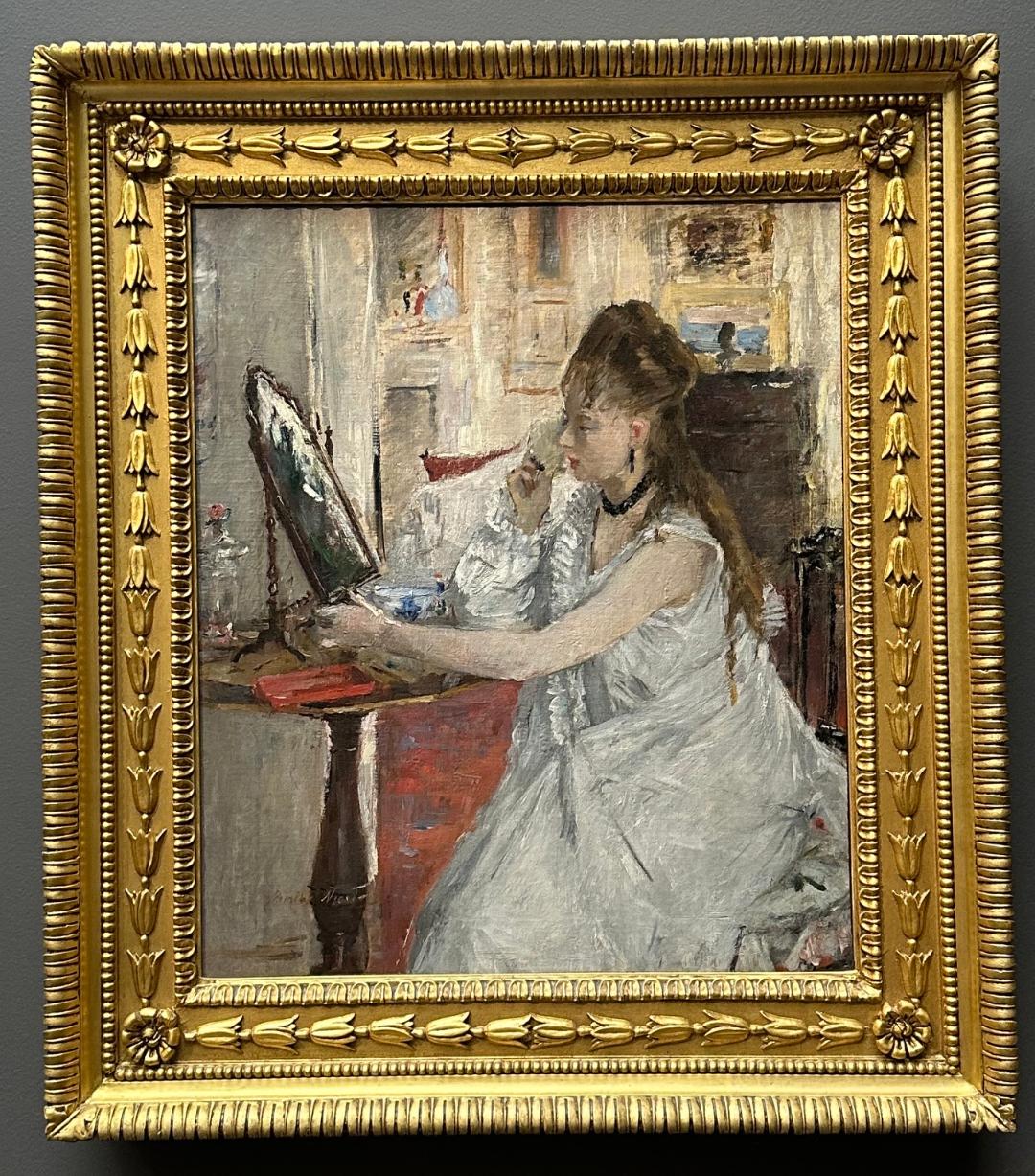
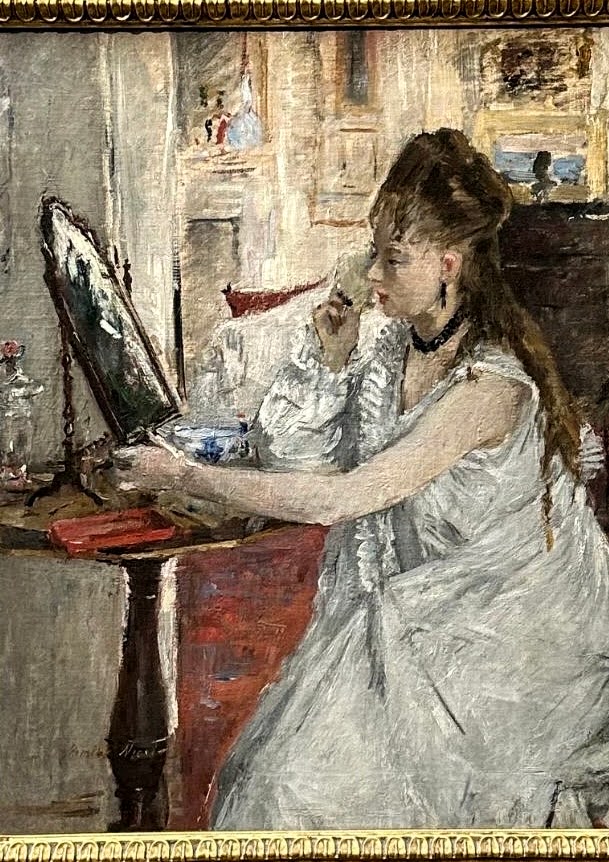
Jeune Femme se Poudrant – by Berthe Morisot – French (1841 – 1895)
Berthe Morisot‘s only daughter, Julie, inspired the many paintings, which documented the lives of women. The painting below is one of those paintings. It hangs in the Musée d’Orsay, Paris.
1887 – Oil on Canvas
Fortunate to have a genuine art education, Morisot studied under Jean-Baptiste-Camille Corot. In the 1860s, Morisot became a professional friend of Edouard Manet.
From1864 – 1870, she showed regularly at the Paris Salon.
In 1874, Morisot exhibited with the Société Anonyme des Artistes-Peintres, Sculpteurs, Graveurs, the first Impressionist exhibit.
In December, 1874 she married Eugène Manet (brother of Edouard Manet).
Achieving significant recognition during her lifetime, in 1887 her work showed at George Petit’s International Exhibition in Parisand Paul Durand-Ruel’s exhibition of Impressionist painting in New York.
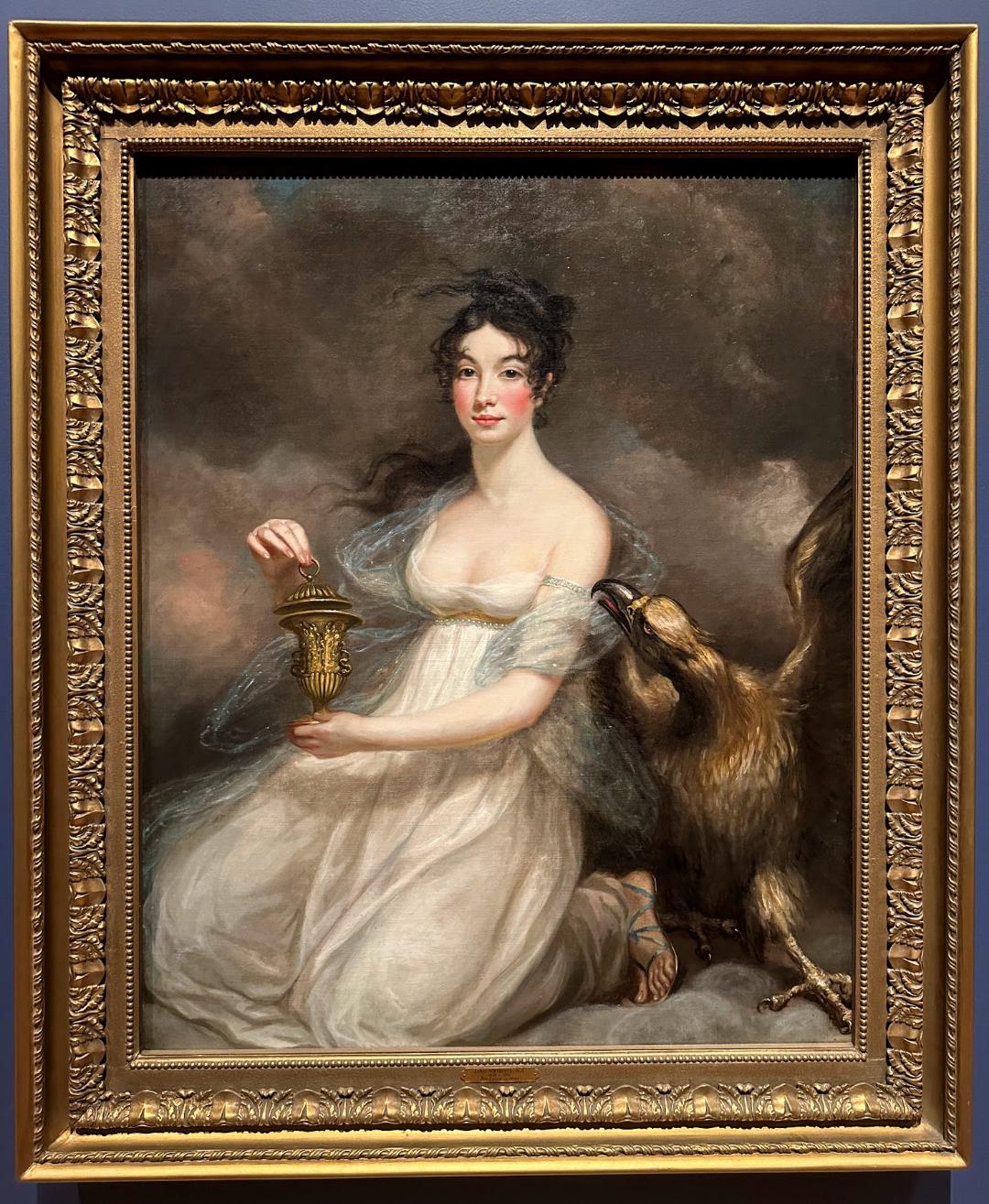
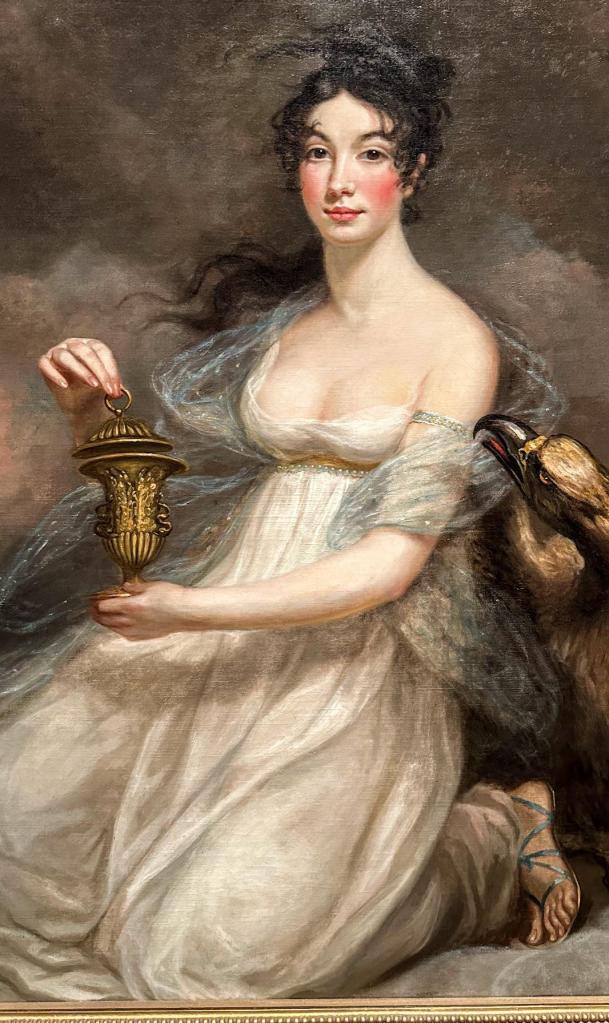
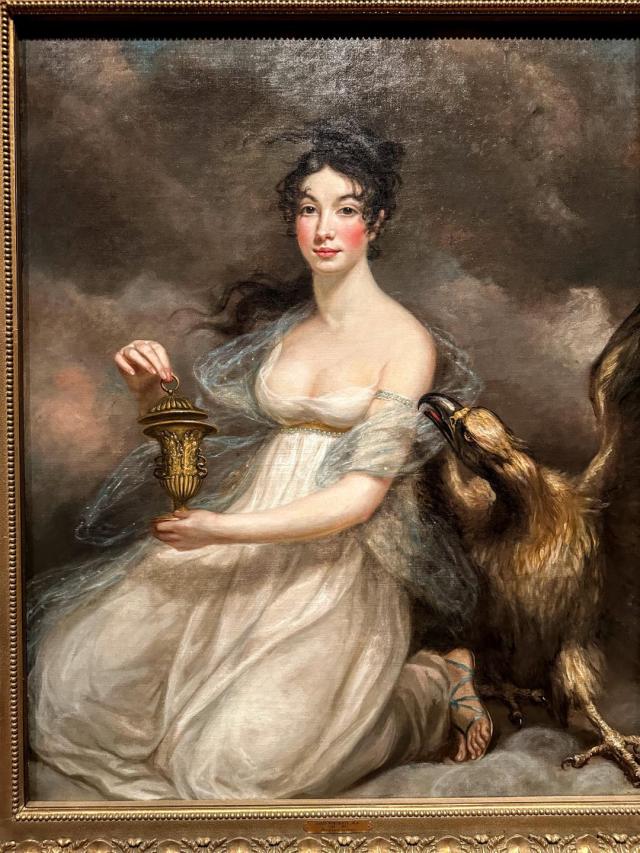
Mrs. Wells as “Hebe” – James Northcote – British (1746 – 1831)
James Northcote was a writer as well as a painter of predominantly portraits. Largely self taught, he studied under and worked for Sir Joshua Reynolds. He became a member of The Royal Academy in 1787.
1805 – Oil on Canvas
At this time in history, allegorical artworks portraying people as mythological or historical figures were the height of fashion.
Mrs, Wells as “Hebe”features British actress Mary Wells (1761-1829), immortalizing herself via this painting.
Zeus’s daughter – Hebe, goddess of youth & cupbearer of the gods, was also the young bride’s patron goddess.
A Child’s Gown
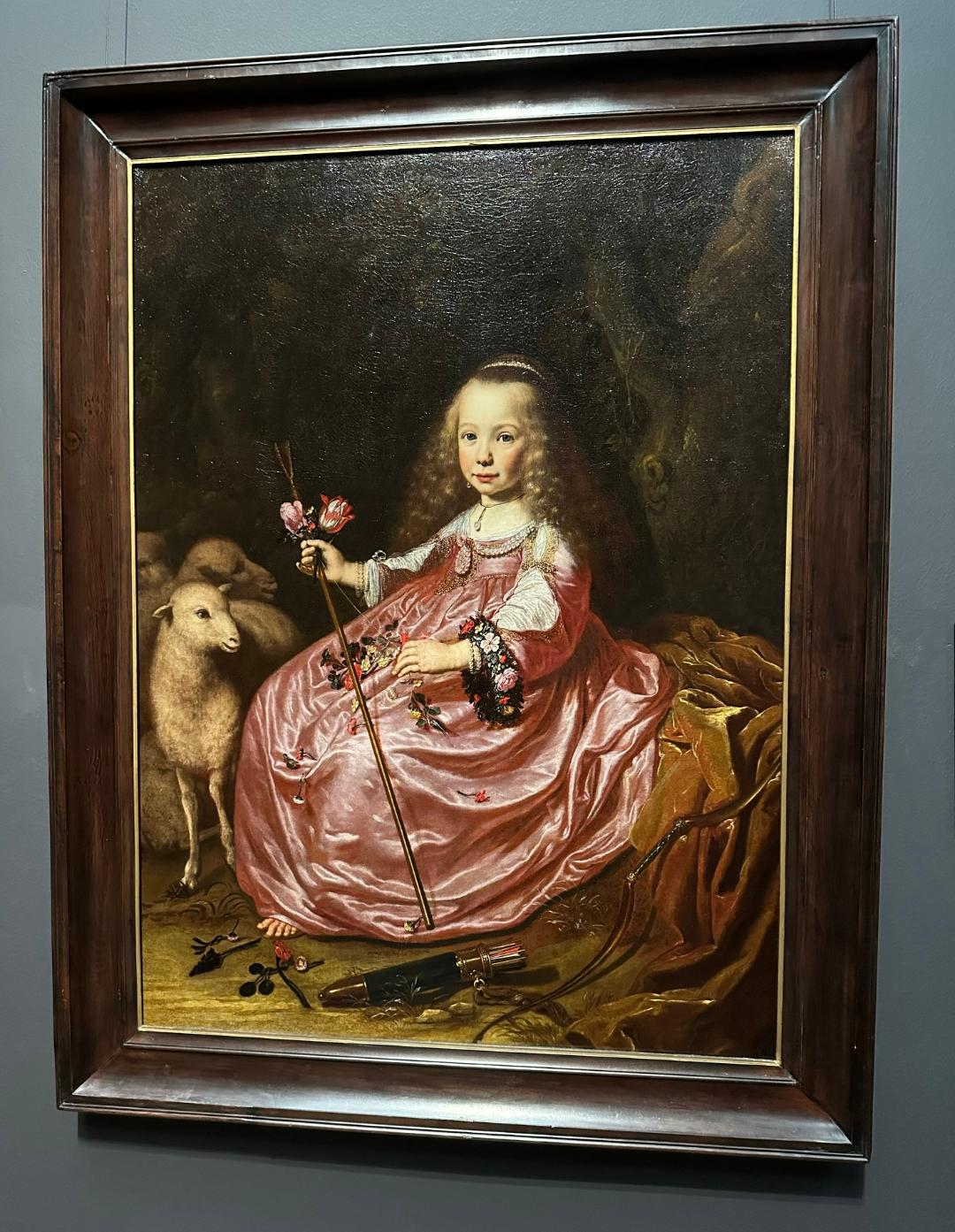
Portrait of Clara Alewijn – Dirk van Santvoort – Netherlands (1610-1680)
Dirk van Santvoort was a prominent painter of children circa the mid seventeenth century. Clara Alewijn, the subect of the portrait below, was van Santvoort’s sister.
Oil on canvas – 1644
He likely studied under his farther – Dirck Pietersz. Bontepaert. None of the father’s work weathered time. After becoming wealthy, Van Santvoort ceased painting. He became the Dean of the Painters’ Guild and was an assessor of paintings.
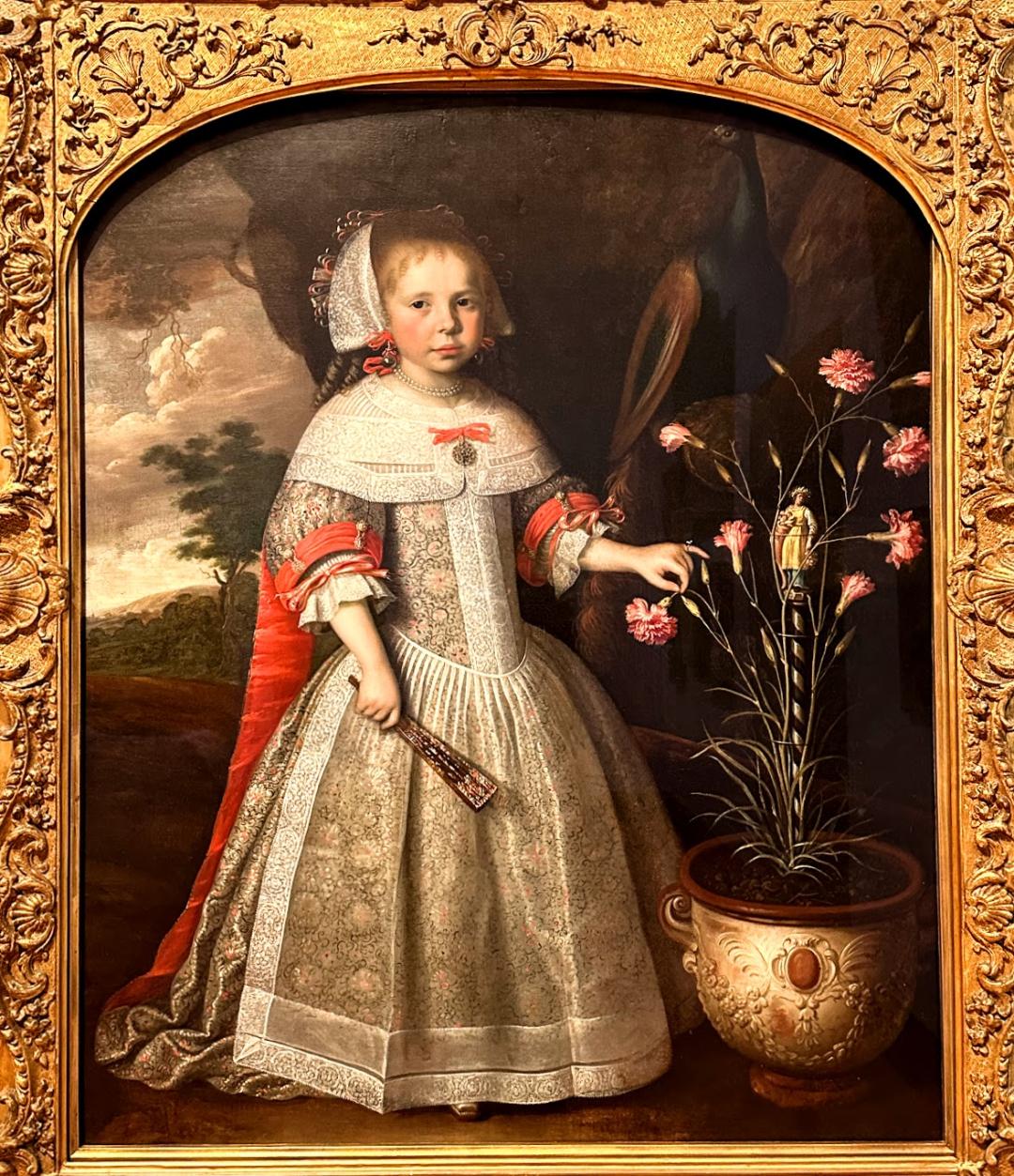
Portrait of a Young Girl with Carnations – Jan Albertsz. Rotius – Netherlands (1615-1674)
Jan Albertsz. Rotius (aka Rootgies) was a portrait and still life painter
Oil on Canvas – circa 1663
He had 7 children, of which only 3 survived to adulthood. His son Jacob Rotius, became a successful painter of flowers.
Feels Antediluvian
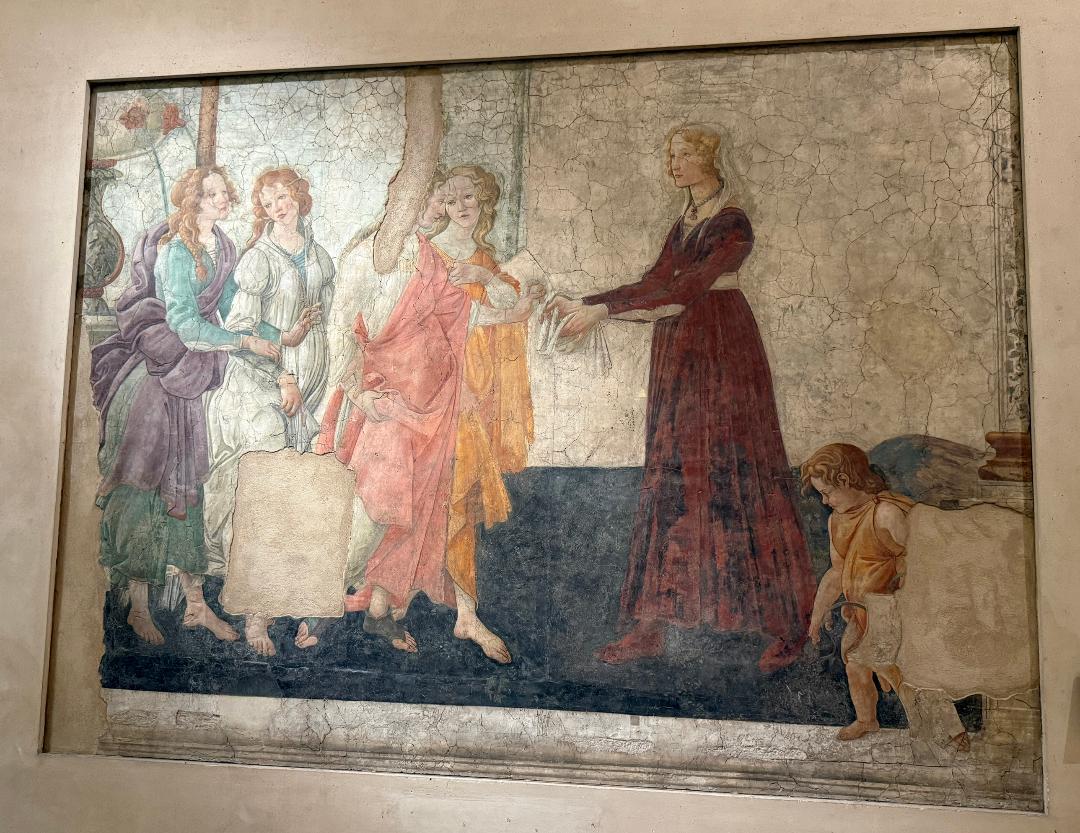
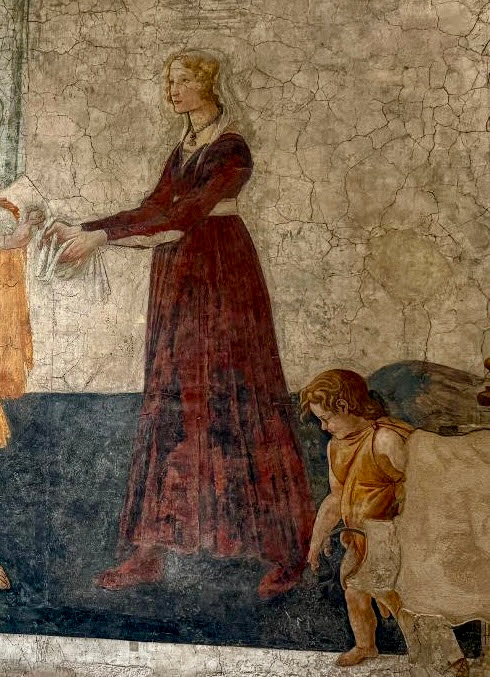
Venus and the Three Graces Presenting Gifts to a Young Woman – Sandro Botticelli – Italian (1445-1510)
Botticelli, a draughtsman and painter, began painting religious frescoes before opening his own studio circa 1470.
Fresco – circa 1484
Prior to opening his studio he apprenticed in the studio of Fra Filipo Lippi, then worked with Antonio del Pollaiuolo. Botticelli spent most his life in service of the Medici family and their clique.
Aka Gioo degli Albizzi Receiving a Gift of Flowers from Venus, this fabulous fresco resides in the Louvre since 1882.
Found again in Italy in 1873, it is believed he used the patron’s daughter, possibly on her wedding engagement, for this allegorical image.
Botticelli’s name almost vanished from art circles until the late 19th century. At that time an esteem for the Florentine arts and culture renewed a look at his creations.
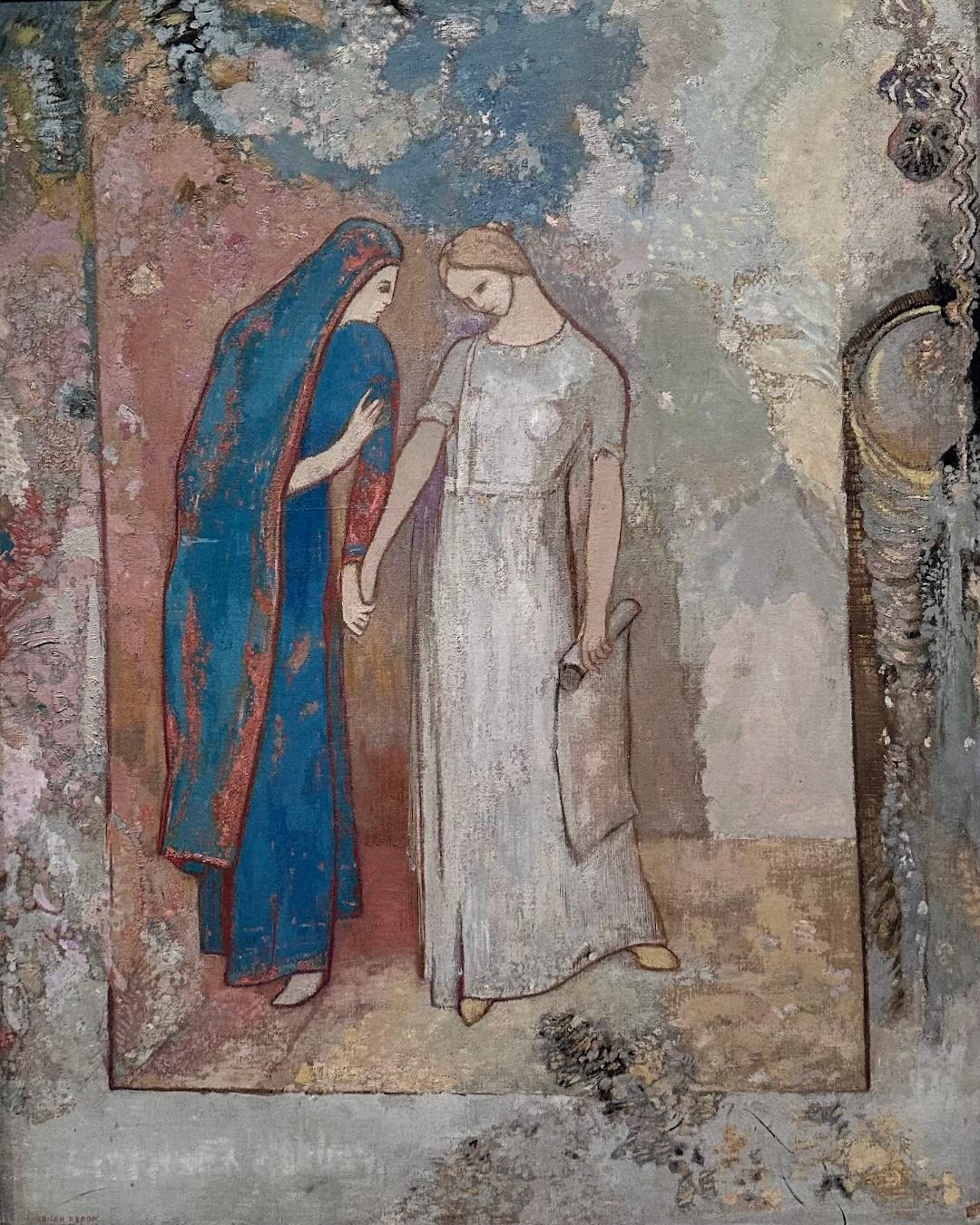
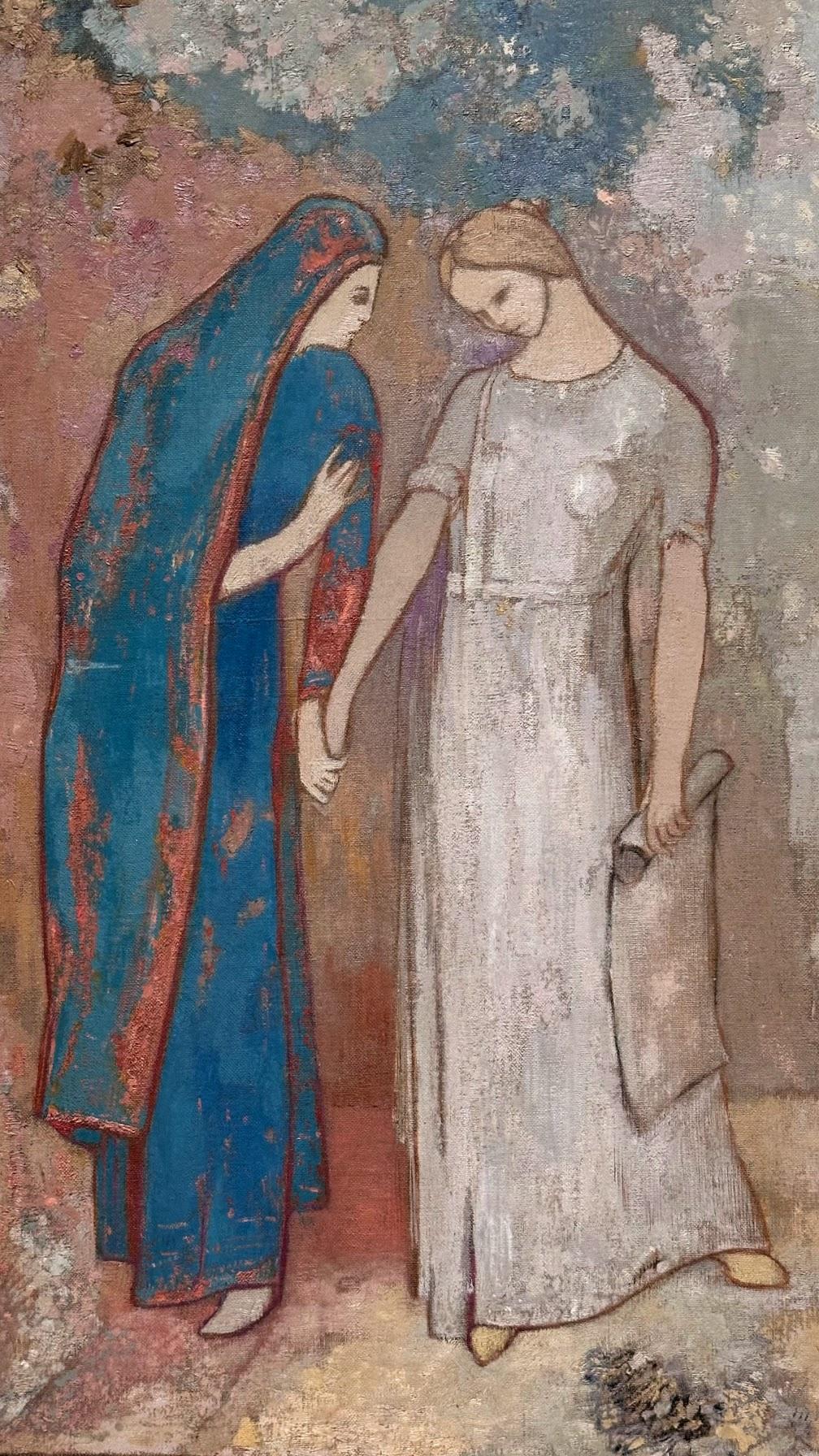
Initiation to Study – Two Young Ladies – Odilon Redon – French (1840-1916)
Bertrand-Jean Redon was a Symbolist painter, as well as a print maker.
At 15, his father made him switch from drawing to architecture. Later, he enjoyed sculpture and was instructed in etching and lithography by Rodolphe Bresdin.
He joined the army during the Franco-Prussian War, putting his career on hold.
Redon was still mostly unknown until in 1884, when a novel by Joris-Karl Huysmans titled, À rebours, featured a debauched aristocrat who collected Redon’s drawings.
A catalogue of his etchings and lithographs, published in 1913, caused his popularity to increase.
“My drawings inspire, and are not to be defined. They place us, as does music, in the ambiguous realm of the undetermined.” – REDON
The Lady Wears Black
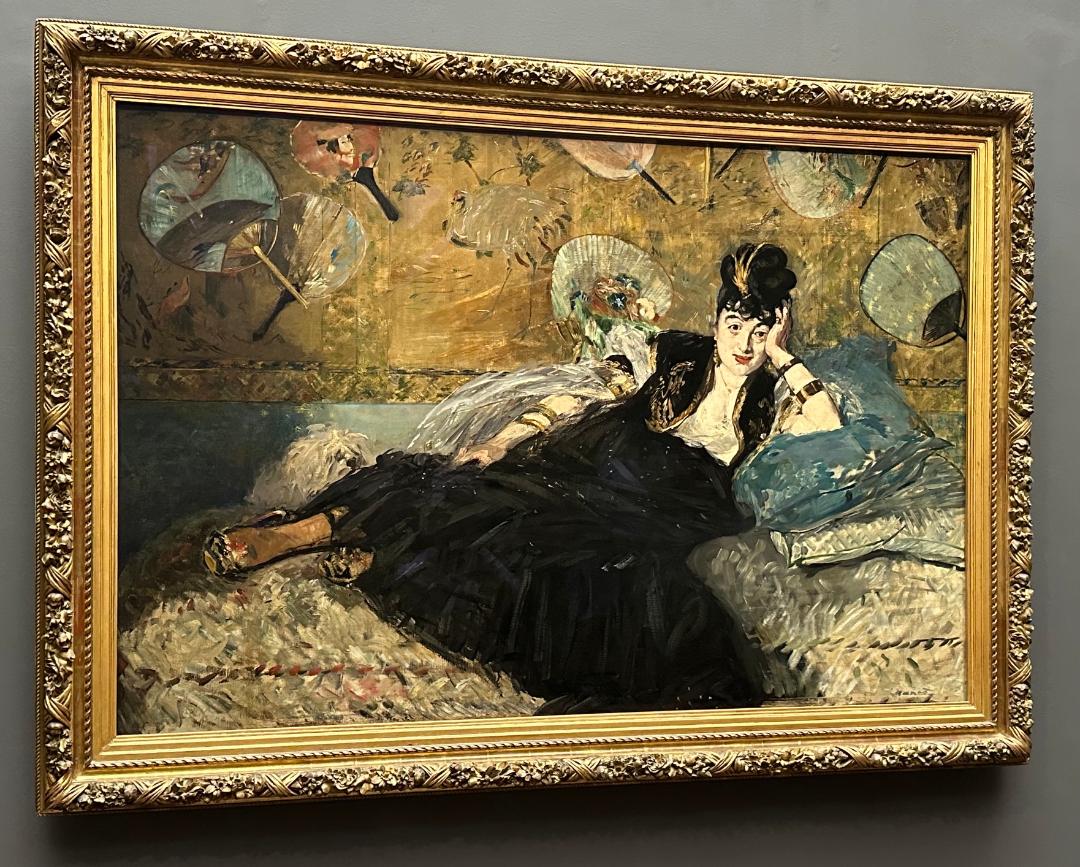
La Dame aux éventails – Édouard Manet – French – 1832-1883
Manet emerged from wealth. He studied at the studio of artist Thomas Couture, then began copying paintings at the Louvre. Manet, inspired by the work of Spanish painter Diego Velázquez, chose a non academic free manner of loose brushwork.
He married Suzanne Leenhoff in 1863. She modelled for at least 13 of his paintings, but not for Olympia. Exhibited at the 1865 Salon, this parody of the classic Venus created a vicious scandal, making Manet the de facto leader of the avant-garde.
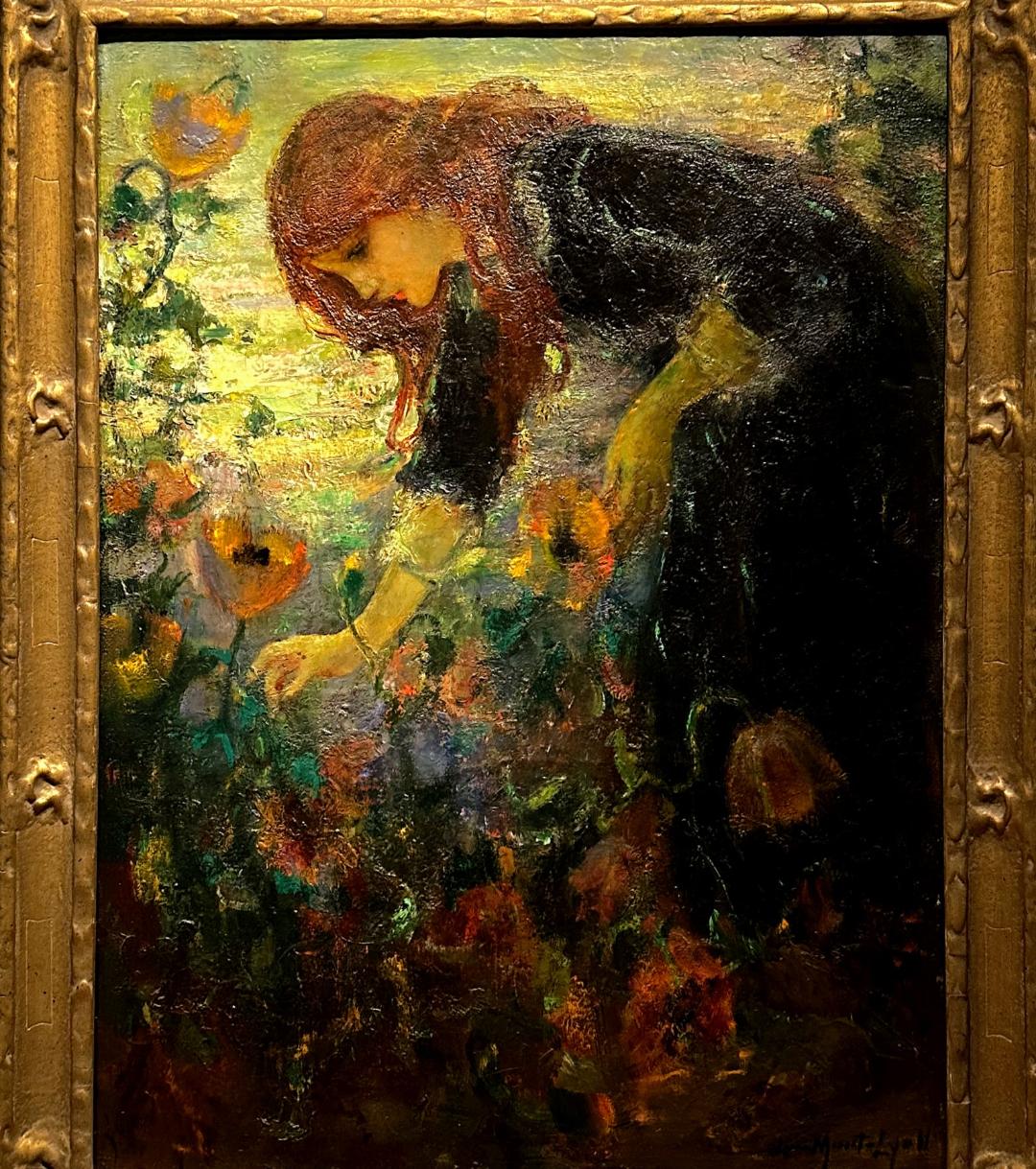
Oriental Poppies – Laura Muntz Lyall – Canadian (1860-1930)
Born in England, Laura Muntz Lyall immigrated to Canada at the age of 9 years. The first Canadian artist to receive honourable mention at the Paris Salon, she is also the first female Canadian Impressionist artist to have her work become part of the National Gallery of Canada.
Oil on Canvas – circa 1915
Laura Muntz-Lyall studied in London, Toronto and Paris. She supported herself in Paris by teaching English. Prior to moving to Montreal in 1906, where she ran a prominent studio at Beaver Hall Square, she taught art at Toronto’s Havargal College.
The Red Gown
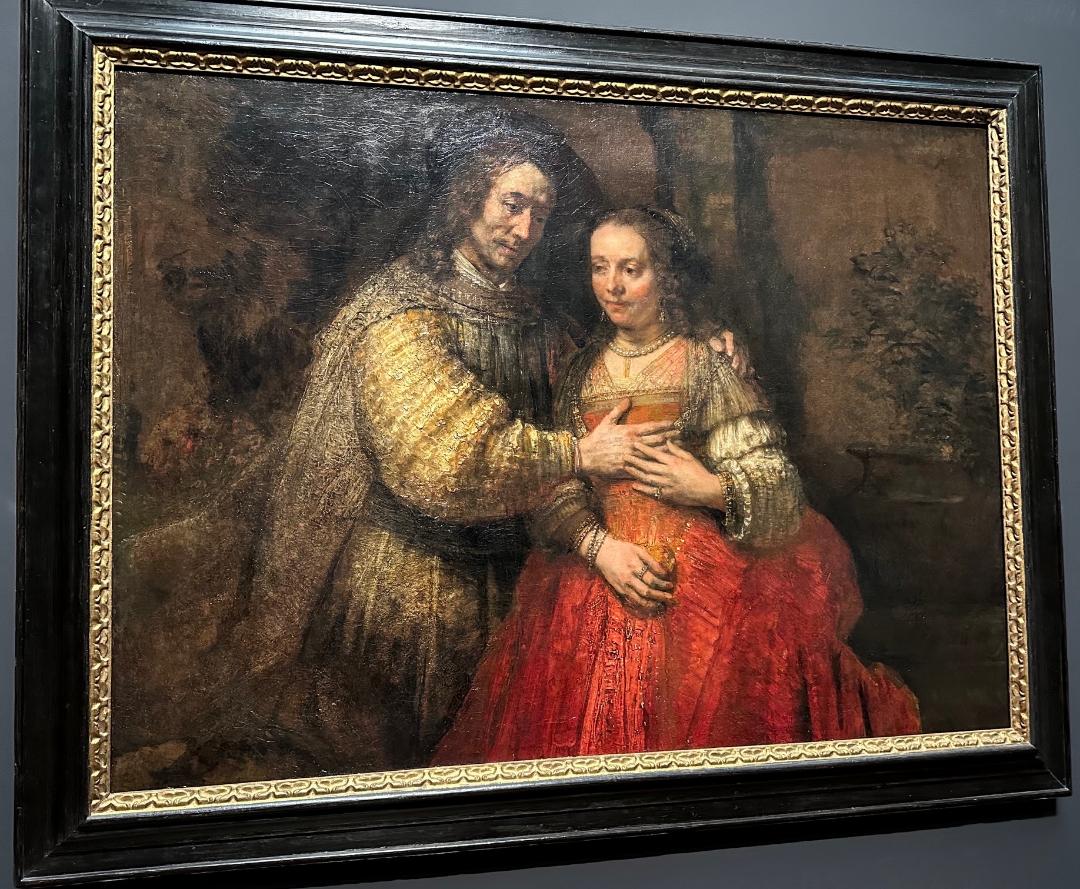
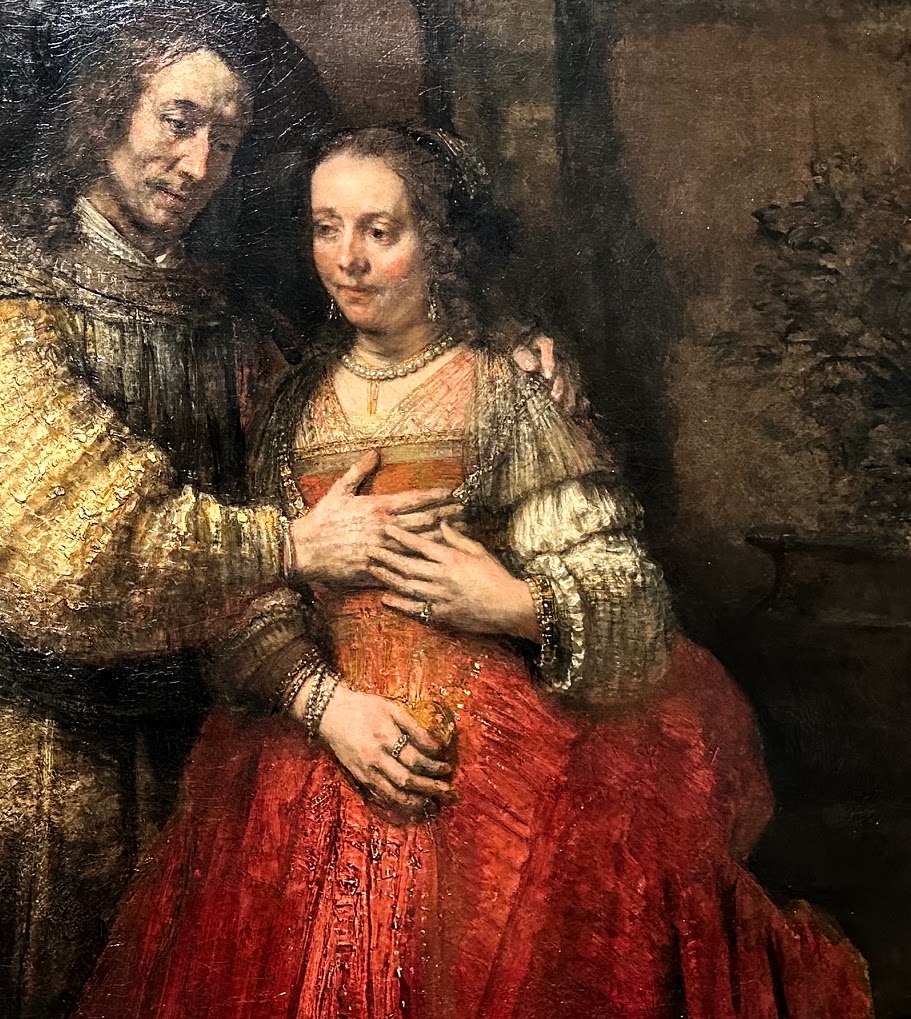
The Jewish Bride aka Isaac and Rebecca – Rembrandt van Rijn (1606-1609)
Rembrandt attended Leiden University. Here he studied literature and history. He learned painting from Jacob Van Swanenburgh, then apprenticed in Amsterdam with history painter Pieter Lastman.
Oil on Canvas – Circa 1665-69
Later in his life, Rembrandt’s wife and some of their children died, leaving him in a state of loss. Demand for his work declined, and he declared bankruptcy.
This canvas, which he said brought him to tears, was painted later in Rembrandt’s career, when he was considered in artistic decline.
Ironically, this era yielded many of his most revered works, when rich earth tones ran from thinly painted areas to thick impasto.
“…Hang this picture in a bright light and in such a manner that it can be viewed from a distance. It will then sparkle at its best. “ – Rembrandt
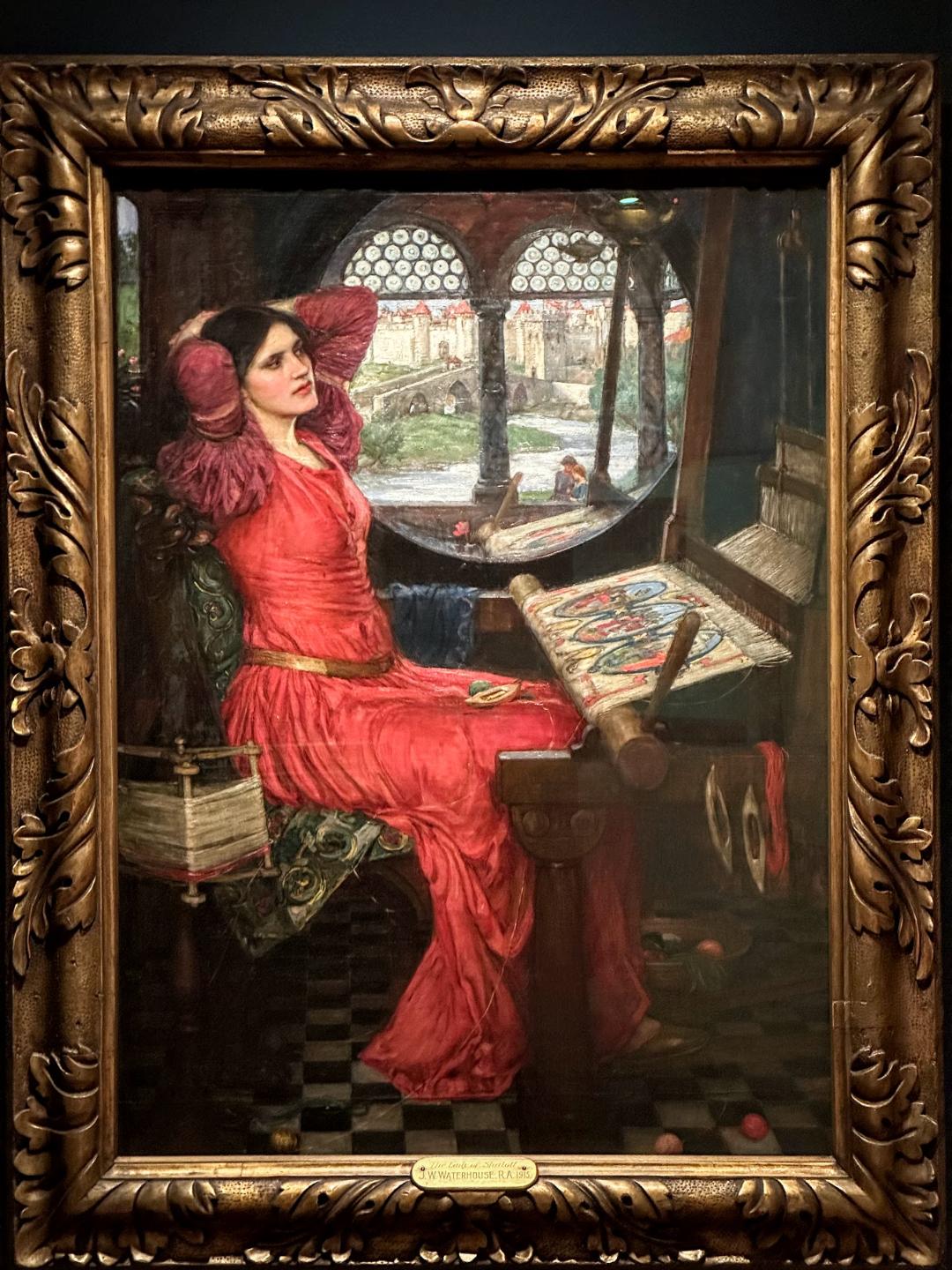
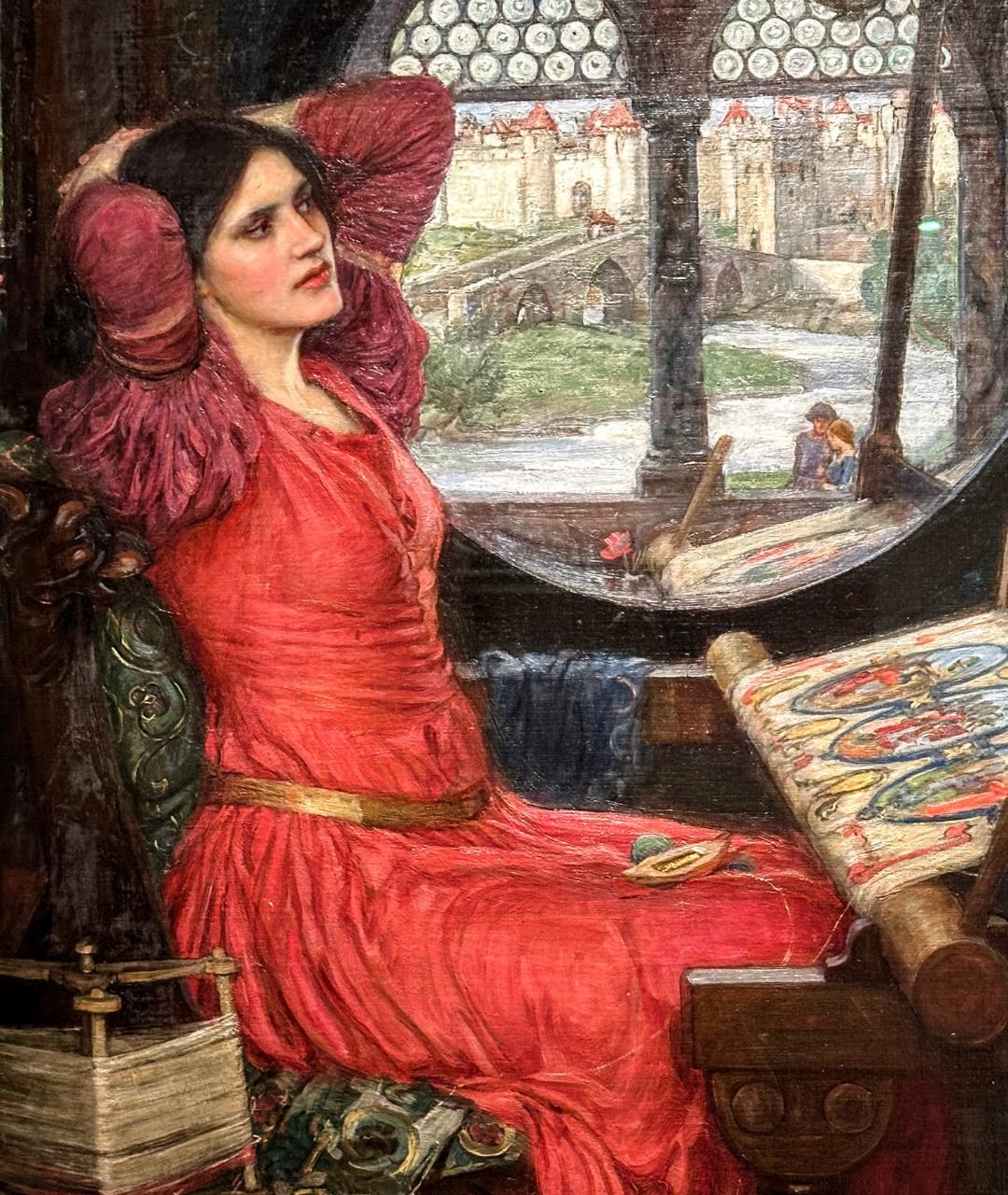
I’m Half Sick of Shadows, Said the Lady of Shalott – John William Waterhouse – English (1849-1917)
John William Waterhouse was born in Rome, prior to his parents moving back to England in the 1850’s. His paintings’ early classical themes gave way to genre paintings in the late 1870’s.
Oil on Canvas – 1915
By 1888, Waterhouse’s paintings reveal a growing interest in Pre-Raphaelite themes. He developed a penchant for ladies of tragic circumstance or femmes fatales. In 1901 he joined the St John’s Wood Arts Club. Here he served on the Art School advisory council.
Based on Lord Alfred Tennyson’s poem – “The Lady of Shalott” is from the legends of King Arthur and his court at Camelot. The Lady of Shalott, aka Elaine Astolat, suffers a curse. Trapped in a tower, she may not look out the window. She observe’s the world through a window-facing mirror, weaving what she sees.
Waterhouse and his wife, Esther, married in 1883. She outlived him by 27 years.
“I’m Half Sick of Shadows, Said the Lady of Shalott” is inspired by the first 2 verses in part II.
PART II

No time hath she to sport and play:
A charmed web she weaves away.
A curse is on her, if she stay
Her weaving, either night or day,
To look down to Camelot.
She knows not what the curse may be;
Therefore she weaveth steadily,
Therefore no other care hath she,
The Lady of Shalott.

But in her web she still delights
To weave the mirror's magic sights,
For often thro' the silent nights
A funeral with plumes and lights
  And music came from Camelot:
Or when the moon was overhead
Came two young lovers lately wed;
"I'm half sick of shadows," said
The Lady of Shalott.
A prolific creator of art, poetry and prose, Robbie is the Bloggers’ Blogger. Her 2 blogs Roberta Writes and Robbie’s Inspiration will not just entertain, but sweep you around the blogiverse, where she shares a multitude of topics with her many blog pals. – Resa McConaghy
Harriet Boulton Smith (1825-1909) willed her art collection and residence, The Grange – “to serve as the first home of the Art Museum of Toronto. Built in 1817, the Grange is a national historic site,” – now part of the AGO
Please click on the below painting by Louise-Adéone Drölling, to view all research links.
NO AI was used in the research or preparation of this post.
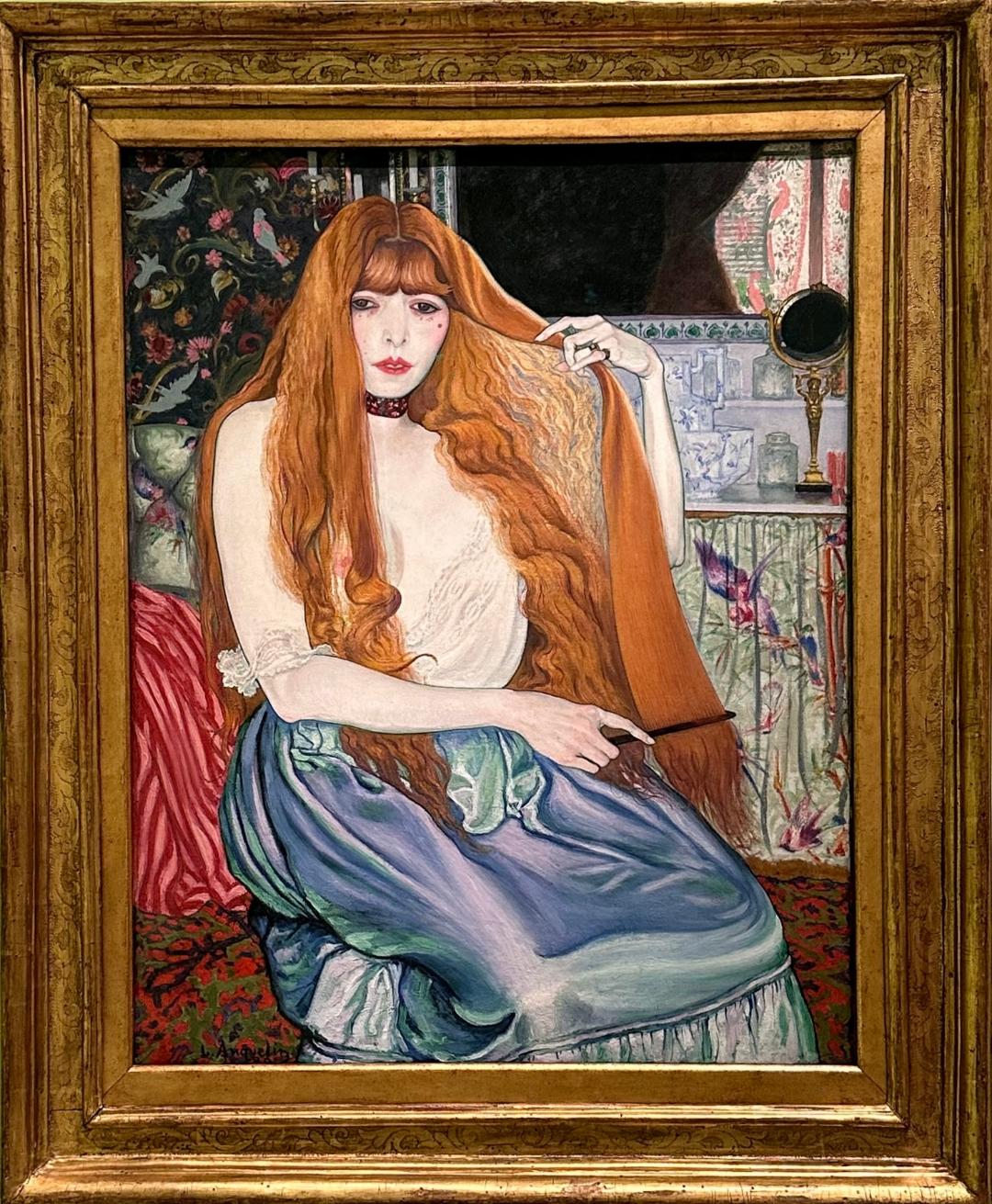
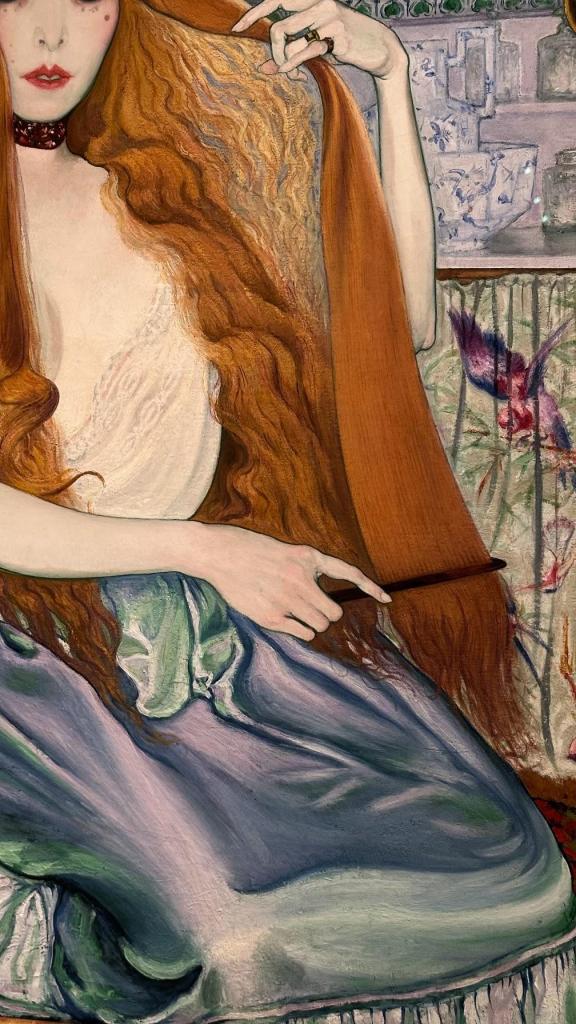
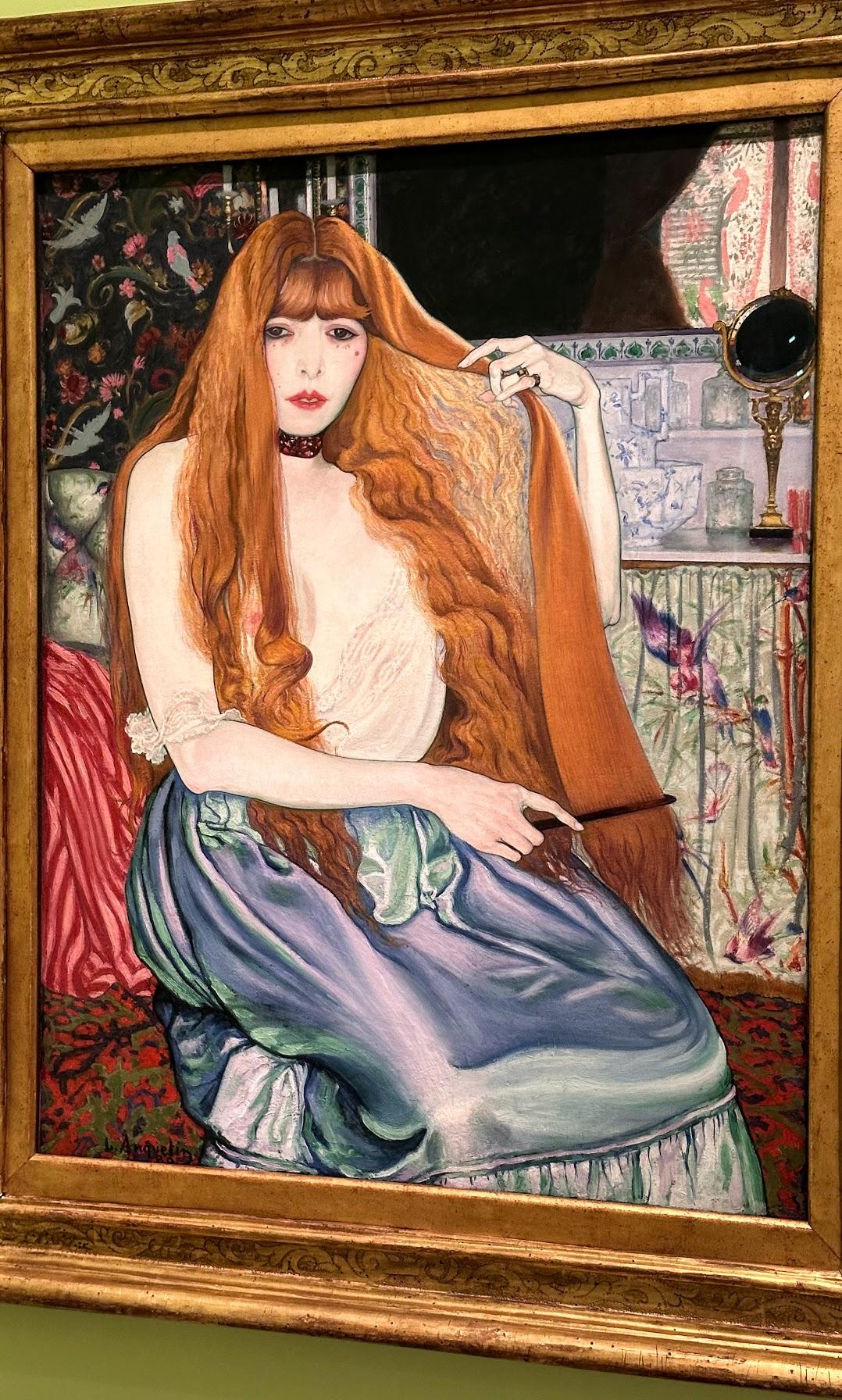
The painting mesmerized. Couldn’t tear myself away. In a spell, my thoughts were of Holly and her Sad Café.
Oil on canvas (1889)
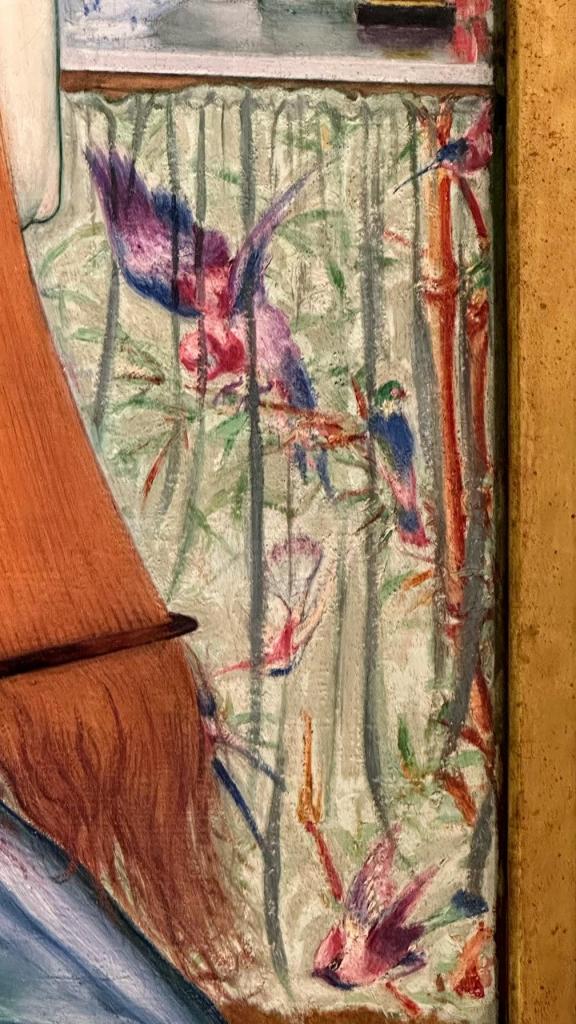
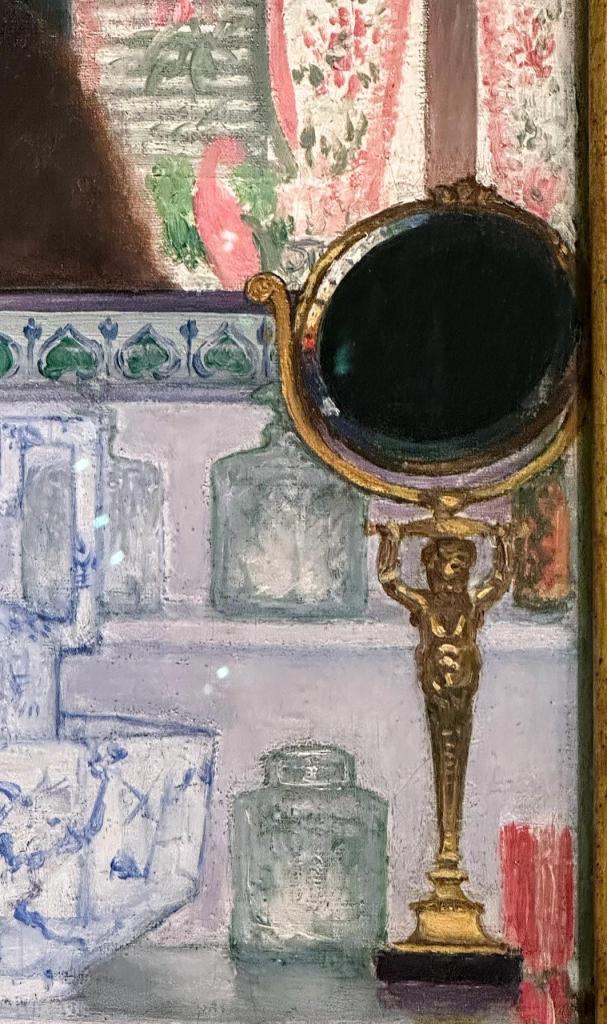
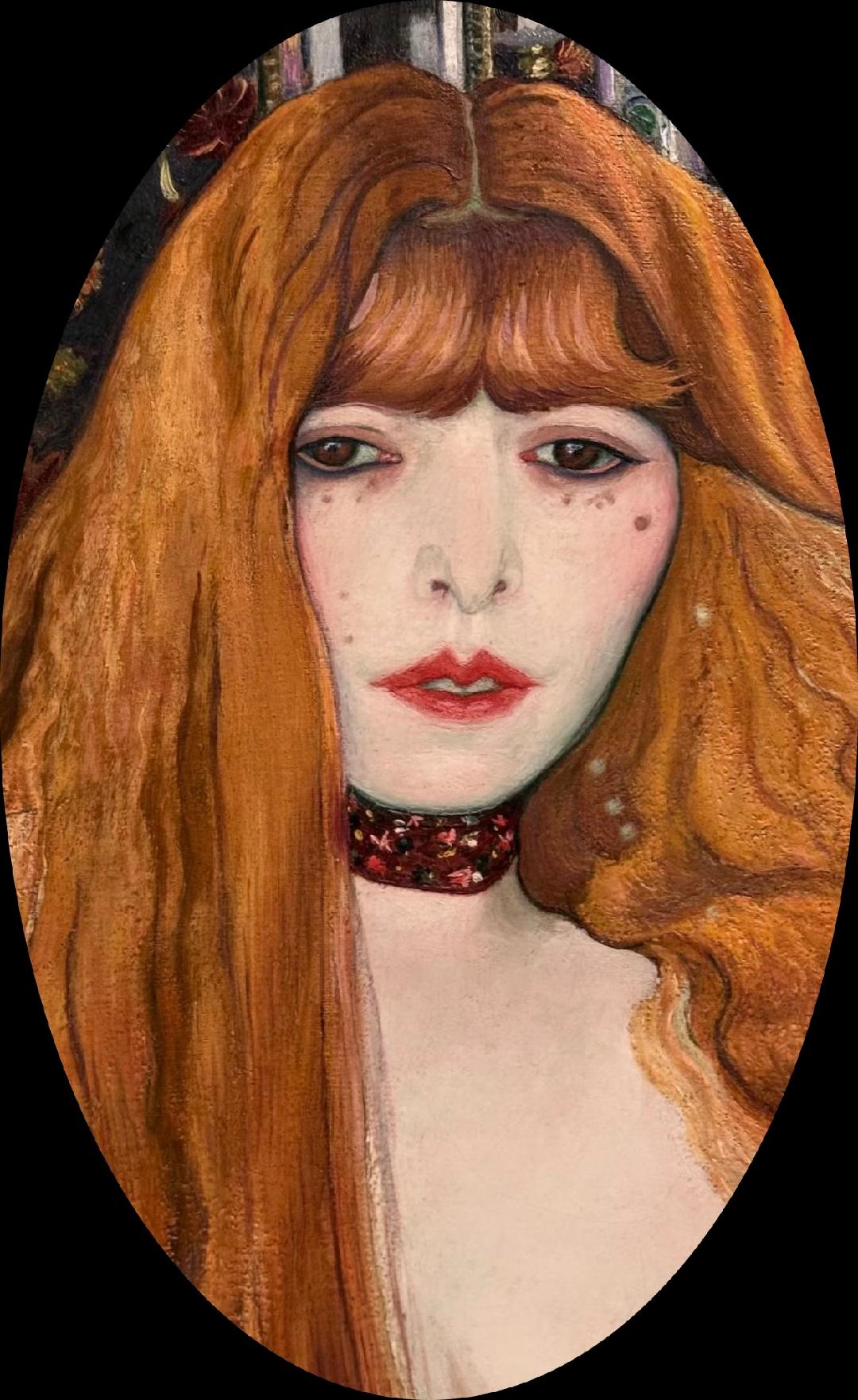
Woman at Her Toilette : Louis Anquetin – French (1861-1932)
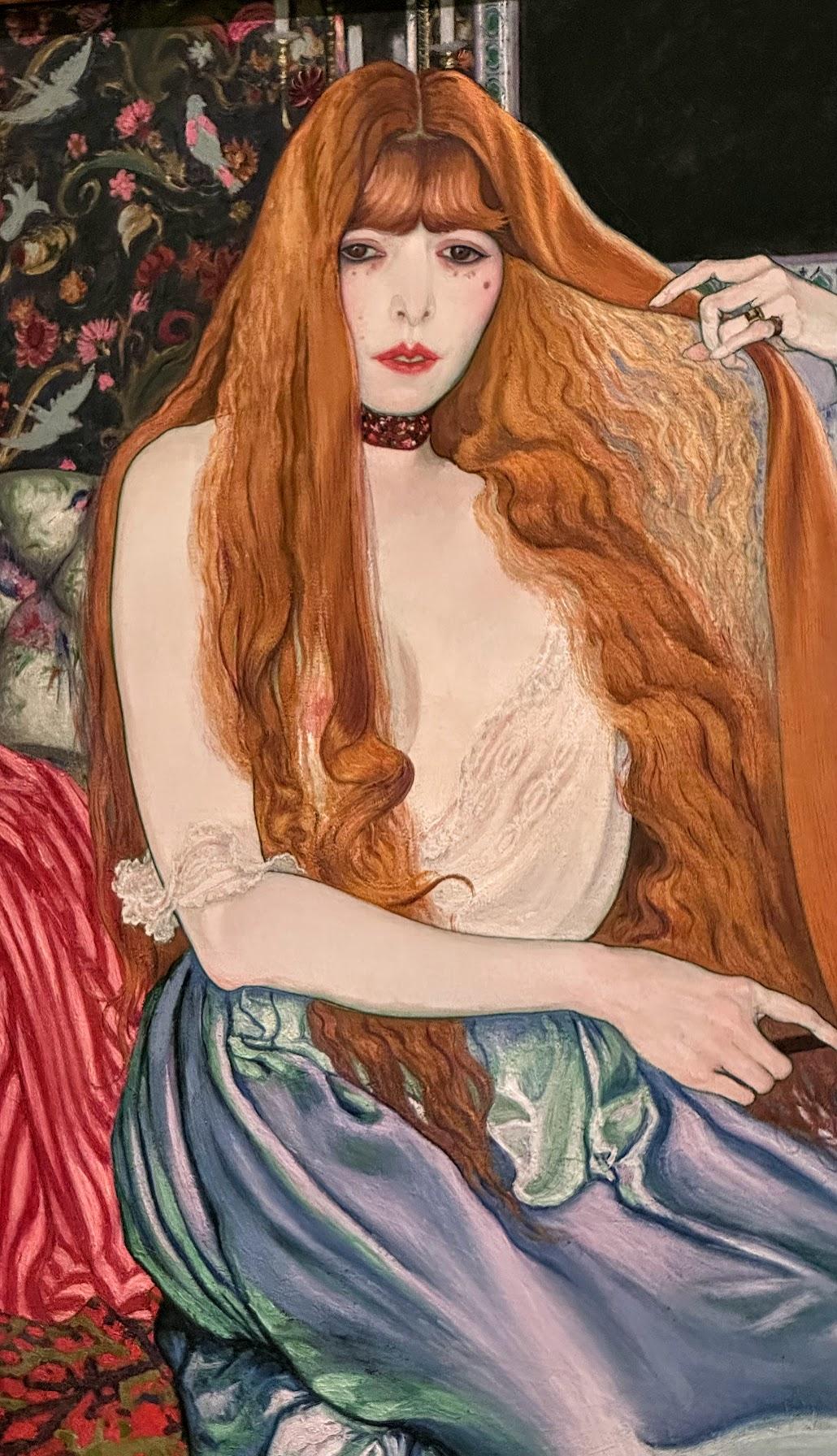
It was in the Salon titled Post Impressionism at the AGO. I was floating after having just seen Monet’s Water Lilies. Then I saw her, combing her long red hair.
At my mirror I braid silver thread through my hair.
“- though images of women dressing, are traditional within European art, the figure’s direct gaze and pronounced makeup suggest the she is a courtesan, a sex worker who catered to upper class patrons.“
My skin smells of yesterday’s perfume mingled with the haunting presence of strong cologne and the sweet scent of sweat and rope.
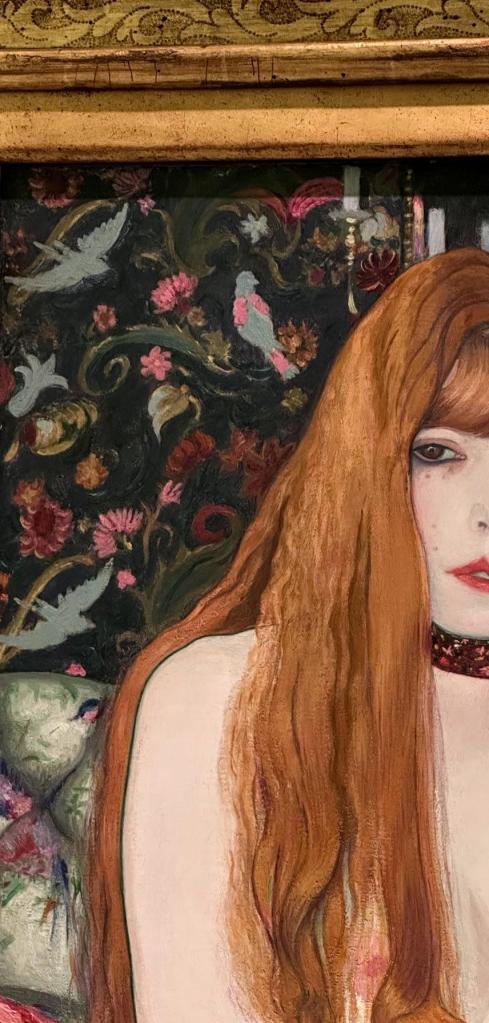
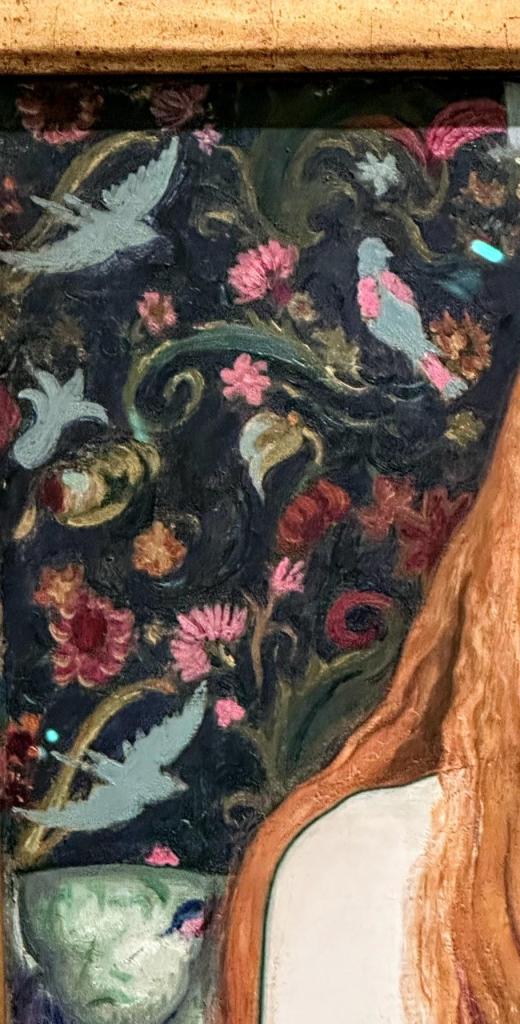
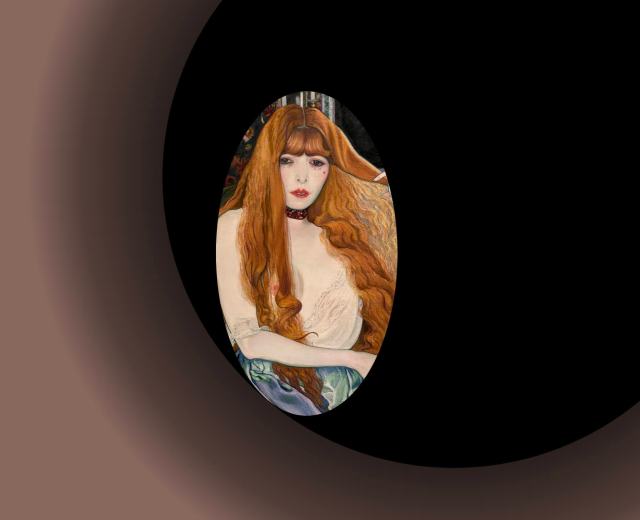
The details in this painting are luscious. I got in with the camera, as close as was allowed. The slideshow highlights shots of this Cloisonnism style work of art. The details are “Imitating medieval stained glass windows, cloisonné enamel and Japanese woodcut prints.”
“Cloisonnism features flat areas of solid colour enclosed by curving outlines, such as the green contour that encircles the woman’s porcelain skin.”
Cloisonnism was a bold new style invented by Anquetin, with his friend Émile Bernard.
It was the social event of the season. Announced in all forms of media, it would raise a lot of money for GIFFT (Global Initiative for Flora & Fauna Trust).
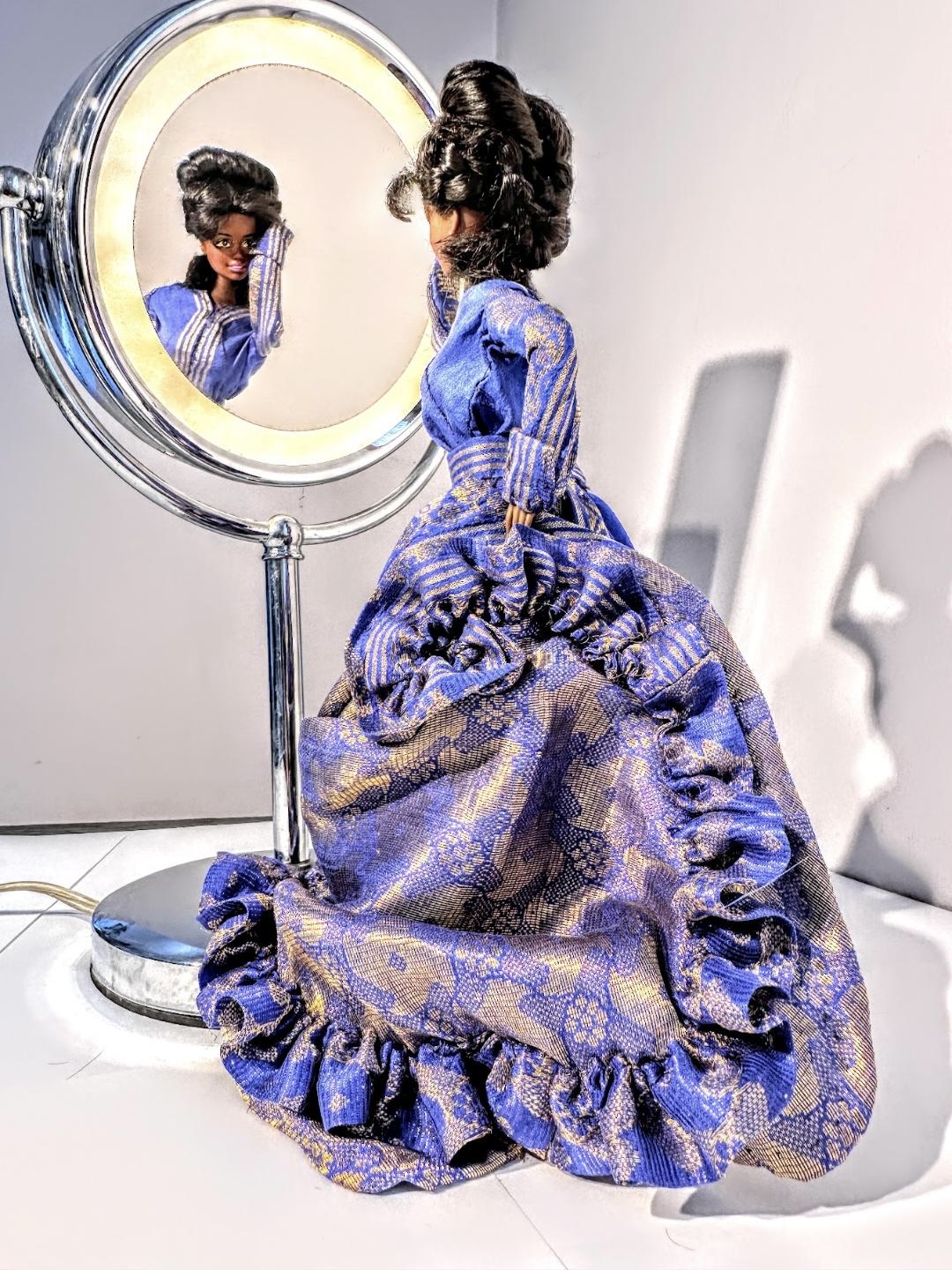
How could that have happened? Simple. Dorinda pointed out to the board that their smash hit act, THE MIRROR, was drawing in hundreds every night.
Dorinda, wearing a vintage hand crocheted dress, told the board to think of all the money their act could generate. That was all the board needed to headline the 2 girls.
When the hoi polloi found out that Suzette was doing hair and make-up for the girls, ticket sales soared.
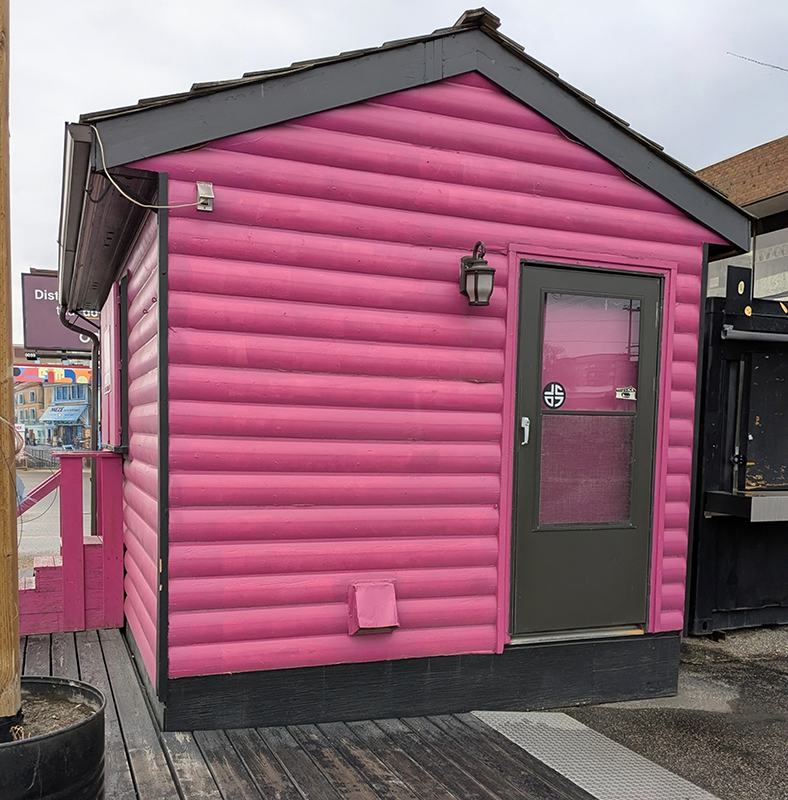
It was near impossible to get a beauty appointment at Suzette’s Pink Place, as she only took 2 each week, tops.
Special Thank you to Holly Rene Hunter for her contribution of poetry for this post. I love the way her poetry and my gowns work so beautifully together.
Please note: GIFFT (Global Initiative for Flora & Fauna Trust) is a fictitious charity!
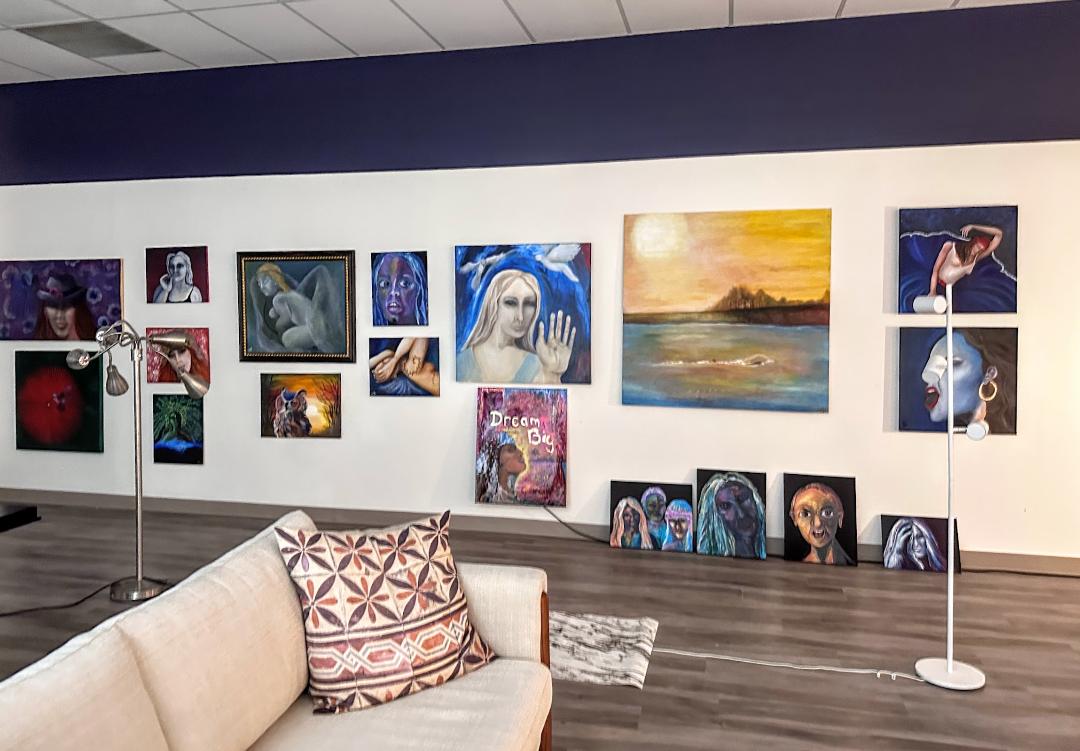
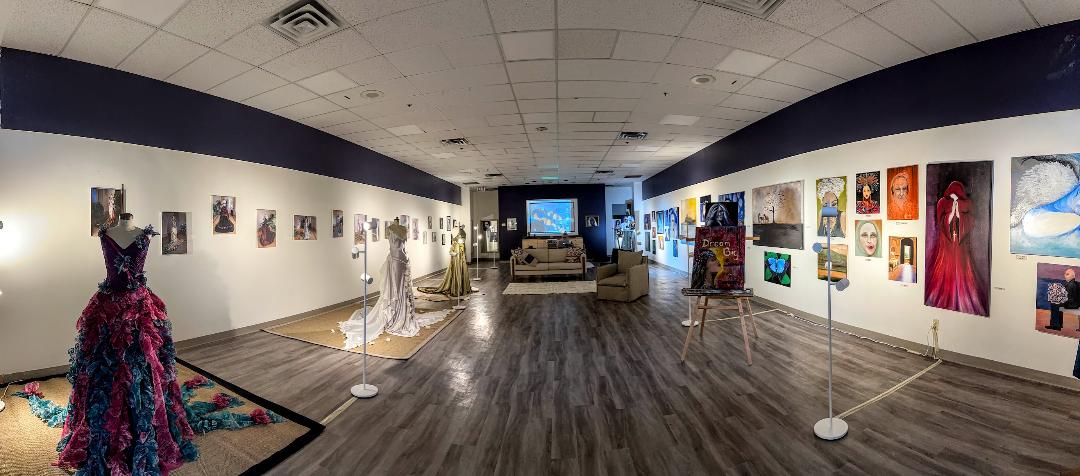
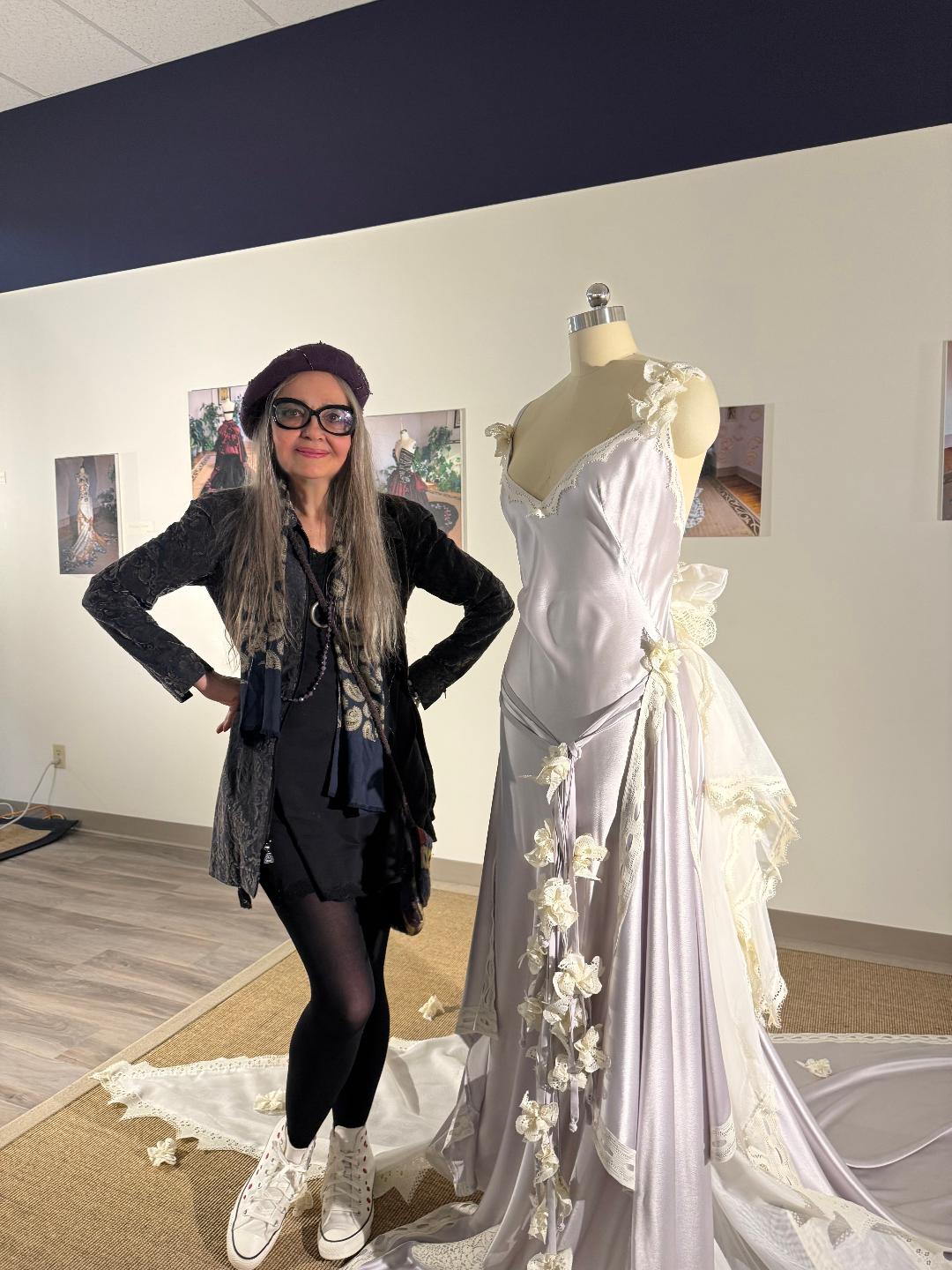
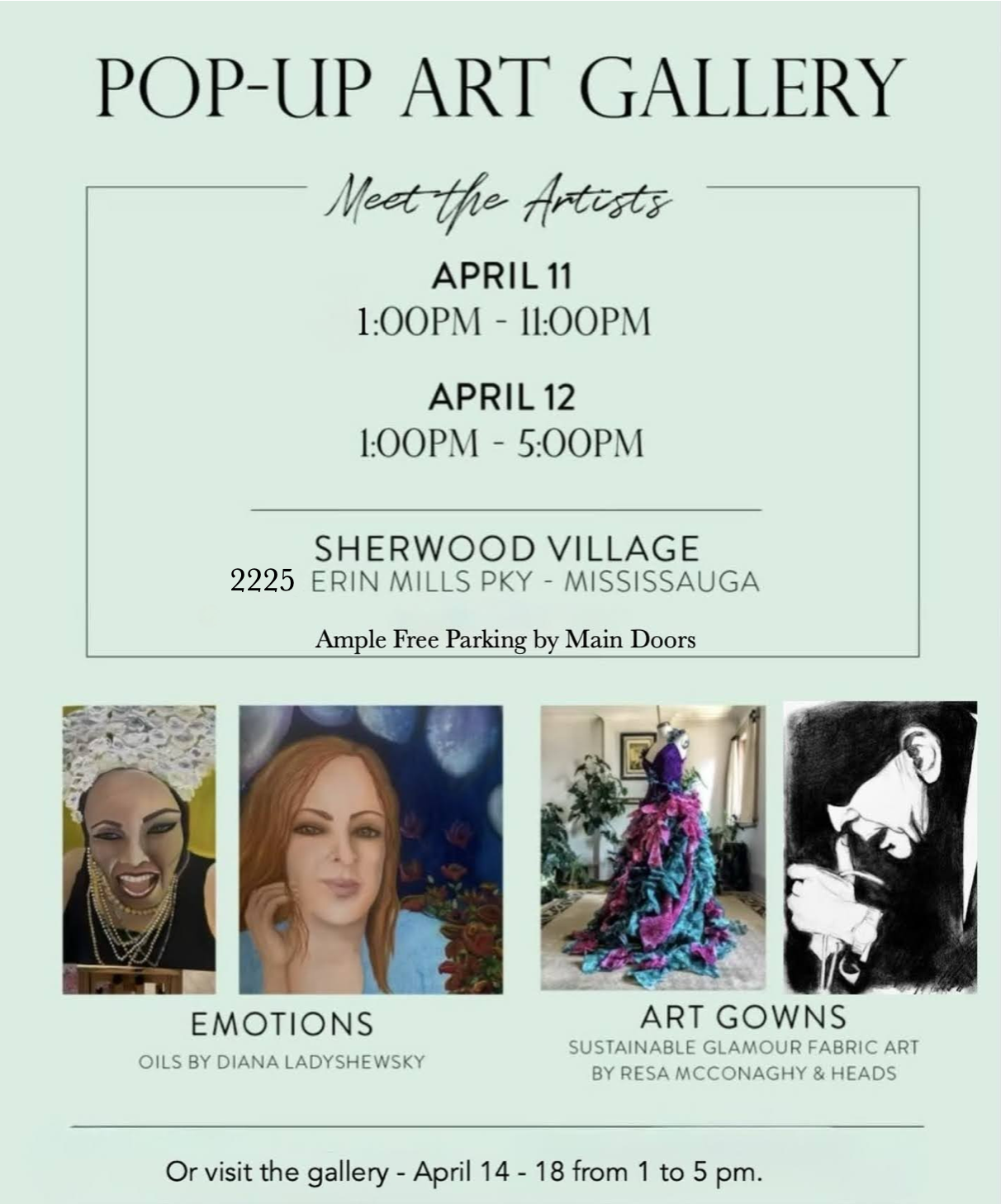
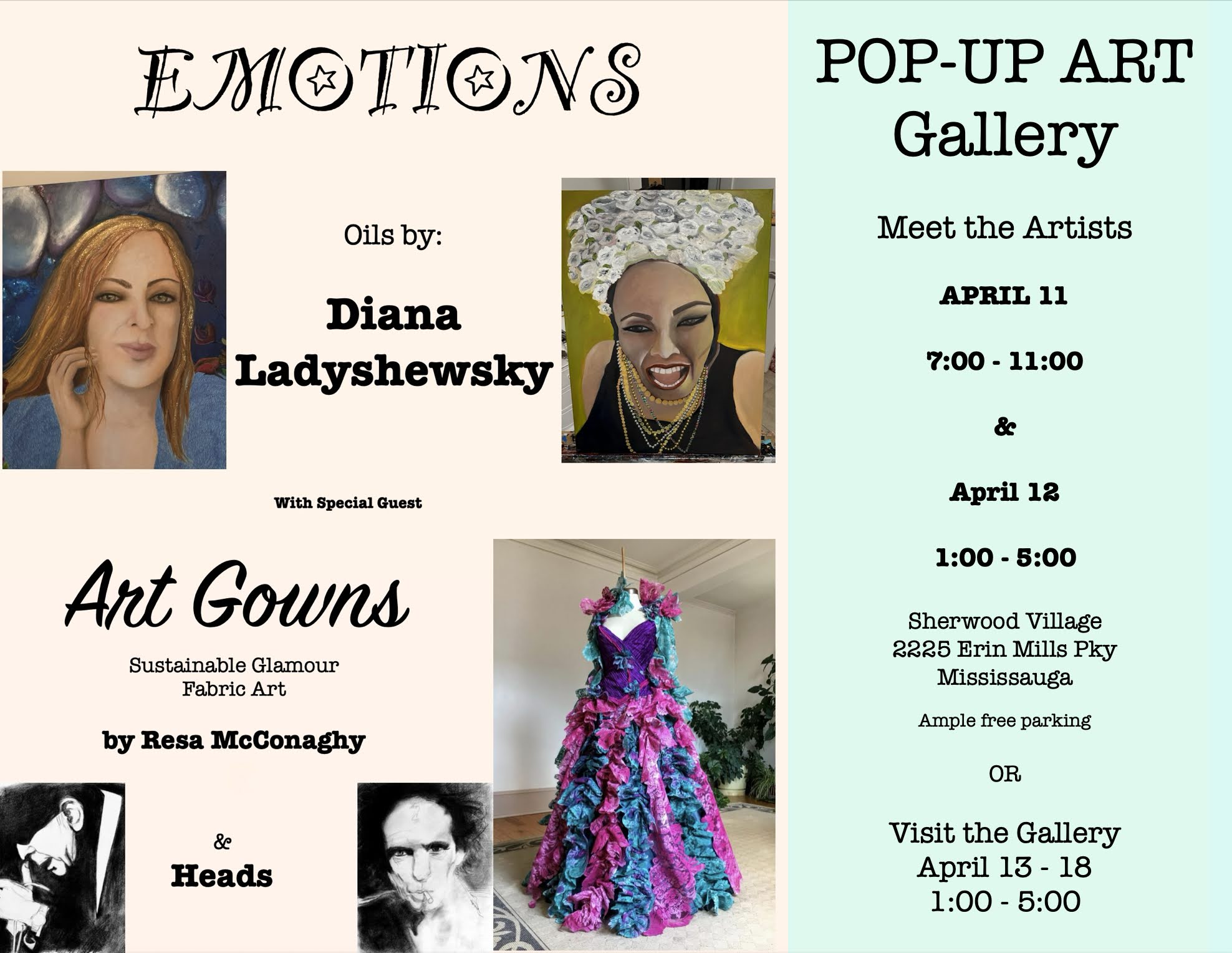
The Art Show was a success, a thrill, and a joy. This was Diana’s 8th showing. It was my first, marking it as a personal milestone.
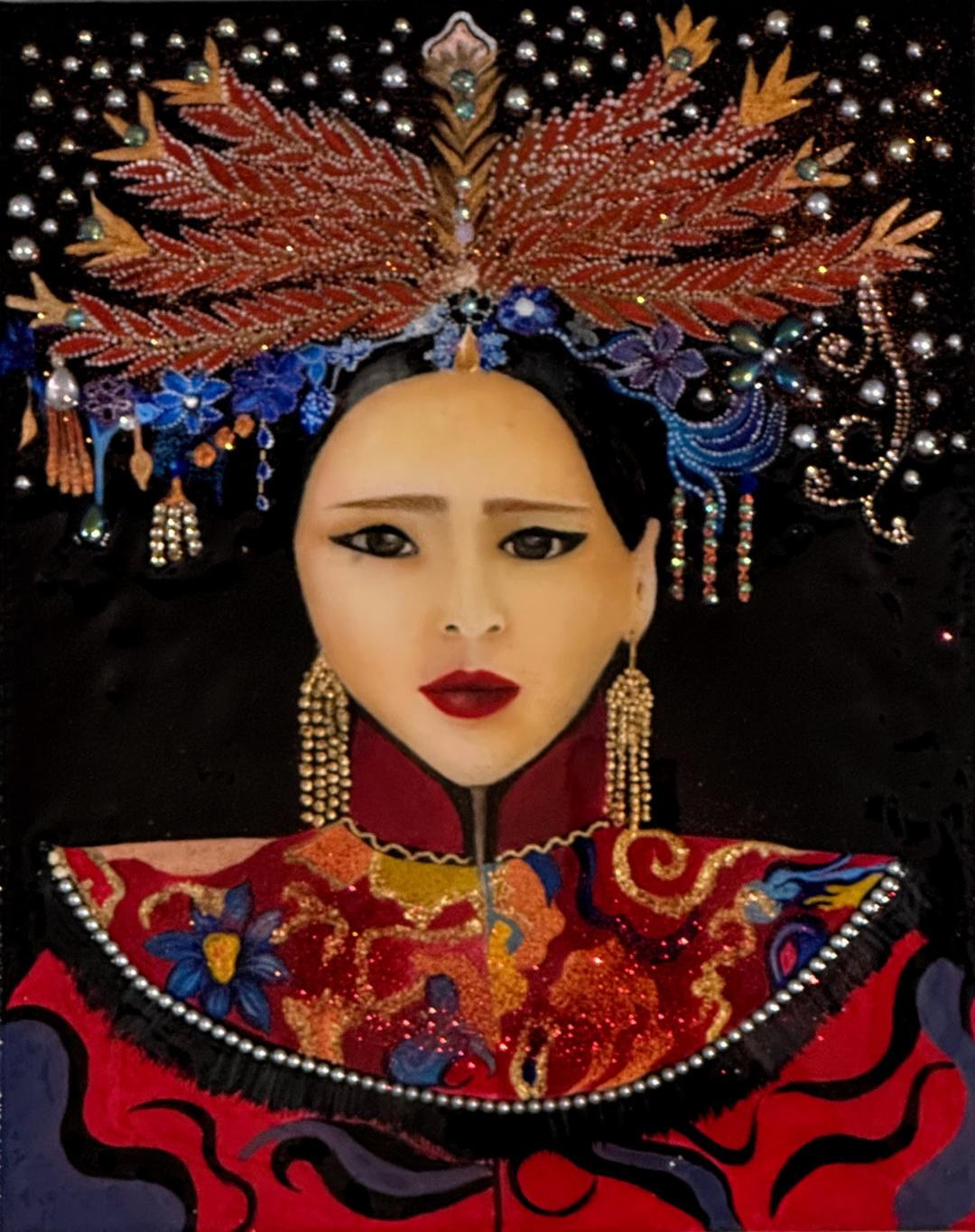
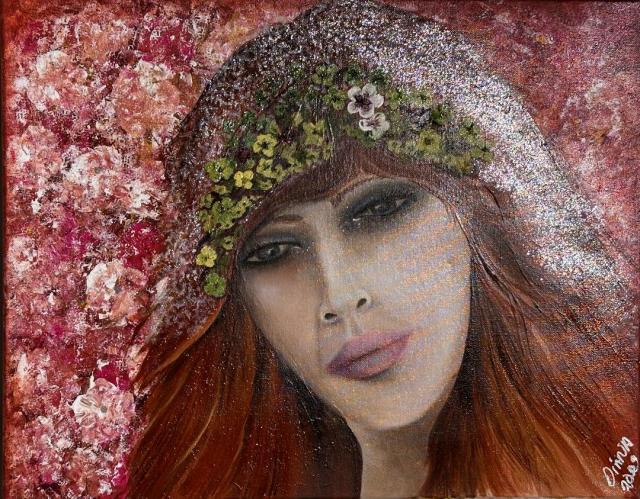
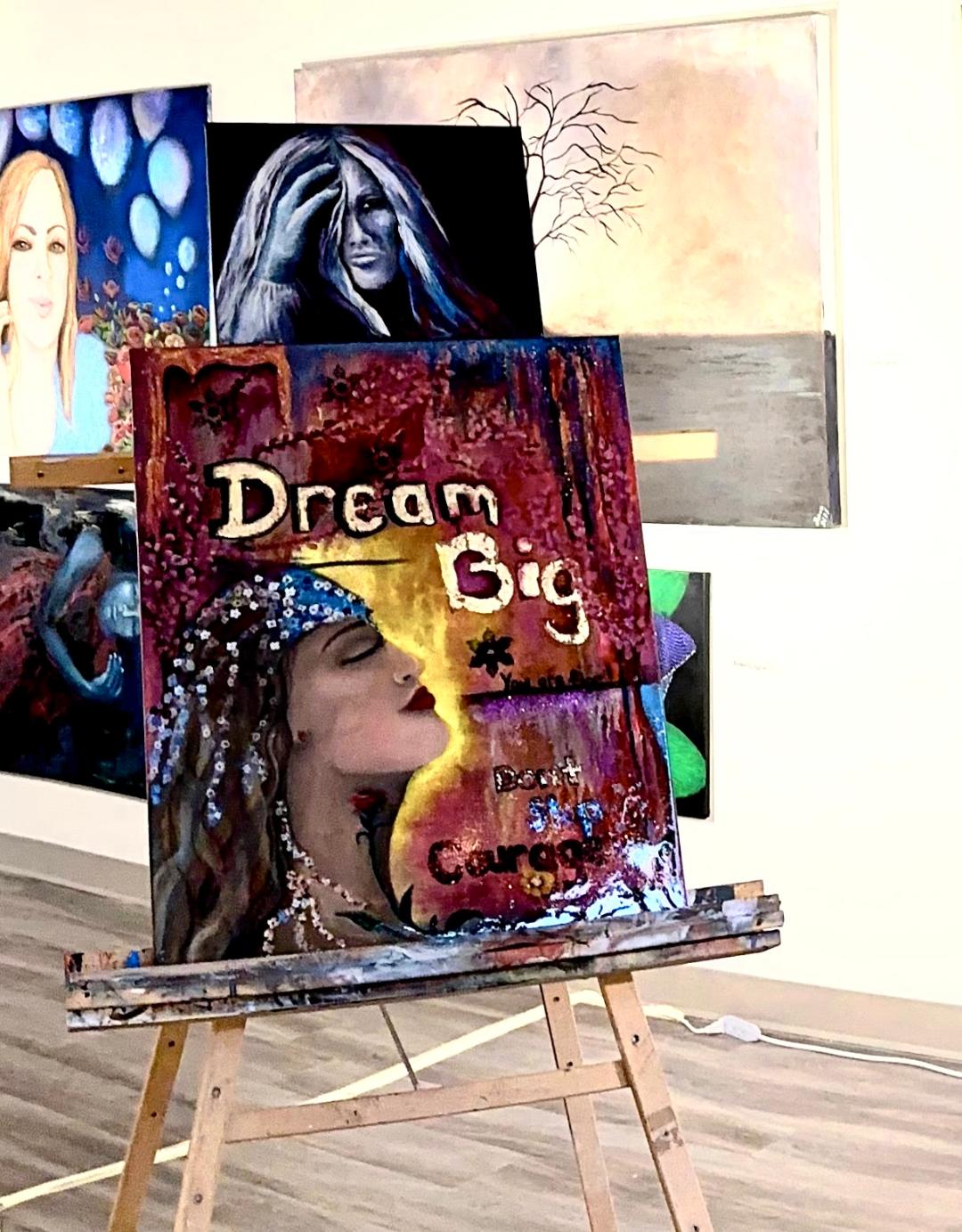
Asian Beauty – oil and sparkles – Diana Ladyshewsky
The Artists
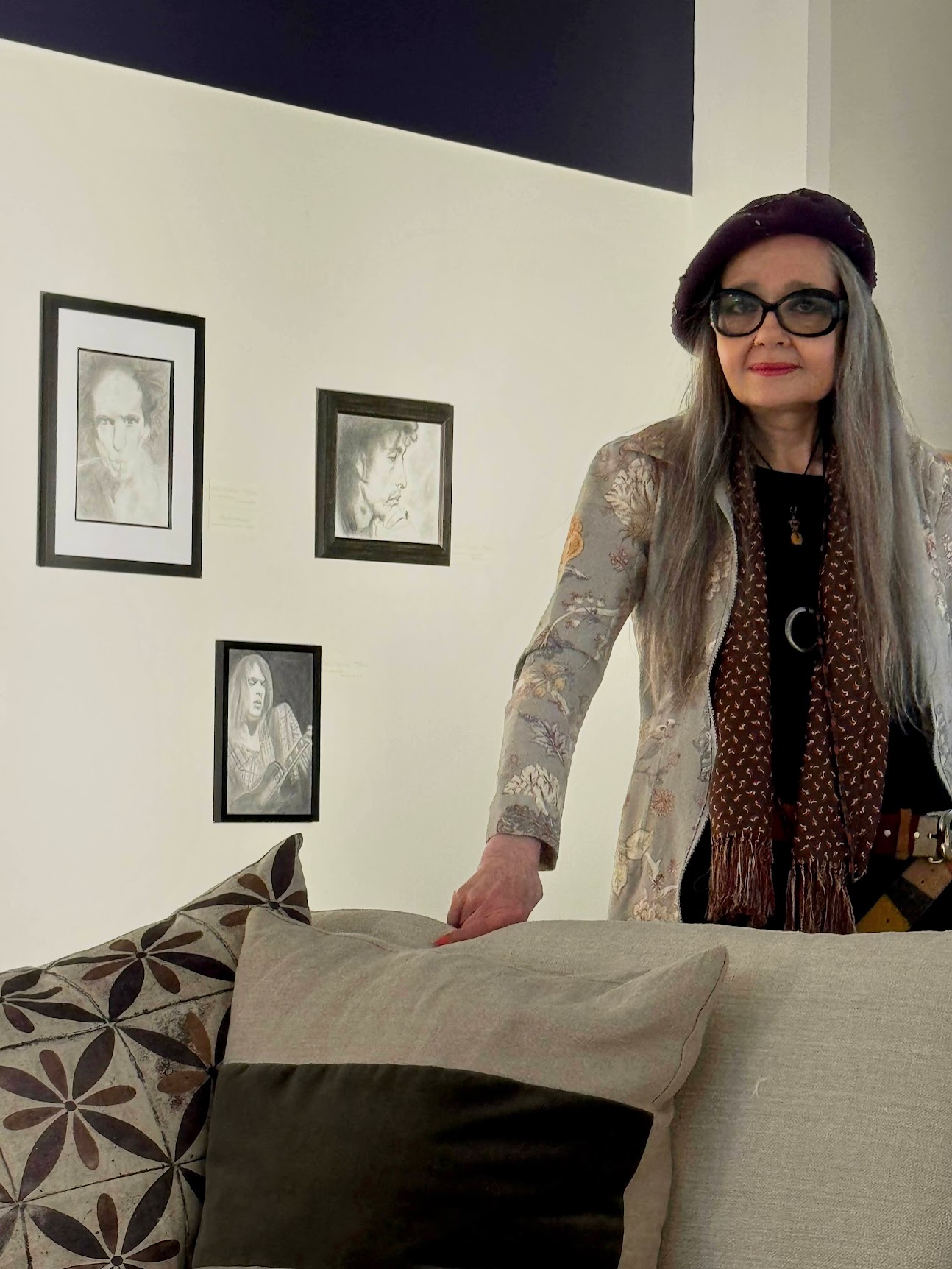
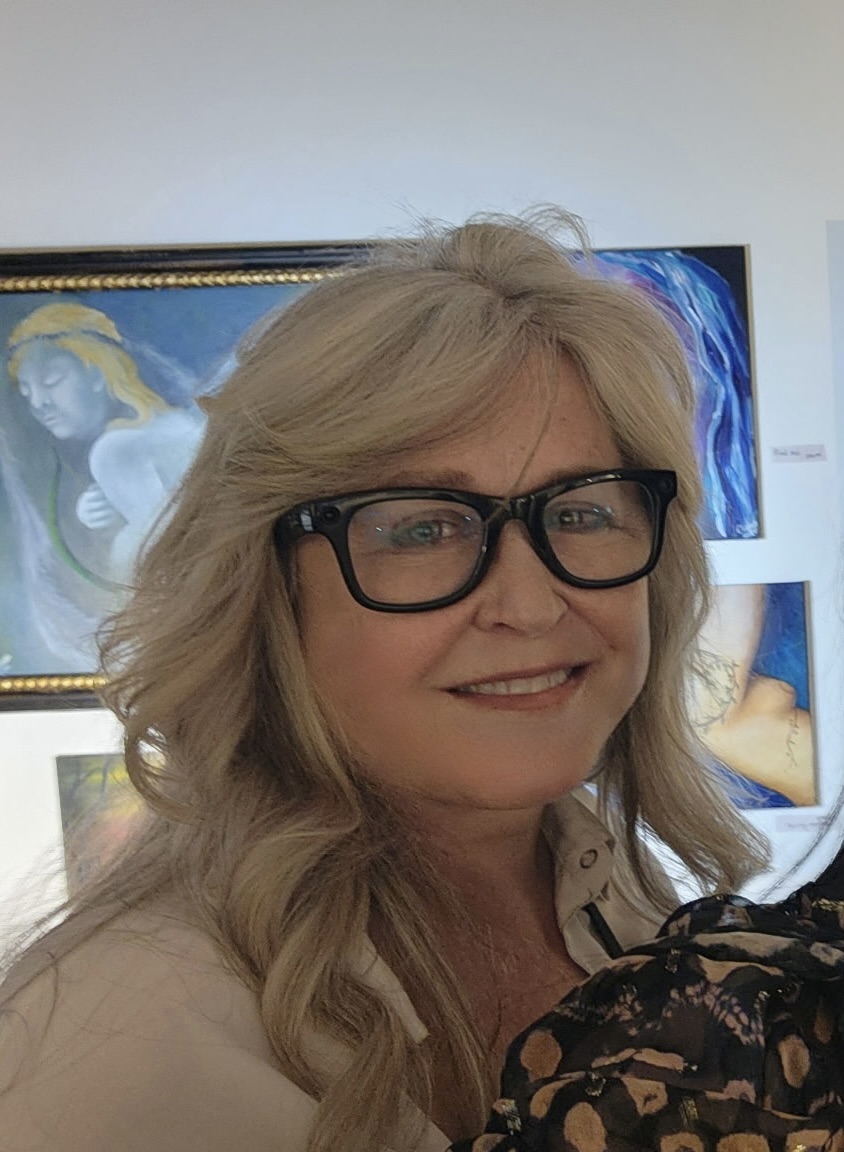
Resa above and Diana below
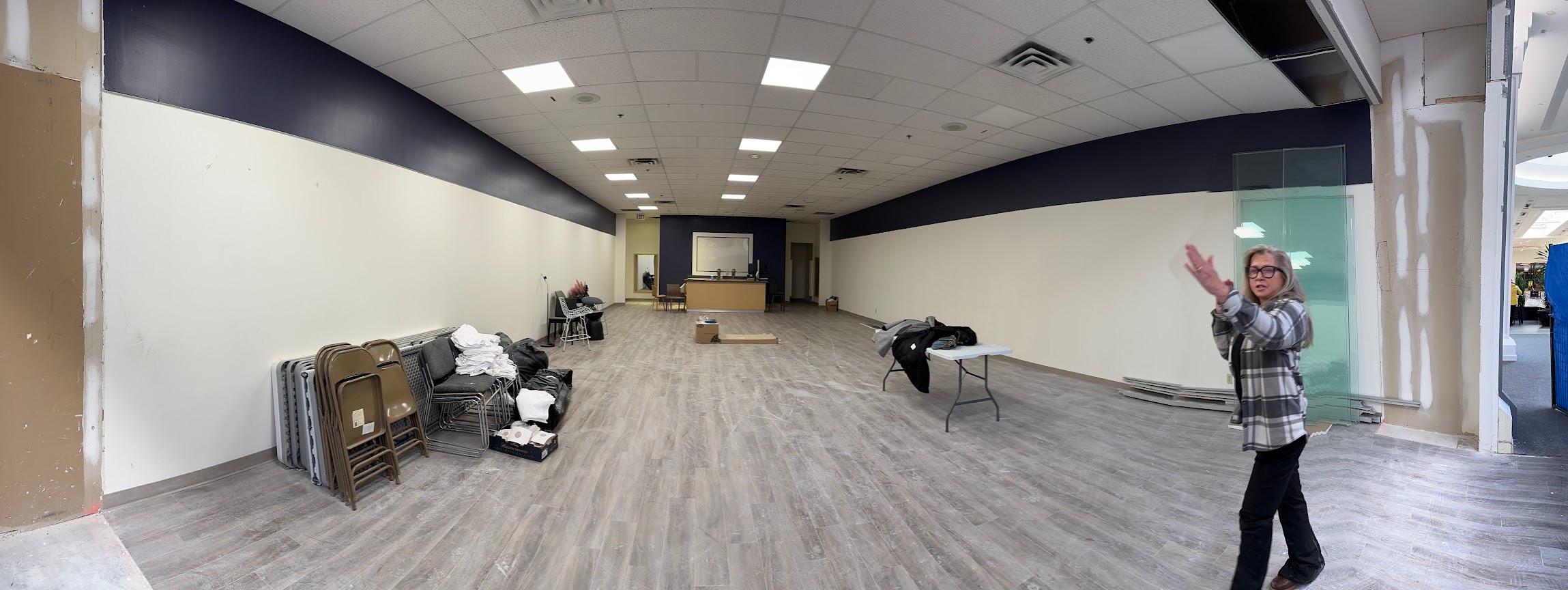
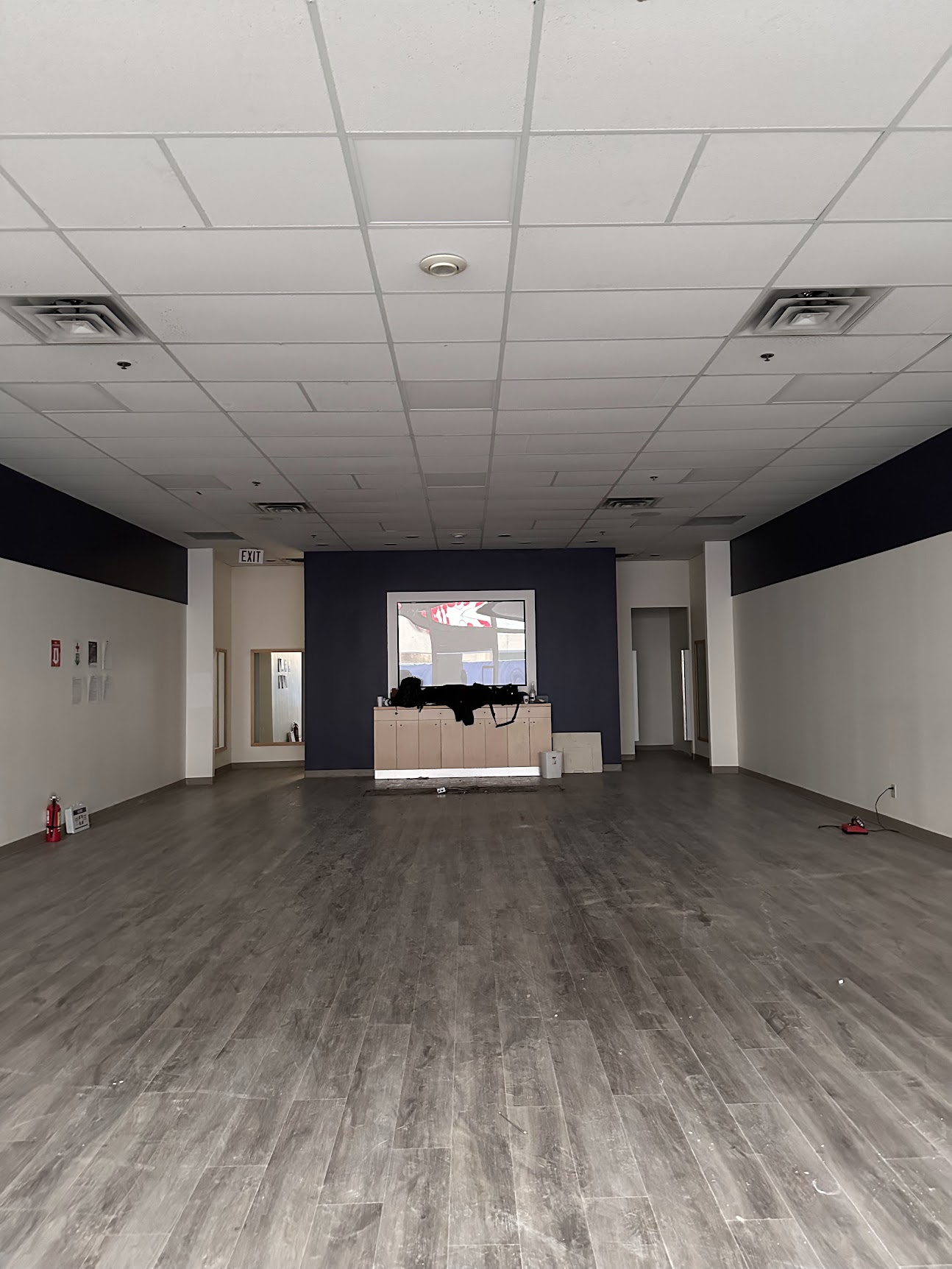
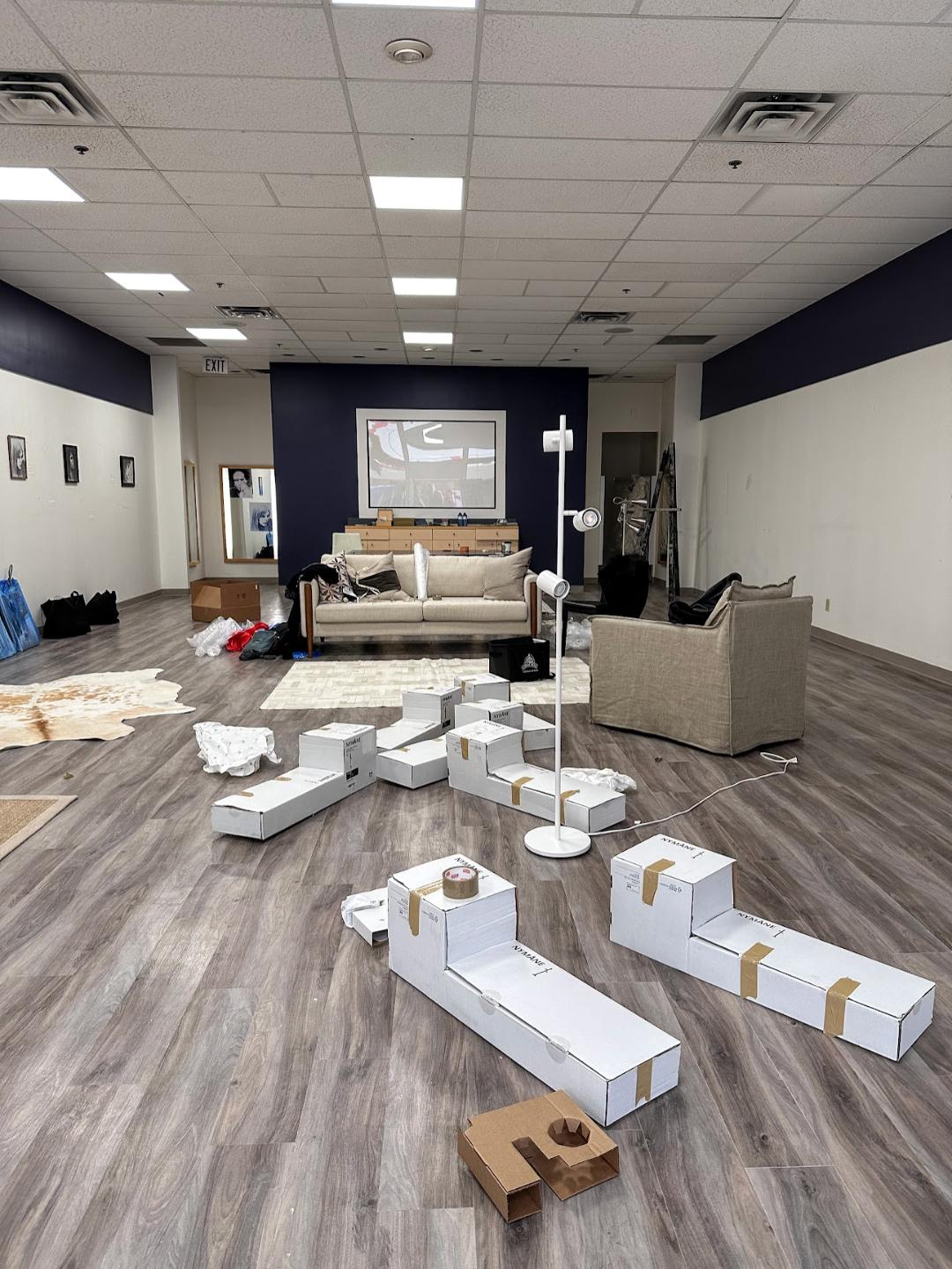
One day Diana (a hair stylist to the stars I know from working in film) took me to an empty store, and drew a mental image of an art show we could have.
She said we can turn this empty space, into a showcase place for our art.
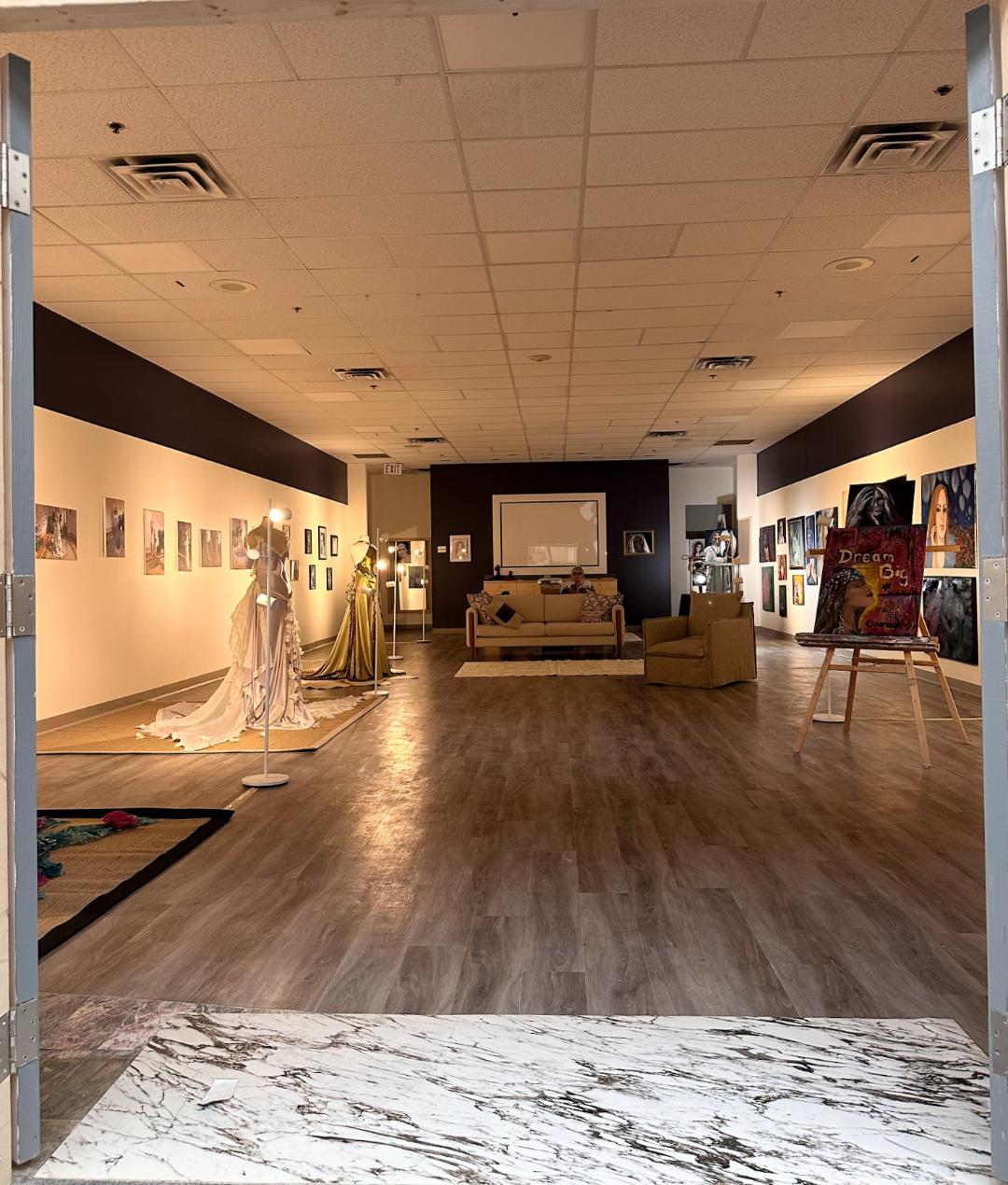
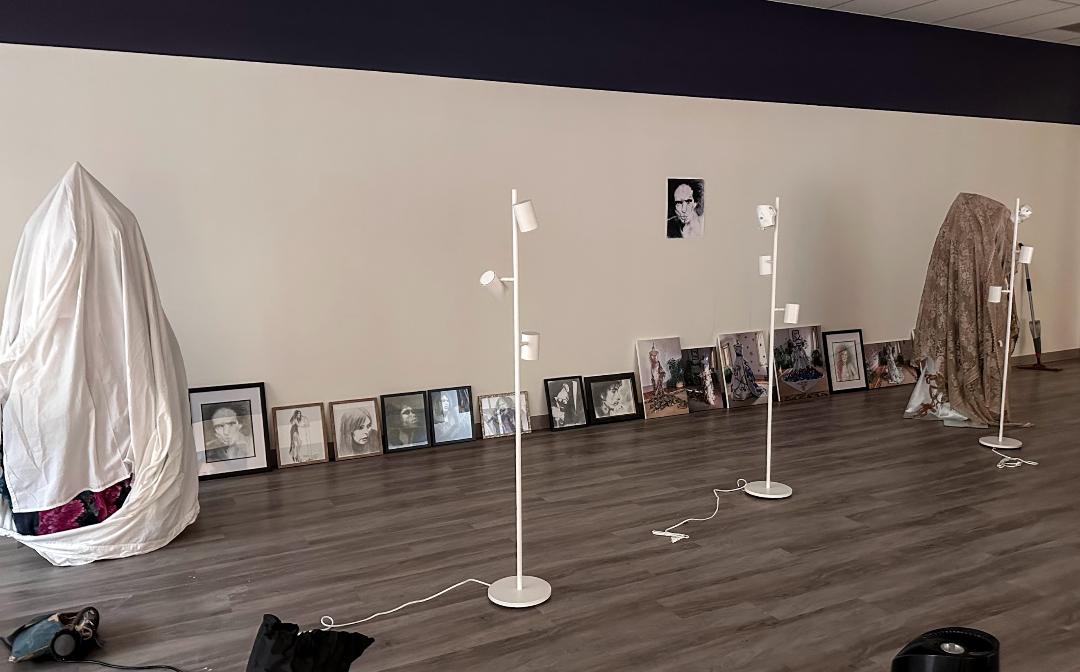
Above is before and after. The after shot is not quite the finished space, but close. I did change light bulbs from halogen to warm white led’s.
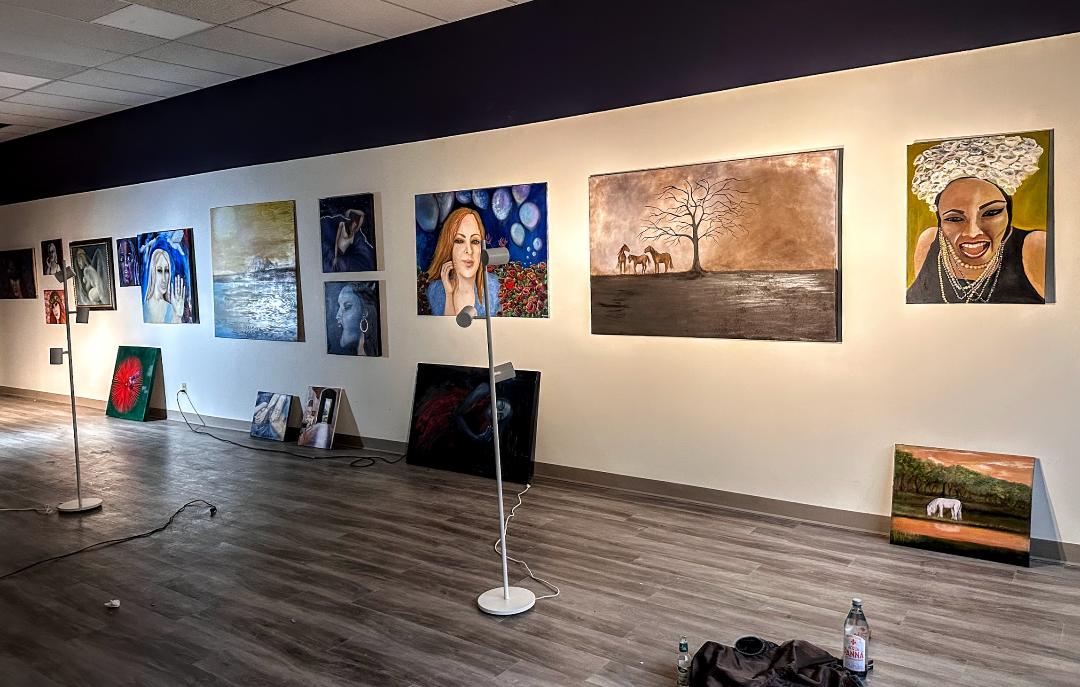
Diana took one side. I took the other. Diana got her paintings hung up in no time at all.
Mine were still along the floor. Then she hung mine up in no time at all.
She came up with the welcoming furniture.
I made a slide show that was projected on the screen at the back.
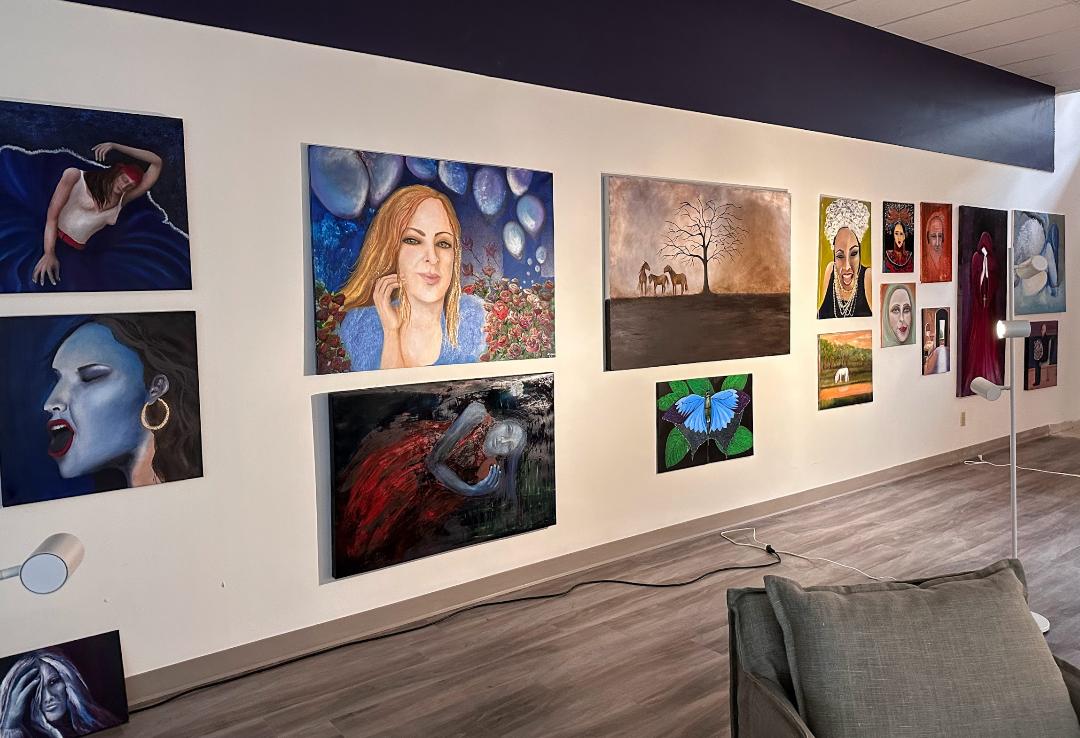
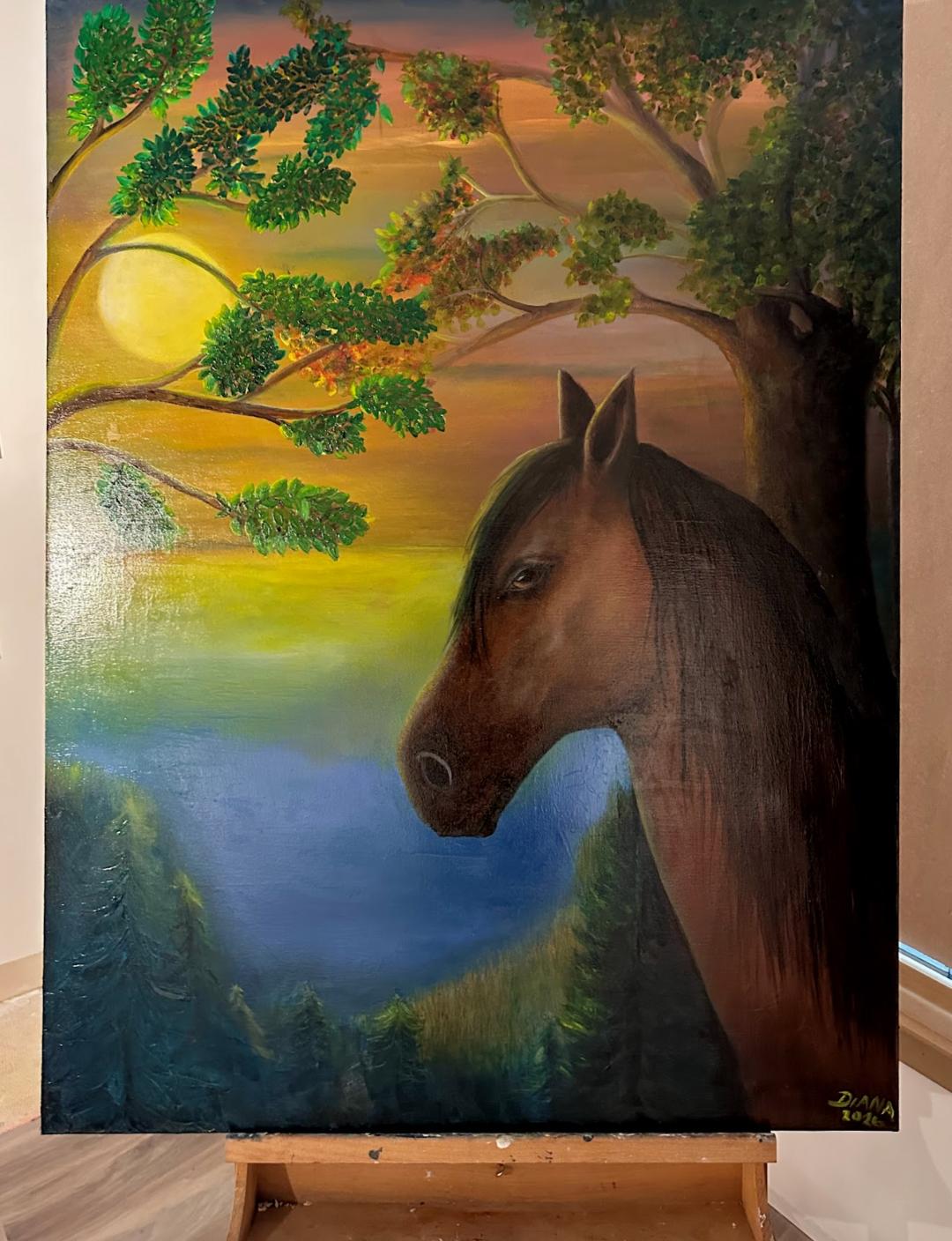
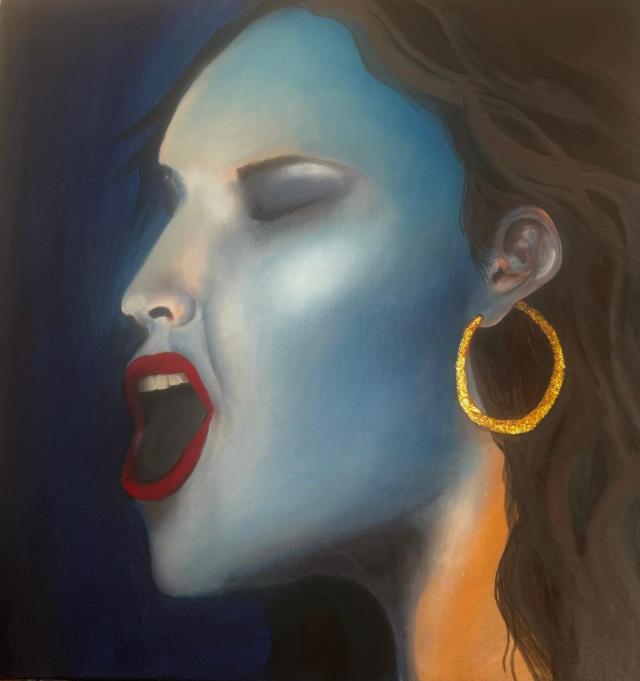
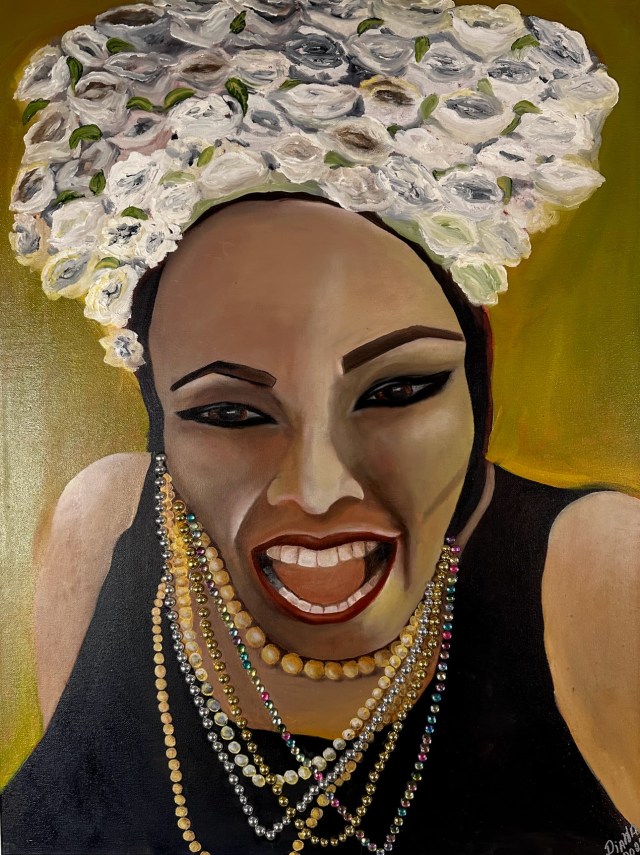
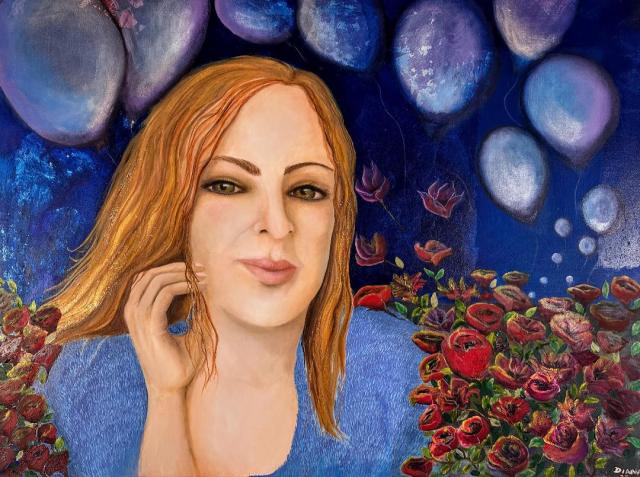
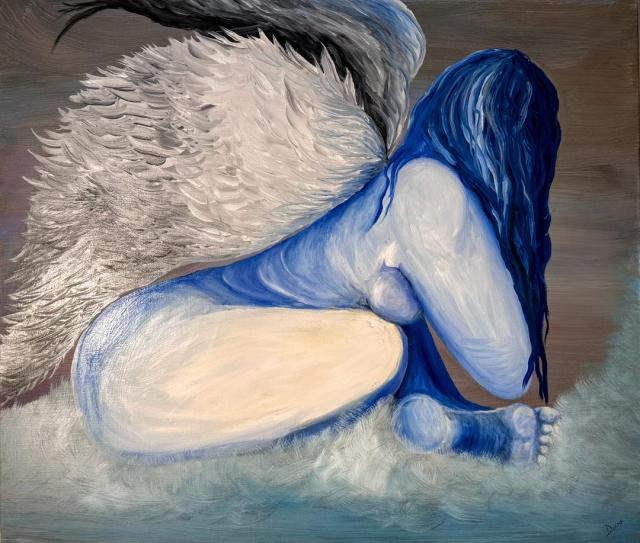
Diana paints with oils, sometimes adding sparkles or gems. A self taught artist, her spirit resides with notable self taught artists: Frida Kahlo, Henri Rousseau, Grandma Moses and Jean-Michael Basquiat and others.
Irish Bride
Blues Singer
Frida Goes to New Orleans
Unnamed
Resting Angel
I adore her & her art, and will be doing a more comprehensive article on this artist in the near future.
She is fine
like Dynasty porcelain.
Her words are the chimes of
a host of carillons that ring
True and wise, clear as bells.
Her hair is a storm
Of Harlow platinum
eyes, a deluge of diamonds.
Not to give into Winter
She winks over her shoulder,
saunters Emmy's catwalk
adorned in Chanel and Lavender.
Queen Isabella
Inspired by & dedicated to Isabella (RIP)
Thank You Tim!
SURPRISE!!Timothy Price (Off Center Not Even) sent $$$$ to my PayPal, to help with costs. Although the space was free, there were lights to buy, photo cards for handing out, diesel gas for Diana’s truck, a deal we worked out with the restaurant beside us for wine and pizza and more.
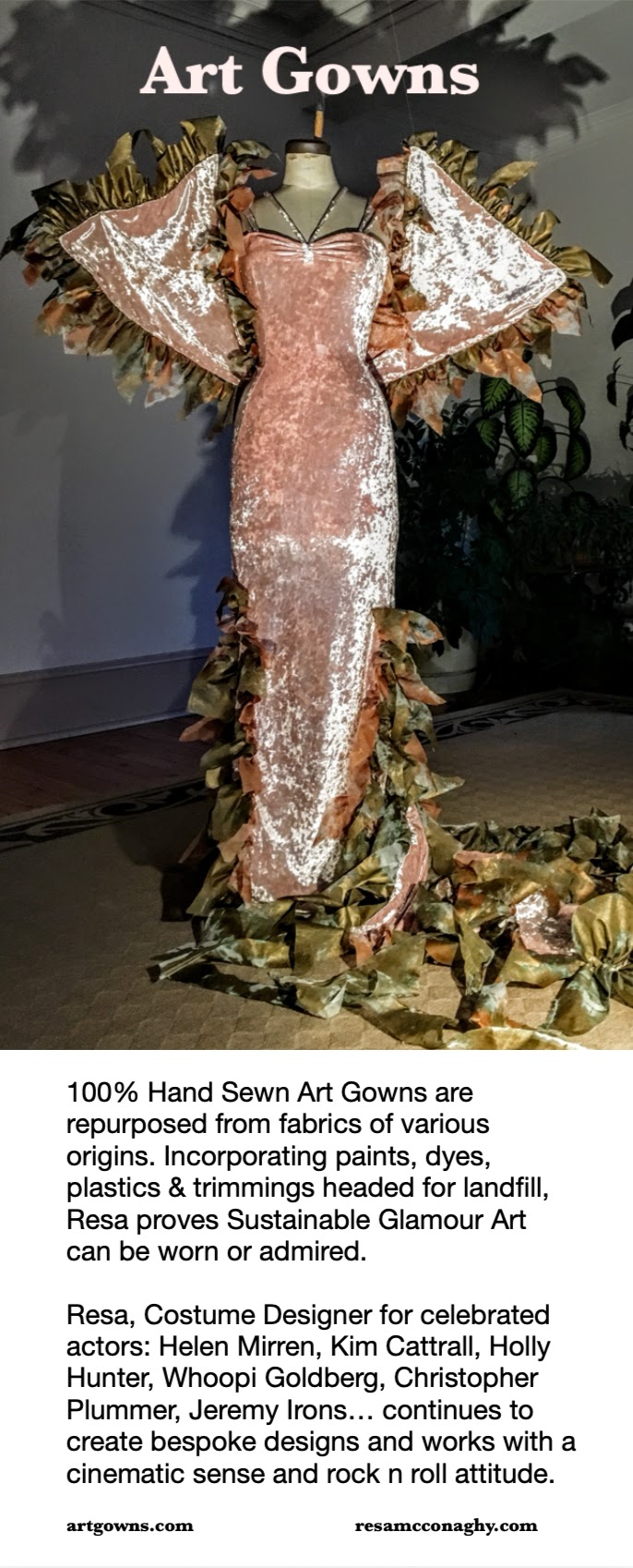
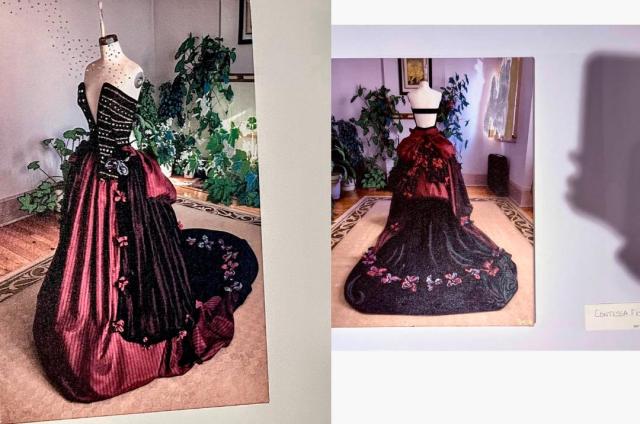
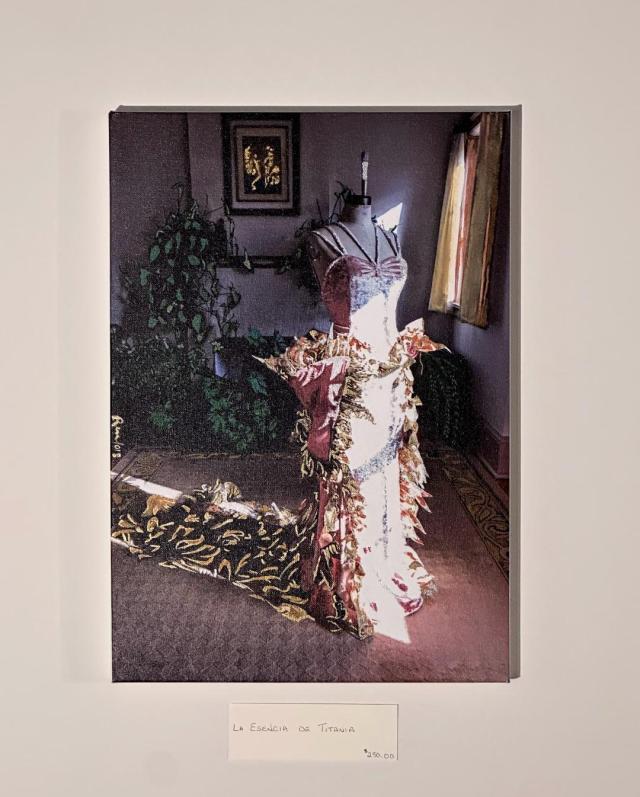
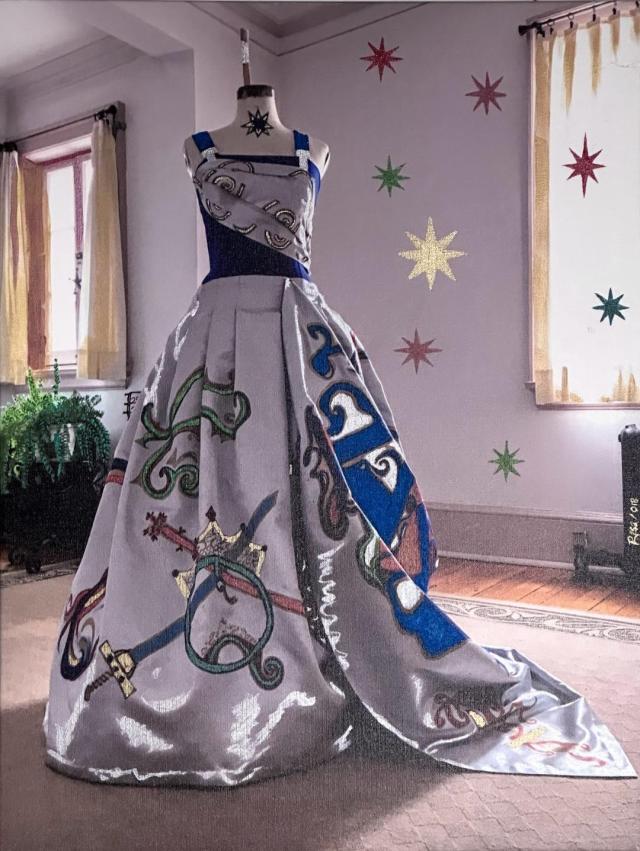
My Art Gowns Art (photo prints on canvas with iridescent paint hand detailed on top,
It’s hard to take pics of iridescent paint
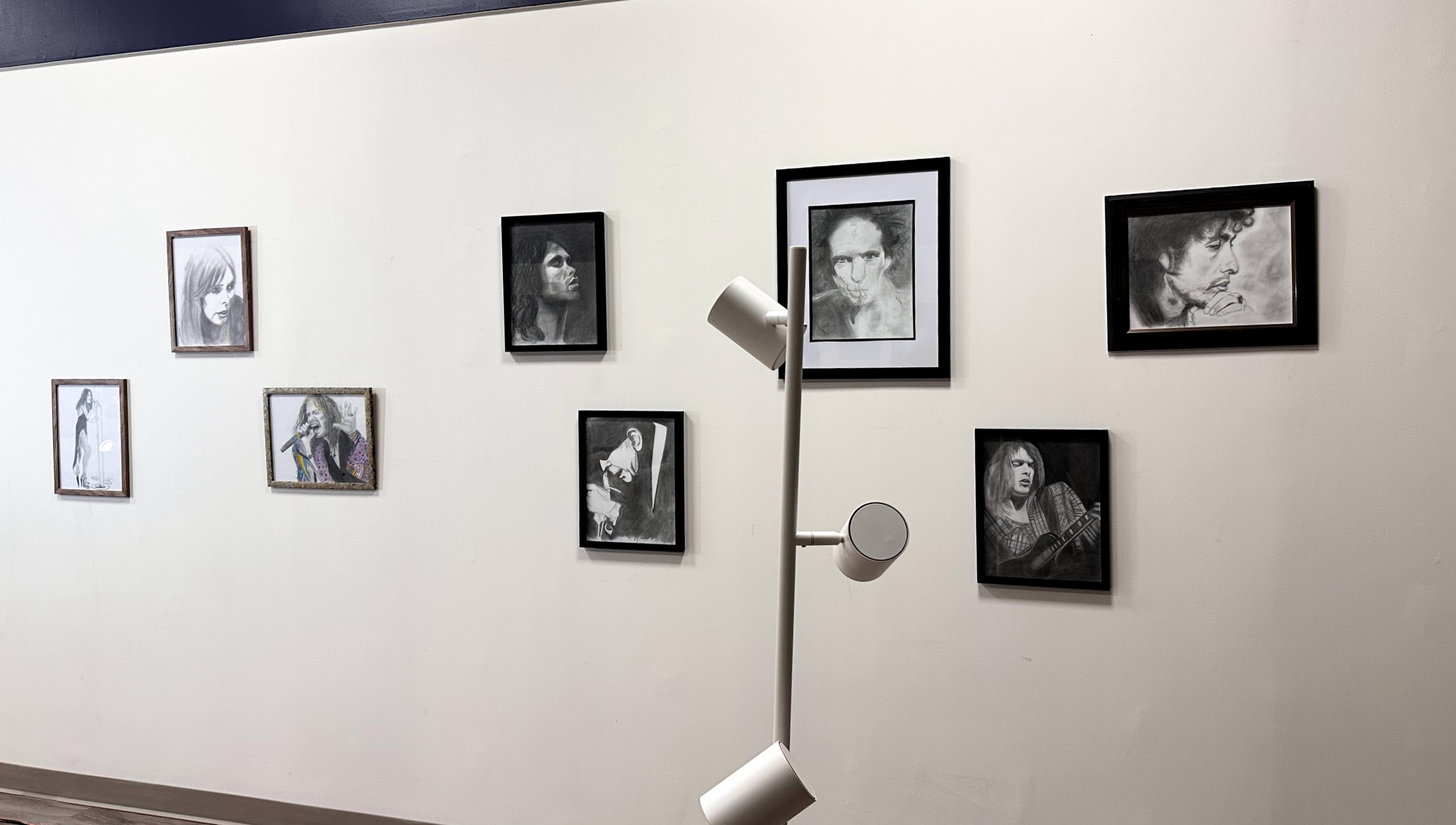
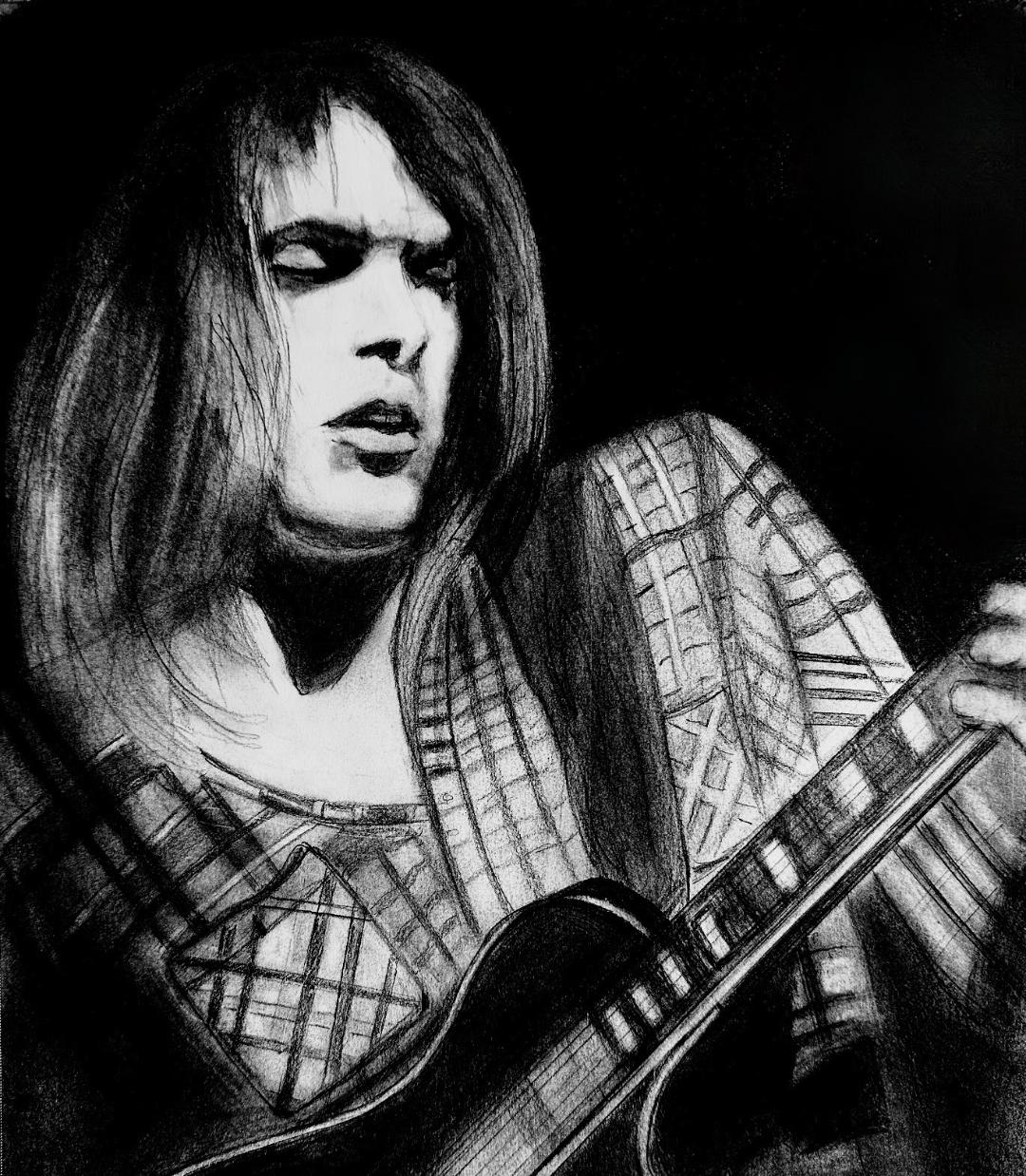
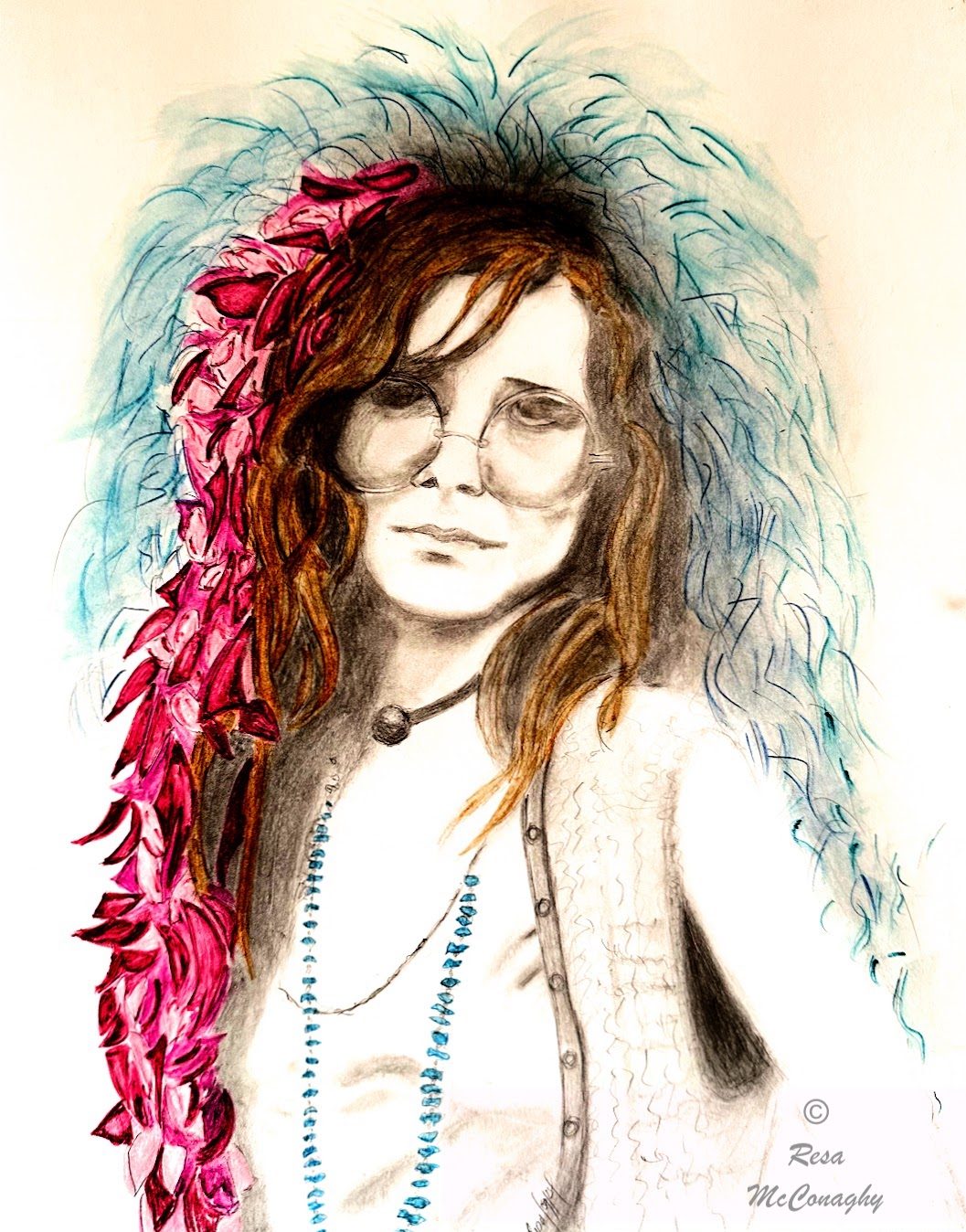
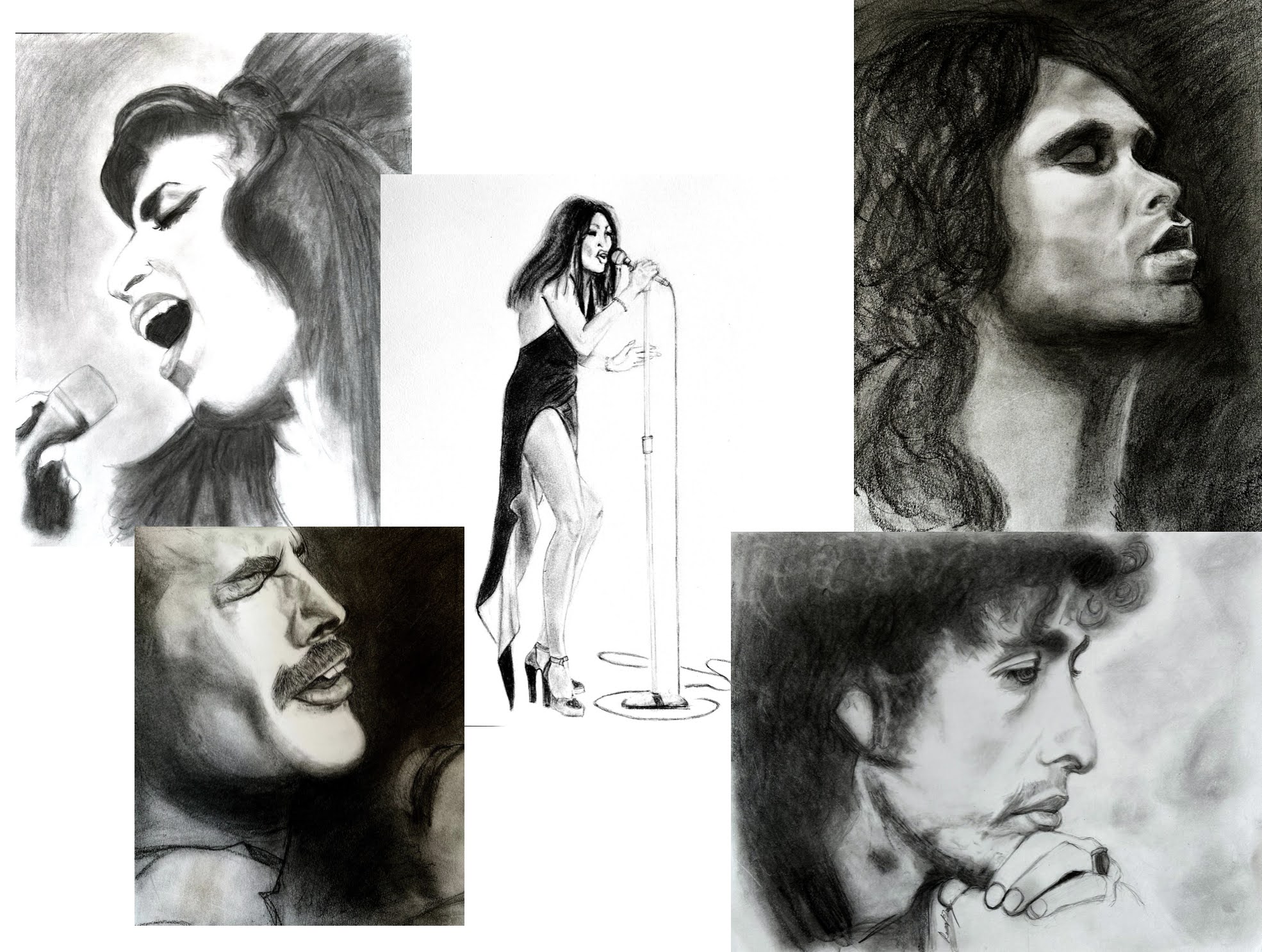
…and Rock Legends made the wall.
A few posters were made up to sell.
I’ve always had a penchant for Bugs Bunny feet.
Wrapping out was a sweet sorrow.
From the top and bottom of my heart – Thank You, Diana!
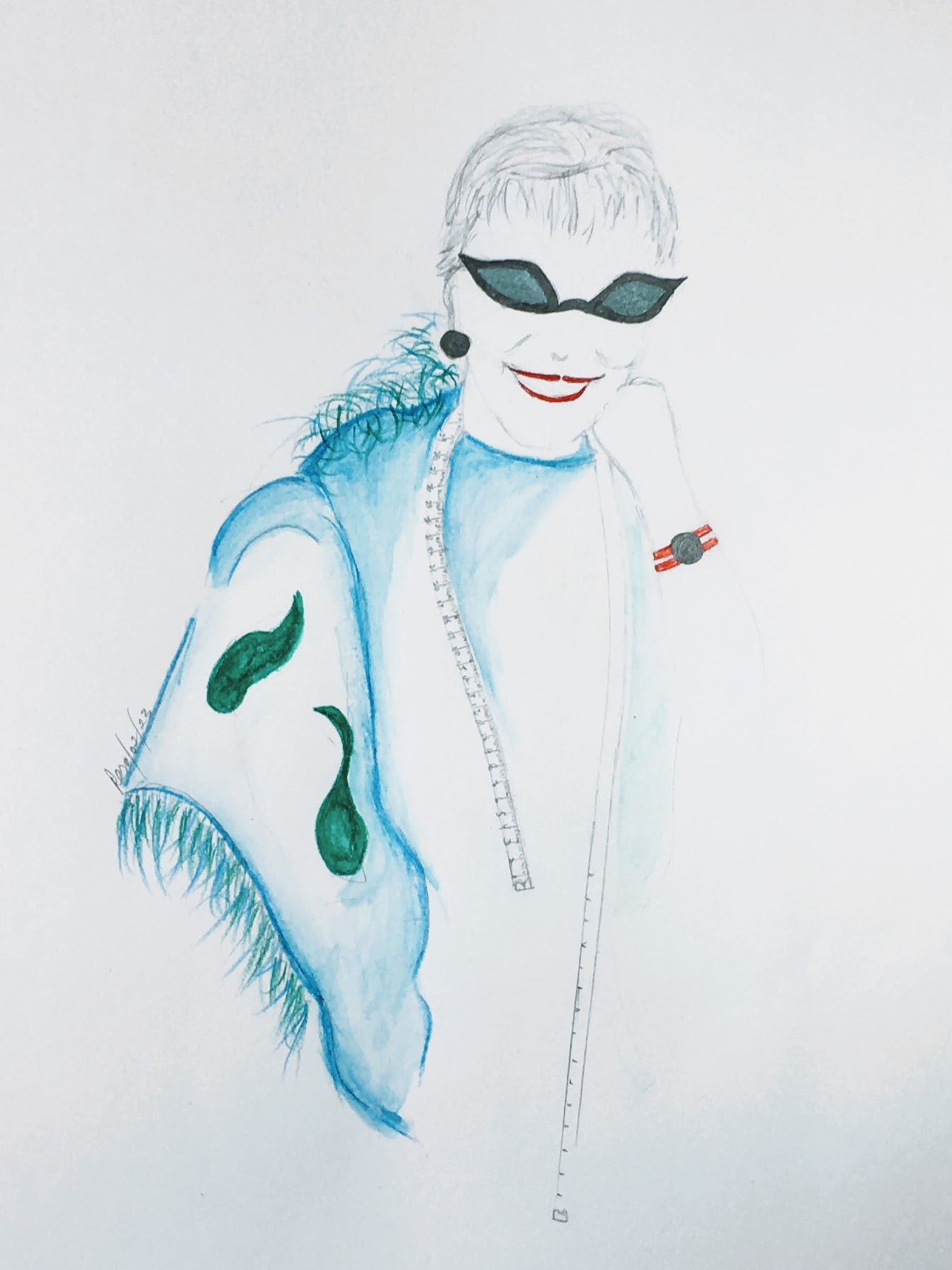
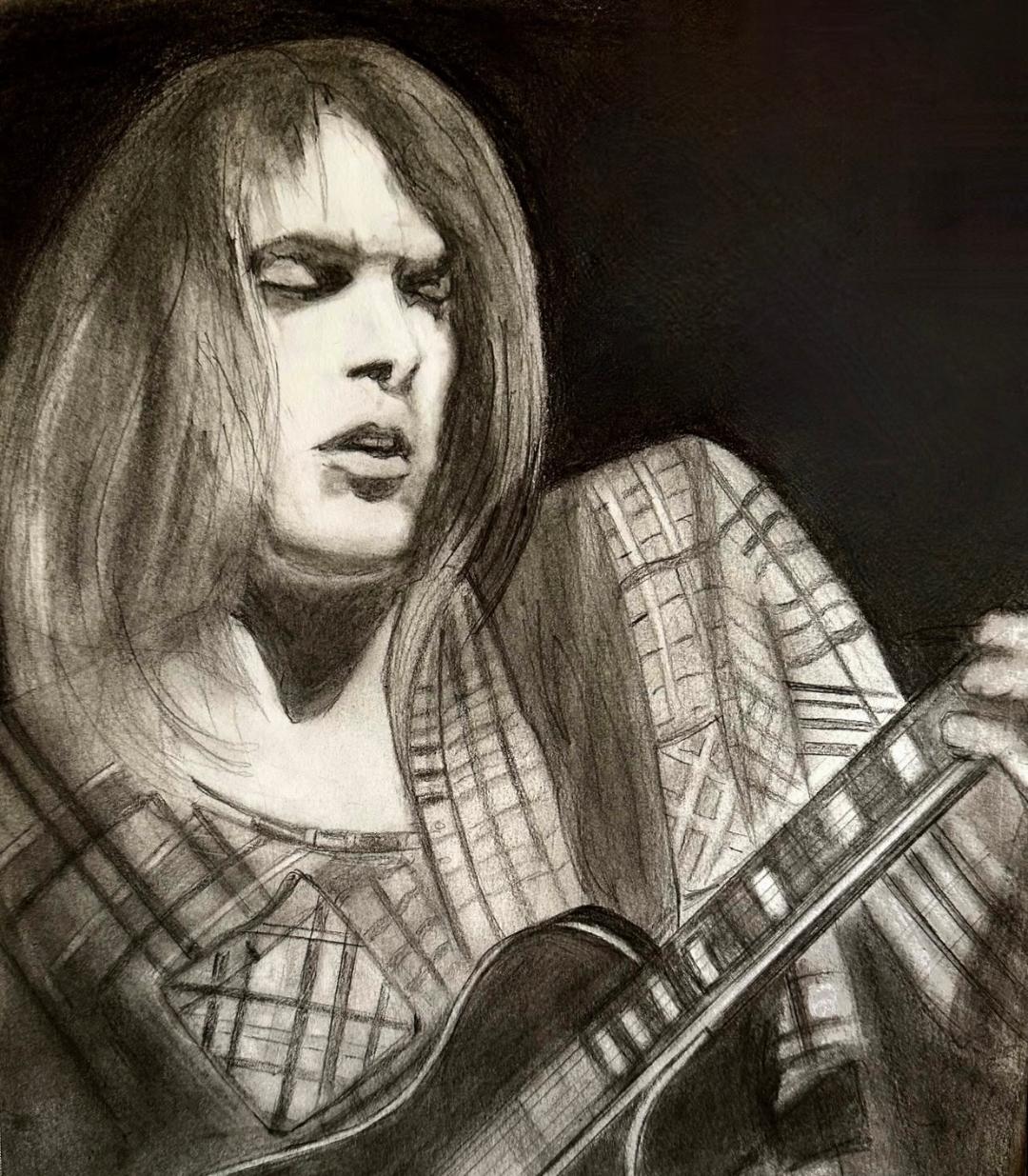
As always I am thrilled and honoured to provide the drawing. We decided on a young Neil. He is in his very early 20’s in this drawing.
Holly chose a fabulous song by Neil that, quite frankly, I had forgotten about. Check out her choice! This was the song I figured she’d pick. She must have had a hard time picking one song. His catalogue is brilliant!
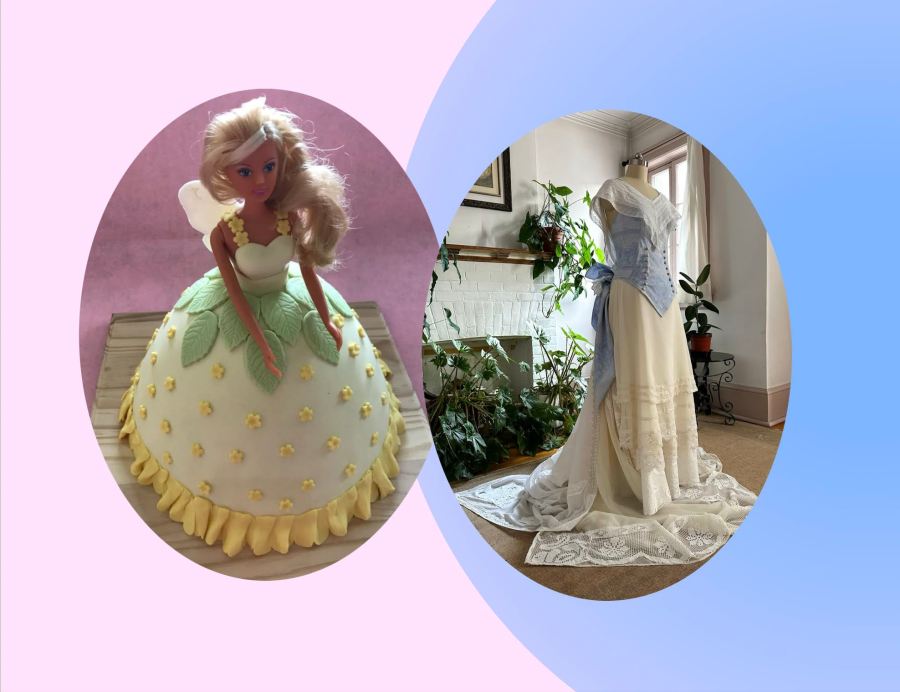
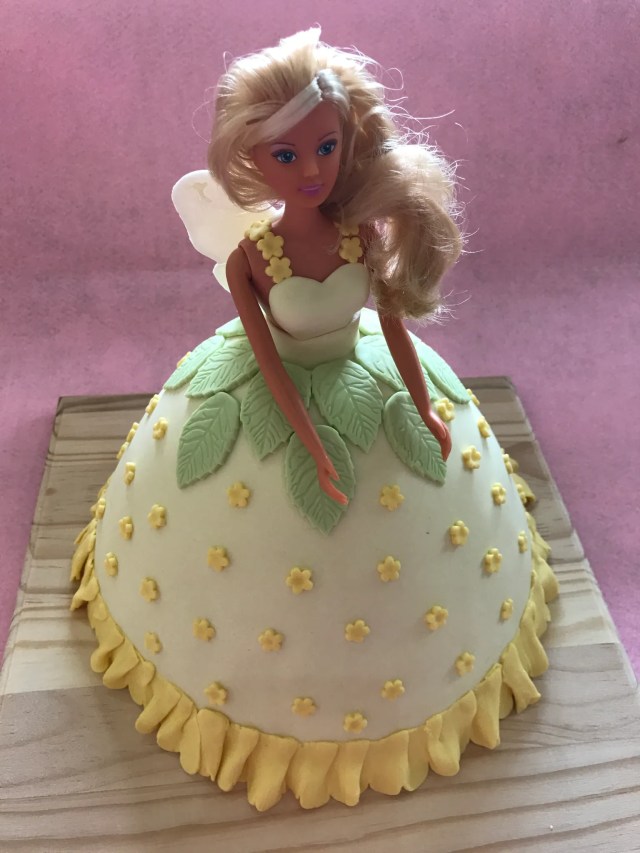
Robbie Cheadle made a fun and gorgeous wedding post on Latinos USA with Art Gown Victorian Sonnetand her fabulously creative cakes. Pop on over for a taste of beauty!
By the way,
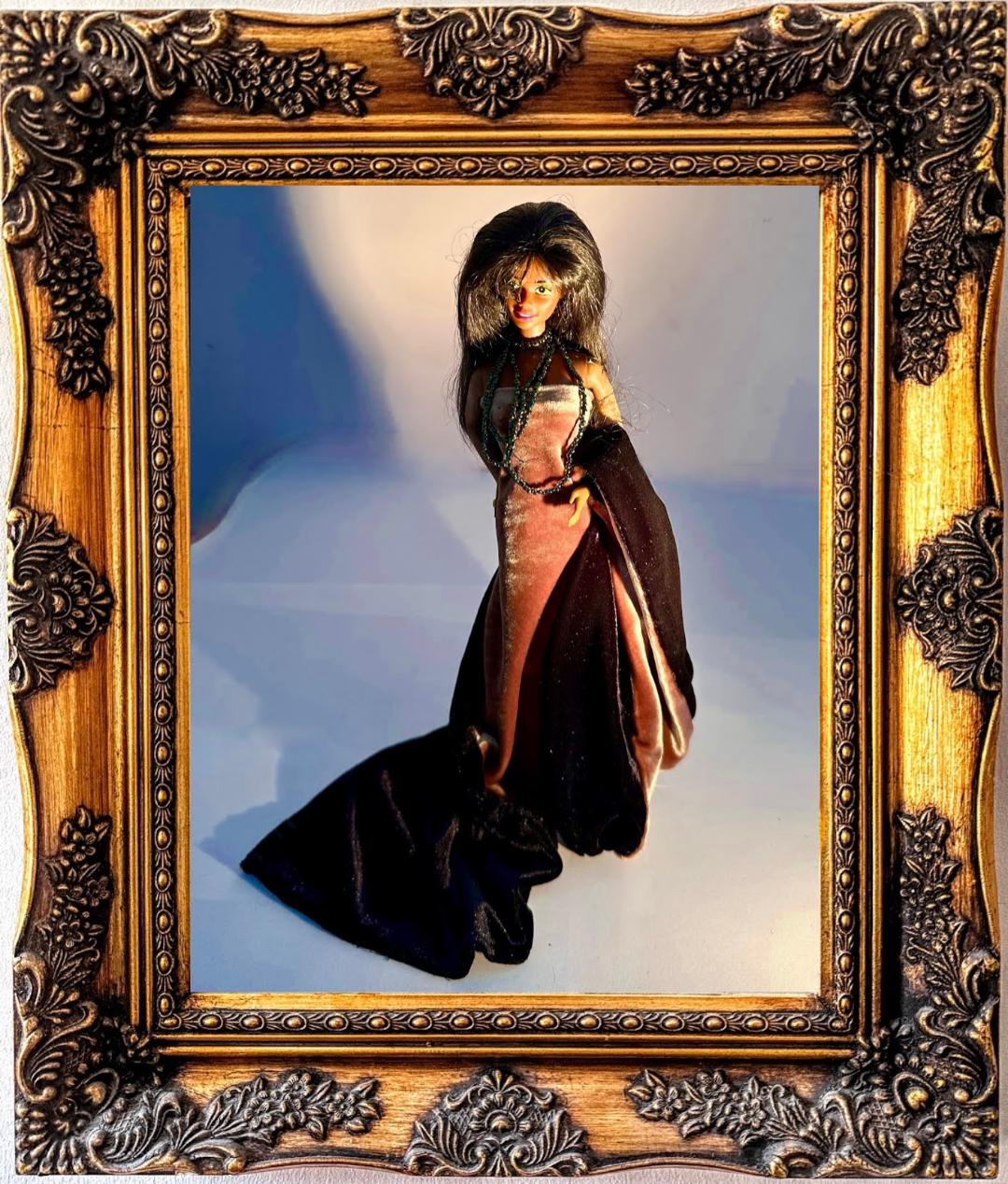
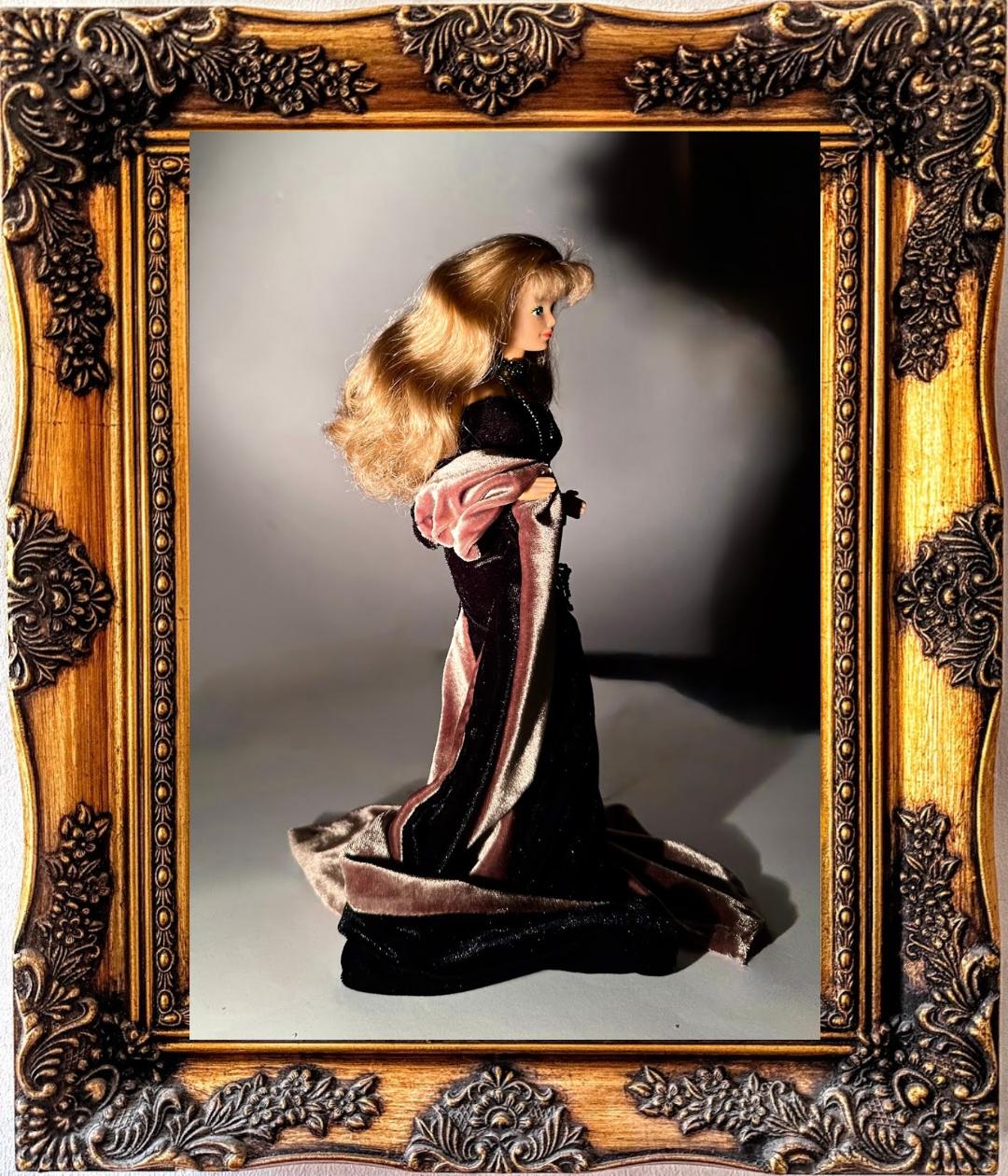
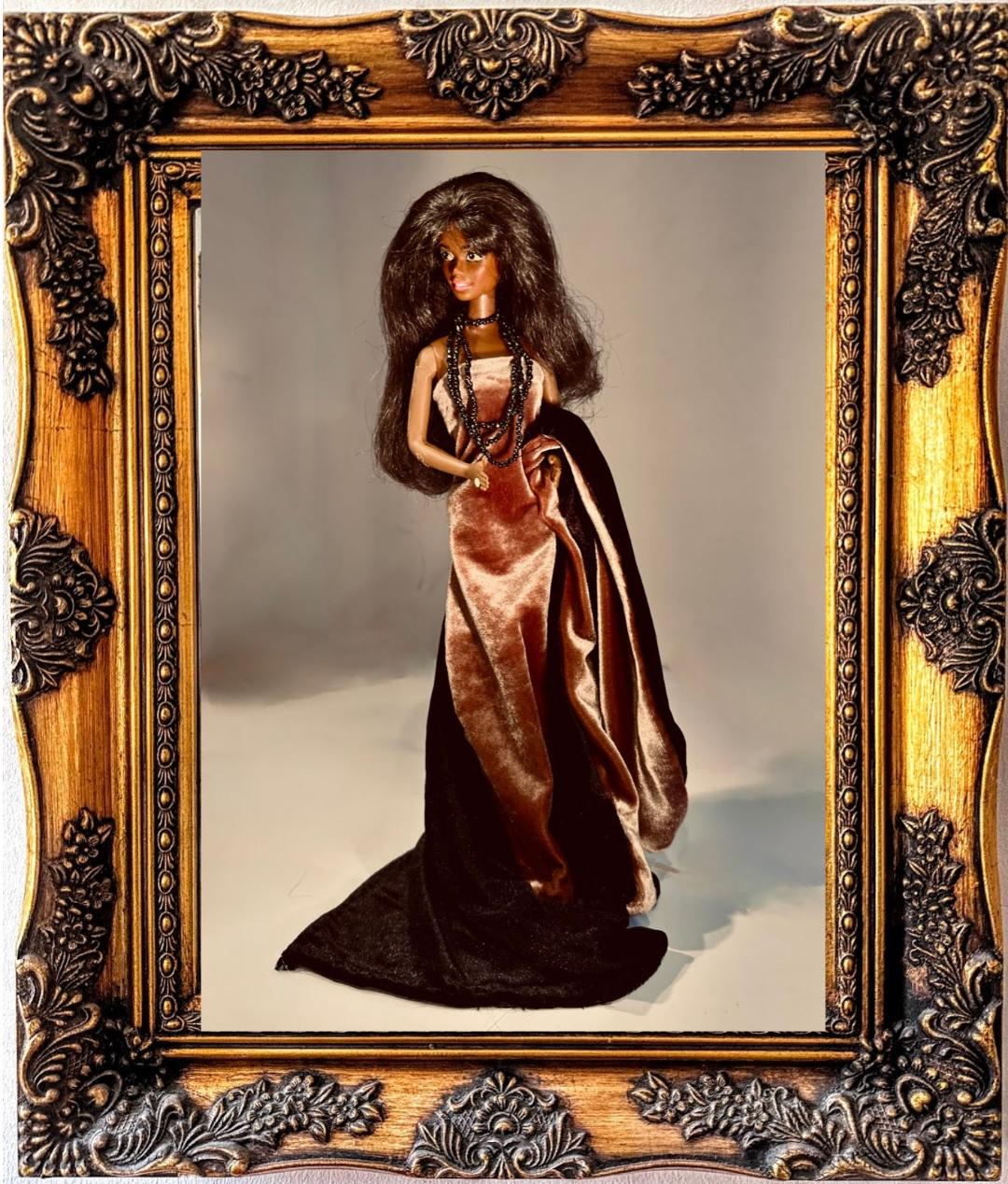
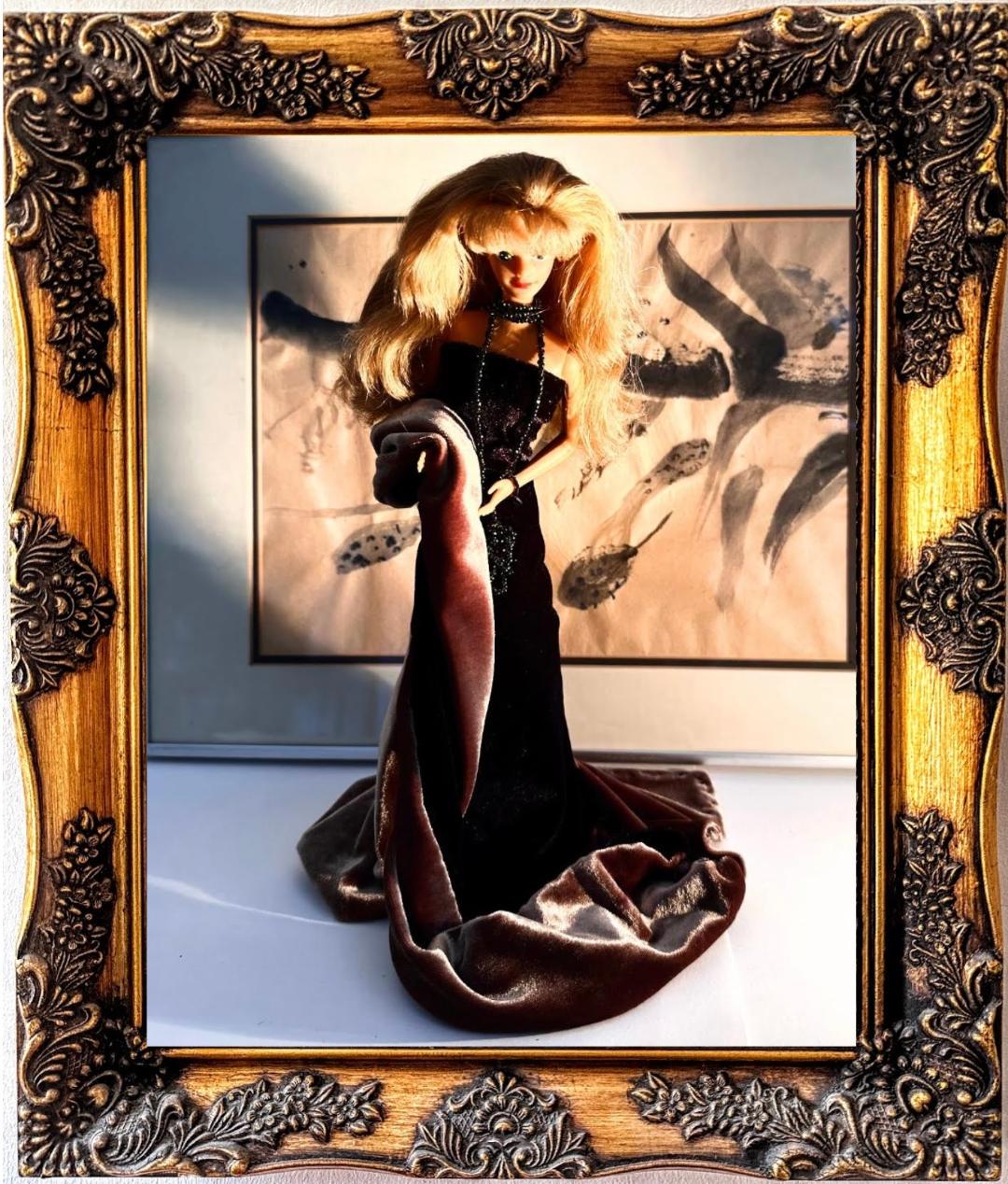
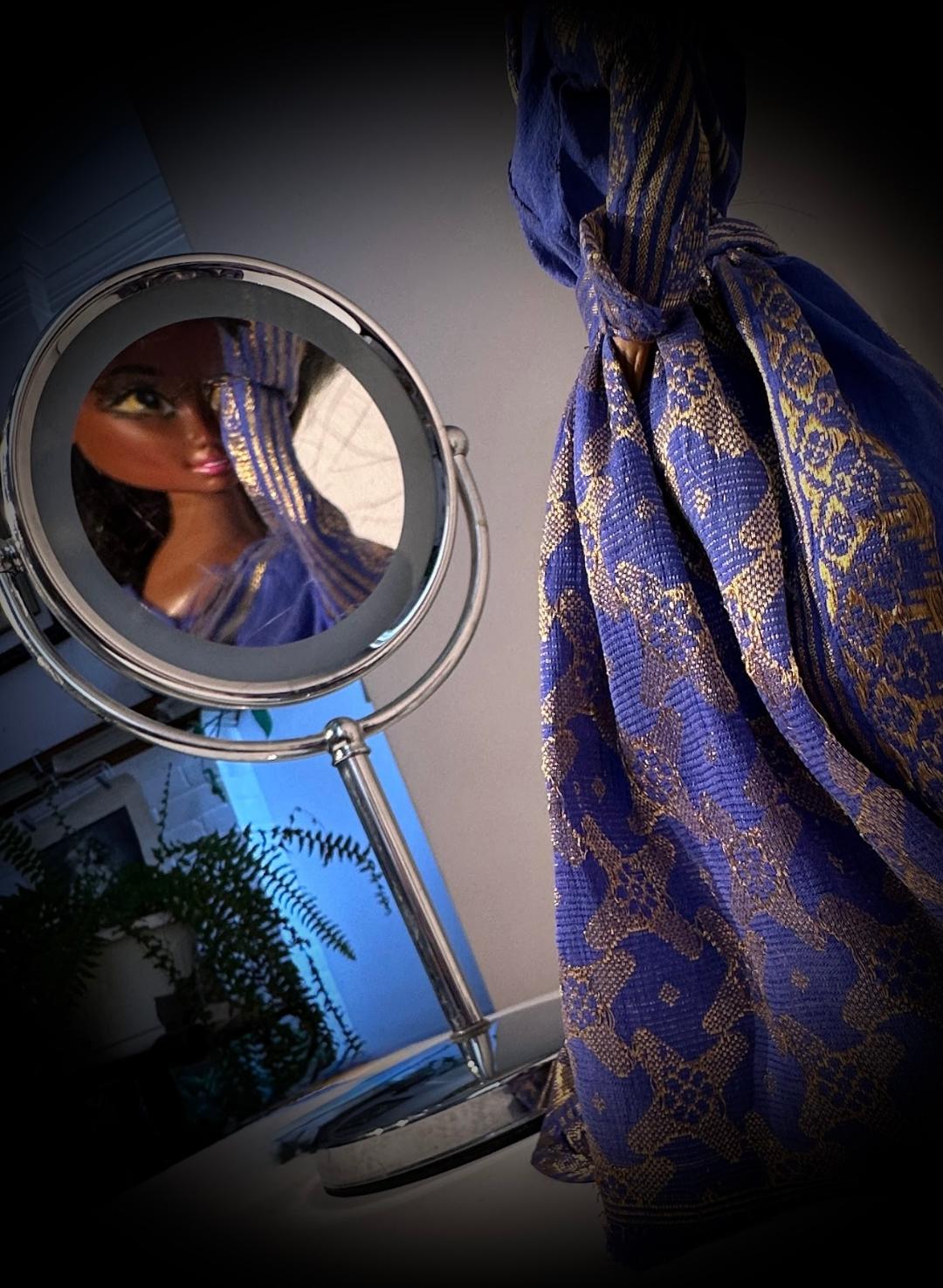
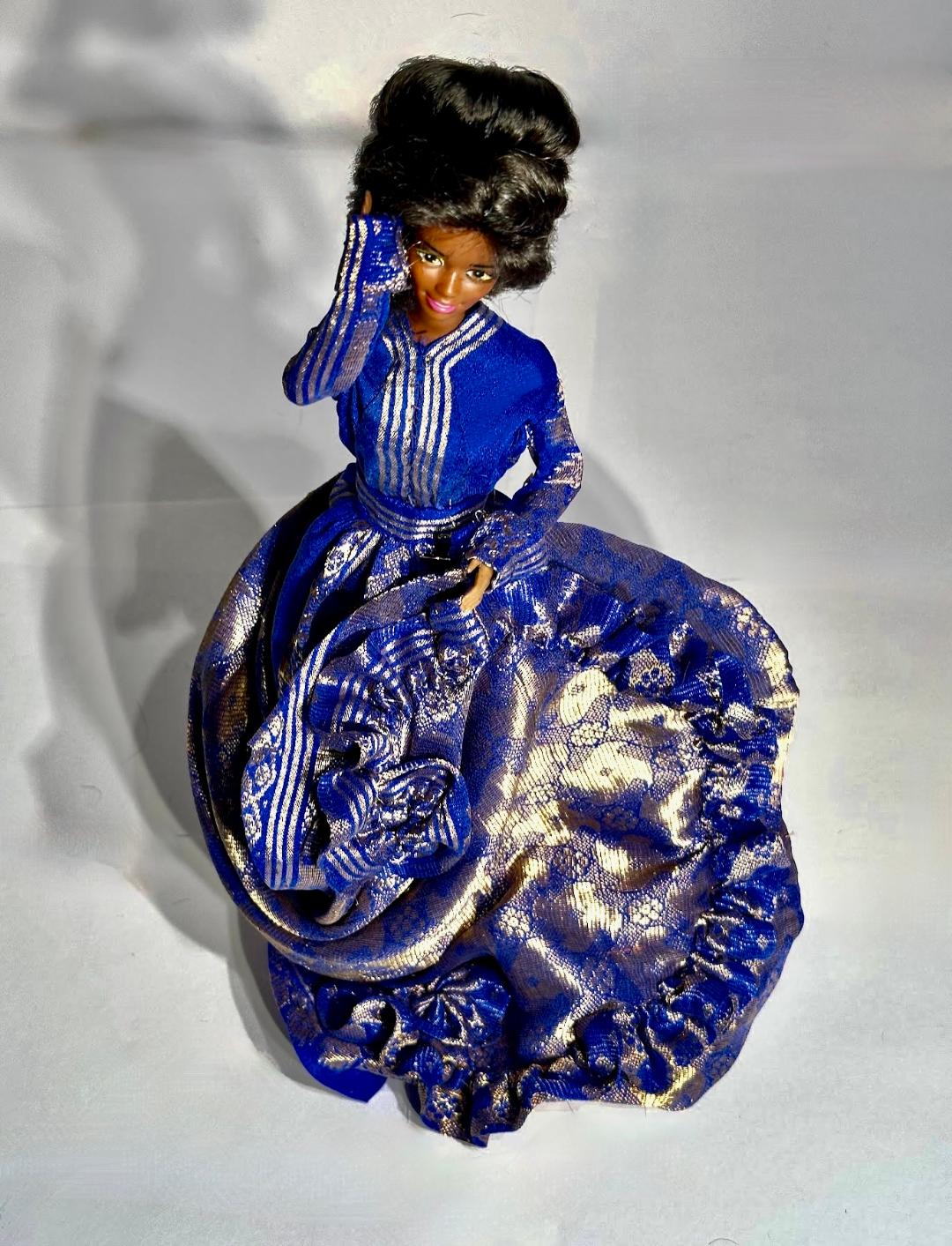
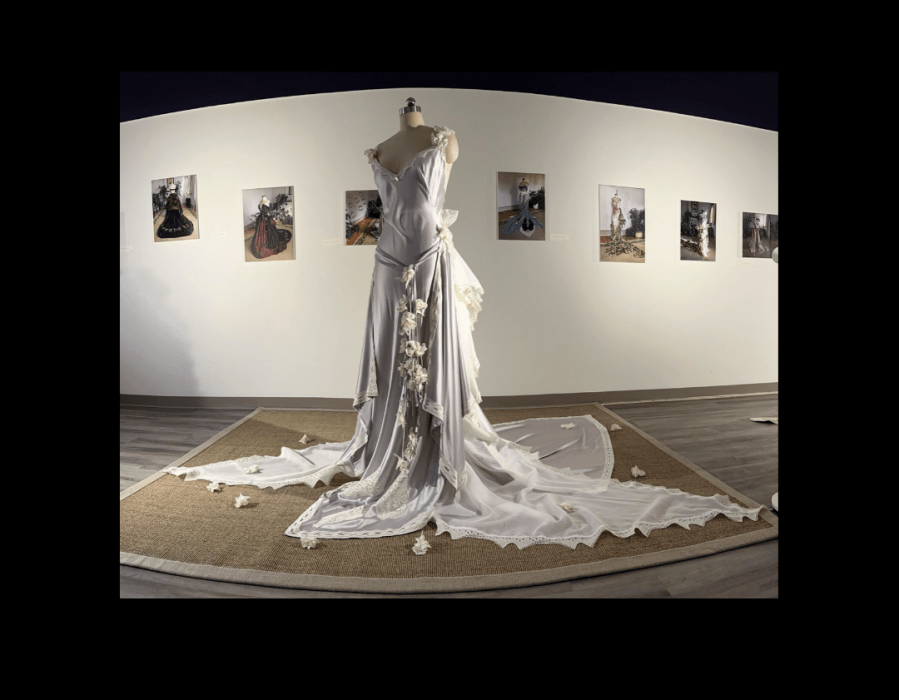
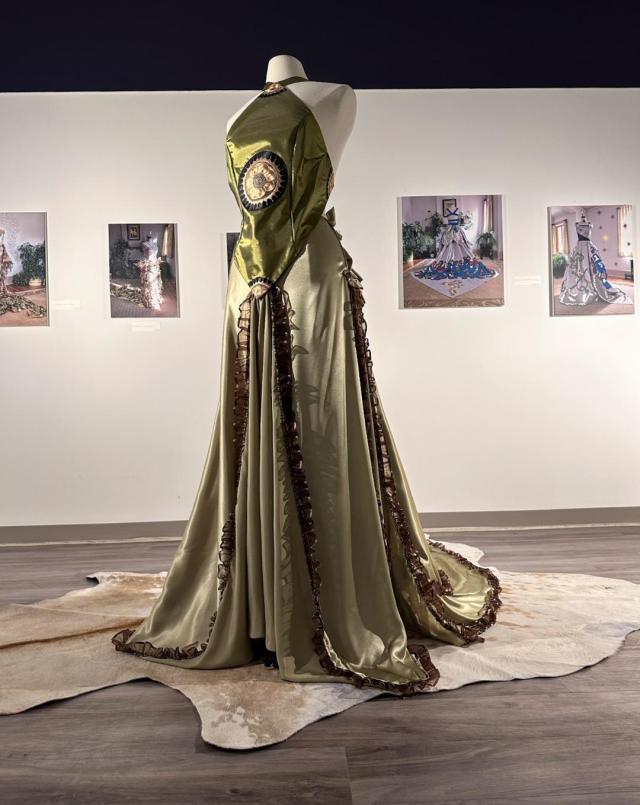
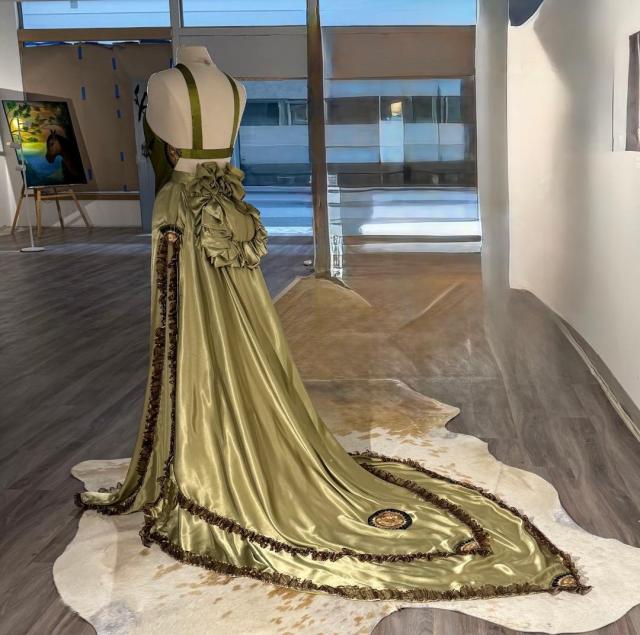
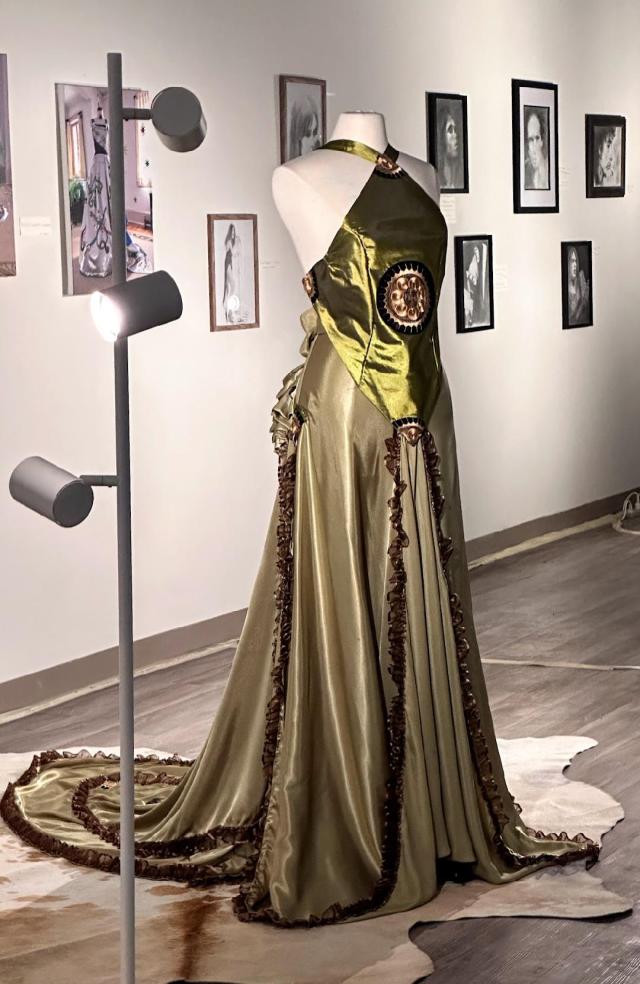
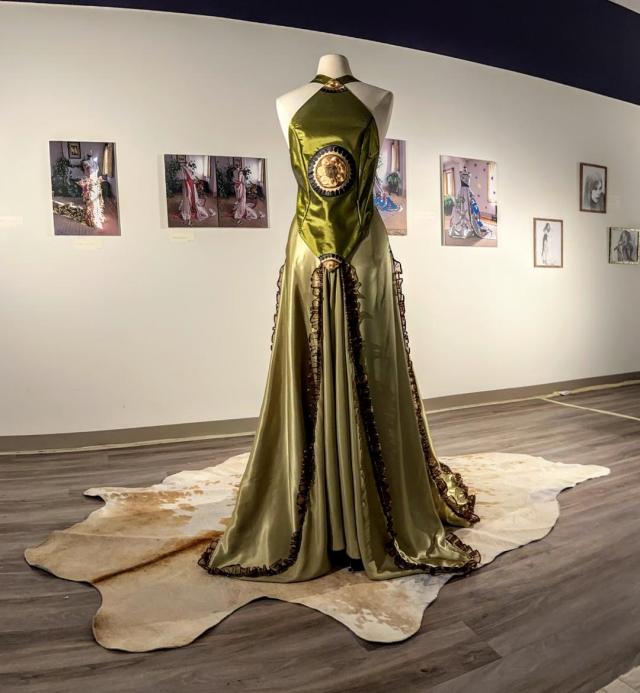
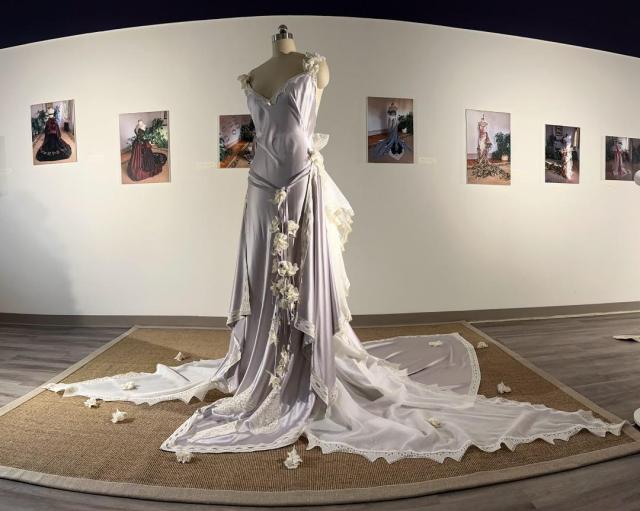
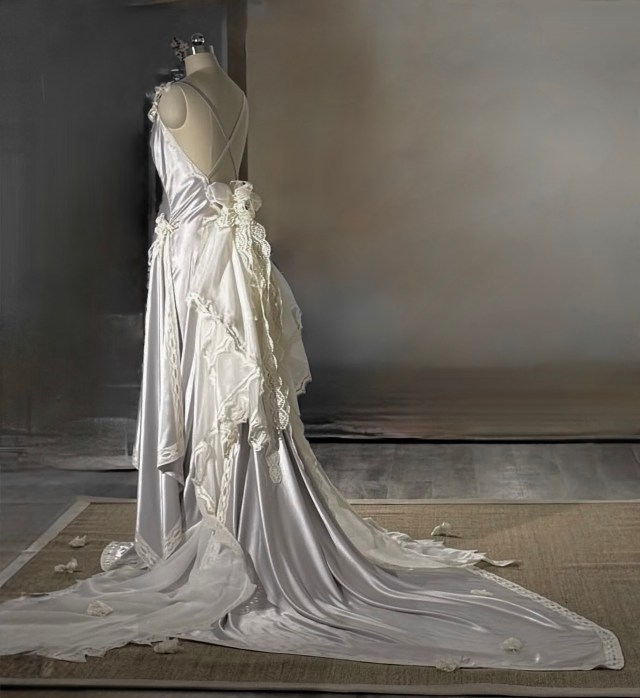
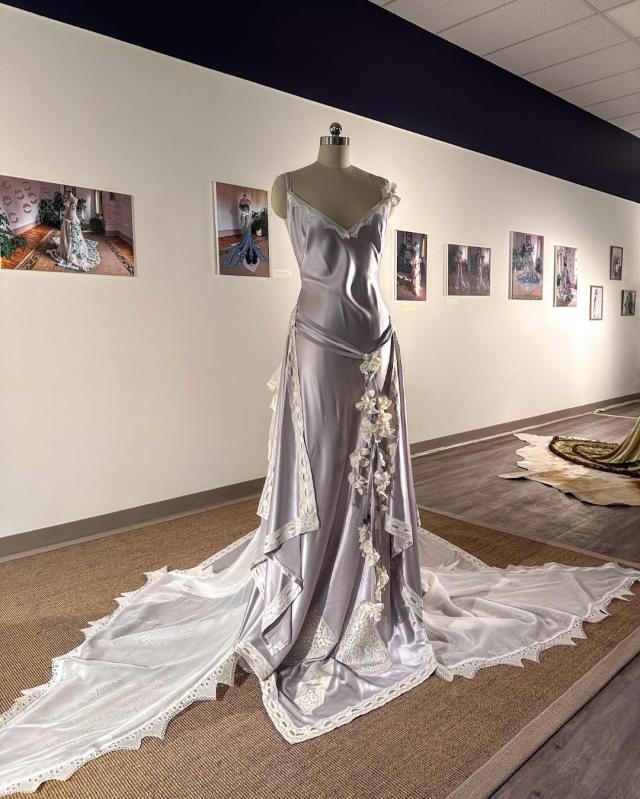
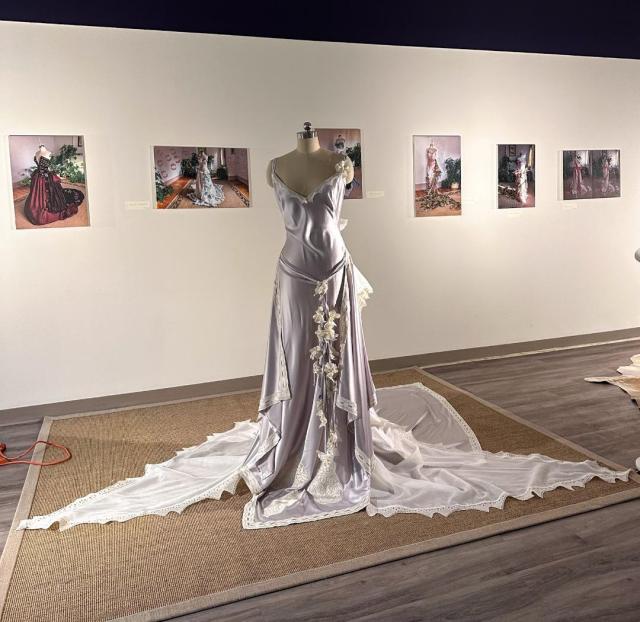
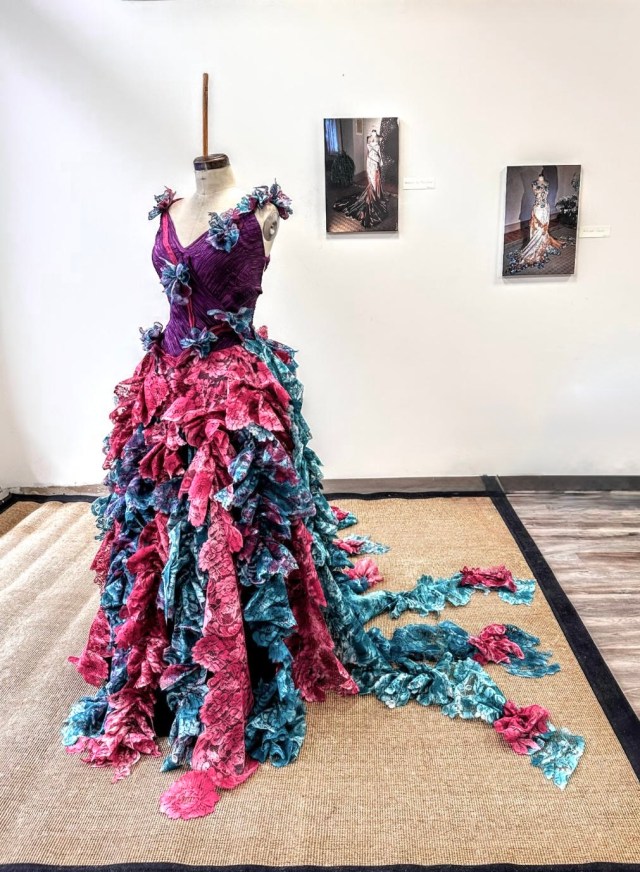
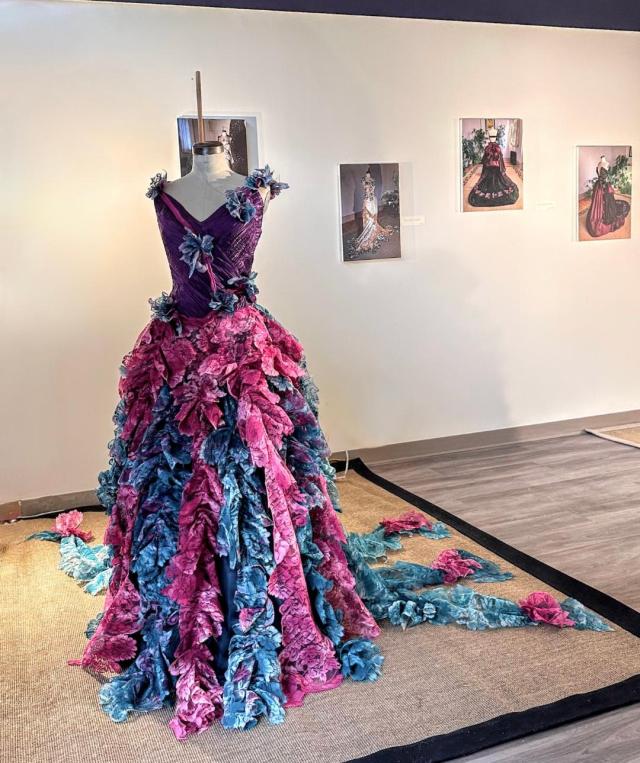
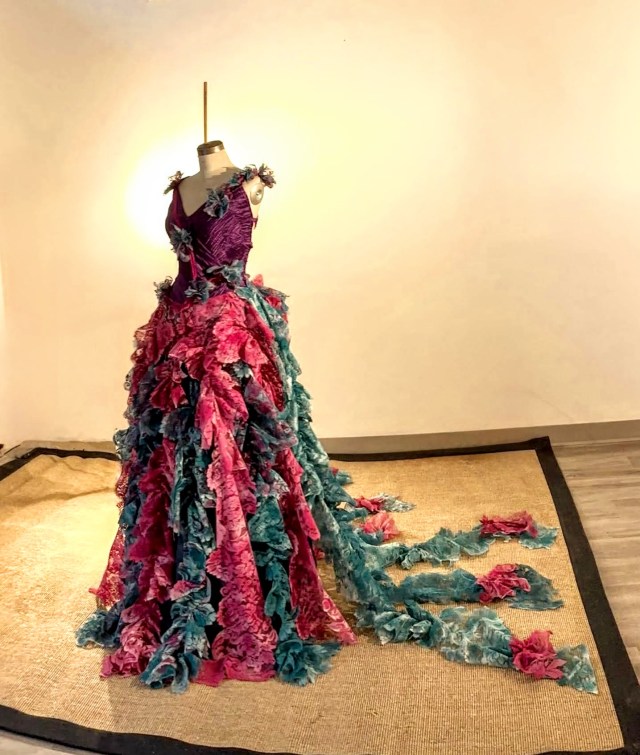
As a guest artist at my friend’s Pop-Up Art Gallery Show, I have space to show 2 Art Gowns.
A few Art Gowns pics printed on faux canvases, then painted over selectively with iridescent paint, will also be there.
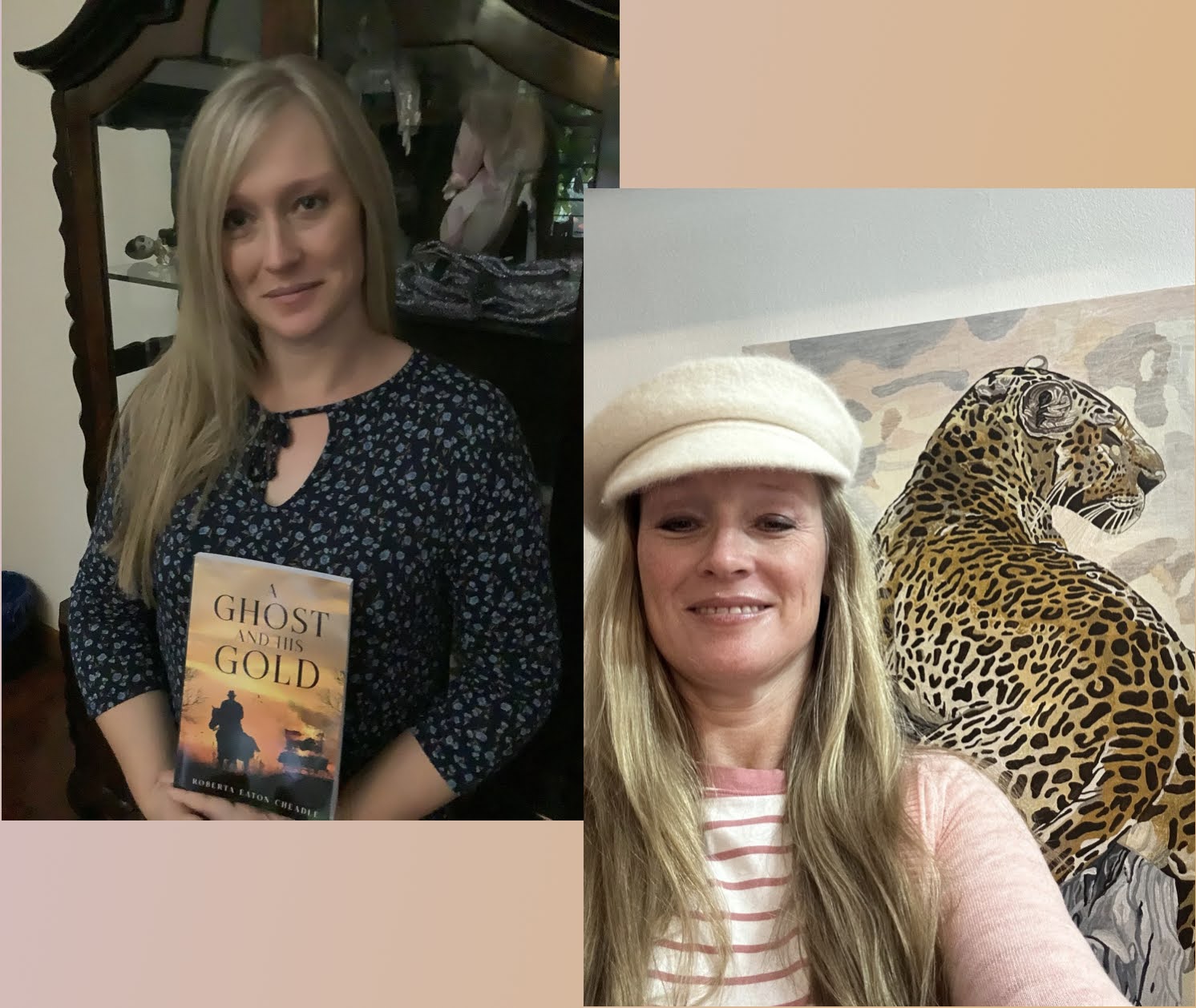
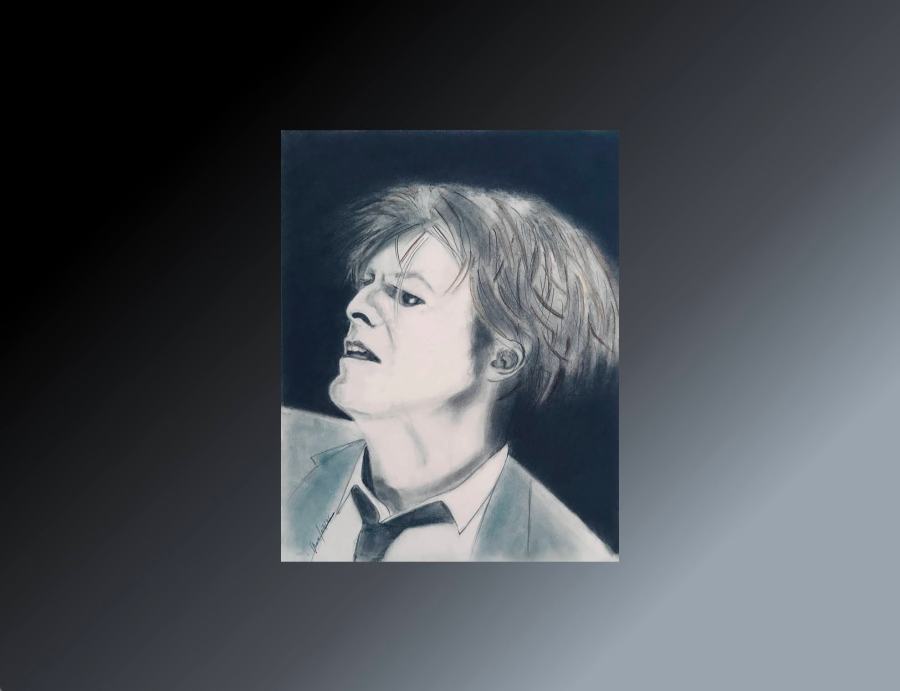
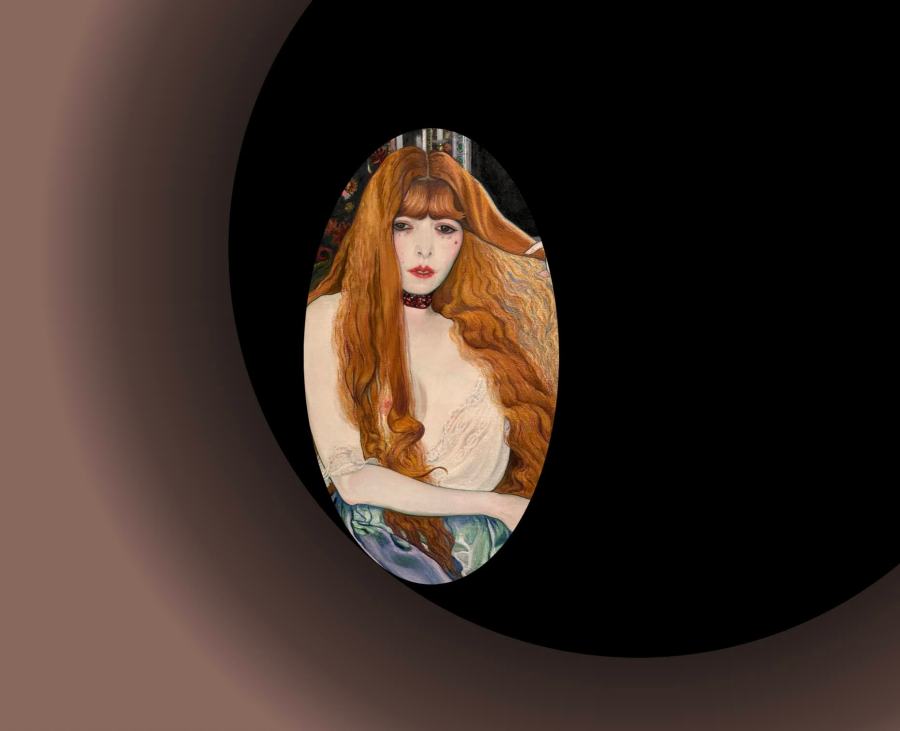
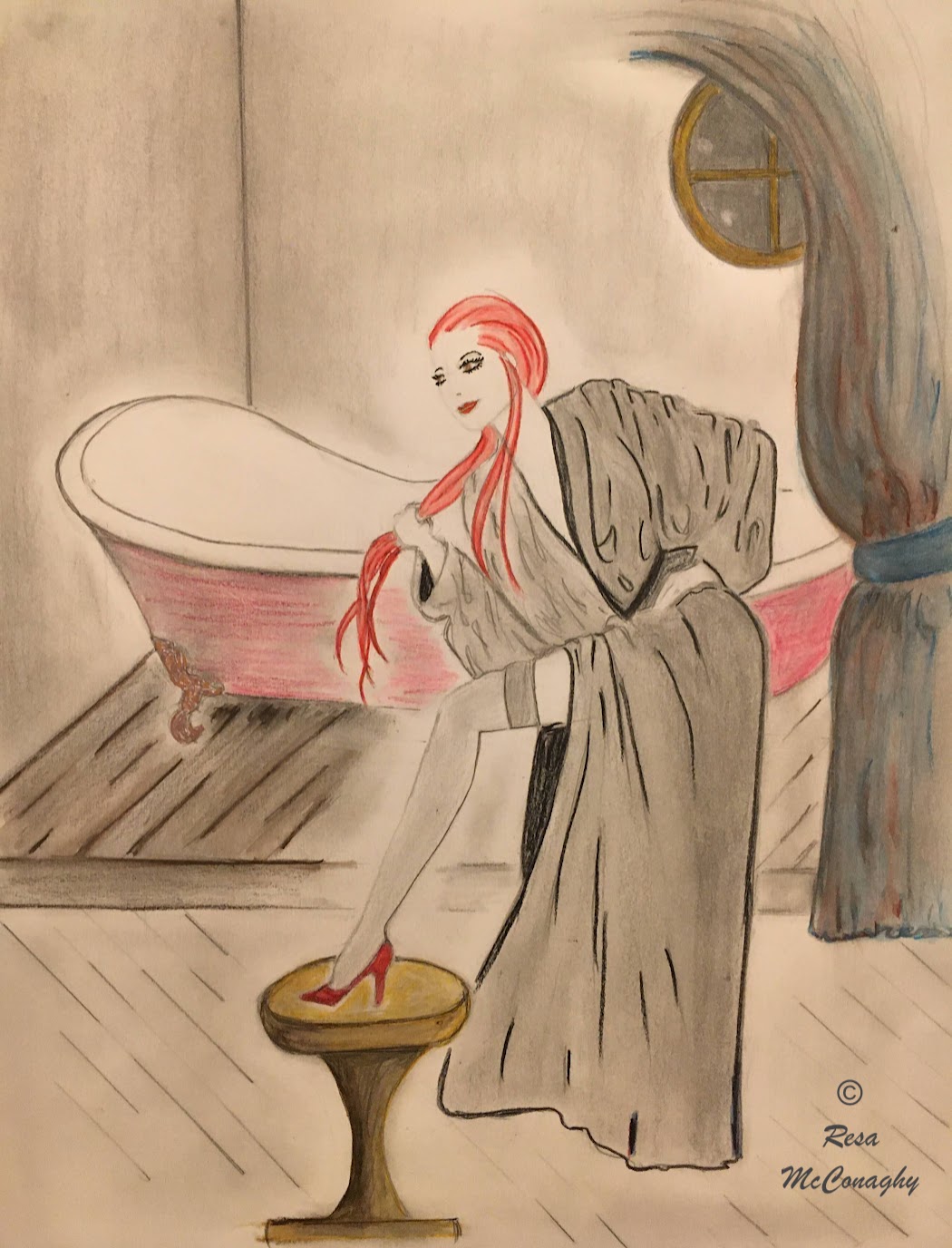
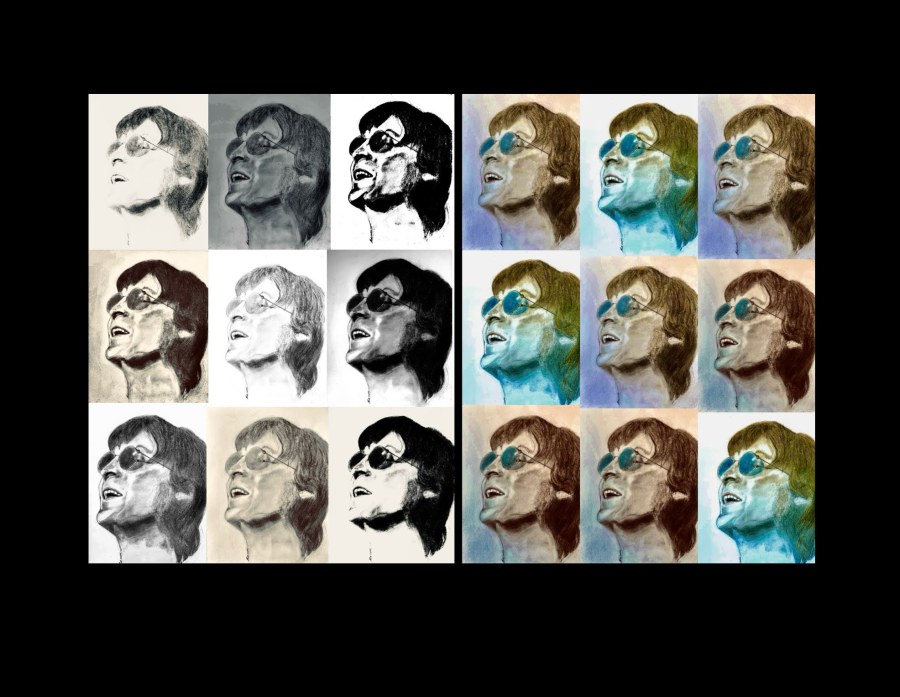
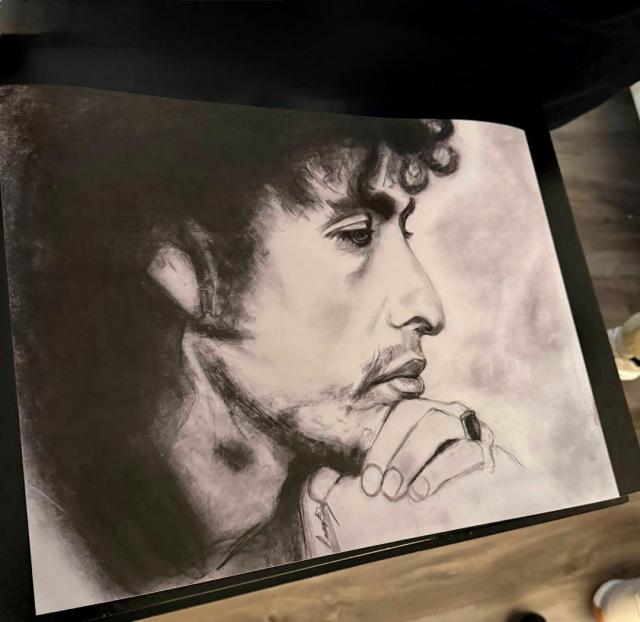
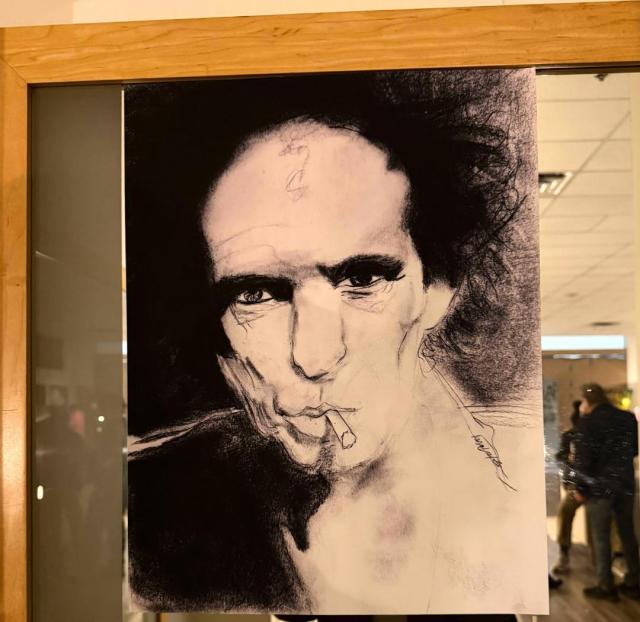
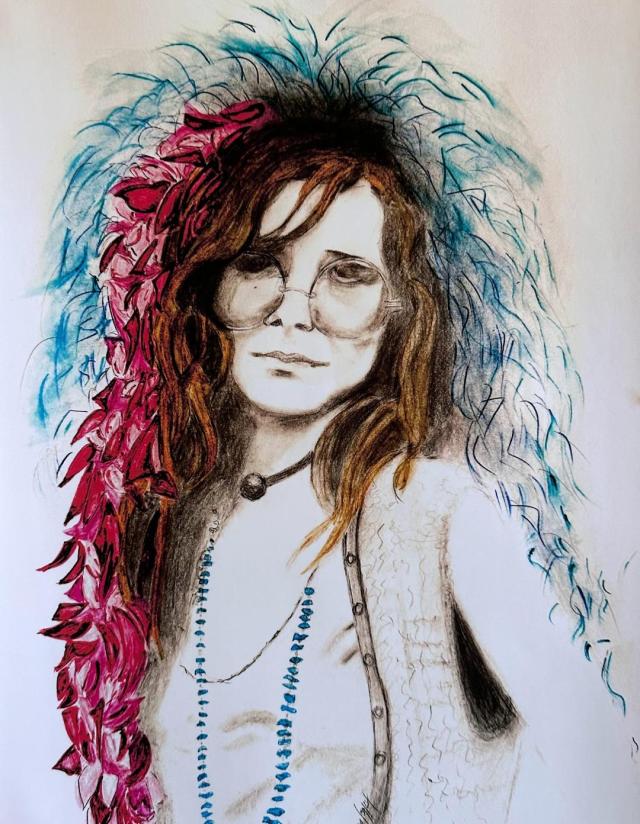
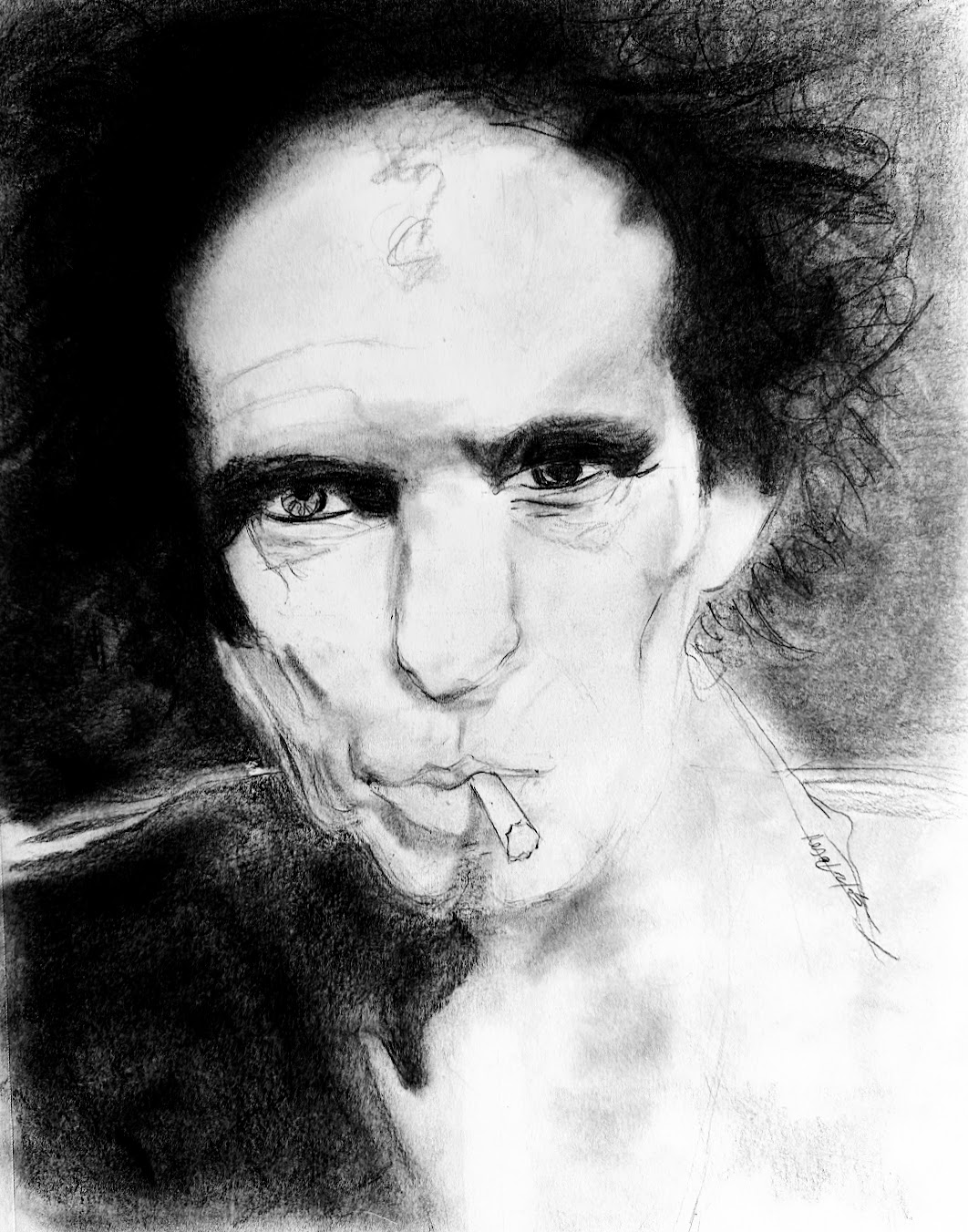
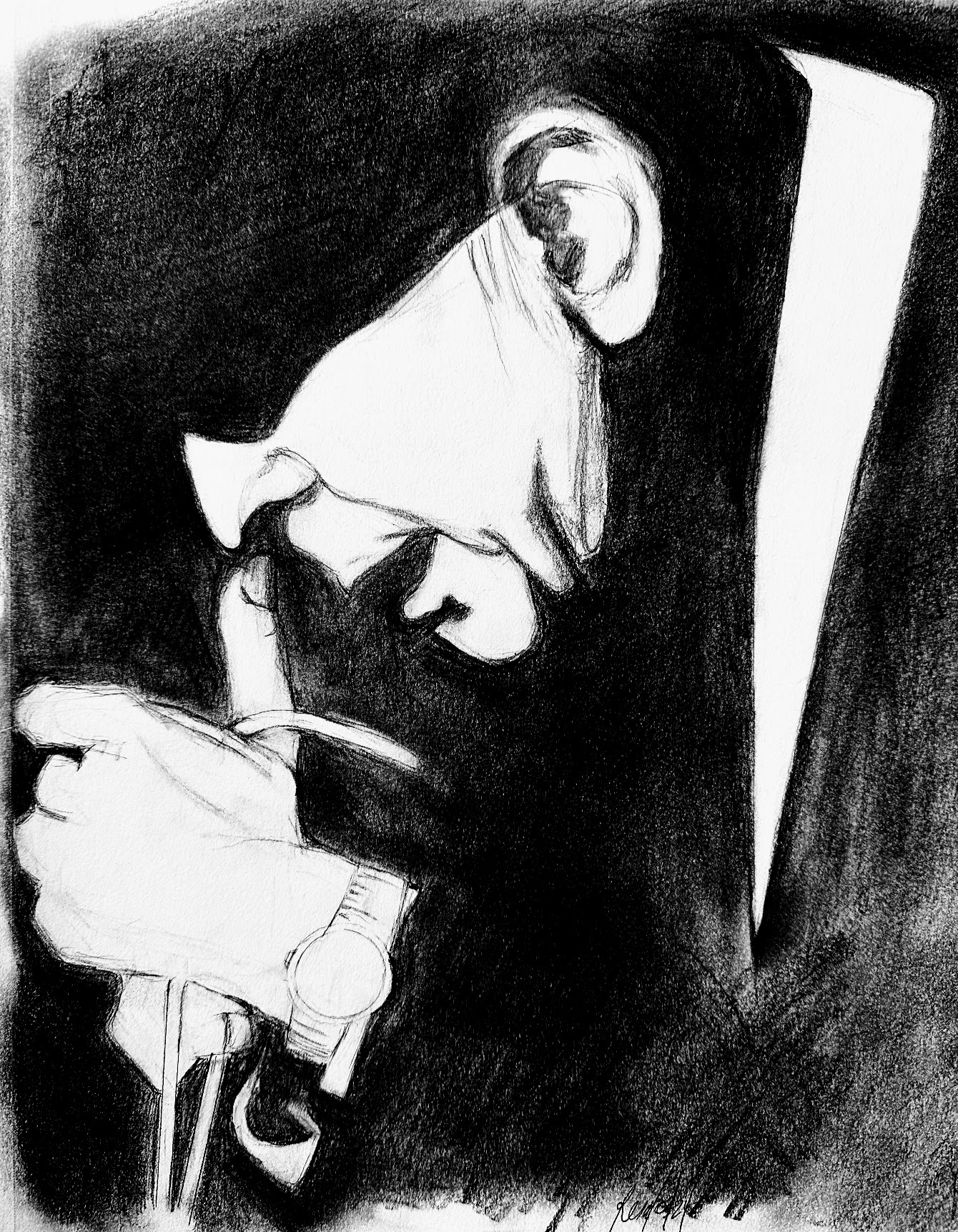
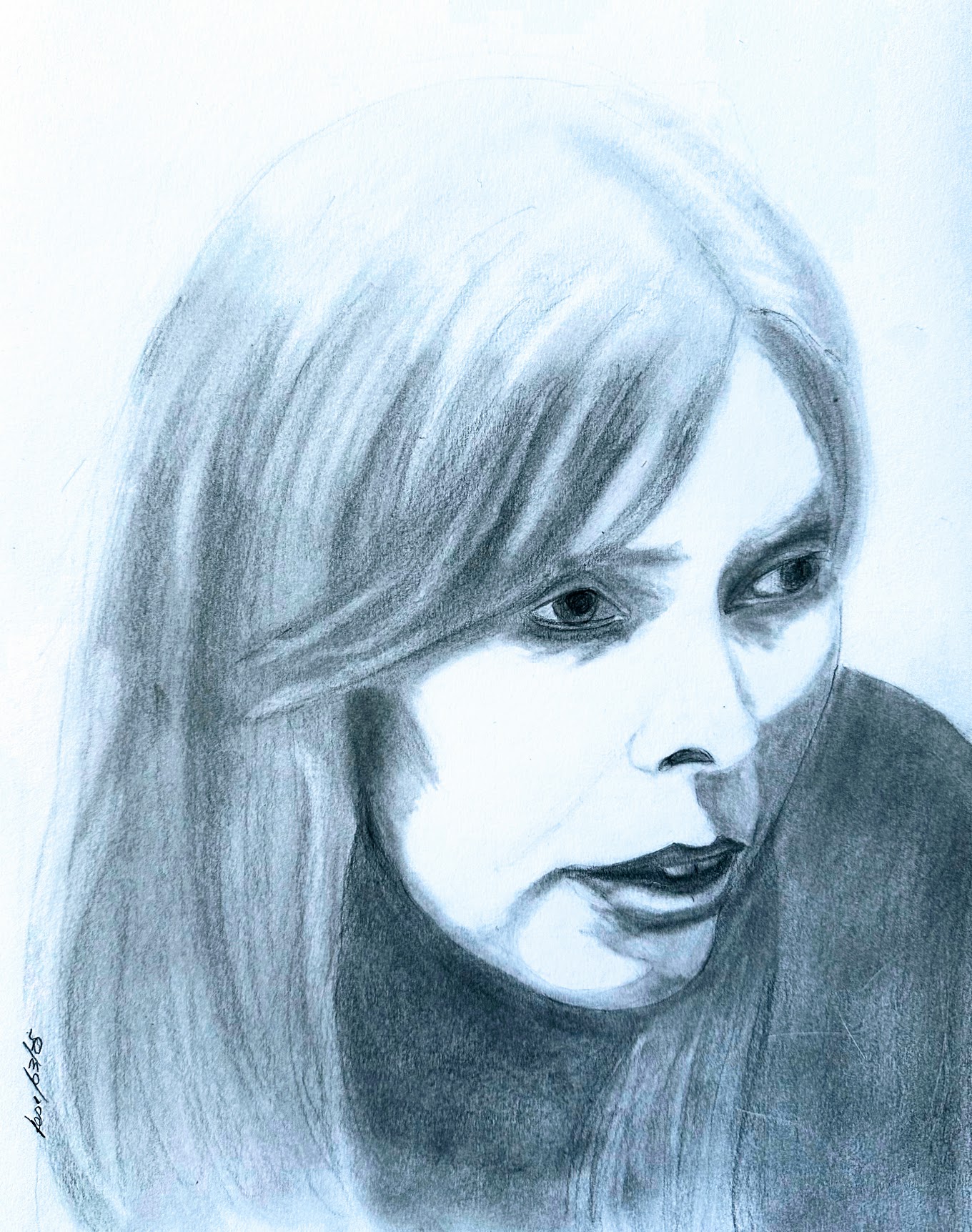
Additionally, five portraits will be on a slice of wall. The 4 below are now framed.
One of the drawings below will be the 5th. If you’re leaving a comment, let me know which one you’d pick!
This is my first time showing in public, and it is a small sample try. If you are already in Toronto, pop by if time allows!













You must be logged in to post a comment.